The Invisible Architecture of Atmosphere: Why Mass Flow Control Defines Thermal Kinetics
May 03, 2026
The Illusion of the Static Chamber
In the study of material science, we often treat the inside of a tube furnace as a static environment. We set a temperature, we wait, and we assume the chemistry follows the heat.
But heat is never static. It is a fluid process.
When a sample begins its thermal decomposition, it isn't just reacting to the temperature of the ceramic wall. It is reacting to the "weather" inside the tube—the invisible currents of gas that carry heat to the surface and strip reaction products away.
This is where the High-Precision Mass Flow Controller (MFC) moves from being a peripheral component to the primary architect of the experiment.
The Convective Handshake
Thermal decomposition kinetics are essentially a measurement of energy transfer. In a vacuum, this is simple radiation. In a tube furnace, it is a complex dance of convection.
The Stability of Heat Transfer
An MFC ensures that the gas velocity remains constant. Without this, the "wind" inside the furnace fluctuates. These fluctuations create erratic temperature gradients on the sample surface. If the flow isn't steady, your pyrolysis data isn't reflecting the material's nature; it's reflecting the instability of your gas line.
The "Sweep" Effect and the Boundary Layer
As a polymer or mineral decomposes, it exhales volatiles. These gases linger in a stagnant boundary layer just above the sample.
- Without high-precision flow: These volatiles can be reabsorbed or undergo secondary reactions, "poisoning" the data.
- With precision MFCs: The "sweep gas" maintains a relentless, calculated removal of these species, ensuring you measure the primary decomposition pathway and nothing else.
The Chemistry of Partial Pressure
Precision in thermal science is often a battle against oxygen. Whether you are seeking a perfect reduction or simulating the harsh flue gases of a power plant, the molar ratio is your most critical variable.
| Research Goal | MFC Function | Technical Metric |
|---|---|---|
| Redox Control | Balancing CO/CO2 or O2/Ar ratios | Oxygen Fugacity (logf O2) |
| Industrial Simulation | Mixing trace SO2, HCl, or CO2 | Molar Volume Ratio |
| Residence Optimization | Adjusting gas velocity vs. hot zone length | Space Velocity (WHSV) |
By adjusting these ratios with an error margin of less than 2 cc/min, the researcher stops "guessing" at the atmosphere and starts "engineering" it.
The Engineer’s Caution: The Psychology of Calibration
There is a certain romanticism in high-precision hardware, but it demands a specific kind of discipline. An MFC is a thermal mass device; it "feels" the gas properties to calculate flow.
If you calibrate for Nitrogen but run Sulfur Dioxide, the physics changes. The device remains precise, but its "truth" is no longer aligned with your reality. Furthermore, as samples decompose and release soot or ash, backpressure can build.
Systemic integrity requires a holistic view: the MFC provides the precision, but the furnace’s exhaust and filtration systems provide the environment that allows that precision to exist.
Designing the System for the Result
Choosing the right flow control strategy depends entirely on the "why" of your research:
- For Pyrolysis: Repeatability is king. You need to ensure the volatile removal rate is identical across every trial to isolate the kinetic variables.
- For Corrosion: Chemical complexity is the priority. Multi-channel systems allow for the simulation of aggressive, multi-component industrial atmospheres.
- For Synthesis (CVD/PECVD): Residence time is the variable that determines film quality. The MFC becomes the clock that dictates how long atoms have to find their place on a substrate.
Precision by Design: The THERMUNITS Standard
At THERMUNITS, we understand that a furnace is only as good as the control systems that govern it. We don't just build heaters; we build controlled environments for the next generation of material discovery.
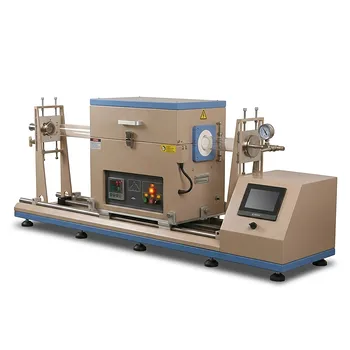
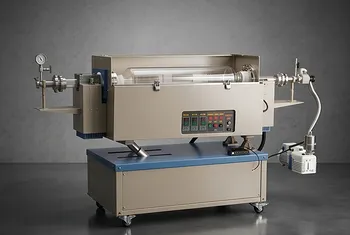
Our range of Tube, Vacuum, Atmosphere, and Rotary furnaces are engineered to integrate seamlessly with high-precision MFC arrays. Whether you are navigating the complexities of Vacuum Induction Melting (VIM) or the delicate requirements of CVD/PECVD systems, our equipment provides the thermal and atmospheric stability required for high-fidelity R&D.
From maintaining stable oxygen fugacity to managing the high-pressure demands of a Hot Press furnace, we provide the tools that turn thermal processing into a repeatable science.
To find the optimal configuration for your specific atmospheric requirements, Contact Our Experts.
Quick Links
Suggested Products
High Temperature Tilting Rotary Tube Furnace with Integrated Mass Flow Control and Multi Zone Heating 1200C High Throughput Multi Channel Tube Furnace with 50mm Quartz Tubes for Annealing and Material Phase Diagram Research 800C High Magnetic Field Compatible Tube Furnace 100mm ID 190mm OD Inert Atmosphere Research System 1500C Hybrid Muffle Tube Furnace 1.7L Box with 2 Inch Mullite Tube and Programmable PID Controller High Magnetic Field Compatible Tube Furnace for 1100C Material Research with Controlled Atmosphere and Water Cooled Non Magnetic CaseFurther Reading
The Geometry of Recovery: Why Tilting Rotary Furnaces Redefine Recycling Economics The Architecture of Equilibrium: Why Rotation is the Antidote to Thermal Stagnation The Architecture of Movement: Managing Gravity and Heat in Rotary Furnaces The Geometry of Heat: Why Electric Rotary Kilns are Winning the Efficiency War The Architecture of Heat: Why the Kiln Shell is a Masterclass in Structural Compromise
ThermUnits
Last updated on Apr 15, 2026
Related Products
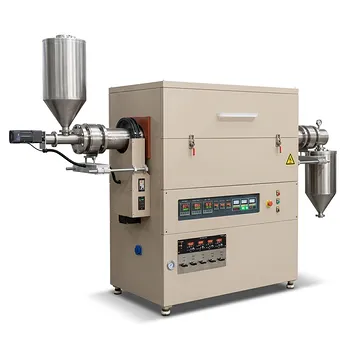
High Temperature Tilting Rotary Tube Furnace with Integrated Mass Flow Control and Multi Zone Heating

1200C High Throughput Multi Channel Tube Furnace with 50mm Quartz Tubes for Annealing and Material Phase Diagram Research
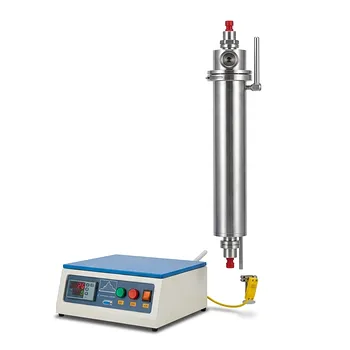
800C High Magnetic Field Compatible Tube Furnace 100mm ID 190mm OD Inert Atmosphere Research System
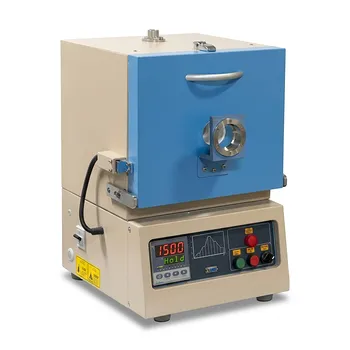
1500C Hybrid Muffle Tube Furnace 1.7L Box with 2 Inch Mullite Tube and Programmable PID Controller
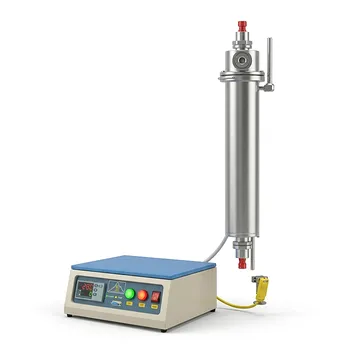
High Magnetic Field Compatible Tube Furnace for 1100C Material Research with Controlled Atmosphere and Water Cooled Non Magnetic Case
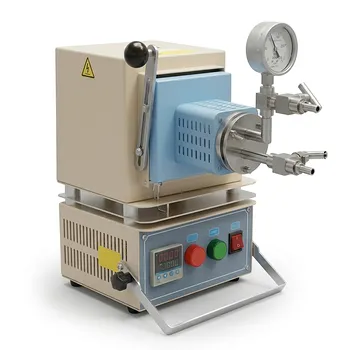
Compact Hybrid Muffle and Tube Furnace for 1000C Controlled Atmosphere Laboratory Material Sintering
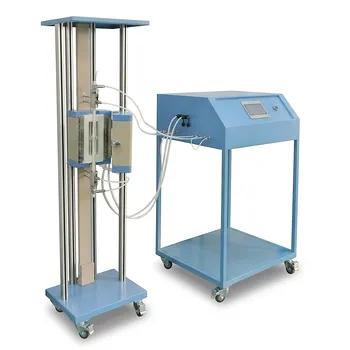
High Temperature Vertical Tube Furnace for Small Solid Oxide Fuel Cell Testing with Four Channel Gas Control
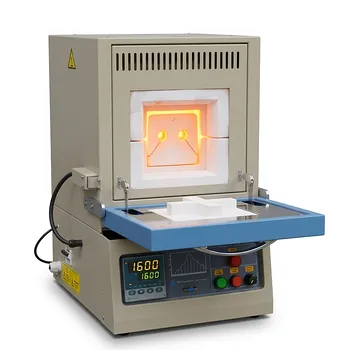
High Temperature Compact Muffle Furnace 1700 C with 30 Segment Programmable Controller and 1.7L Cubic Chamber
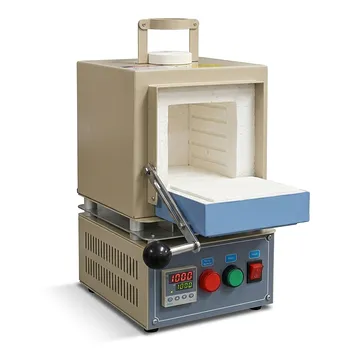
Compact 1000C Muffle Furnace with Programmable Controller and 2 Inch Top Port for Vacuum and Atmosphere Material Research
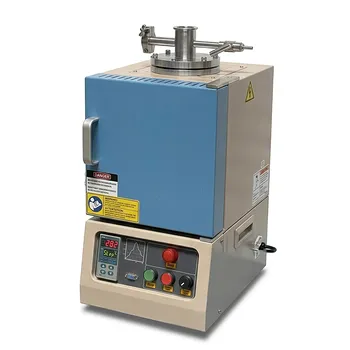
High Temperature Hybrid Muffle and Tube Furnace with Vacuum Capability and PID Control
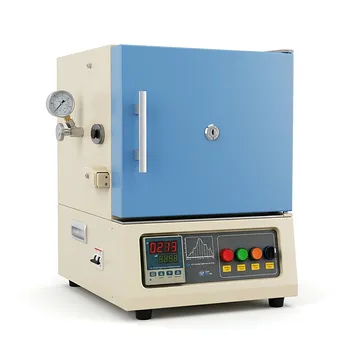
1200C Hybrid Muffle and Tube Furnace for Material Research with Dual Atmosphere Control Quartz Tubes
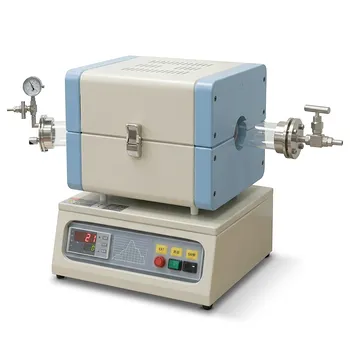
1200C Tube Furnace with Internal Magnetic Sample Sliding for Direct Vaporizing Deposition and Rapid Thermal Processing

Compact Vertical Split Quartz Tube Furnace with Stainless Steel Vacuum Flanges for Rapid Thermal Quenching and Controlled Atmosphere Material Processing
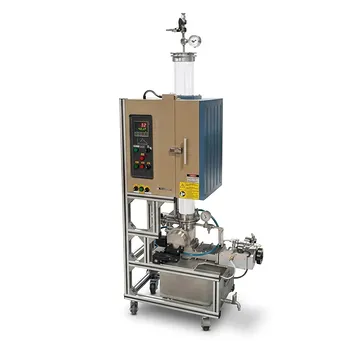
1200C High Temperature Atmosphere Controlled Vertical Quenching Tube Furnace with 4 Inch Quartz Tube
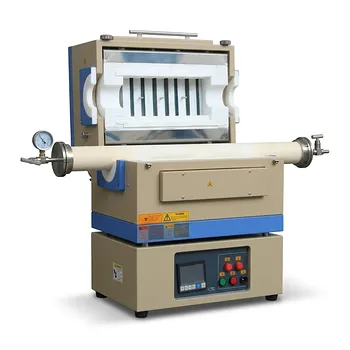
1500C Eight Zone Split Tube Furnace for Thermal Gradient Processing and Advanced Material Research
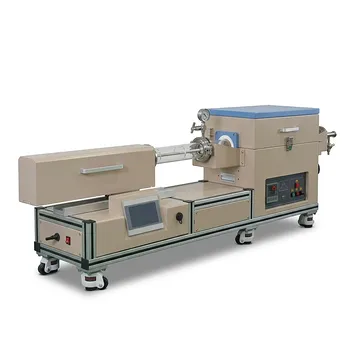
1200C Sliding Internal Crucible Tube Furnace for Controlled Atmosphere Thin Film Deposition and Material Sublimation Research

High Temperature 1700C Vertical Tube Furnace for Powder Spherification and Material Sintering
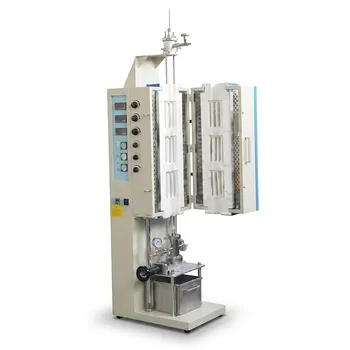
High Temperature Dual Zone Tube Furnace for Material Science Research and Professional Thermal Processing
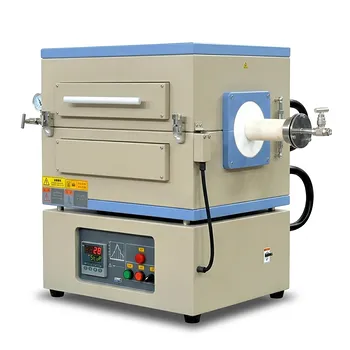
1500°C Split Tube Furnace with Alumina Tube and Vacuum Sealing Flanges for Material Research