The Physics of Redemption: Surface Restoration of Violet Phosphorus in the Thermal Field
May 13, 2026
The Entropy of the Surface
Every material has a secret. For Violet Phosphorus (VP), that secret is its intrinsic atomic morphology—a landscape of potential for next-generation electronics.
But nature is aggressive. When exposed to light and air, VP doesn't just "get dirty." It undergoes a chemical metamorphosis, growing a mask of $HPO_x$-type adsorbates.
This is photodegradation. It is a form of material entropy that hides the very features researchers need to see. To find the truth of the material, we must peel back the mask without destroying the face.
The 200°C Equilibrium
In material science, precision is rarely about the highest temperature; it is about the right temperature.
Restoring VP is a delicate dance at 200 °C. At this specific threshold:
- The Mask Dissolves: The $HPO_x$ films reach their volatilization point.
- The Structure Remains: The underlying phosphorus crystal remains below its sublimation or phase-change threshold.
A tube furnace functions here not as a "heater," but as a precision surgical tool. It provides the kinetic energy necessary to "boil off" contaminants while maintaining the structural status quo.
The Invisible Shield: Nitrogen’s Role
Heat alone is a catalyst for destruction if the environment is wrong. If you heat VP in the presence of oxygen, you don't clean it—you incinerate its potential.
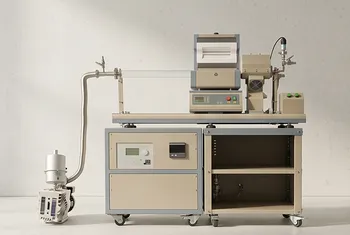
The tube furnace provides a controlled vacuum-tight environment where high-purity nitrogen ($N_2$) performs two critical tasks:
- Exclusion: It pushes out oxygen and moisture, the architects of degradation.
- Transport: As the $HPO_x$ adsorbates evaporate, the continuous flow of $N_2$ sweeps them away, preventing them from settling back onto the surface like dust.
Systemic Precision in the Thermal Field
Restoration fails if the temperature is uneven. If one side of a sample is 205 °C and the other is 195 °C, you end up with a gradient of degradation rather than a clean surface.
The "Engineer’s Romance" in a tube furnace lies in its Thermal Field Distribution. A high-quality furnace creates a "isothermal zone"—a pocket of space where the laws of thermodynamics are perfectly balanced.
| Component | Technical Function | Material Outcome |
|---|---|---|
| Hermetic Tube | Total atmospheric isolation | Prevention of secondary oxidation |
| PID Controller | Micro-adjustments to power | Zero-overshoot thermal stability at 200 °C |
| Flow Metering | Managed $N_2$ velocity | Efficient removal of volatilized species |
| Stable Gradient | Uniform heat distribution | Consistent atomic morphology across the sample |
The Trade-off of Time and Flow
In engineering, there is no such thing as a free lunch. Every parameter has a psychological price.
1. The Duration Dilemma Annealing for longer periods ensures deeper cleaning. However, the longer a material stays at temperature, the higher the risk of subtle atomic migration. We aim for "just enough" time to reveal the laser-etched pits, but not a second more.
2. The Flow Rate Paradox High gas flow removes contaminants faster. But high flow can also cause "thermal shock" or localized cooling spots on the sample. The flow must be a gentle breeze, not a gale.
Restoring the Atomic Truth
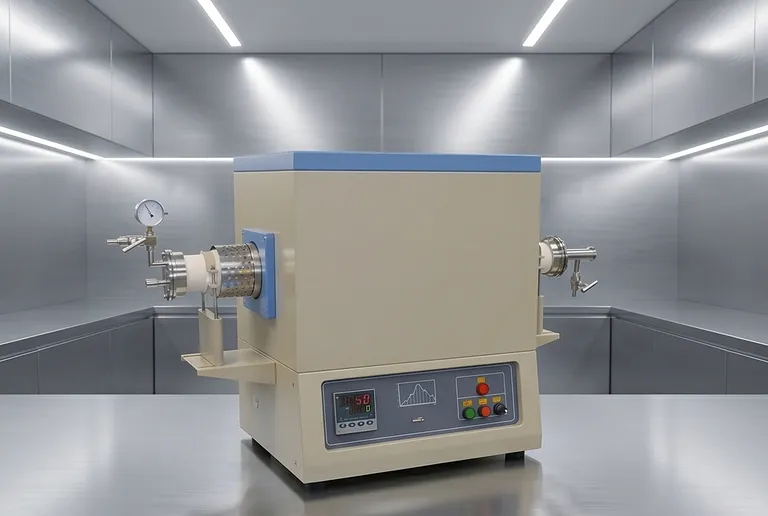
Once the furnace cycle completes, the result is a revelation. Under the microscope, the "blurred" surface of the degraded VP disappears. In its place, the intrinsic atomic structure and the sharp edges of laser-etched features emerge.
The tube furnace is the bridge between a degraded sample and actionable data. It is the instrument of restoration.
Engineering the Future of Research
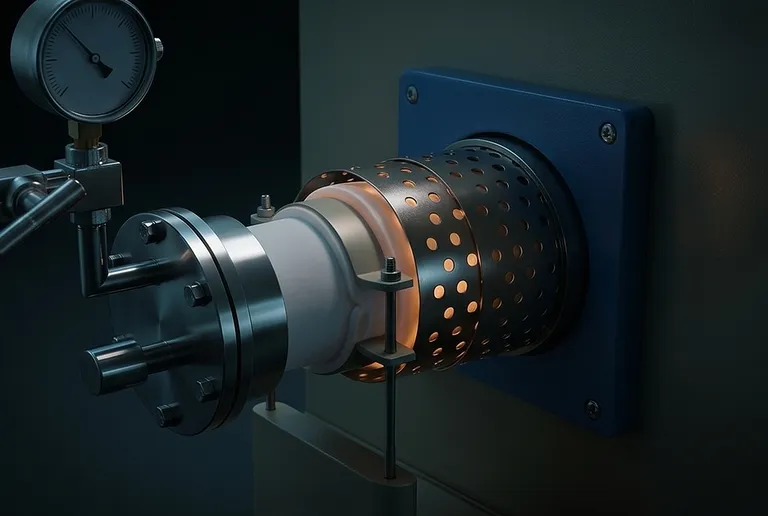
At THERMUNITS, we understand that in R&D, the difference between a breakthrough and a failure is often a matter of a few degrees and a pure atmosphere.
Our suite of thermal solutions—from Vacuum and Atmosphere Tube Furnaces to CVD and Vacuum Induction Melting (VIM) systems—is engineered for the level of precision required by sensitive materials like Violet Phosphorus. We build the chambers where material redemption happens.
Quick Links
Suggested Products
Rapid Thermal Processing Furnace 1100C Atmosphere Controlled Bottom Loading RTP System for Wafer Annealing and Catalysis Research Rapid Thermal Processing Atmosphere Controlled Bottom Loading Furnace 1100C with 50C Per Second Heating Rate for Wafer Annealing Five Side Heating Muffle Furnace High Purity Alumina Fiber 27L Chamber 1200C High Temperature Thermal Processing System for Sintering Annealing and Materials Research High Temperature 1500C Benchtop Muffle Furnace 3.6L Alumina Fiber Chamber Programmable Controller Sintering Annealing Carbonization Thermal Processing System Compact Atmosphere Controlled Rapid Thermal Processing RTP Furnace with 4 Inch ID Quartz Tube 1100C
ThermUnits
Last updated on Apr 14, 2026
Related Products
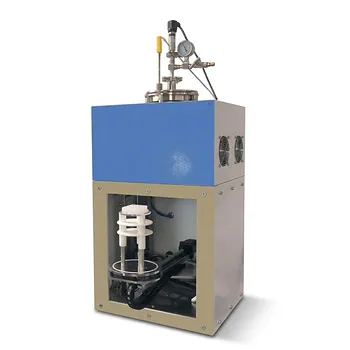
Rapid Thermal Processing Furnace 1100C Atmosphere Controlled Bottom Loading RTP System for Wafer Annealing and Catalysis Research
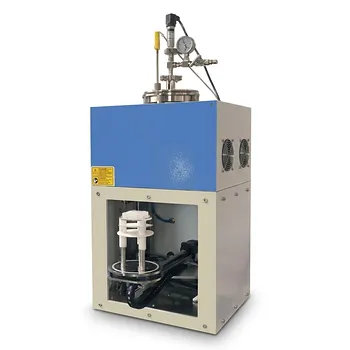
Rapid Thermal Processing Atmosphere Controlled Bottom Loading Furnace 1100C with 50C Per Second Heating Rate for Wafer Annealing
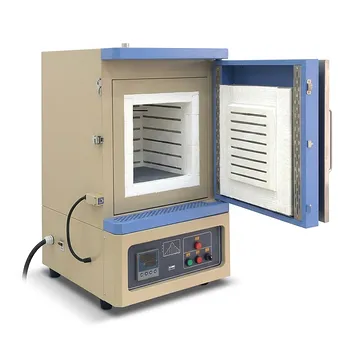
Five Side Heating Muffle Furnace High Purity Alumina Fiber 27L Chamber 1200C High Temperature Thermal Processing System for Sintering Annealing and Materials Research

High Temperature 1500C Benchtop Muffle Furnace 3.6L Alumina Fiber Chamber Programmable Controller Sintering Annealing Carbonization Thermal Processing System
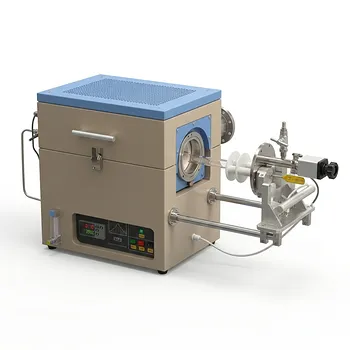
Compact Atmosphere Controlled Rapid Thermal Processing RTP Furnace with 4 Inch ID Quartz Tube 1100C
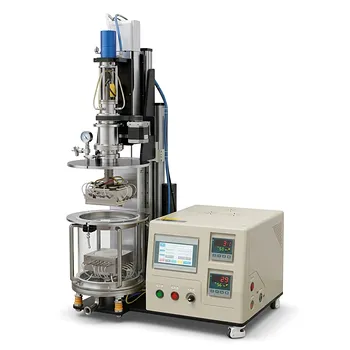
High Temperature 800C Rapid Thermal Processing Furnace with Rotating Sample Holder for Close Spaced Sublimation and Thin Film Solar Cell Research
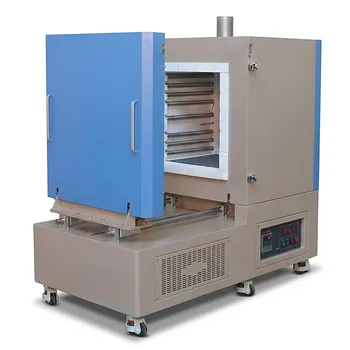
1200C Five Side Heating Muffle Furnace with Sliding Door 125L Volume High Temperature Heat Treatment System for Large Scale Sintering and Annealing
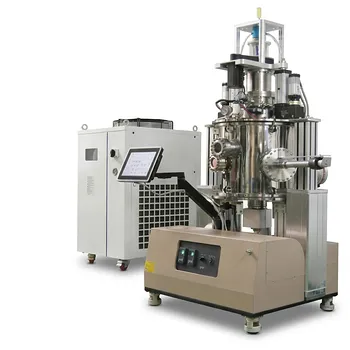
950C Rapid Thermal Processing Furnace for 12 Inch Wafer CSS Coating with Rotating Substrate Holder
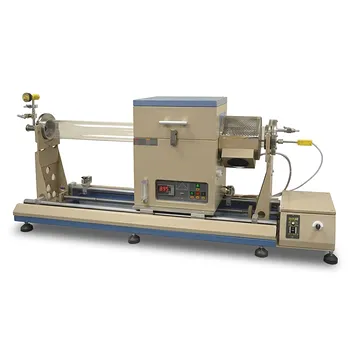
900 ºC Max Sliding RTP Tube Furnace with Rapid IR Heating and 4 Inch OD Quartz Tube
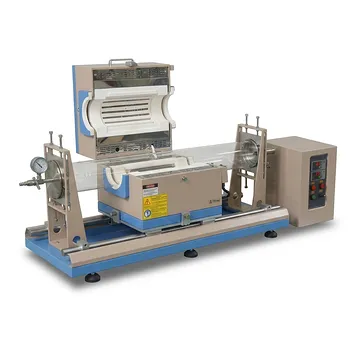
1200C High Temperature 5 Inch Sliding Tube Furnace for Rapid Thermal Processing RTP and Wafer Annealing
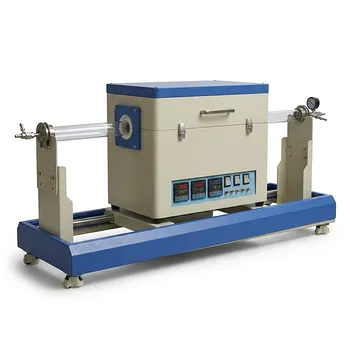
Double Temperature Zone Double Cover Tube Furnace for High Temperature CVD and Vacuum Annealing
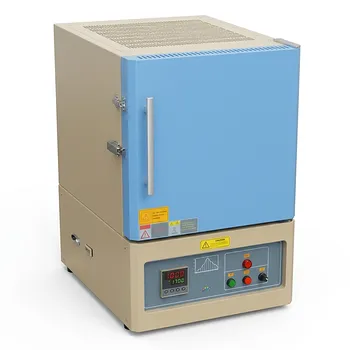
Large Bench Top 1700C High Temperature Muffle Furnace with 19L Chamber for Advanced Material Sintering and Annealing
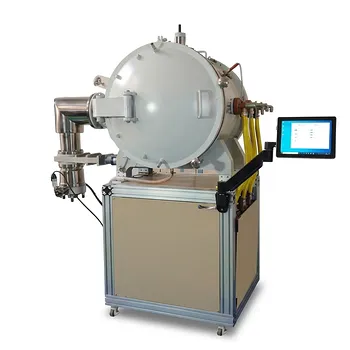
High Temperature Cold Wall Vacuum Furnace for Advanced Material Sintering and Annealing 1600C Heating Area 200x200x300mm
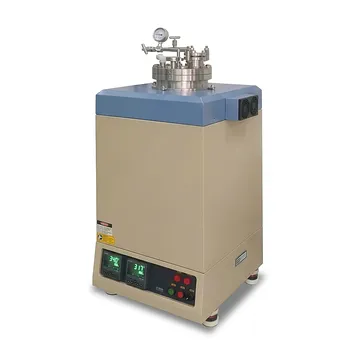
High Temperature 1000C Vacuum Furnace with 8 Inch ID Chamber for Material Sintering and Research Annealing
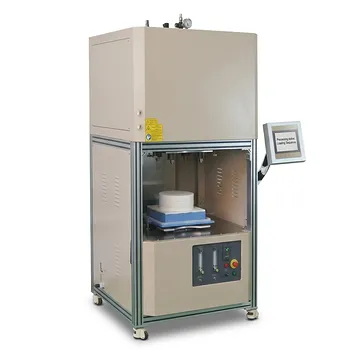
High Temperature Vertical Atmosphere Controlled Furnace with Automatic Bottom Loading and 1700°C Capacity for Advanced Material Research
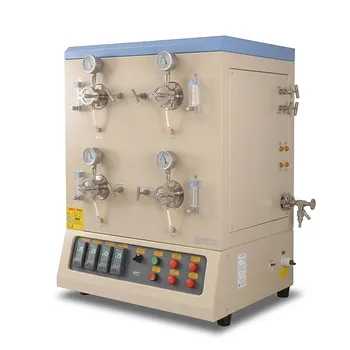
High Temperature 1500C Four Channel Tube Furnace with Alumina Tubes for High Throughput Annealing and Phase Diagram Research

1200C High Throughput Multi Channel Tube Furnace with 50mm Quartz Tubes for Annealing and Material Phase Diagram Research
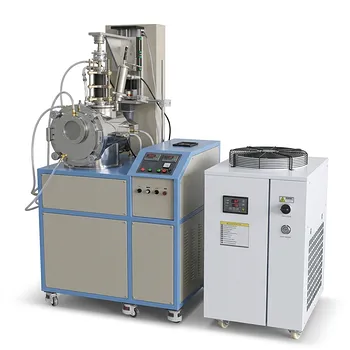
High Temperature Ultrafast Heating Pressing Furnace 2900C Max 100kgf Rapid Thermal Processing System