How do high-purity alumina crucibles affect h-BN synthesis? Ensure Material Purity and Prevent Contamination
Updated 3 months ago
High-purity alumina crucibles act as the primary safeguard for the chemical and structural integrity of h-BN during high-temperature synthesis. These containers prevent the introduction of metallic impurities and resist the aggressive chemical environment created by the decomposition of precursors like boric acid and urea. By maintaining structural stability at temperatures exceeding 1300°C, they ensure that the resulting h-BN nanoparticles remain pure, chemically stable, and free from physical adhesion to the vessel.
Core Takeaway: The use of high-purity alumina is essential because it provides a chemically inert and thermally stable environment that prevents leaching and sample contamination. This ensures that the final hexagonal Boron Nitride maintains the precise stoichiometry and morphology required for advanced technical applications.
Protecting Sample Integrity at High Temperatures
Thermal Stability and Structural Endurance
During the synthesis of h-BN, materials must endure rigorous pre-treatment and sintering phases in muffle or tube furnaces. High-purity alumina is specifically engineered to withstand these environments, often supporting temperatures up to 1300°C without structural failure.
Because these crucibles maintain their mechanical strength at high heat, they provide a reliable platform for the sample. This prevents the vessel from sagging or cracking, which could otherwise expose the sample to furnace contaminants or lead to catastrophic loss of the material.
Prevention of Physical Adhesion
A critical requirement for any refractory container is that it must not bond with the material it carries. High-quality alumina prevents physical adhesion, allowing the synthesized h-BN nanoparticles to be recovered easily after the cooling process.
If a lower-grade material were used, the h-BN could fuse to the crucible walls. This would not only lead to sample loss but could also alter the physical morphology of the nanoparticles through mechanical stress during removal.
Chemical Inertness Against Corrosive Byproducts
Resilience to Decomposition Gases
The synthesis of h-BN often involves the decomposition of boric acid and urea, which releases highly corrosive gases such as ammonia and isocyanic acid. High-purity alumina remains chemically indifferent to these vapors, ensuring the crucible does not degrade during the reaction.
This inertness is vital for maintaining a "clean" reaction environment. Because the alumina does not react with these intermediate products, the chemical pathways of h-BN formation remain uninterrupted and predictable.
Avoiding Metal Impurity Leaching
The presence of even trace amounts of transition metals or alkali ions can significantly degrade the performance of h-BN. High-purity alumina ensures that no unwanted ions leach from the container walls into the sample, even at peak sintering temperatures.
This level of purity is necessary to ensure the compositional accuracy of the final product. By acting as a total barrier, the crucible guarantees that the electronic and thermal properties of the h-BN are a result of the precursors alone, not the container.
Understanding the Trade-offs and Limitations
Thermal Shock Sensitivity
While alumina is exceptionally stable at high temperatures, it can be sensitive to rapid temperature fluctuations. Heating or cooling the crucible too quickly can induce internal stresses, leading to micro-cracks or total fracture of the vessel.
To maintain the longevity of these crucibles, users must strictly adhere to controlled ramp rates during heating and cooling. This caution is necessary to protect both the expensive refractory material and the integrity of the h-BN batch inside.
Chemical Limits with Extreme Fluxes
Alumina is highly inert, but it is not universal; it can be vulnerable to certain highly alkaline fluxes or aggressive molten salts at extreme temperatures. In specific niche synthesis routes involving these chemicals, the alumina may undergo slight surface erosion over multiple cycles.
For standard h-BN synthesis involving urea and boric acid, alumina remains the gold standard. However, researchers must verify that their specific precursor chemistry does not include rare additives that might react with aluminum oxide.
How to Apply This to Your Project
Recommendations for Material Selection
- If your primary focus is maximum chemical purity: Always select crucibles with an alumina content of 99% or higher to minimize the risk of trace metal leaching.
- If your primary focus is long-term durability: Prioritize crucibles with high thermal shock resistance and ensure furnace cooling cycles are gradual to prevent structural fatigue.
- If your primary focus is high-yield nanoparticle production: Use shallow alumina boats rather than deep crucibles to increase the surface area exposure to the ammonia atmosphere during sintering.
By carefully selecting high-purity alumina vessels, you ensure that the complex chemical evolution from precursors to h-BN occurs in a controlled, contamination-free environment.
Summary Table:
| Key Feature | Impact on h-BN Synthesis | Primary Benefit |
|---|---|---|
| High Thermal Stability | Resists deformation up to 1300°C+ | Prevents sample loss & furnace contamination |
| Chemical Inertness | Resists corrosive ammonia & isocyanic acid | Maintains precise stoichiometry & purity |
| Non-Adhesive Surface | Prevents bonding with container walls | Easy sample recovery & morphology control |
| Purity (>99% Al2O3) | Eliminates metallic & alkali ion leaching | Ensures high compositional accuracy |
Elevate Your Material Synthesis with THERMUNITS
Achieving the perfect hexagonal Boron Nitride (h-BN) requires more than just the right precursors—it demands precision thermal environments. THERMUNITS is a leading manufacturer of high-temperature laboratory equipment specifically designed for material science and industrial R&D.
Whether you are synthesizing nanoparticles or performing complex heat treatments, our comprehensive range of Muffle, Vacuum, Atmosphere, and Tube furnaces, as well as advanced CVD/PECVD systems, provides the stability and control your research deserves. We help you minimize contamination and maximize yield with equipment engineered for excellence.
Ready to optimize your lab’s thermal processing?
Contact our expert team today to find the ideal furnace solution for your high-purity synthesis needs!
References
- Qun Li, Guolong Ni. Preparation of BN Nanoparticle with High Sintering Activity and Its Formation Mechanism. DOI: 10.3390/molecules29153458
Mentioned Products
- High Temperature 1700C Benchtop Tube Furnace with 5 Inch Heating Zone High Purity Alumina Tube and Vacuum Sealing Flanges
- 1800C Bench Top Muffle Furnace 18 Liters with Kanthal Super 1900 Heating Elements for High Purity Ceramic Sintering and Material Research
- 1100C High Temperature Vacuum Crucible Furnace with Quartz Chamber for Thermal Processing and Sintering
- 600°C Vertical Crucible Furnace with SS316 Alloy Reactor and 6 Port Vacuum Flange
- High Temperature Vertical Hybrid Furnace with Alumina Tube and SiC Heating for SOFC Coin Cell Testing and Atmosphere Processing
People Also Ask
- How are high-temperature tube furnaces utilized to repair etching damage? Precision Lattice Restoration Solutions
- What is the function of a high-temperature tube furnace in the synthesis of g-C3N4? Optimize Thermal Polycondensation
- What is the role of a high-temperature tube furnace in the calcination process of ZnO/In2O3 nanocomposites?
- What impact does the heating rate of a tube furnace have on biochar microstructure? Optimize Your Material R&D.
- Conditions for nZVI Synthesis in Tube Furnaces? Learn to Optimize Thermal and Atmospheric Control for High Purity.

Tech Team · ThermUnits
Last updated on Jun 03, 2026
Related Products

High Temperature 1700C Benchtop Tube Furnace with 5 Inch Heating Zone High Purity Alumina Tube and Vacuum Sealing Flanges
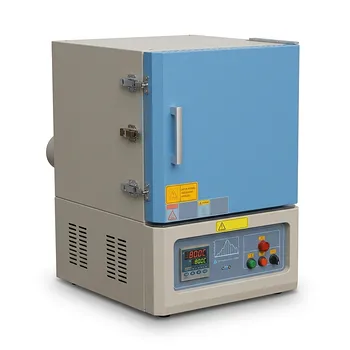
1800C Bench Top Muffle Furnace 18 Liters with Kanthal Super 1900 Heating Elements for High Purity Ceramic Sintering and Material Research
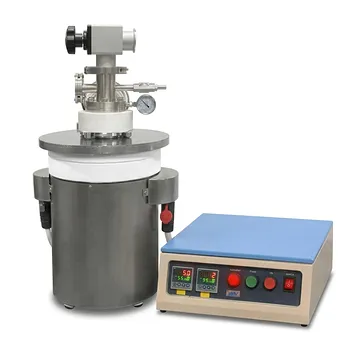
1100C High Temperature Vacuum Crucible Furnace with Quartz Chamber for Thermal Processing and Sintering
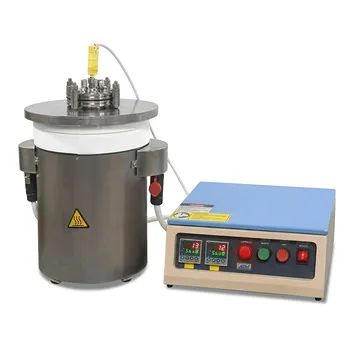
600°C Vertical Crucible Furnace with SS316 Alloy Reactor and 6 Port Vacuum Flange
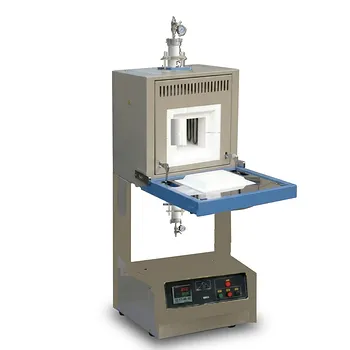
High Temperature Vertical Hybrid Furnace with Alumina Tube and SiC Heating for SOFC Coin Cell Testing and Atmosphere Processing
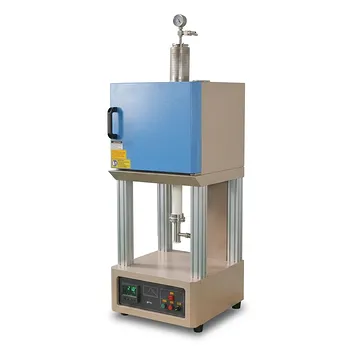
Hybrid High Temperature Tube and Box Furnace 1700C with 2 Inch Alumina Tube for Material Research
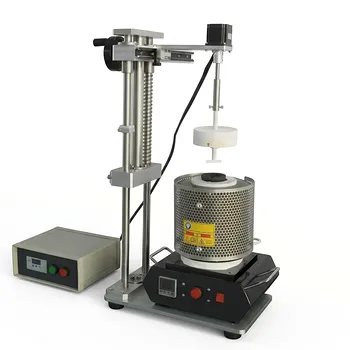
1100C Crucible Melting Furnace with Stirring Function for Glovebox and Air Sensitive Alloy Research
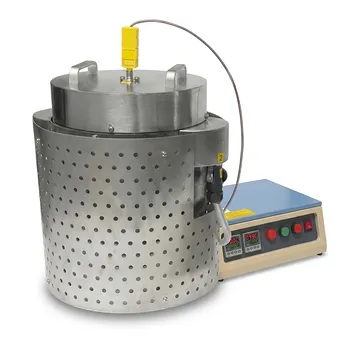
Vertical Crucible Furnace 1000C High Temperature Laboratory Equipment 4.7 Inch Diameter Chamber SS316 Anti Corrosive Enclosure