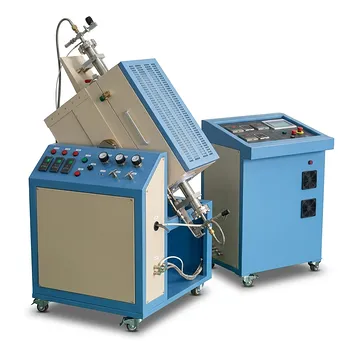
How are high-temperature tube furnaces utilized to repair etching damage? Precision Lattice Restoration Solutions
Updated 3 months ago
High-temperature tube furnaces repair etching damage in ferroelectric devices by providing a controlled environment for precise thermal annealing. This process allows for the re-incorporation of critical cations into the crystal lattice within specialized atmospheres, effectively reversing the structural degradation caused by ion bombardment during the etching phase.
The core utility of the tube furnace lies in its ability to facilitate lattice restoration and reduce defect states through high-uniformity thermal fields. By neutralizing "voltage imprint" issues and stabilizing material interfaces, these furnaces restore the electrical integrity and hysteresis performance of ferroelectric components.
The Mechanism of Lattice Restoration
Reversing Ion Bombardment Damage
During the fabrication of ferroelectric devices, etching processes involve high-energy ion bombardment that displaces atoms and creates vacancies. A high-temperature tube furnace provides the thermal energy required for these displaced atoms to migrate back to their thermodynamically stable positions.
Atmosphere-Assisted Cation Re-incorporation
The furnace creates a specialized atmosphere, often rich in elements like barium and oxygen, to facilitate chemical recovery. This environment allows the damaged crystal lattice to re-absorb lost cations, essentially "healing" the gaps left by the etching process.
Reducing Defect State Density
By providing a stable and uniform temperature field, the furnace ensures that the reduction of defect states occurs consistently across the entire device. This uniformity is critical for preventing localized electrical failures and ensuring the device meets performance specifications.
Impact on Ferroelectric Performance
Resolving Voltage Imprint Issues
Etching damage often leads to a phenomenon known as voltage imprint, where the ferroelectric hysteresis loop shifts and creates a preference for one polarization state. High-temperature annealing restores the symmetry of the hysteresis loop by eliminating the internal fields created by trapped charges at defect sites.
Stabilizing the Material Interface
Thermal treatment in a tube furnace strengthens the bonding force between the active ferroelectric layer and the underlying substrate. This improved adhesion is vital for the mechanical and electrical longevity of the device under operational stress.
Enhancing Porosity and Structure
In specific applications involving metal-organic frameworks (ZIFs), the furnace is used for calcination at precise temperatures, such as 350 °C. This step induces specific porosity and stabilizes the framework structure, which can be critical for the electrochemical performance of the final device.
Understanding the Trade-offs and Constraints
Temperature Sensitivity and Degradation
While heat is necessary for repair, excessive temperatures can lead to unwanted grain growth or the total decomposition of sensitive layers. Precision control is mandatory to ensure the repair process does not inadvertently damage the device's fine features.
Atmosphere Purity and Contamination
The success of cation re-incorporation depends entirely on the purity and composition of the furnace atmosphere. Any introduction of contaminants during the annealing cycle can create new defect states that are often more difficult to remove than the original etching damage.
Uniformity Requirements
If the furnace displays significant temperature gradients, different areas of the ferroelectric device will exhibit different electrical properties. This lack of uniformity can lead to inconsistent switching behavior and reduced yield during large-scale manufacturing.
Applying Thermal Repair to Your Project
When utilizing a high-temperature tube furnace for ferroelectric restoration, your strategy must align with the specific material requirements of your device.
- If your primary focus is lattice restoration: Prioritize an atmosphere rich in the specific cations lost during etching to ensure the crystal structure is fully reconstituted.
- If your primary focus is electrical stability: Focus on maximizing the uniformity of the temperature field to eliminate voltage imprints and center the hysteresis loop across the entire wafer.
- If your primary focus is structural integrity: Use precise calcination temperatures to strengthen interface bonding and stabilize frameworks without triggering grain coarsening.
Mastering the thermal environment of a tube furnace transforms it from a simple heating element into a precision tool for atomic-level device restoration.
Summary Table:
| Repair Mechanism | Process Action | Performance Impact |
|---|---|---|
| Lattice Restoration | Thermal annealing to move atoms to stable positions | Reverses ion bombardment damage |
| Cation Re-incorporation | Specialized atmosphere (Barium/Oxygen) | Heals chemical gaps in the crystal lattice |
| Defect Reduction | High-uniformity thermal field application | Eliminates voltage imprints and loop shifts |
| Interface Stabilization | Controlled calcination and bonding | Strengthens adhesion and mechanical longevity |
Elevate Your Material Research with THERMUNITS
Is your R&D or production process hindered by etching damage or structural defects? THERMUNITS is a leading manufacturer of high-temperature laboratory equipment designed specifically for material science and industrial R&D.
Our precision-engineered Tube Furnaces and Atmosphere Furnaces provide the stable, uniform thermal environments and specialized gas controls required to restore ferroelectric integrity and optimize device performance. Beyond restoration, we offer a comprehensive suite of thermal solutions, including:
- Muffle, Vacuum, and Rotary Furnaces
- Hot Press & CVD/PECVD Systems
- Vacuum Induction Melting (VIM) & Dental Furnaces
- Electric Rotary Kilns & High-Quality Thermal Elements
Don’t let process-induced damage limit your device potential. Partner with THERMUNITS for equipment that delivers repeatability and precision.
Contact our technical team today to discuss your project requirements!
References
- Yizhe Jiang, Lane W. Martin. Effect of fabrication processes on BaTiO3 capacitor properties. DOI: 10.1063/5.0203014
Mentioned Products
- High Temperature Tube Furnace 1500C with Sliding Flanges and 50mm OD for Rapid Thermal Processing Fast Heating and Cooling
- High Temperature 1700C Tube Furnace with High Vacuum Turbomolecular Pump System and Multi Channel Mass Flow Controller Gas Mixer
- 1750°C High Temperature Benchtop Vacuum Atmosphere Tube Furnace with Kanthal Super 1800 Heating Elements and 60mm Alumina Processing Tube
- High Temperature 1700C Benchtop Tube Furnace with 5 Inch Heating Zone High Purity Alumina Tube and Vacuum Sealing Flanges
- High Temperature Split Tube Furnace 1500C for Material Research Vacuum and Atmosphere Thermal Processing
People Also Ask
- What role does a high-temperature tube furnace play in the sulfidation heat treatment of CoS@C/MXene nanocomposites? Guide
- What core conditions does a high-temperature tube furnace provide for rGO aerogels? Mastering Precision Synthesis.
- How does precision tube furnace control influence CoFe nanoparticle formation? Master Your Bimetallic Synthesis.
- What role does a high-temperature tube furnace play in CVD synthesis of silicon nanowires? Master VLS Growth Precision.
- What role does a high-temperature tube furnace play in the carbonization? Mastering Precision Carbon Synthesis

Tech Team · ThermUnits
Last updated on Jun 02, 2026
Related Products

High Temperature Tube Furnace 1500C with Sliding Flanges and 50mm OD for Rapid Thermal Processing Fast Heating and Cooling

High Temperature 1700C Tube Furnace with High Vacuum Turbomolecular Pump System and Multi Channel Mass Flow Controller Gas Mixer

1750°C High Temperature Benchtop Vacuum Atmosphere Tube Furnace with Kanthal Super 1800 Heating Elements and 60mm Alumina Processing Tube

High Temperature 1700C Benchtop Tube Furnace with 5 Inch Heating Zone High Purity Alumina Tube and Vacuum Sealing Flanges
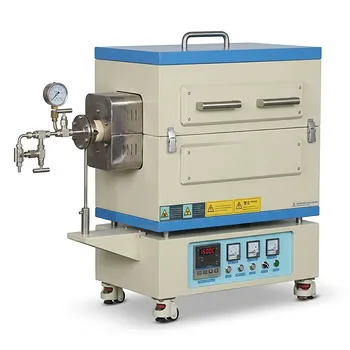
High Temperature Split Tube Furnace 1500C for Material Research Vacuum and Atmosphere Thermal Processing
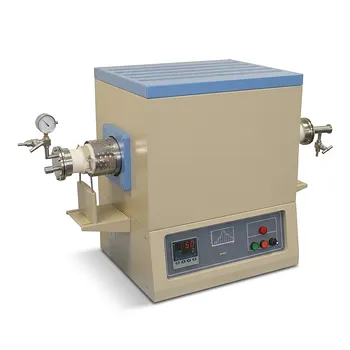
1700C High Temperature Alumina Tube Furnace with 18 Inch Heated Zone and Vacuum Sealing Flanges

1800C High Temperature Compact Vacuum Tube Furnace with 60mm OD Alumina Tube and Kanthal MoSi2 Heating Elements

Compact High Temperature 1600C Tube Furnace with 50mm Alumina Tube and Vacuum Flanges for Material Sintering
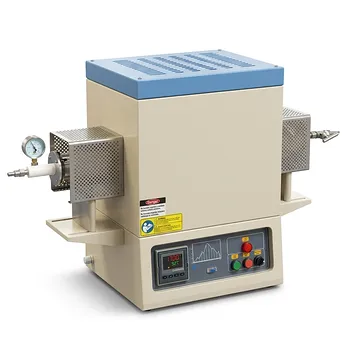
High Temperature Three Zone Tube Furnace 1700C with Alumina Tube and Water Cooled Flanges
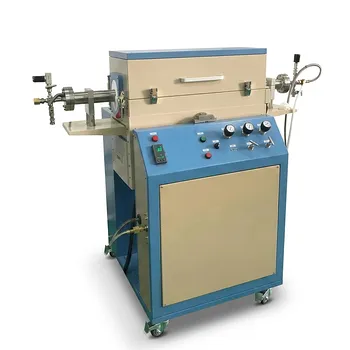
High Temperature Rocking Tube Furnace 1700°C Alumina Processing Tube with Precision Oscillation for Material Synthesis
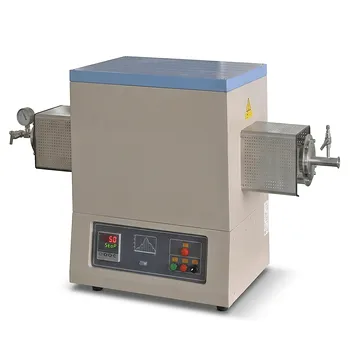
High Temperature 1700C Tube Furnace with 4 Inch OD Alumina Tube and Vacuum Sealing Flanges

High Temperature 1700C Vertical Tube Furnace for Powder Spherification and Material Sintering
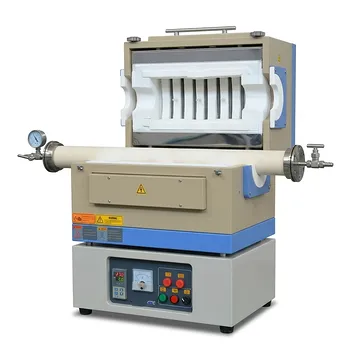
High Temperature 1600C Split Tube Furnace Vacuum Flanges Valves Optional 60mm 80mm Alumina Tube

High Temperature Automated 5 Inch Tube Furnace for Autonomous Material Research and Advanced Laboratory R&D

High Temperature 1700C Six Zone Split Tube Furnace with Alumina Tube and Water Cooled Flanges
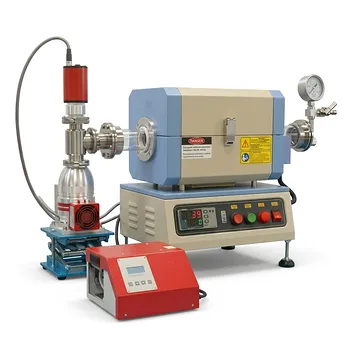
High Vacuum Compact Tube Furnace 1200C with Integrated Turbo Pump System and 8 Inch Heating Zone
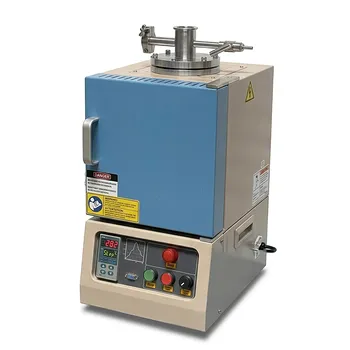
High Temperature Hybrid Muffle and Tube Furnace with Vacuum Capability and PID Control
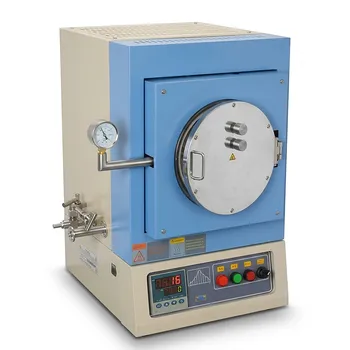
1100°C High Temperature Quartz Chamber Furnace 8 Inch OD with 7.6 Liter Capacity and Vacuum Atmosphere Capability

1100C Tube Furnace with Vacuum Flange and Programmable Temperature Controller for Material Science and Industrial Heat Treatment