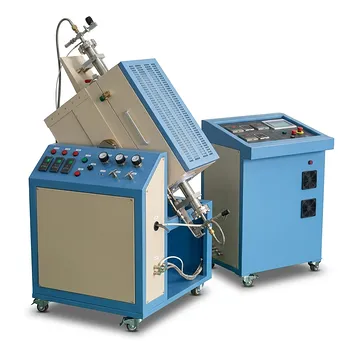
Conditions for nZVI Synthesis in Tube Furnaces? Learn to Optimize Thermal and Atmospheric Control for High Purity.
Updated 3 months ago
A high-temperature tube furnace creates a specialized micro-environment characterized by extreme thermal stability and rigorous atmospheric isolation. It provides the critical 500°C to 1000°C range required for carbon sources to chemically reduce iron oxides into zero-valent iron. By maintaining a continuous flow of inert gas, the furnace simultaneously prevents sample re-oxidation and removes volatile waste gases generated during the reduction process.
Core Takeaway: The tube furnace acts as a closed-system reactor that synchronizes precise thermal energy delivery with a chemically inert atmosphere to ensure the high-purity synthesis of nano zero-valent iron (nZVI).
Precise Thermal Management
Ultra-High Temperature Stability
The carbothermal reduction of iron requires sustained energy, typically ranging from 500°C to 1000°C, to break oxygen-iron bonds. The tube furnace provides a stable thermal field that ensures every part of the precursor material reaches the activation energy necessary for the reaction. This consistency is vital for transforming iron salts or oxides into a metallic zero-valent state.
Regulation of Particle Morphology
The furnace allows for specific heating programs, such as a controlled rise of 3°C per minute, which dictates the nucleation and growth of iron nanoseeds. By managing the constant temperature duration, researchers can prevent excessive grain growth, effectively regulating the final particle size and distribution of the nZVI. High-precision control ensures the iron remains at the "nano" scale rather than sintering into larger, less reactive masses.
Atmospheric and Chemical Control
Oxygen-Free Environment
The primary technical condition provided is a sealed heating environment protected by high-purity nitrogen (N2) or argon (Ar). This oxygen-free atmosphere is mandatory because zero-valent iron is highly pyrophoric and would immediately re-oxidize if exposed to air at high temperatures. The furnace acts as a protective barrier, maintaining the integrity of the reduced iron throughout the heating and cooling cycles.
Facilitation of In-Situ Reducing Gases
Beyond providing external heat, the furnace environment promotes the deep pyrolysis of carbon sources (like biochar or glucose). This process generates internal reducing gases such as hydrogen (H2) and carbon monoxide (CO). These gases work in tandem with the solid carbon to achieve a more thorough "in-situ" reduction of the iron precursors.
Efficient Byproduct Removal
As the carbothermal reaction progresses, waste gases and vapors are produced as chemical byproducts. The furnace utilizes a continuous carrier gas flow to sweep these impurities away from the reaction zone. This transport mechanism prevents side reactions and ensures that the chemical equilibrium favors the formation of pure metallic iron.
Understanding the Trade-offs
Temperature vs. Sintering
While higher temperatures (near 1000°C) ensure a more complete reduction of iron, they also increase the risk of particle sintering. As temperatures rise, individual nanoparticles tend to fuse together, which reduces the specific surface area and the overall reactivity of the nZVI. Finding the "sweet spot" between complete reduction and particle isolation is a primary challenge.
Gas Flow Rate Dynamics
A flow rate that is too low may fail to remove oxidizing byproducts, leading to impure samples or residual magnetite. Conversely, an excessively high flow rate can cause thermal instability by cooling the reaction zone too rapidly or carrying away fine precursors before they can react. Precise calibration of flow meters is required to balance these factors.
How to Apply This to Your Project
When utilizing a tube furnace for nZVI synthesis, your technical approach should be dictated by your specific material requirements:
- If your primary focus is Maximum Reactivity: Aim for the lower end of the temperature scale (approx. 500°C–700°C) and use a rapid cooling program to keep particle sizes as small as possible.
- If your primary focus is High Purity and Crystallinity: Utilize higher temperatures (800°C–1000°C) and a slower heating rate to ensure the complete conversion of all iron oxides into the metallic zero-valent phase.
- If your primary focus is Magnetic Properties: Target a stable thermal field around 800°C to promote the growth of magnetic phases like hematite or metallic iron seeds within a carbon matrix.
By mastering the intersection of thermal precision and atmospheric purity, you can reliably synthesize nano zero-valent iron with predictable chemical and physical properties.
Summary Table:
| Technical Parameter | Required Condition | Benefit for nZVI Synthesis |
|---|---|---|
| Temperature Range | 500°C to 1000°C | Provides activation energy to break oxygen-iron bonds. |
| Atmospheric Control | Inert Gas (N2/Ar) | Prevents pyrophoric iron re-oxidation and removes byproducts. |
| Heating Rate | Precise Programming | Regulates nucleation to control particle size and morphology. |
| System Design | Sealed Tube Reactor | Facilitates in-situ reduction via pyrolysis of carbon sources. |
| Flow Dynamics | Calibrated Gas Flow | Maintains thermal stability while sweeping away waste vapors. |
Elevate Your Material Research with THERMUNITS
Precision is the backbone of successful nano zero-valent iron (nZVI) synthesis. At THERMUNITS, we are a leading manufacturer of high-temperature laboratory equipment specifically engineered for material science and industrial R&D. Our high-performance Tube Furnaces and Atmosphere Furnaces provide the rigorous thermal stability and atmospheric purity required for complex carbothermal reduction.
Whether you are scaling up industrial production or conducting sensitive laboratory experiments, our comprehensive range of solutions includes:
- Furnaces: Muffle, Vacuum, Tube, Rotary, and Hot Press Furnaces.
- Advanced Systems: CVD/PECVD systems, Vacuum Induction Melting (VIM) furnaces, and Electric Rotary Kilns.
- Specialized Equipment: Dental Furnaces, Thermal Elements, and custom heat treatment tools.
Ready to optimize your thermal processing? Our experts are here to help you select the ideal equipment to achieve maximum reactivity and high-purity results.
Contact THERMUNITS Today to request a quote or technical consultation!
References
- Mohammad Ghaffarzadeh, Gity Behbudi. Recent advances in synthesis, properties, and applications of nano-zero valent iron: A promising material for environmental remediation. DOI: 10.53063/synsint.2024.44242
Mentioned Products
- High Temperature Tube Furnace 1500C with Sliding Flanges and 50mm OD for Rapid Thermal Processing Fast Heating and Cooling
- High Temperature 1700C Tube Furnace with High Vacuum Turbomolecular Pump System and Multi Channel Mass Flow Controller Gas Mixer
- 1750°C High Temperature Benchtop Vacuum Atmosphere Tube Furnace with Kanthal Super 1800 Heating Elements and 60mm Alumina Processing Tube
- High Temperature 1700C Benchtop Tube Furnace with 5 Inch Heating Zone High Purity Alumina Tube and Vacuum Sealing Flanges
- High Temperature Split Tube Furnace 1500C for Material Research Vacuum and Atmosphere Thermal Processing
People Also Ask
- How are high-temperature tube furnaces utilized to repair etching damage? Precision Lattice Restoration Solutions
- What core conditions does a high-temperature tube furnace provide for rGO aerogels? Mastering Precision Synthesis.
- What role does a high-temperature tube furnace play in CVD synthesis of silicon nanowires? Master VLS Growth Precision.
- How does precision tube furnace control influence CoFe nanoparticle formation? Master Your Bimetallic Synthesis.
- What role does a high-temperature tube furnace play in the sulfidation heat treatment of CoS@C/MXene nanocomposites? Guide

Tech Team · ThermUnits
Last updated on Jun 02, 2026
Related Products

High Temperature Tube Furnace 1500C with Sliding Flanges and 50mm OD for Rapid Thermal Processing Fast Heating and Cooling

High Temperature 1700C Tube Furnace with High Vacuum Turbomolecular Pump System and Multi Channel Mass Flow Controller Gas Mixer
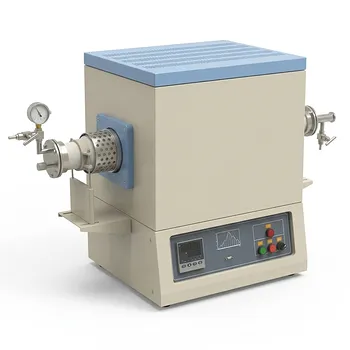
1750°C High Temperature Benchtop Vacuum Atmosphere Tube Furnace with Kanthal Super 1800 Heating Elements and 60mm Alumina Processing Tube

High Temperature 1700C Benchtop Tube Furnace with 5 Inch Heating Zone High Purity Alumina Tube and Vacuum Sealing Flanges
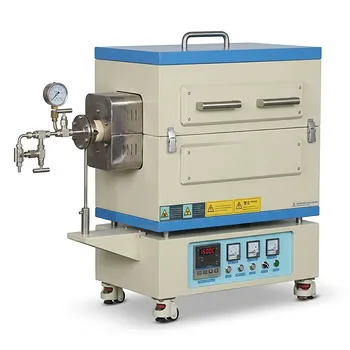
High Temperature Split Tube Furnace 1500C for Material Research Vacuum and Atmosphere Thermal Processing
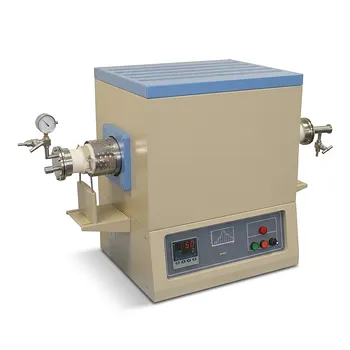
1700C High Temperature Alumina Tube Furnace with 18 Inch Heated Zone and Vacuum Sealing Flanges

1800C High Temperature Compact Vacuum Tube Furnace with 60mm OD Alumina Tube and Kanthal MoSi2 Heating Elements

Compact High Temperature 1600C Tube Furnace with 50mm Alumina Tube and Vacuum Flanges for Material Sintering
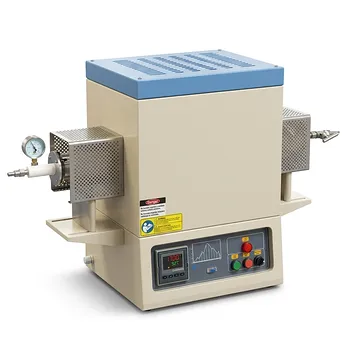
High Temperature Three Zone Tube Furnace 1700C with Alumina Tube and Water Cooled Flanges
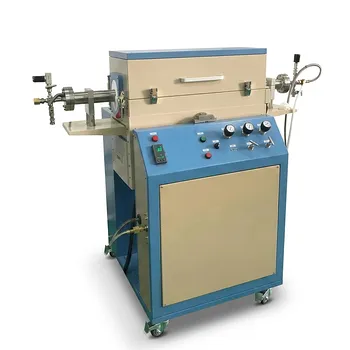
High Temperature Rocking Tube Furnace 1700°C Alumina Processing Tube with Precision Oscillation for Material Synthesis
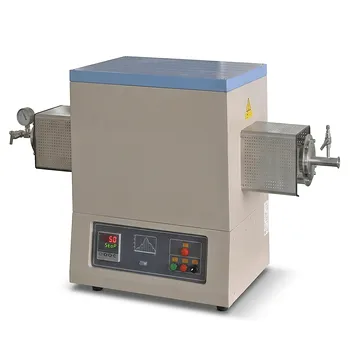
High Temperature 1700C Tube Furnace with 4 Inch OD Alumina Tube and Vacuum Sealing Flanges

High Temperature 1700C Vertical Tube Furnace for Powder Spherification and Material Sintering
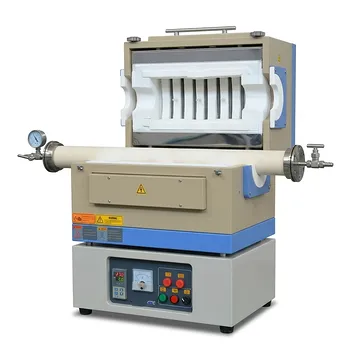
High Temperature 1600C Split Tube Furnace Vacuum Flanges Valves Optional 60mm 80mm Alumina Tube

High Temperature Automated 5 Inch Tube Furnace for Autonomous Material Research and Advanced Laboratory R&D

High Temperature 1700C Six Zone Split Tube Furnace with Alumina Tube and Water Cooled Flanges
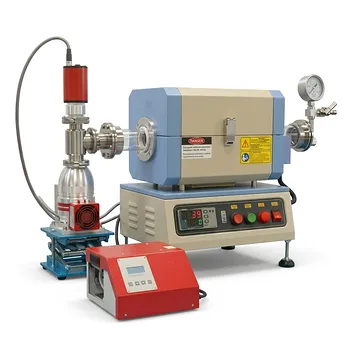
High Vacuum Compact Tube Furnace 1200C with Integrated Turbo Pump System and 8 Inch Heating Zone
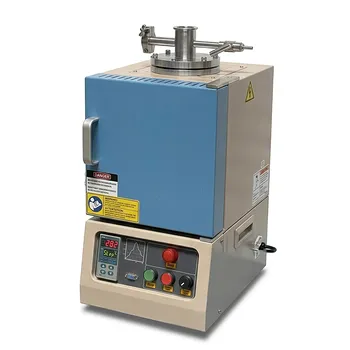
High Temperature Hybrid Muffle and Tube Furnace with Vacuum Capability and PID Control
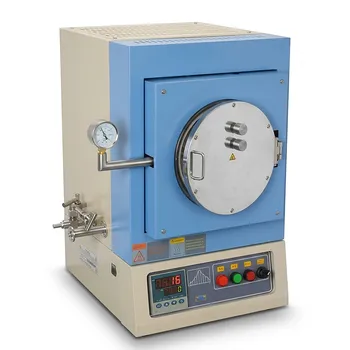
1100°C High Temperature Quartz Chamber Furnace 8 Inch OD with 7.6 Liter Capacity and Vacuum Atmosphere Capability

1100C Tube Furnace with Vacuum Flange and Programmable Temperature Controller for Material Science and Industrial Heat Treatment