How does a high-purity quartz boat contribute to MoS2 synthesis? Enhance Purity and Growth Control in CVD
Updated 3 months ago
A high-purity quartz boat is the essential vessel for precursor containment and kinetic control during the Chemical Vapor Deposition (CVD) of Molybdenum Disulfide (MoS2). It serves as a chemically inert platform for molybdenum trioxide (MoO3) and sulfur powders, ensuring they remain free from metallic contamination at temperatures reaching 900°C. Beyond mere containment, the boat's geometry and spatial positioning within the furnace regulate the evaporation rates and transport of precursor vapors, directly dictating the film's uniformity and crystalline integrity.
The high-purity quartz boat acts as both a protective barrier against impurity-induced defects and a mechanical regulator of vapor-phase kinetics. Its primary value lies in maintaining the high-purity environment necessary for semiconductor-grade monolayer MoS2 while providing the geometric control required for repeatable film growth.
Maintaining Chemical and Structural Integrity
Prevention of Metallic Contamination
High-purity quartz is selected specifically for its chemical inertness. During the synthesis of MoS2, the introduction of even trace metal ions can drastically degrade the electrical performance of the semiconductor. The quartz boat ensures that no impurity atoms are released into the reaction environment, which is critical for achieving high carrier mobility in the resulting monolayer.
Thermal Stability in Corrosive Environments
Synthesis often requires temperatures between 750°C and 900°C in the presence of corrosive sulfur vapor. High-purity quartz maintains its structural integrity without deformation under these extreme conditions. This stability ensures that the precursors remain in a fixed position, allowing for consistent results across multiple growth cycles.
Protecting Optical and Electrical Properties
By preventing the release of impurity ions, the quartz boat directly supports the development of strong photoluminescence properties. A clean growth environment ensures that the MoS2 lattice remains pristine. This level of purity is necessary for the material to function effectively in advanced electronic and optoelectronic applications.
Regulating Growth Kinetics and Morphology
Control of Evaporation and Vapor Pressure
The geometry of the quartz boat determines the exposed surface area of the solid precursors. This surface area directly influences the evaporation rate of MoO3 and sulfur. By modulating the local vapor pressure, the boat helps control the concentration of reactants available for deposition on the substrate.
Influence on Gas Flow and Transport
The placement of the boat within the furnace tube alters the local gas flow field. This positioning dictates how carrier gases transport precursor vapors to the substrate. Proper alignment ensures a stable laminar flow, which is essential for achieving uniform coverage and consistent crystalline quality across the MoS2 film.
Determining Crystal Morphology
The concentration distribution of the precursor vapors, regulated by the boat, is a critical factor in defining the morphology of the MoS2 crystals. Whether the resulting film is a continuous monolayer or a series of isolated flakes depends heavily on these transport kinetics. The boat’s design essentially acts as a mechanical regulator for the growth rate.
Understanding the Trade-offs and Limitations
The Impact of Geometric Variability
While the boat provides control, any slight variation in its shape or dimensions can lead to inconsistent vapor concentrations. Users must ensure that the same boat design is used across experiments to maintain process repeatability. Small shifts in the boat's position within the furnace can also lead to significant changes in film thickness and quality.
Maintenance and Contamination Over Time
Although chemically inert, quartz boats can accumulate residual precursors or reaction byproducts over multiple runs. If not cleaned rigorously, these residues can act as sources of contamination in subsequent batches. This requires a strict maintenance protocol to ensure the high-purity environment is not compromised over time.
Quartz vs. Alternative Materials
In some high-temperature applications, ceramic crucibles are used as alternatives. However, quartz remains the standard for monolayer synthesis because it is less likely to release impurity ions at typical MoS2 growth temperatures. Choosing quartz is a deliberate trade-off, prioritizing chemical purity over the higher mechanical ruggedness of some ceramics.
Making the Right Choice for Your Goal
To achieve the best results in Monolayer MoS2 synthesis, the utilization of the quartz boat should align with your specific research or production objectives:
- If your primary focus is high carrier mobility: Prioritize the highest grade of high-purity quartz to eliminate metallic ion interference within the MoS2 lattice.
- If your primary focus is large-area uniformity: Focus on the precise and repeatable placement of the boat within the furnace to maintain a stable laminar gas flow.
- If your primary focus is consistent crystal morphology: Standardize the surface area of the precursors within the boat to ensure a constant local vapor pressure throughout the growth process.
By mastering the spatial and chemical role of the high-purity quartz boat, you can achieve the precision required for high-performance two-dimensional semiconductor fabrication.
Summary Table:
| Feature | Role in MoS2 Synthesis | Benefit to Research |
|---|---|---|
| Chemical Purity | Prevents metallic ion leaching | Higher carrier mobility and electrical performance |
| Thermal Stability | Resists deformation up to 900°C | Ensures consistent precursor positioning and results |
| Vapor Control | Regulates precursor evaporation | Maintains stable local vapor pressure for uniform growth |
| Kinetic Regulation | Stabilizes gas flow fields | Controls crystal morphology and monolayer thickness |
Optimize Your CVD Processes with THERMUNITS
Precision in 2D material synthesis requires equipment that delivers uncompromising purity and thermal stability. THERMUNITS is a leading manufacturer of high-temperature laboratory equipment specifically designed for material science and industrial R&D. We provide the tools you need to master monolayer growth and advanced heat treatments.
Our comprehensive range of thermal solutions includes:
- CVD/PECVD Systems for precise 2D material synthesis
- Tube, Muffle, and Vacuum Furnaces for diverse heat treatments
- Hot Press & Rotary Furnaces for industrial R&D
- Dental Furnaces & High-Quality Thermal Elements
Ready to enhance your lab's efficiency and material integrity? Contact THERMUNITS today to discuss your specific thermal processing needs!
References
- Ting Li, Shuhui Yu. Sodium chloride-assisted CVD enables controlled synthesis of large single-layered MoS<sub>2</sub>. DOI: 10.1039/d4ra02510e
Mentioned Products
- 1200C Three Zone Vertical Tube Furnace with 2 Inch Quartz Tube and Vacuum Flanges
- 1100°C Large Diameter Quartz Tube Furnace with 24 Inch Heating Zone and Water Cooled Flanges
- HFCVD Machine System for Nano Diamond Coating on Drawing Dies and Industrial Tools
- Three Zone Quartz Tube Furnace with 3 Channel Gas Mixer Vacuum Pump and Anti Corrosive Vacuum Gauge
- 1100°C Dual Zone Split Vertical Tube Furnace with 4 Inch Quartz Tube and Vacuum Sealing Flanges
People Also Ask
- Why is a Tube Furnace typically utilized for CVD? Achieve Precision in Graphene and 2D Material Synthesis
- Why is a 1 inch high-purity quartz tube selected as the reaction vessel for Fe1+yTe CVD growth? Optimizing 2D Growth
- How does a high-vacuum tube furnace facilitate the PVD growth of CdS nanobelts? Precision Control for Nanomaterials
- Why must the nitridation reaction of LiGa be conducted in a quartz tube with sealing flanges? Ensure Purity & Selection
- How does a horizontal tube furnace control CNT growth? Master High-Precision CVD and CNT/DE Synthesis

Tech Team · ThermUnits
Last updated on Jun 03, 2026
Related Products
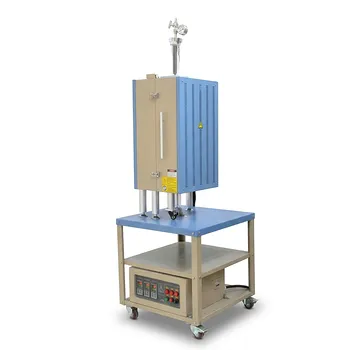
1200C Three Zone Vertical Tube Furnace with 2 Inch Quartz Tube and Vacuum Flanges
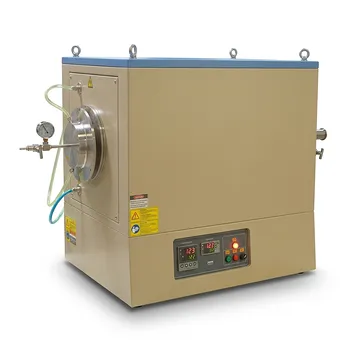
1100°C Large Diameter Quartz Tube Furnace with 24 Inch Heating Zone and Water Cooled Flanges
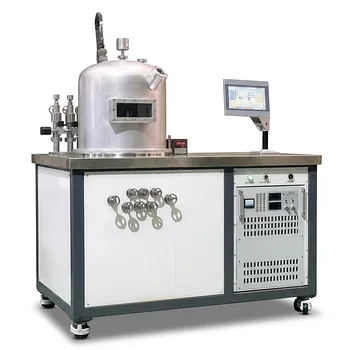
HFCVD Machine System for Nano Diamond Coating on Drawing Dies and Industrial Tools
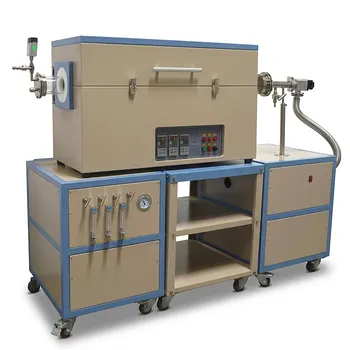
Three Zone Quartz Tube Furnace with 3 Channel Gas Mixer Vacuum Pump and Anti Corrosive Vacuum Gauge
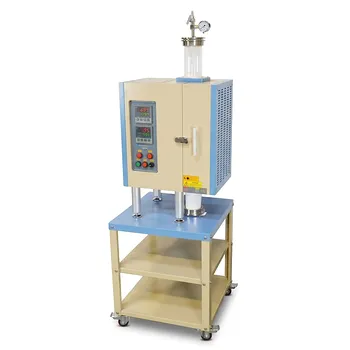
1100°C Dual Zone Split Vertical Tube Furnace with 4 Inch Quartz Tube and Vacuum Sealing Flanges
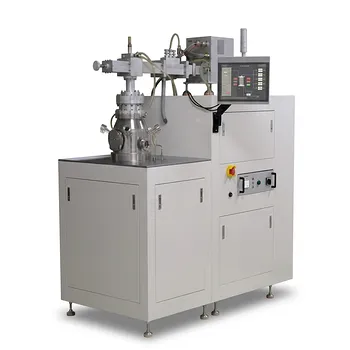
Cylindrical Resonator MPCVD Machine System for Microwave Plasma Chemical Vapor Deposition and Lab Diamond Growth
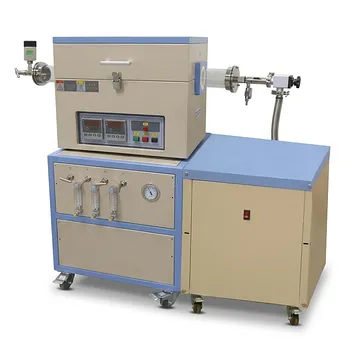
Dual Zone Quartz Tube Furnace with 80mm Diameter 1200C Max Temperature 3 Channel Gas Mixer and Vacuum Pump System
Molybdenum Disilicide MoSi2 Thermal Elements Electric Furnace Heating Element High Temperature Resistance