Why is a 1 inch high-purity quartz tube selected as the reaction vessel for Fe1+yTe CVD growth? Optimizing 2D Growth
Updated 5 months ago
The selection of a 1-inch high-purity quartz tube is a strategic engineering choice based on thermal stability and fluid dynamics. It provides the necessary chemical inertness to prevent contamination at growth temperatures between 520°C and 600°C. Crucially, the specific 1-inch diameter optimizes the concentration gradient of precursor vapors, which is essential for the anisotropic growth of ultra-thin $Fe_{1+y}Te$ nanosheets.
The 1-inch high-purity quartz tube serves as both a chemically sterile chamber and a geometric regulator. It ensures material purity while managing vapor density to facilitate the growth of high-quality, two-dimensional structures.
Ensuring Chemical Purity at Elevated Temperatures
Thermal Resistance and Stability
Quartz can easily withstand the 520°C to 600°C range required for $Fe_{1+y}Te$ synthesis without deforming. Its high thermal shock resistance allows it to endure the frequent heating and cooling cycles inherent in Chemical Vapor Deposition (CVD) processes.
Prevention of Impurity Contamination
High-purity quartz is chemically inert, meaning it will not react with the metallic precursors or process gases. This prevents the introduction of foreign atoms into the $Fe_{1+y}Te$ crystal lattice, which is vital for maintaining the desired electronic properties.
Vacuum and Atmospheric Isolation
The material acts as a robust vacuum-tight barrier that isolates the reaction from the external atmosphere. This allows for the precise gas purging and vacuum cycles necessary to maintain a pristine experimental environment.
The Strategic Role of the 1-Inch Diameter
Optimizing Vapor Concentration Gradients
The narrow 1-inch diameter restricts the volume of the reaction zone, which helps maintain a high local concentration of precursor vapors. This density is critical for ensuring that the reaction proceeds efficiently across the substrate.
Promoting Anisotropic Nanosheet Growth
The specific geometry of the tube influences the flow dynamics of the carrier gas. By controlling the vapor gradient, the 1-inch tube promotes anisotropic growth, allowing the material to expand horizontally into ultra-thin 2D nanosheets rather than forming bulk structures.
Uniform Gas Delivery
The smooth inner walls of the quartz tube minimize turbulence as the precursor gases travel through the furnace. This leads to a more uniform delivery of reactants, resulting in consistent film thickness across the growth zone.
Enhanced Process Monitoring and Control
Optical Transparency for Real-Time Observation
The transparent nature of quartz allows researchers to visually monitor the sublimation states of precursors. It also enables the observation of color changes in the deposited films, which can indicate the phase and quality of the $Fe_{1+y}Te$ growth.
Integration with Infrared Thermometry
Transparency allows for the use of external infrared thermometers to verify internal temperatures. This ensures that the actual temperature gradient profile precisely matches the process design, which is critical for reproducible results.
Understanding the Trade-offs
Scaling vs. Quality
While the 1-inch diameter is ideal for maintaining the concentration gradients required for nanosheets, it limits the total substrate size. Scaling up to larger diameter tubes for mass production can disrupt these gradients, potentially leading to less uniform or thicker films.
Maintenance and Contamination Build-up
Over time, precursor residues can accumulate on the inner walls of the tube. If not cleaned rigorously, these deposits can alter the gas flow dynamics or act as a source of "memory effect" contamination in subsequent growth runs.
Applying These Insights to Your Growth Process
Recommendations for Experimental Success
- If your primary focus is crystal morphology and thinness: Stick with the 1-inch diameter tube to maximize the local vapor concentration gradients necessary for 2D growth.
- If your primary focus is high-purity electronic grade samples: Prioritize high-purity synthetic quartz over standard grades to eliminate the risk of trace metal leaching at 600°C.
- If your primary focus is process reproducibility: Use the tube’s transparency to map the thermal gradient with an IR thermometer before starting your first growth run.
By balancing material purity with precise geometric control, the high-purity quartz tube remains the definitive vessel for high-quality $Fe_{1+y}Te$ synthesis.
Summary Table:
| Feature | Engineering Benefit | Role in Fe1+yTe CVD Growth |
|---|---|---|
| High-Purity Quartz | Chemical inertness & thermal stability | Prevents contamination and withstands 520°C-600°C |
| 1-Inch Diameter | Optimal concentration gradient | Promotes anisotropic growth of ultra-thin nanosheets |
| Optical Transparency | Real-time monitoring & IR access | Facilitates visual sublimation checks and temp verification |
| Geometric Design | Laminar gas flow dynamics | Ensures uniform reactant delivery and consistent film thickness |
Maximize Your Research Precision with THERMUNITS
Achieving the perfect 2D crystal growth requires more than just high-purity tubes—it requires a high-performance thermal environment. THERMUNITS is a leading manufacturer of high-temperature laboratory equipment specifically designed for material science and industrial R&D.
We offer a comprehensive range of thermal processing solutions tailored to your specific research needs, including:
- Advanced CVD/PECVD Systems for precise film deposition.
- High-Performance Tube, Muffle, and Atmosphere Furnaces.
- Specialized Vacuum Induction Melting (VIM) and Hot Press Furnaces.
- High-purity Thermal Elements and quartz components.
Whether you are synthesizing superconductors like Fe1+yTe or developing next-generation nanomaterials, our engineering team is ready to provide the expertise and equipment you need to succeed.
Ready to upgrade your lab's thermal processing capabilities? Contact THERMUNITS Today
References
- Lu Lv, Yanfeng Gao. High Quality Fe<sub>1+y</sub>Te Synthesized by Chemical Vapor Deposition with Conspicuous Vortex Flow. DOI: 10.1002/adfm.202401748
Mentioned Products
- 1100°C Large Diameter Quartz Tube Furnace with 24 Inch Heating Zone and Water Cooled Flanges
- Dual Zone Quartz Tube Furnace with 80mm Diameter 1200C Max Temperature 3 Channel Gas Mixer and Vacuum Pump System
- 1100°C Dual Zone Split Vertical Tube Furnace with 4 Inch Quartz Tube and Vacuum Sealing Flanges
- 1200C Three Zone Vertical Tube Furnace with 2 Inch Quartz Tube and Vacuum Flanges
- Three Zone Quartz Tube Furnace with 3 Channel Gas Mixer Vacuum Pump and Anti Corrosive Vacuum Gauge
People Also Ask
- Why is a quartz tube furnace necessary for phosphorus-doped MoS2/GO preparation? Ensure Purity & Precise Synthesis
- What are the advantages of 1100°C tube furnaces for ORR catalysts? Boost Conductivity and Structural Stability.
- What conditions does a quartz tube furnace provide for AlxCoCrFeNi steam corrosion tests? Achieve Precise R&D Control.
- What is the primary function of a Quartz Tube Furnace in ZnO VLS growth? Master High-Precision Nanowire Synthesis
- What role does a single-temperature zone quartz tube furnace play in the growth of monolayer MoS2? Optimize 2D Synthesis

Tech Team · ThermUnits
Last updated on Apr 14, 2026
Related Products
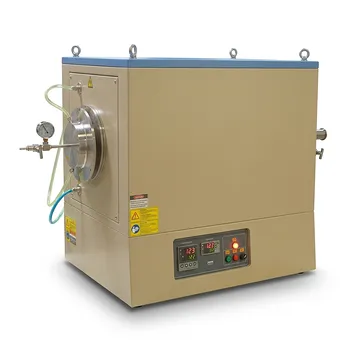
1100°C Large Diameter Quartz Tube Furnace with 24 Inch Heating Zone and Water Cooled Flanges
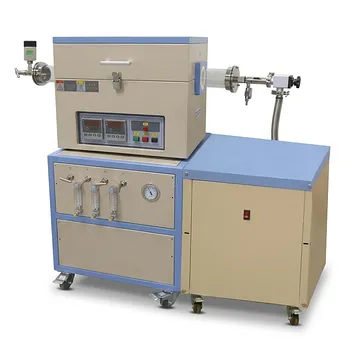
Dual Zone Quartz Tube Furnace with 80mm Diameter 1200C Max Temperature 3 Channel Gas Mixer and Vacuum Pump System
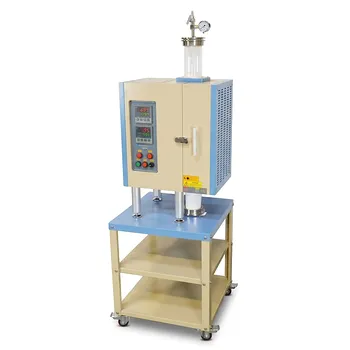
1100°C Dual Zone Split Vertical Tube Furnace with 4 Inch Quartz Tube and Vacuum Sealing Flanges
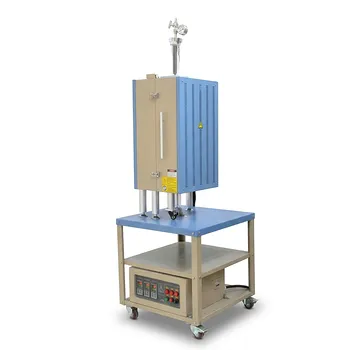
1200C Three Zone Vertical Tube Furnace with 2 Inch Quartz Tube and Vacuum Flanges
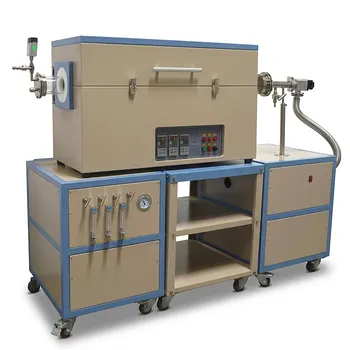
Three Zone Quartz Tube Furnace with 3 Channel Gas Mixer Vacuum Pump and Anti Corrosive Vacuum Gauge
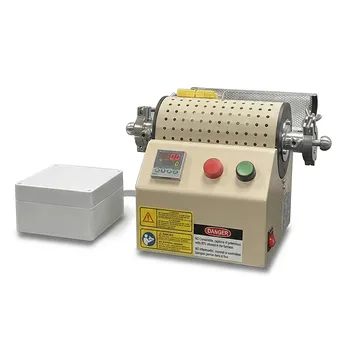
1000C Mini Tube Furnace with 20mm Quartz Tube and Vacuum Flanges for Material Science Research and Controlled Atmosphere Small Sample Processing

Compact Vertical Split Quartz Tube Furnace with Stainless Steel Vacuum Flanges for Rapid Thermal Quenching and Controlled Atmosphere Material Processing
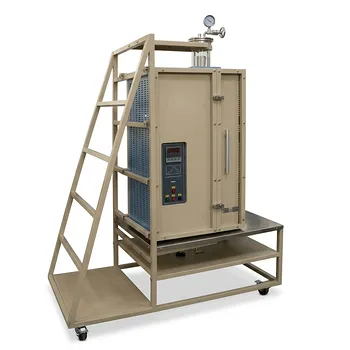
Split Vertical Tube Furnace with 1200C Quartz Tube and Stainless Steel Vacuum Flanges for Rapid Thermal Processing
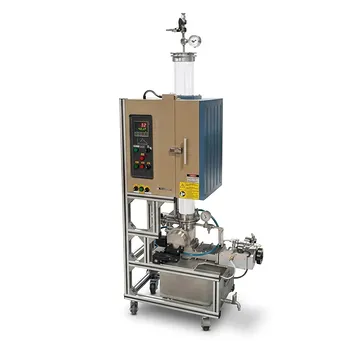
1200C High Temperature Atmosphere Controlled Vertical Quenching Tube Furnace with 4 Inch Quartz Tube
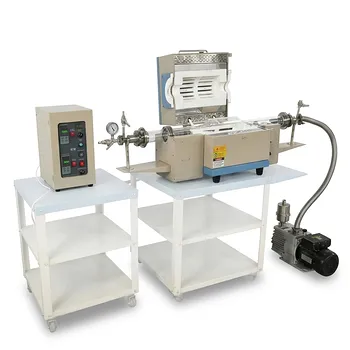
Two Zone Rotary Tube Furnace for Powder CVD Coating and Core Shell Material Synthesis 1100C
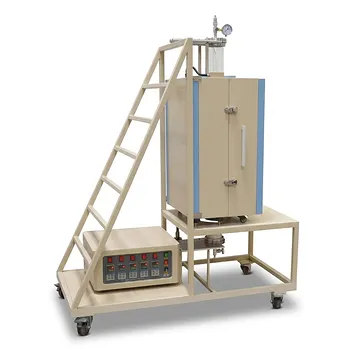
Five Zone Split Vertical Tube Furnace 1200C Max with 4 Inch Quartz Tube and Stainless Steel Vacuum Flanges
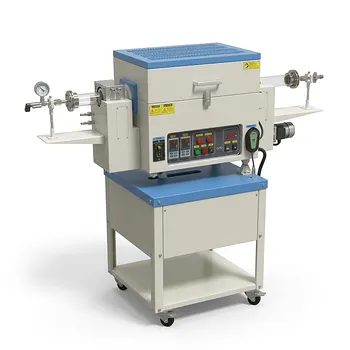
4 Inch Two Zone Rotary CVD Tube Furnace for High Temperature Battery Material Synthesis and Advanced Material Calcination
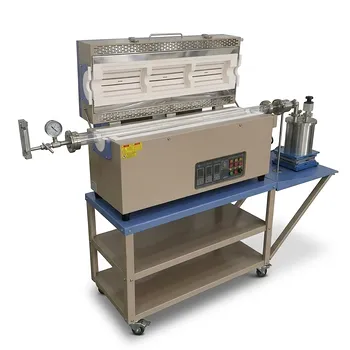
5 Inch Two Zone Rotary Tube Furnace 1100C for Powder CVD and Material Synthesis
5 Inch Three Zone Rotary Tube Furnace with Integrated Gas Delivery System and 1200C Capability for Advanced Material CVD Processing
5 Inch Rotary Tube Furnace with Automatic Feeding and Receiving System 1200C Three Zone CVD Powder Processing
High Throughput 1200C Four Channel Tube Furnace with 3 Inch Quartz Tubes for Multi Zone Annealing and Material Research
Split Chamber CVD Tube Furnace with Vacuum Station Chemical Vapor Deposition System Machine
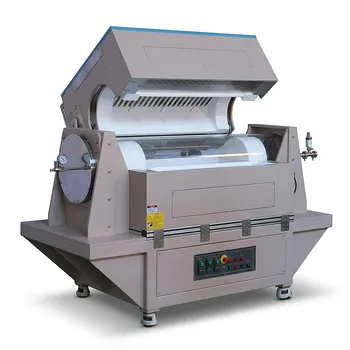
Three Zone Tube Furnace with 11 Inch or 15 Inch Quartz Tube and Hinged Flanges for Vacuum Atmosphere Heat Treatment
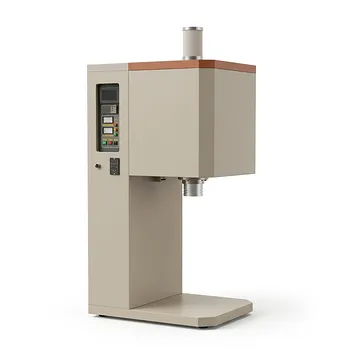
Vertical Openable Tube Furnace 0-1700c High Temperature Laboratory System for CVD and Vacuum Heat Treatment
