How does a high-vacuum tube furnace facilitate the PVD growth of CdS nanobelts? Precision Control for Nanomaterials
Updated 3 months ago
The high-vacuum tube furnace acts as the primary reaction vessel, providing the precise thermal gradient and atmospheric control required to sublimate solid precursors and drive their subsequent nucleation into one-dimensional nanostructures. By heating CdS powder to 835°C under controlled pressure, the furnace enables the transition of solid material into a vapor phase, which is then transported to cooler regions for deposition. This process ensures that CdS nanobelts grow with high crystalline quality and specific directional orientation.
The core function of a high-vacuum tube furnace in CdS nanobelt synthesis is to create a stable, reproducible environment where temperature-driven sublimation and gas-phase transport can be precisely managed. By balancing heat, vacuum, and carrier gas flow, the furnace dictates the transition of material from raw powder to structured 1D nanobelts.
Thermal Management and Sublimation
Precise Temperature Control
The furnace utilizes programmed temperature control to reach a specific set point, such as 835°C, which is necessary for the sublimation of CdS powder. This precise heating ensures that the precursor material converts into a vapor at a consistent rate, preventing fluctuations that could lead to irregular growth or structural defects.
Establishing the Thermal Gradient
A critical feature of the tube furnace is its ability to maintain a thermal field environment with distinct temperature zones. While the source material is heated to its sublimation point in one zone, the furnace creates a lower-temperature region downstream where the vapor can lose energy and begin to crystallize.
Transport and Nucleation Mechanics
Carrier Gas Dynamics
The furnace works in tandem with a precise carrier gas flow control system to move the CdS vapor from the crucible to the substrate. The flow rate of the gas determines the concentration of the vapor phase components at the growth site, directly influencing the nucleation and growth kinetics of the nanobelts.
Facilitating Catalyst Site Growth
Once the vapor reaches the cooler regions, it interacts with catalyst sites located on a substrate. The tube furnace provides the stable environment necessary for the Vapor-Liquid-Solid (VLS) or similar growth mechanisms, where the vapor precipitates onto the catalyst to form oriented, high-density nanobelt arrays.
Environmental Control and Purity
The Role of High Vacuum
Maintaining a high-vacuum environment is essential for removing atmospheric contaminants like oxygen or moisture that could oxidize the CdS or interfere with the crystalline lattice. The furnace’s sealing performance ensures that the internal atmosphere remains pure, leading to higher crystalline quality and thickness uniformity.
Atmospheric Stability
Beyond vacuum, the furnace allows for the introduction of specific gas mixtures to maintain atmospheric stability. This ensures that the chemical composition of the CdS nanobelts remains consistent throughout the entire growth cycle, which is vital for the semiconductor's electronic properties.
Understanding the Trade-offs
Temperature Sensitivity
While 835°C is the target for sublimation, even slight deviations can significantly alter results. If the temperature is too low, the sublimation rate will be insufficient for growth; if it is too high, it may lead to uncontrolled evaporation and the formation of bulk crystals rather than nanobelts.
Gas Flow and Morphology
There is a delicate trade-off between carrier gas speed and nanostructure morphology. High flow rates may transport vapor too quickly for proper nucleation, while low flow rates can lead to non-uniform deposition and varying nanobelt lengths across the substrate.
Applying Furnace Parameters to Your Growth Goals
To achieve the best results in CdS nanobelt synthesis, parameters must be tuned to your specific material requirements.
- If your primary focus is high crystalline quality: Ensure the furnace maintains a high-vacuum seal and a stable, slow cooling rate to minimize lattice defects.
- If your primary focus is specific nanobelt length: Precisely calibrate the carrier gas flow rate and the duration of the 835°C heating cycle to control the volume of material transported.
- If your primary focus is uniform distribution: Optimize the multi-zone temperature gradient to create a broad, stable "growth zone" downstream from the precursor.
Mastering the synergy between the furnace's thermal zones and gas dynamics is the definitive factor in producing high-quality CdS nanostructures.
Summary Table:
| Key Feature | Impact on CdS Nanobelt Growth |
|---|---|
| Programmed Temp (835°C) | Ensures stable sublimation and prevents structural defects. |
| Thermal Gradient Zones | Creates a defined low-temp region for vapor nucleation and 1D growth. |
| High-Vacuum Environment | Removes atmospheric contaminants to maintain high crystalline purity. |
| Carrier Gas Dynamics | Controls vapor concentration and transport speed to the substrate. |
| VLS Growth Support | Provides the stable thermal environment required for catalyst-site precipitation. |
Elevate Your Material Research with THERMUNITS High-Precision Furnaces
As a leading manufacturer of high-temperature laboratory equipment for material science and industrial R&D, THERMUNITS provides the advanced thermal processing solutions required for complex synthesis like CdS nanobelt growth. Our equipment is designed for researchers who demand precision, reliability, and superior atmospheric control.
Our comprehensive product range includes:
- Vacuum, Atmosphere, and Tube Furnaces for precise PVD/CVD processes.
- Muffle, Rotary, and Hot Press Furnaces for versatile material treatment.
- CVD/PECVD Systems, Dental Furnaces, and Electric Rotary Kilns.
- Vacuum Induction Melting Furnaces (VIM) and high-quality Thermal Elements.
Don't let unstable temperatures or poor vacuum seals compromise your crystalline quality. Partner with THERMUNITS to optimize your heat treatment workflow with industry-leading technology.
Contact Our Experts Today to Find Your Ideal Solution
References
- Yao Liu, Yingkai Liu. High-response formamidine bromide lead hybrid cadmium sulfide photodetector. DOI: 10.3788/col202422.022502
Mentioned Products
- Vertical Openable Tube Furnace 0-1700c High Temperature Laboratory System for CVD and Vacuum Heat Treatment
- 1200C Three Zone Vertical Tube Furnace with 2 Inch Quartz Tube and Vacuum Flanges
- High Temperature Dual Zone Vacuum Tube Furnace for Material Research and CVD Processing
- High Temperature 1700C Tube Furnace with High Vacuum Turbomolecular Pump System and Multi Channel Mass Flow Controller Gas Mixer
- High Temperature 1100C Compact Top Loading Vertical Vacuum Tube Furnace for High Vacuum Noble Metal Melting and Material Research
People Also Ask
- Why is a Tube Furnace typically utilized for CVD? Achieve Precision in Graphene and 2D Material Synthesis
- What role does a high-temperature vertical tube furnace play in simulating high-carbon ferromanganese slag formation?
- What functions does a vertical high-temperature tube furnace perform? Master Industrial Sintering & R&D Simulation
- How does a vertical tube furnace facilitate thermoelectric alloy melting? Precision synthesis for material homogeneity.
- How is an industrial-grade vertical tube furnace utilized in smelting leaching residues? Enhance Metal Recovery Efficiency

Tech Team · ThermUnits
Last updated on Jun 02, 2026
Related Products
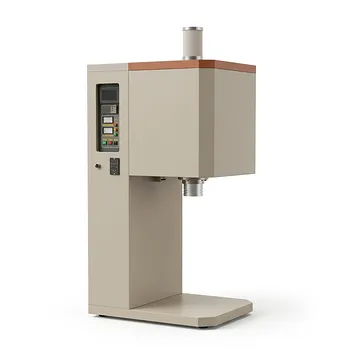
Vertical Openable Tube Furnace 0-1700c High Temperature Laboratory System for CVD and Vacuum Heat Treatment
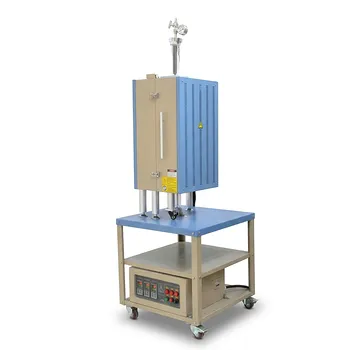
1200C Three Zone Vertical Tube Furnace with 2 Inch Quartz Tube and Vacuum Flanges
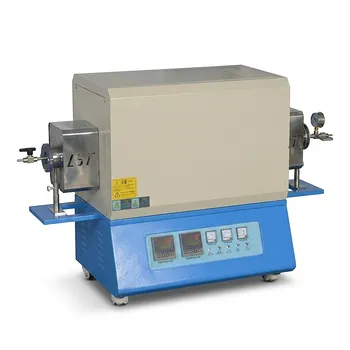
High Temperature Dual Zone Vacuum Tube Furnace for Material Research and CVD Processing

High Temperature 1700C Tube Furnace with High Vacuum Turbomolecular Pump System and Multi Channel Mass Flow Controller Gas Mixer
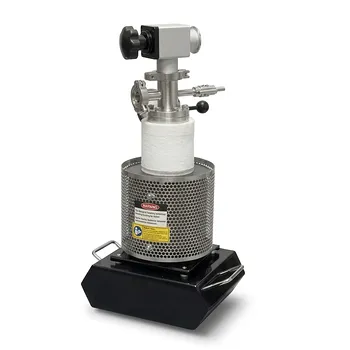
High Temperature 1100C Compact Top Loading Vertical Vacuum Tube Furnace for High Vacuum Noble Metal Melting and Material Research
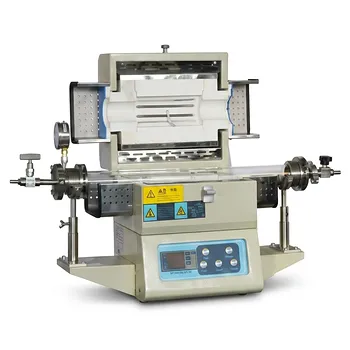
High Temperature 1200C Split Tube Furnace for CVD Research and Vacuum Atmosphere Heat Treatment

High Temperature 1700C Vertical Tube Furnace for Powder Spherification and Material Sintering
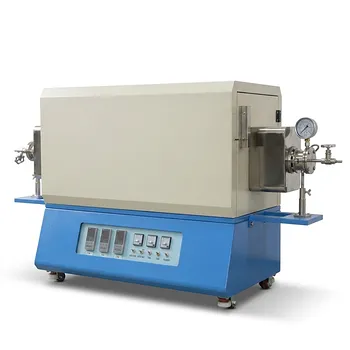
Three Temperature Zone High Temperature Vacuum Tube Furnace for CVD and Material Sintering
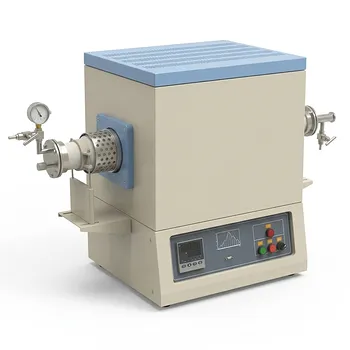
1750°C High Temperature Benchtop Vacuum Atmosphere Tube Furnace with Kanthal Super 1800 Heating Elements and 60mm Alumina Processing Tube

High Temperature 1700C Benchtop Tube Furnace with 5 Inch Heating Zone High Purity Alumina Tube and Vacuum Sealing Flanges
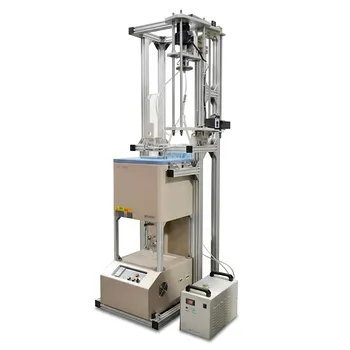
500C Vacuum Vertical Tube Furnace 84mm OD Sample Rotation Lifting System
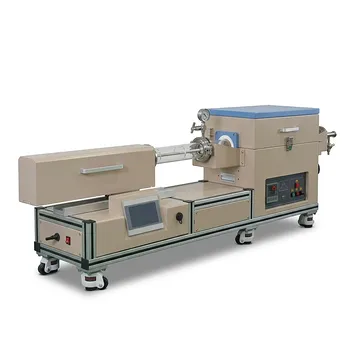
1200C Sliding Internal Crucible Tube Furnace for Controlled Atmosphere Thin Film Deposition and Material Sublimation Research

1800C High Temperature Compact Vacuum Tube Furnace with 60mm OD Alumina Tube and Kanthal MoSi2 Heating Elements
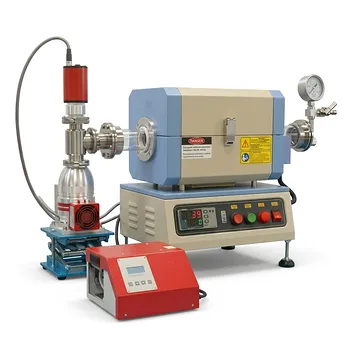
High Vacuum Compact Tube Furnace 1200C with Integrated Turbo Pump System and 8 Inch Heating Zone

1100C Tube Furnace with Vacuum Flange and Programmable Temperature Controller for Material Science and Industrial Heat Treatment
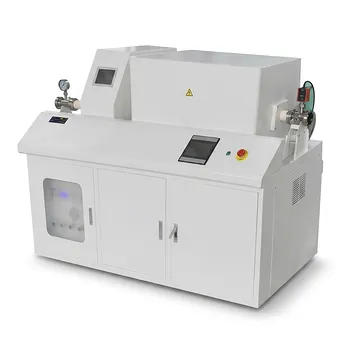
Chemical Vapor Deposition CVD System Slide PECVD Tube Furnace with Liquid Gasifier PECVD Machine

Vertical 1700C Vacuum and Atmosphere Tube Furnace with 80mm Alumina Tube
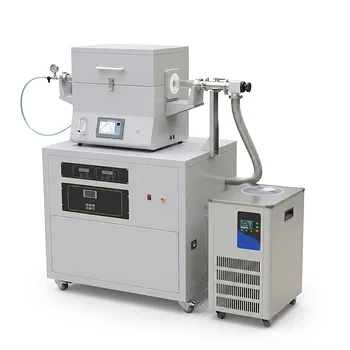
Split Chamber CVD Tube Furnace with Vacuum Station Chemical Vapor Deposition System Machine

Compact Vertical Split Quartz Tube Furnace with Stainless Steel Vacuum Flanges for Rapid Thermal Quenching and Controlled Atmosphere Material Processing
