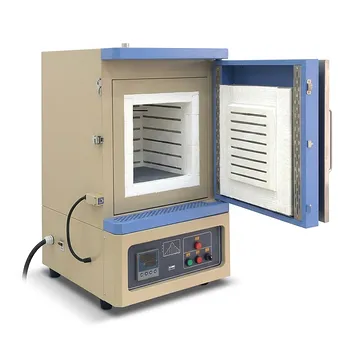
How does a laboratory ashing furnace contribute to the post-processing of silica nanocomposites? Optimize Purity.
Updated 3 months ago
The laboratory ashing furnace is the critical link between initial synthesis and final structural integrity in silica nanocomposite production. It primarily performs thermal debinding, a process where organic binders are decomposed and discharged at temperatures around 600°C. This transforms the "green body" of the composite into a "brown body" consisting strictly of inorganic silica particles, which is a mandatory prerequisite for successful high-temperature sintering.
The core function of an ashing furnace in silica post-processing is the precise removal of organic components and impurities to prepare a pure inorganic framework. By controlling thermal profiles, the furnace ensures that the material transitions from a polymer-bound state to a high-purity crystalline or amorphous structure ready for final densification.
The Mechanism of Thermal Debinding
Converting Green Bodies to Brown Bodies
During the initial shaping of silica nanocomposites, organic binders are often used to hold the "green" structure together. The ashing furnace applies precisely controlled heating programs, typically reaching 600 °C, to thermally decompose these binders. This process leaves behind a "brown body" composed entirely of inorganic silica particles, ensuring the structural blueprint remains intact without the interference of organic residues.
Preparing for High-Temperature Sintering
By discharging organic gases and residues early, the furnace prevents internal pressure buildup and voids that could occur during final sintering. This stage is vital for creating a dense and stable framework. Without this controlled removal, the final silica product would likely suffer from structural defects or contamination.
Enhancing Material Purity and Crystallinity
Removing Residual Carbon and Impurities
In advanced silica composites, such as those involving boron-doped silicon carbide, the furnace is used for multi-stage calcination at temperatures between 650°C and 700°C. Through an oxidizing atmosphere, the furnace effectively eliminates unreacted carbon. This ensures the production of high-purity nanowires or particles that are free of carbon-based contaminants.
Inducing Phase Transformation
Beyond simple cleaning, the thermal environment of the furnace can be used to induce phase transitions. For precursor materials within a composite, such as vanadium or manganese oxides, the furnace provides the energy needed to shift from an amorphous state to high-crystallinity phases. This transformation is essential for establishing a stable, electrochemically active framework in the nanocomposite.
Managing Microstructure and Stress
Eliminating Lattice Stress and Optimizing Grain Size
Precise temperature control allows manufacturers to eliminate lattice stress that accumulates during the chemical synthesis of the nanocomposite. By maintaining specific temperatures (such as 400°C to 500°C), the furnace helps in optimizing grain size. This result is a more uniform material with predictable mechanical and chemical properties.
Solidifying the Microstructure
For silica-based materials, the furnace or oven also facilitates final dehydration. By removing residual physically adsorbed water and capillary water at controlled temperatures, the furnace solidifies the microstructure of amorphous silica. This prevents errors in downstream experiments, such as release kinetic studies, which can be skewed by unstable moisture content.
Understanding the Trade-offs
The Risk of Rapid Heating
While high temperatures are necessary, heating the material too quickly can lead to thermal shock or internal cracking. If organic binders decompose faster than the gases can escape through the material's pores, the resulting pressure can shatter the silica framework.
Atmospheric Sensitivity
The effectiveness of the ashing process depends heavily on the furnace atmosphere. Using an oxidizing atmosphere is excellent for removing carbon but may inadvertently oxidize sensitive metallic dopants within a nanocomposite. Conversely, an inert atmosphere might fail to completely remove carbon residues, leading to phase impurity.
Applying This to Your Project
Recommendations for Success
To maximize the effectiveness of your laboratory ashing furnace, align your thermal program with your specific material goals.
- If your primary focus is Binder Removal: Utilize a slow ramp-up to 600°C with adequate dwell time to ensure all organic components are discharged without compromising structural integrity.
- If your primary focus is Phase Purity: Select a multi-stage calcination program (e.g., 650°C to 700°C) in an oxidizing environment to purge residual unreacted carbon.
- If your primary focus is Structural Stability: Focus on the annealing stage between 300°C and 500°C to relieve lattice stress and encourage the formation of high-crystallinity phases.
Mastering the thermal profile of the ashing furnace is the definitive step in transforming a volatile chemical mixture into a stable, high-performance silica nanocomposite.
Summary Table:
| Process Stage | Typical Temperature | Primary Objective |
|---|---|---|
| Thermal Debinding | ~600°C | Decomposes organic binders; converts green body to brown body. |
| Calcination/Purification | 650°C – 700°C | Removes residual carbon and impurities using oxidizing atmospheres. |
| Phase Transformation | Variable | Shifts material from amorphous states to high-crystallinity phases. |
| Stress Relief/Annealing | 300°C – 500°C | Eliminates lattice stress and optimizes grain size for stability. |
| Microstructure Fixation | Controlled Ramping | Removes residual water to solidify amorphous silica structures. |
Elevate Your Material Research with THERMUNITS
Achieving the perfect structural integrity for silica nanocomposites requires uncompromising thermal precision. As a leading manufacturer of high-temperature laboratory equipment, THERMUNITS provides the advanced thermal processing solutions essential for material science and industrial R&D.
Our comprehensive range includes:
- Furnaces: Muffle, Vacuum, Atmosphere, Tube, Rotary, and Hot Press furnaces.
- Advanced Systems: CVD/PECVD systems, Dental Furnaces, and Vacuum Induction Melting (VIM) furnaces.
- Specialized Tools: Electric rotary kilns, Thermal Elements, and custom heat treatment equipment.
Whether you are performing critical thermal debinding or complex multi-stage calcination, our equipment ensures uniform heating and precise atmospheric control to prevent structural defects.
Ready to optimize your lab’s efficiency? Contact our experts today to find the ideal thermal solution for your specific research needs.
References
- Sebastian Kluck, Frederik Kotz. Sub‐Micron Replication of Fused Silica Glass and Amorphous Metals for Tool‐Based Manufacturing. DOI: 10.1002/advs.202405320
Mentioned Products
- 1750C Compact Muffle Furnace 1.7L Ultra High Temperature Laboratory Sintering System for Advanced Ceramics and Material Science Research
- Laboratory Tilting Rotary Tubular Furnaces for Material Science and Industrial Heat Treatment
- 1200C Muffle Furnace 12x8x5 7.2L Heating Chamber with Quartz Observation Window and Vent Port
- High Temperature Benchtop Muffle Furnace 1500C with 3.6L Chamber and Quartz Observation Window
- 1200°C High Temperature Muffle Furnace 19L Chamber with 50 Segment Programmable Controller
People Also Ask
- What role does a laboratory high-temperature muffle furnace play in the ash analysis phase of biomass co-firing research? [Guide]
- What is the function of a high-temp muffle furnace in Ni-V oxide synthesis? Optimize your material's performance.
- What role does a high-temperature muffle furnace play in the synthesis of Melem precursors? Precision Polymerization.
- What is the function of a high-temperature muffle furnace in phosphorus-modified zeolite catalyst preparation?
- What is the function of a muffle furnace in aluminoborosilicate glass prep? Stabilize Raw Materials for Superior Purity

Tech Team · ThermUnits
Last updated on Jun 02, 2026
Related Products
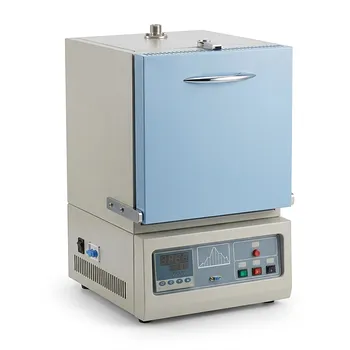
1750C Compact Muffle Furnace 1.7L Ultra High Temperature Laboratory Sintering System for Advanced Ceramics and Material Science Research
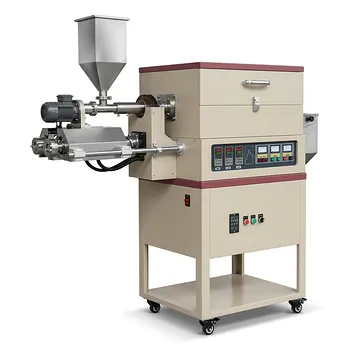
Laboratory Tilting Rotary Tubular Furnaces for Material Science and Industrial Heat Treatment
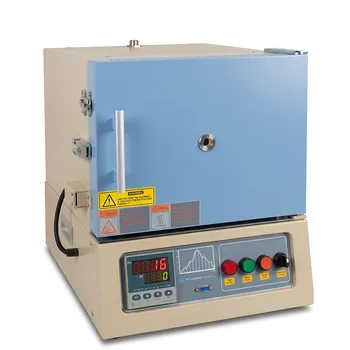
1200C Muffle Furnace 12x8x5 7.2L Heating Chamber with Quartz Observation Window and Vent Port
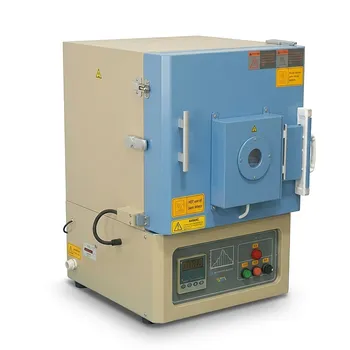
High Temperature Benchtop Muffle Furnace 1500C with 3.6L Chamber and Quartz Observation Window
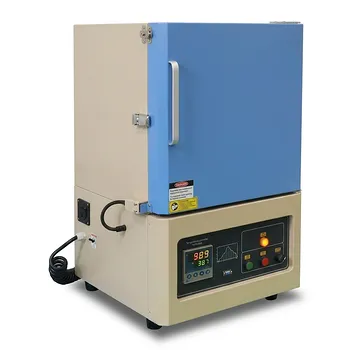
1200°C High Temperature Muffle Furnace 19L Chamber with 50 Segment Programmable Controller
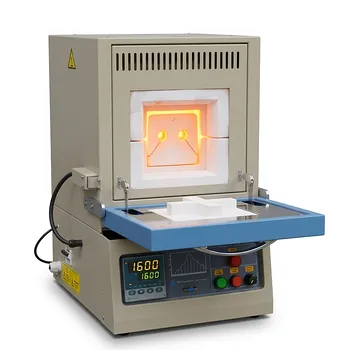
High Temperature Compact Muffle Furnace 1700 C with 30 Segment Programmable Controller and 1.7L Cubic Chamber
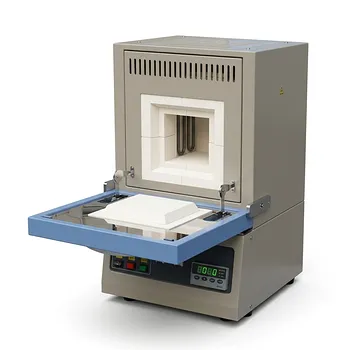
Five Sided Heating Muffle Furnace High Uniformity 1200C Lab Box Furnace 27L Alumina Fiber Chamber
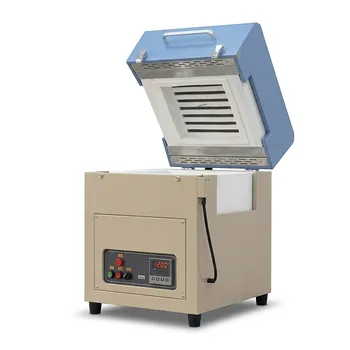
1200 C Maximum Three Sided Heating Top Loading Furnace with 12 x 12 x 8 Inch Chamber for Solid Oxide Fuel Cell Testing and High Temperature RD
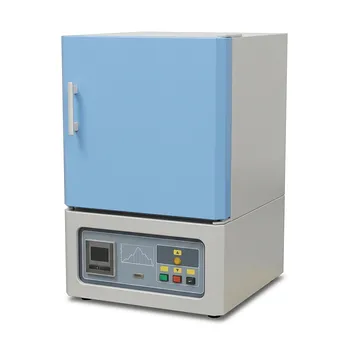
1800C Bench Top Muffle Furnace with Kanthal Super 1900 Heating Elements and 3.6L Alumina Fiber Chamber
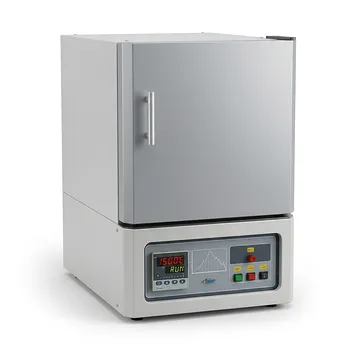
High Temperature 1500C Benchtop Muffle Furnace 3.6L Alumina Fiber Chamber Programmable Controller Sintering Annealing Carbonization Thermal Processing System
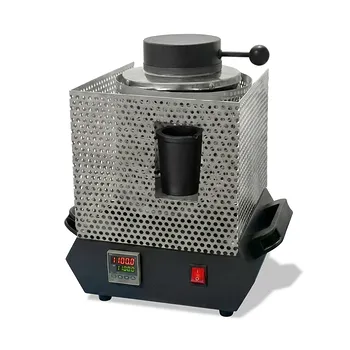
Compact Crucible Melting Furnace 1100C Programmable Temperature Controller Metal Sintering Equipment
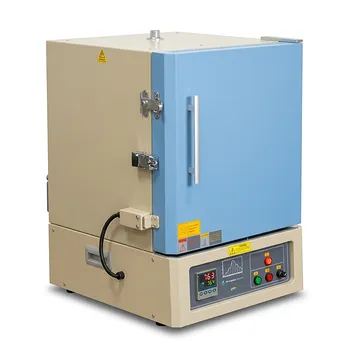
Large Capacity 1200C Muffle Furnace 64 Liter Chamber with Digital PID Controller and Built In Venting Port
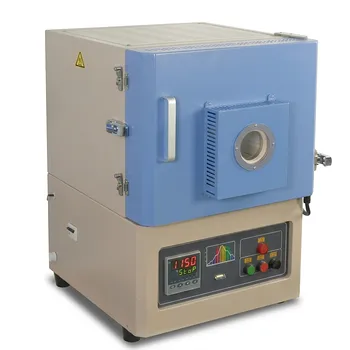
High Temperature Benchtop Muffle Furnace with Quartz Observation Window for Thermal Imaging and Material Analysis
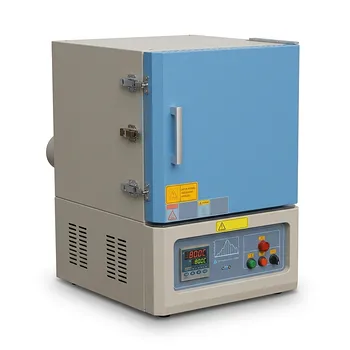
1800C Bench Top Muffle Furnace 18 Liters with Kanthal Super 1900 Heating Elements for High Purity Ceramic Sintering and Material Research
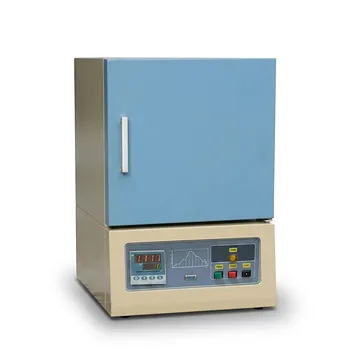
Ultra High Temperature Bench Top Muffle Furnace 1750C Sintering System with Kanthal Super Heating Elements and Precision Digital Control
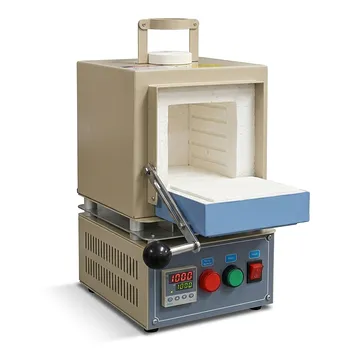
Compact 1000C Muffle Furnace with Programmable Controller and 2 Inch Top Port for Vacuum and Atmosphere Material Research
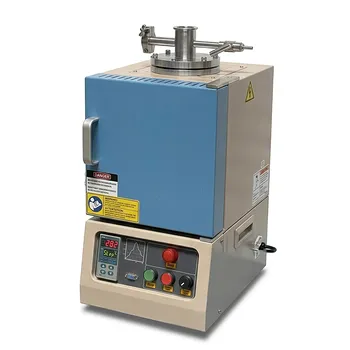
High Temperature Hybrid Muffle and Tube Furnace with Vacuum Capability and PID Control
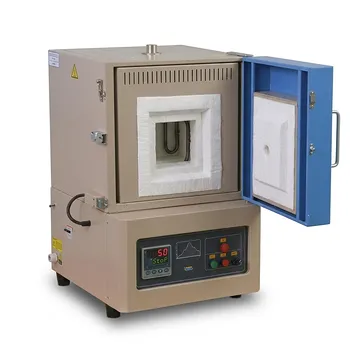
1800°C Bench Top Ultra High Temperature Muffle Furnace with Sapphire Observation Window and Top Feeding Port for Materials Research and Thermal Processing
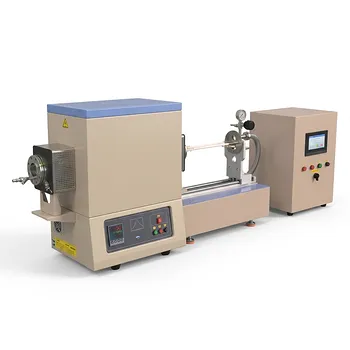
High Temperature Horizontal Electrical Assisted Sintering Furnace with 3KW Programmable Power Source for Advanced Ceramic Materials