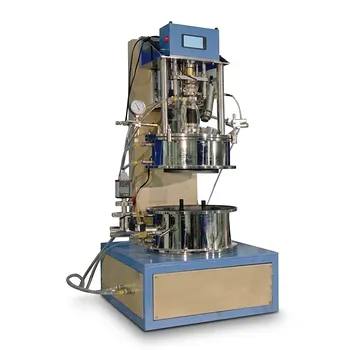
How does a precision laboratory hot press affect the performance of a fuel cell during MEA preparation? Optimize Bonding
Updated 3 months ago
The precision laboratory hot press is the defining tool for transforming separate electrochemical layers into a high-performance Membrane Electrode Assembly (MEA). By applying synchronized heat and pressure, typically ranging from 120°C to 140°C and 1.5 to 8 MPa, it bonds the catalyst layers to the ion exchange membrane. This process reduces interfacial contact resistance and ensures the mechanical stability required for efficient ion transport and long-term fuel cell operation.
A precision hot press optimizes fuel cell performance by creating an intimate, molecular-level bond between the catalyst layer and the membrane. This integration is essential for minimizing ohmic losses and preventing delamination during rigorous operational cycles.
Optimizing the Electrochemical Interface
Achieving Molecular-Level Bonding
The hot press uses high temperatures (often around 130°C to 135°C) to slightly soften the ionomer within the catalyst layer and the membrane. This softening allows the materials to interdiffuse, creating a molecular-level connection that is far superior to simple mechanical stacking.
Reducing Interfacial Contact Resistance
In an MEA, any microscopic gap between the catalyst layer and the membrane acts as a barrier to proton flow. The application of uniform pressure (such as 1.5–2 MPa) eliminates these gaps, significantly lowering the interfacial contact resistance and improving the overall output power density.
Enhancing Ion Transport Paths
By compressing the layers together, the hot press optimizes the paths through which ions travel. This ensures that the proton conduction efficiency is maximized, which is a critical factor for achieving high-efficiency electrochemical output in both fuel cells and electrolyzers.
Ensuring Mechanical and Operational Stability
Preventing Interlayer Delamination
Fuel cells undergo significant physical stress during start-up/shut-down (SUSD) cycles and variable load changes. The robust bond created by a precision hot press prevents the catalyst layer from detaching, which is vital for the long-term stability of Proton Exchange Membrane Fuel Cells (PEMFC).
Supporting High Current Densities
At high current densities, the flow of ions and electrons is at its peak. A well-pressed MEA maintains its structural integrity and low resistance under these intense conditions, allowing the cell to operate efficiently without premature voltage drops.
Protection of Sensitive Components
Precision control is necessary to protect the thin proton exchange membrane from physical damage. Advanced laboratory presses allow for specific pressure setpoints that ensure bonding without piercing or over-thinning the membrane material.
Understanding the Trade-offs and Risks
The Danger of Over-Compression
Applying excessive pressure can lead to the "crushing" of the gas diffusion layer (GDL) or the membrane itself. This reduces the porosity required for gas transport and can lead to internal short circuits or gas crossover.
Thermal Degradation Limits
While heat is necessary for bonding, exceeding the thermal stability limit of the membrane (typically above 140°C for standard Nafion-based materials) can cause permanent damage. This degradation reduces the ion exchange capacity and makes the membrane brittle.
Precision vs. Manual Control
Inconsistent pressure or temperature distribution across the heating plates can lead to non-uniform MEA quality. This results in "hot spots" during fuel cell operation, where certain areas of the MEA work harder than others, leading to localized failure and shortened lifespan.
Optimizing Your MEA Fabrication Strategy
When preparing an MEA, your hot pressing parameters must be carefully aligned with your specific material properties and performance goals.
- If your primary focus is Maximum Power Density: Prioritize higher precision in pressure control (1.5-2 MPa) to minimize contact resistance while maintaining the thickness of the catalyst layer.
- If your primary focus is Long-Term Durability: Focus on the "soak time" and temperature (130°C-135°C) to ensure a deep molecular bond that resists delamination during thermal cycling.
- If your primary focus is High-Current Electrolysis: Ensure the press can handle higher pressure ranges (up to 8 MPa) to optimize ion transport paths for the dense catalyst layers used in water electrolysis.
By mastering the balance of heat, pressure, and time, you ensure that the MEA serves as a high-efficiency engine for electrochemical conversion rather than a source of parasitic loss.
Summary Table:
| Feature | Impact on MEA Performance | Operational Benefit |
|---|---|---|
| Temperature (120-140°C) | Facilitates molecular-level interdiffusion | Prevents interlayer delamination |
| Pressure (1.5-8 MPa) | Minimizes interfacial contact resistance | Increases output power density |
| Uniform Heat/Pressure | Eliminates microscopic gaps & "hot spots" | Ensures long-term mechanical stability |
| Precision Control | Protects sensitive proton exchange membranes | Prevents gas crossover & short circuits |
Elevate Your Material Research with THERMUNITS Precision Solutions
At THERMUNITS, we specialize in empowering material science and industrial R&D with top-tier high-temperature laboratory equipment. As a leading manufacturer, we understand that the quality of your Membrane Electrode Assembly (MEA) depends on the exact synchronization of heat and pressure.
Our advanced Hot Press furnaces are engineered to provide the precise control required to minimize ohmic losses and maximize ion transport efficiency in fuel cells and electrolyzers. Beyond hot pressing, our comprehensive thermal processing portfolio includes:
- Furnaces: Muffle, Vacuum, Atmosphere, Tube, Rotary, and Dental Furnaces.
- Advanced Systems: CVD/PECVD systems, Vacuum Induction Melting (VIM) furnaces, and Electric Rotary Kilns.
- Components: High-quality Thermal Elements and custom heat treatment tools.
Ready to achieve superior structural integrity and performance in your electrochemical devices? Contact us today to consult with our experts and find the perfect thermal processing solution for your laboratory.
References
- Weihao Liu, Jianglan Shui. Boosting the Oxygen Reduction Performance of Fe–N–C Catalyst Using Zeolite as an Oxygen Reservoir. DOI: 10.1007/s12209-024-00409-x
Mentioned Products
- Industrial High Temperature Vacuum Hot Press Furnace and Heated Vacuum Press Machine for Material Science Sintering
- High Temperature Vacuum Lamination Hot Press Furnace Machine for Semiconductor Wafer Bonding and Advanced Composite Thermal Processing
- Industrial Vacuum Hot Press Furnace Machine and High Temperature Heated Vacuum Press for Advanced Material Sintering
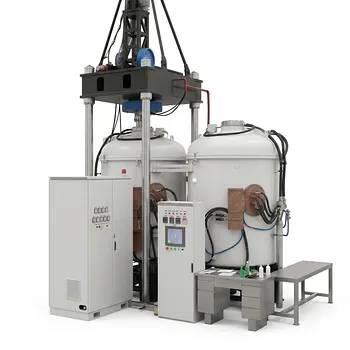
- High Pressure 600T Vacuum Induction Hot Press Furnace for Advanced Material Heat Treatment and Sintering
- 2500C High Vacuum Ultrafast Heating Pellet Press with Automated 8 Sample Loading System
People Also Ask
- How do vacuum, heat, and pressure work together in a Vacuum Hot Press Furnace? Achieving Near-Theoretical Density
- What are the key technical parameters for operating a Vacuum Hot Press Furnace? Master Heat, Pressure, and Vacuum.
- What microstructural mechanisms lead to material densification in a Vacuum Hot Press Furnace? Master Material Sintering
- What is the standard four-step operating sequence for a Vacuum Hot Press Furnace? Master Material Densification
- What is the role of a vacuum hot press furnace in diffusion bonding? Achieve High-Integrity Solid-State Joints

Tech Team · ThermUnits
Last updated on Jun 03, 2026
Related Products
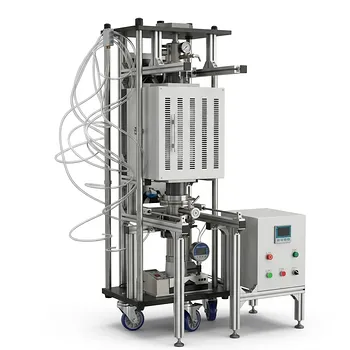
Industrial High Temperature Vacuum Hot Press Furnace and Heated Vacuum Press Machine for Material Science Sintering
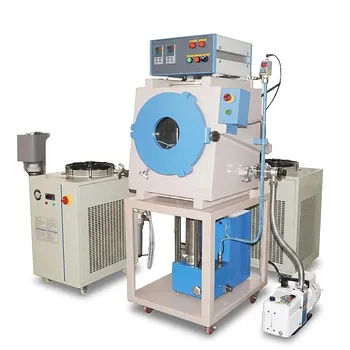
High Temperature Vacuum Lamination Hot Press Furnace Machine for Semiconductor Wafer Bonding and Advanced Composite Thermal Processing
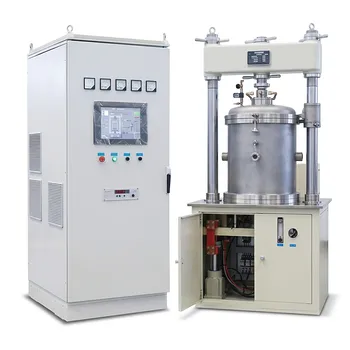
Industrial Vacuum Hot Press Furnace Machine and High Temperature Heated Vacuum Press for Advanced Material Sintering
High Pressure 600T Vacuum Induction Hot Press Furnace for Advanced Material Heat Treatment and Sintering