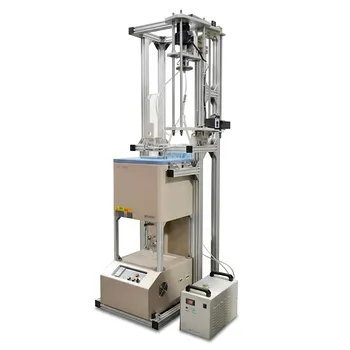
What is the role of a vacuum hot press furnace in diffusion bonding? Achieve High-Integrity Solid-State Joints
Updated 5 months ago
A vacuum hot press furnace acts as the primary catalyst for diffusion bonding by simultaneously applying high heat, uniaxial pressure, and a deep vacuum environment. This combination forces the atoms of two separate components to migrate across their interface, creating a metallurgically sound joint that approaches the strength of the parent materials. Unlike traditional welding, this process occurs in a solid state without the need for filler metals or brazing alloys, ensuring high-integrity bonds even between dissimilar or reactive materials.
Core Takeaway: The vacuum hot press furnace is a precision instrument that eliminates surface oxides and microscopic gaps to facilitate atomic-level joining. It is the definitive solution for high-performance applications where material purity, minimal distortion, and parent-metal strength are non-negotiable.
The Synergy of the Triple Mechanism
Heat as a Kinetic Driver
High temperatures provide the necessary kinetic energy for atoms to become mobile and migrate across the material interface. Depending on the alloy, temperatures typically range from 400°C for aluminum to over 1150°C for specialized steels or titanium. This thermal energy facilitates the alloying of elements and allows for deep penetration, sometimes reaching depths of several millimeters during extended annealing cycles.
Pressure and Plastic Deformation
The furnace’s integrated hydraulic system applies precise mechanical loads, often reaching pressures of 9.8 MPa to 12 MPa. This uniaxial pressure is critical for crushing microscopic asperities—the tiny peaks and valleys on a metal surface—to ensure total physical contact. By inducing microscopic plastic deformation, the furnace eliminates micro-voids and creates a clear, flat diffusion interface.
Vacuum for Surface Integrity
The vacuum environment, often reaching levels as low as 2×10⁻⁶ Torr, is essential for preventing the formation of oxide layers. Reactive metals like aluminum and titanium form dense oxide films almost instantly in the presence of oxygen, which would otherwise block atomic diffusion. By removing reactive gases, the furnace ensures direct metal-to-metal contact, which is the fundamental requirement for a solid-state weld.
Precision Control in Complex Joining
Managing Dissimilar Materials
Vacuum hot pressing is uniquely capable of joining dissimilar metals, such as aluminum to stainless steel or zirconium to titanium. The controlled environment allows engineers to manage the different thermal expansion rates and chemical profiles of these materials. This prevents the brittle phases that often occur with traditional fusion welding of different alloys.
Supporting Transient Liquid Phase (TLP) Bonding
In addition to pure solid-state diffusion, these furnaces are used for diffusion brazing or TLP bonding. The precise temperature control systems manage constant heating rates and holding times required for isothermal solidification. This allows for a joint that can withstand service temperatures higher than the temperature at which it was originally bonded.
Optimizing Hardness and Phase Transitions
Extended thermal treatments within the furnace, such as vacuum diffusion annealing, allow for the control of carbide precipitation and phase transformations. This is vital for applications requiring a smooth transition between a hard faceplate and a tough backplate. By controlling the cooling rate and soak time, the furnace helps engineers tailor the final hardness gradient of the assembly.
Understanding the Trade-offs
Cycle Time and Throughput
One of the primary limitations of a vacuum hot press furnace is the long cycle time required for heating, soaking, and cooling. Unlike rapid welding processes, diffusion bonding can take several hours—or even days—to complete a single batch. This makes the process more suitable for high-value, low-volume components rather than mass-market consumer goods.
Equipment and Tooling Costs
The capital investment for a vacuum hot press is significant due to the complexity of integrating high-vacuum systems with hydraulic presses. Furthermore, specialized tooling and jigs are often required to ensure uniform pressure distribution across complex parts. If the pressure is not perfectly even, the resulting bond may have inconsistent strength or localized voids.
Geometric Constraints
Because the process relies on uniaxial pressure (pressure from one or two directions), it is most effective for flat or relatively simple geometries. Joining complex, multi-axis curved surfaces requires expensive, custom-designed dies to ensure the load is applied perpendicular to the bond interface.
Making the Right Choice for Your Goal
How to Apply This to Your Project
- If your primary focus is joining reactive metals (Ti, Al, Zr): Prioritize a furnace with ultra-high vacuum capabilities (< 5.0E-5 mbar) to ensure surfaces remain oxide-free during the heating cycle.
- If your primary focus is maximum joint strength in dissimilar metals: Use a hot press that offers precise hydraulic control to induce the microscopic plastic deformation necessary for atomic migration.
- If your primary focus is deep element penetration or hardness gradients: Ensure the furnace has a robust temperature control system capable of maintaining high heat for long-duration annealing (e.g., 1150°C for 7+ hours).
The vacuum hot press furnace remains the gold standard for engineering high-performance, solid-state joints where material purity and structural integrity cannot be compromised.
Summary Table:
| Mechanism | Description | Impact on Joint Quality |
|---|---|---|
| High Heat | Provides kinetic energy for atomic migration. | Facilitates alloying and deep material penetration. |
| Uniaxial Pressure | Induces microscopic plastic deformation. | Eliminates surface asperities and micro-voids. |
| Deep Vacuum | Removes reactive gases and oxide layers. | Ensures pure metal-to-metal contact for bonding. |
| Precision Control | Manages isothermal solidification & cooling. | Enables joining of dissimilar metals without brittleness. |
Optimize Your Material Joining with THERMUNITS Expertise
Looking to achieve flawless diffusion bonding for your R&D or industrial projects? THERMUNITS is a leading manufacturer of high-temperature laboratory equipment specifically engineered for material science. Our advanced Vacuum Hot Press Furnaces provide the precision control over heat and pressure necessary to create superior solid-state joints in even the most reactive materials.
From Muffle, Vacuum, and Atmosphere furnaces to specialized CVD/PECVD systems and Vacuum Induction Melting (VIM) units, we offer a comprehensive suite of thermal processing solutions designed to enhance your lab's efficiency and results.
Ready to elevate your heat treatment capabilities? Contact our technical team today to discuss your specific application needs and discover how THERMUNITS can empower your next breakthrough.
Mentioned Products
- High Pressure 600T Vacuum Induction Hot Press Furnace for Advanced Material Heat Treatment and Sintering
- High Temperature Vacuum Lamination Hot Press Furnace Machine for Semiconductor Wafer Bonding and Advanced Composite Thermal Processing
- Industrial Vacuum Hot Press Furnace Machine and High Temperature Heated Vacuum Press for Advanced Material Sintering
- Industrial High Temperature Vacuum Hot Press Furnace and Heated Vacuum Press Machine for Material Science Sintering
- Ultrafast Thermal Pressing Furnace 2900C Max Temperature 200K per Second Heating Rate Vacuum Atmosphere Rapid Processing System
People Also Ask
- What is a Vacuum Hot Press Furnace and what are its primary industrial applications? Achieve Maximum Material Density
- What are the structural features of the furnace body and chamber in a Vacuum Hot Press Furnace? Master Material Density
- What types of heating systems and insulation are used in Vacuum Hot Press Furnaces? Optimize Your Thermal Processing
- Why is graphite the preferred material for dies and heating elements in Vacuum Hot Press Furnaces? High-Temp Solutions
- What are the primary operational components and mechanisms of a vacuum hot press furnace? A Technical Breakdown

Tech Team · ThermUnits
Last updated on Apr 14, 2026
Related Products
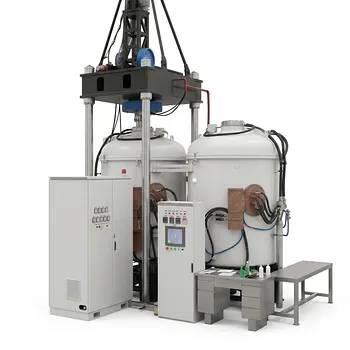
High Pressure 600T Vacuum Induction Hot Press Furnace for Advanced Material Heat Treatment and Sintering
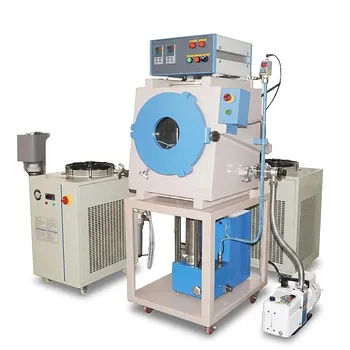
High Temperature Vacuum Lamination Hot Press Furnace Machine for Semiconductor Wafer Bonding and Advanced Composite Thermal Processing
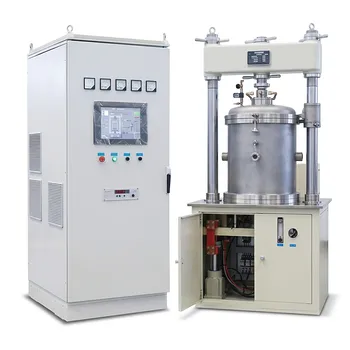
Industrial Vacuum Hot Press Furnace Machine and High Temperature Heated Vacuum Press for Advanced Material Sintering
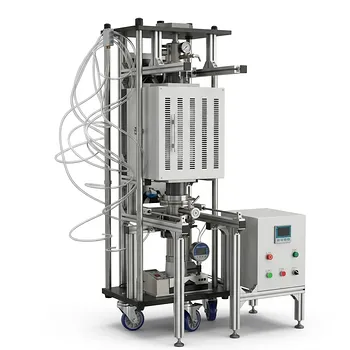
Industrial High Temperature Vacuum Hot Press Furnace and Heated Vacuum Press Machine for Material Science Sintering
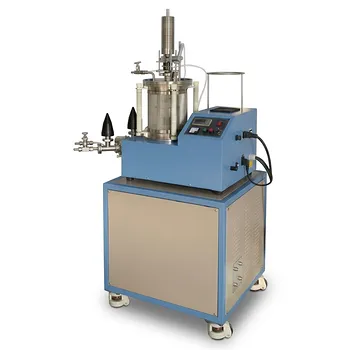
Ultrafast Thermal Pressing Furnace 2900C Max Temperature 200K per Second Heating Rate Vacuum Atmosphere Rapid Processing System
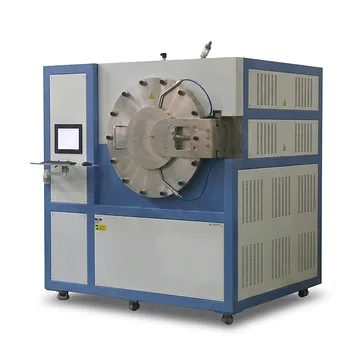
High Vacuum Pressure Chamber Furnace 800C 3.5 Bar Sintering System for Superconducting Materials
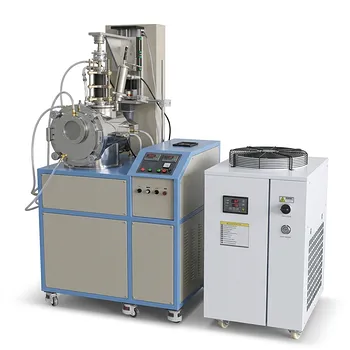
High Temperature Ultrafast Heating Pressing Furnace 2900C Max 100kgf Rapid Thermal Processing System
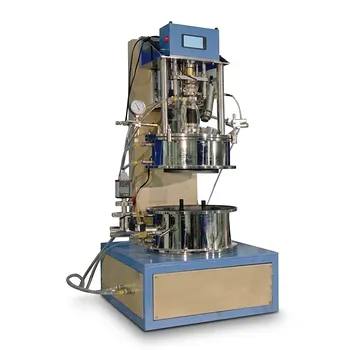
2500C High Vacuum Ultrafast Heating Pellet Press with Automated 8 Sample Loading System
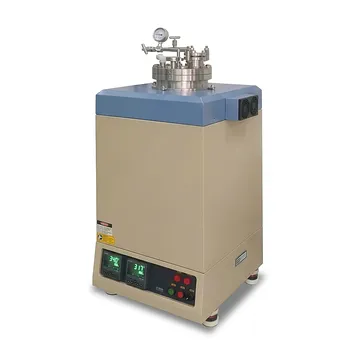
High Temperature 1000C Vacuum Furnace with 8 Inch ID Chamber for Material Sintering and Research Annealing
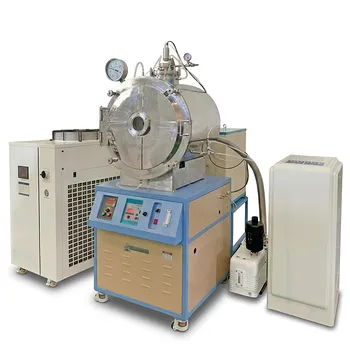
Ultra High Temperature Induction Heated Vacuum Furnace with Molten Salt Electrolysis Capability and 3000 Degree Precision Control
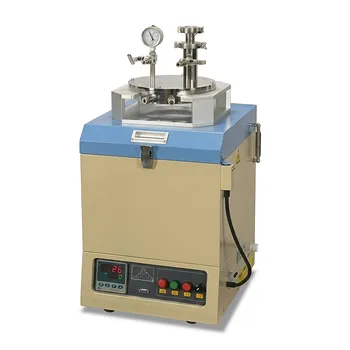
Vertical Vacuum Furnace 1100C High Temperature 8 Inch Quartz Chamber Water Cold Flange System
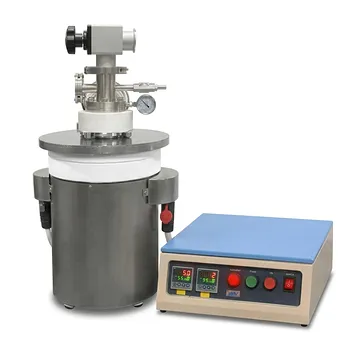
1100C High Temperature Vacuum Crucible Furnace with Quartz Chamber for Thermal Processing and Sintering
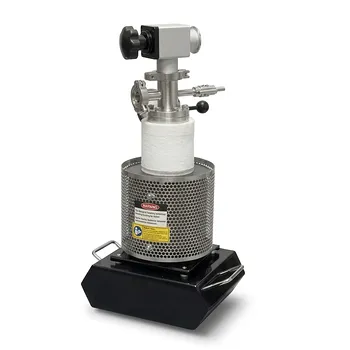
High Temperature 1100C Compact Top Loading Vertical Vacuum Tube Furnace for High Vacuum Noble Metal Melting and Material Research

1750°C High Temperature Benchtop Vacuum Atmosphere Tube Furnace with Kanthal Super 1800 Heating Elements and 60mm Alumina Processing Tube

High Temperature 1700C Tube Furnace with High Vacuum Turbomolecular Pump System and Multi Channel Mass Flow Controller Gas Mixer

1800C High Temperature Compact Vacuum Tube Furnace with 60mm OD Alumina Tube and Kanthal MoSi2 Heating Elements
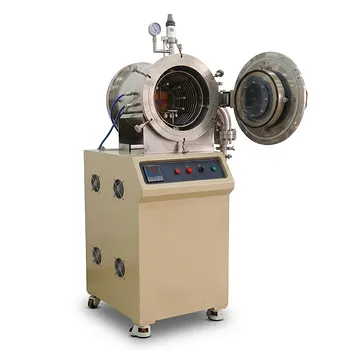
High Temperature Cold Wall High Vacuum Chamber Furnace 1400C for Advanced Material Processing
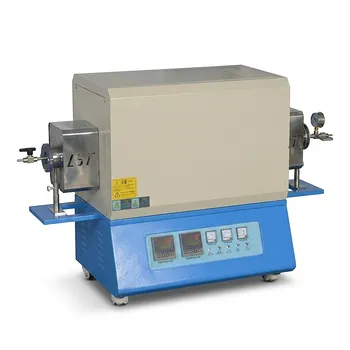
High Temperature Dual Zone Vacuum Tube Furnace for Material Research and CVD Processing
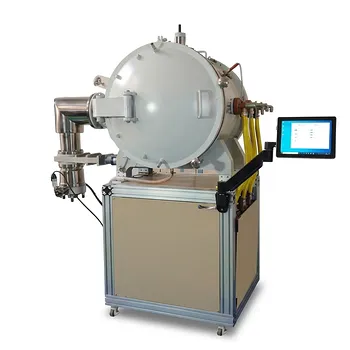
High Temperature Cold Wall Vacuum Furnace for Advanced Material Sintering and Annealing 1600C Heating Area 200x200x300mm