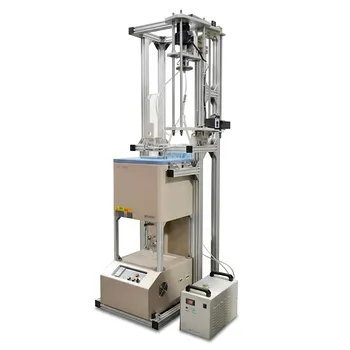
How do vacuum, heat, and pressure work together in a Vacuum Hot Press Furnace? Achieving Near-Theoretical Density
Updated 5 months ago
In a Vacuum Hot Press Furnace, the simultaneous application of vacuum, heat, and uniaxial pressure creates a synergetic environment that accelerates material densification. This "triple-threat" approach allows materials to reach near-theoretical density at temperatures 200°C to 400°C lower than conventional sintering by removing atmospheric resistance, softening material particles, and physically forcing the closure of internal pores.
Core Takeaway: The integration of vacuum, heat, and pressure transforms sintering from a passive thermal process into an active mechanical consolidation, enabling the production of high-performance ceramics and metals with superior purity and controlled microstructures.
The Protective and Catalytic Role of Vacuum
Eliminating Atmospheric Contamination
The vacuum environment serves as a critical shield, preventing oxidation and removing volatile impurities from the material. By eliminating reactive gases like oxygen, the furnace ensures that the final product maintains its intended chemical purity and structural integrity.
Lowering the Sintering Threshold
A high-vacuum environment, often reaching $10^{-3}$ to $10^{-5}$ Pa, significantly lowers the energy barrier required for particles to bond. This allows for effective sintering at temperatures far lower than those required in atmospheric or inert gas environments.
Managing Heat Transfer Mechanisms
In a vacuum, the absence of gas means convection is eliminated, leaving thermal radiation as the primary method of heat transfer. Energy moves directly from heating elements to the workpiece, requiring precise control to ensure uniform temperature distribution across the material.
Heat as the Driver of Atomic Mobility
Activating Atomic Diffusion
High temperatures, reaching up to 2400°C, provide the thermal energy necessary for atoms to migrate across particle boundaries. This movement, known as atomic diffusion, is the fundamental mechanism that allows individual powder particles to fuse into a solid mass.
Softening and Material Plasticity
Elevated heat softens the material particles, making them more susceptible to deformation under mechanical load. This transition into a plastic state is essential for the subsequent pressure stage to be effective in rearranging the material's internal structure.
Controlling Microstructure Development
Careful management of the heating and cooling rates is vital to prevent thermal gradients. Operators must balance the need for high heat to drive densification with the risk of excessive grain growth, which can embrittle the finished material.
Uniaxial Pressure as the Physical Consolidator
Forcing Particle Rearrangement
Unlike standard sintering, which relies on surface tension, the hot press applies uniaxial mechanical pressure (typically 10 to 100 MPa). This physical force pushes powder particles into empty spaces, rapidly increasing the initial density of the "green" compact.
Driving Plastic Flow and Pore Closure
As the material softens from the heat, the applied pressure induces plastic flow and creep. These mechanisms physically collapse internal voids and pores that would otherwise remain trapped in a non-pressurized furnace.
Achieving Near-Theoretical Density
The combination of pressure and heat allows for rapid densification, resulting in materials like sputtering targets and technical ceramics that are nearly 100% solid. This structural density is critical for applications requiring high mechanical strength or specific electrical properties.
Understanding the Trade-offs and Pitfalls
The Challenge of Uniaxial Geometry
Because the pressure is uniaxial (one-directional), it can lead to slight density variations in complex shapes. This makes the process ideal for discs, plates, and simple geometries, but less effective for intricate 3D components compared to Isostatic pressing.
Balancing Hold Times and Grain Growth
Longer hold times at peak temperature and pressure can ensure full density, but they also encourage excessive grain growth. Large grains can degrade the mechanical properties of the material, requiring a precise "sweet spot" for hold times.
Thermal Uniformity Limitations
At lower temperatures (during the initial heating or tempering stages), the lack of convection in a vacuum can lead to uneven heating. To counter this, operators sometimes backfill the furnace with inert gas to allow for forced convection before returning to a full vacuum.
How to Apply This to Your Project
Making the Right Choice for Your Goal
- If your primary focus is Maximum Chemical Purity: Prioritize the vacuum level ($10^{-5}$ Pa) to ensure all volatile impurities and reactive gases are removed before the pressure is applied.
- If your primary focus is Fine Grain Structure: Utilize the lower sintering temperatures enabled by the vacuum and pressure synergy to achieve density without over-exposing the material to heat.
- If your primary focus is Structural Density: Maximize the uniaxial pressure (up to 100 MPa) during the peak temperature hold to ensure the total collapse of all internal micropores.
By mastering the balance between these three forces, you can produce advanced materials that meet the rigorous demands of modern aerospace, electronic, and industrial applications.
Summary Table:
| Element | Primary Function | Core Benefit |
|---|---|---|
| Vacuum | Eliminates oxidation & removes impurities | Maintains chemical purity & lowers energy barriers |
| Heat | Drives atomic diffusion & softens material | Activates particle bonding & enables plasticity |
| Pressure | Forces particle rearrangement & pore closure | Achieves near 100% density & improves strength |
Elevate Your Material Research with THERMUNITS
As a leading manufacturer of high-temperature laboratory equipment, THERMUNITS provides professional thermal processing solutions tailored for material science and industrial R&D. Our Vacuum Hot Press Furnaces are precision-engineered to master the interplay of vacuum, heat, and pressure, helping you achieve superior material performance.
Beyond hot pressing, we offer a comprehensive range of equipment including:
- Muffle, Vacuum, and Atmosphere Furnaces
- Tube and Rotary Furnaces
- CVD/PECVD Systems and Dental Furnaces
- Vacuum Induction Melting Furnaces (VIM)
- Thermal Elements and Heat Treatment Accessories
Ready to optimize your sintering process? Contact our expert engineers today to discover how our advanced furnace solutions can accelerate your research and production goals.
Mentioned Products
- High Pressure 600T Vacuum Induction Hot Press Furnace for Advanced Material Heat Treatment and Sintering
- High Temperature Vacuum Lamination Hot Press Furnace Machine for Semiconductor Wafer Bonding and Advanced Composite Thermal Processing
- Industrial Vacuum Hot Press Furnace Machine and High Temperature Heated Vacuum Press for Advanced Material Sintering
- Industrial High Temperature Vacuum Hot Press Furnace and Heated Vacuum Press Machine for Material Science Sintering
- Ultrafast Thermal Pressing Furnace 2900C Max Temperature 200K per Second Heating Rate Vacuum Atmosphere Rapid Processing System
People Also Ask
- What is a Vacuum Hot Press Furnace and what are its primary industrial applications? Achieve Maximum Material Density
- What are the structural features of the furnace body and chamber in a Vacuum Hot Press Furnace? Master Material Density
- What types of heating systems and insulation are used in Vacuum Hot Press Furnaces? Optimize Your Thermal Processing
- Why is graphite the preferred material for dies and heating elements in Vacuum Hot Press Furnaces? High-Temp Solutions
- What are the primary operational components and mechanisms of a vacuum hot press furnace? A Technical Breakdown

Tech Team · ThermUnits
Last updated on Apr 14, 2026
Related Products
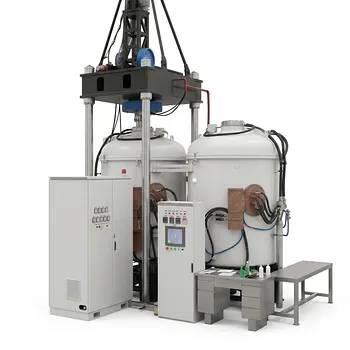
High Pressure 600T Vacuum Induction Hot Press Furnace for Advanced Material Heat Treatment and Sintering
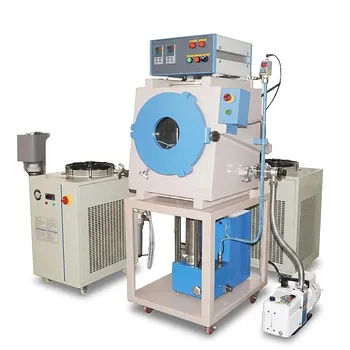
High Temperature Vacuum Lamination Hot Press Furnace Machine for Semiconductor Wafer Bonding and Advanced Composite Thermal Processing
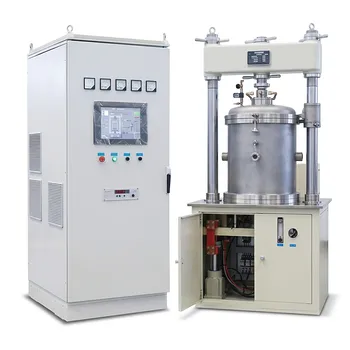
Industrial Vacuum Hot Press Furnace Machine and High Temperature Heated Vacuum Press for Advanced Material Sintering
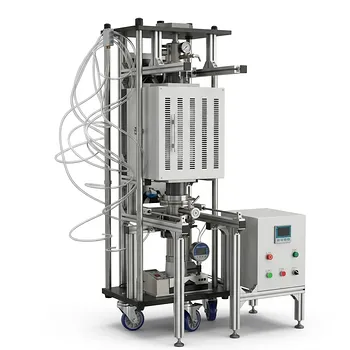
Industrial High Temperature Vacuum Hot Press Furnace and Heated Vacuum Press Machine for Material Science Sintering
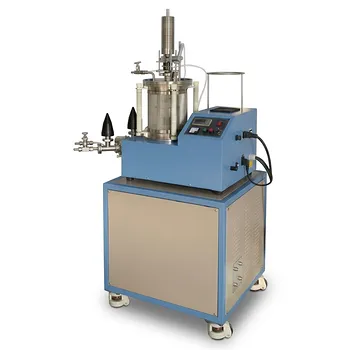
Ultrafast Thermal Pressing Furnace 2900C Max Temperature 200K per Second Heating Rate Vacuum Atmosphere Rapid Processing System
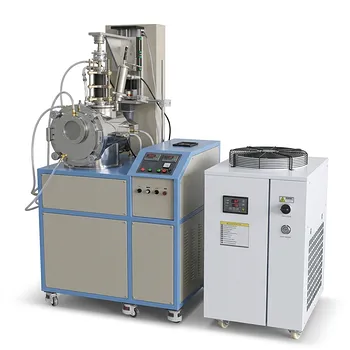
High Temperature Ultrafast Heating Pressing Furnace 2900C Max 100kgf Rapid Thermal Processing System
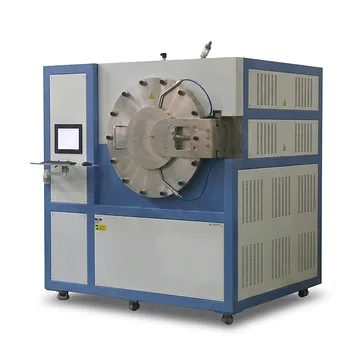
High Vacuum Pressure Chamber Furnace 800C 3.5 Bar Sintering System for Superconducting Materials
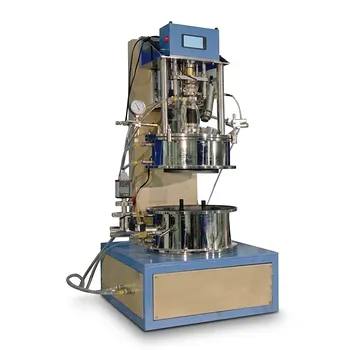
2500C High Vacuum Ultrafast Heating Pellet Press with Automated 8 Sample Loading System
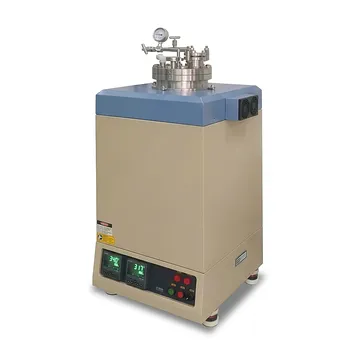
High Temperature 1000C Vacuum Furnace with 8 Inch ID Chamber for Material Sintering and Research Annealing
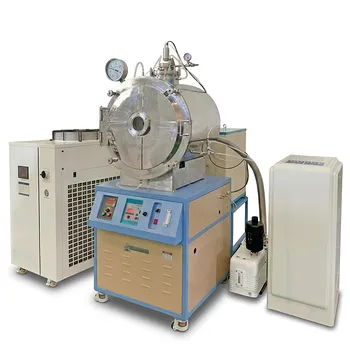
Ultra High Temperature Induction Heated Vacuum Furnace with Molten Salt Electrolysis Capability and 3000 Degree Precision Control
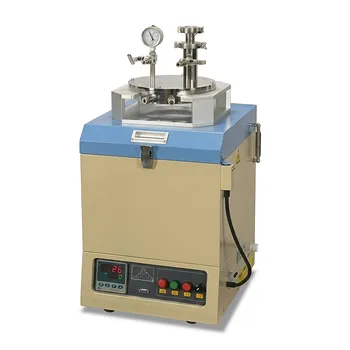
Vertical Vacuum Furnace 1100C High Temperature 8 Inch Quartz Chamber Water Cold Flange System
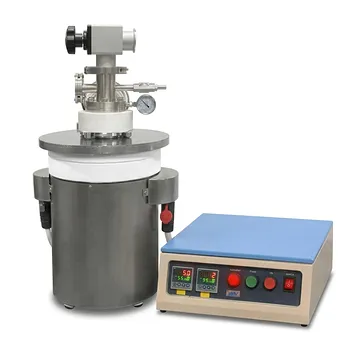
1100C High Temperature Vacuum Crucible Furnace with Quartz Chamber for Thermal Processing and Sintering
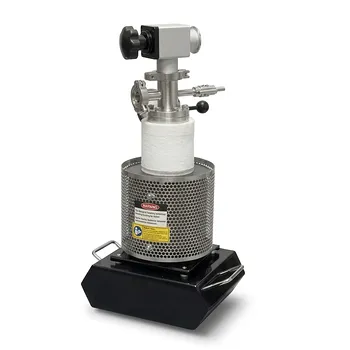
High Temperature 1100C Compact Top Loading Vertical Vacuum Tube Furnace for High Vacuum Noble Metal Melting and Material Research

1750°C High Temperature Benchtop Vacuum Atmosphere Tube Furnace with Kanthal Super 1800 Heating Elements and 60mm Alumina Processing Tube

1800C High Temperature Compact Vacuum Tube Furnace with 60mm OD Alumina Tube and Kanthal MoSi2 Heating Elements

High Temperature 1700C Tube Furnace with High Vacuum Turbomolecular Pump System and Multi Channel Mass Flow Controller Gas Mixer
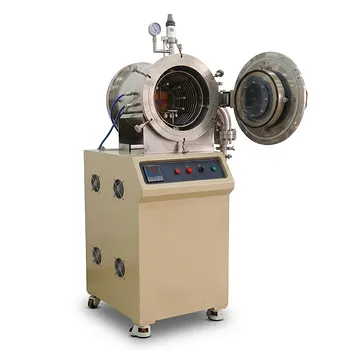
High Temperature Cold Wall High Vacuum Chamber Furnace 1400C for Advanced Material Processing
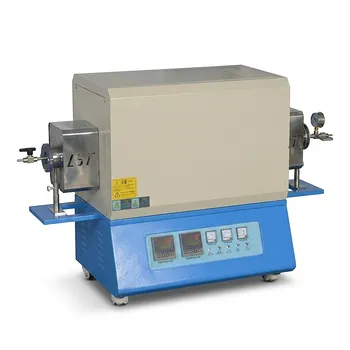
High Temperature Dual Zone Vacuum Tube Furnace for Material Research and CVD Processing
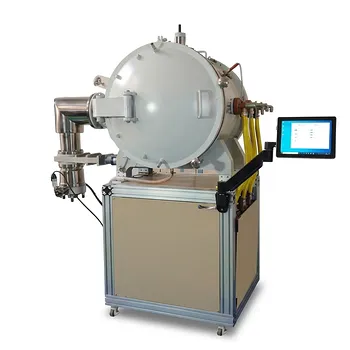
High Temperature Cold Wall Vacuum Furnace for Advanced Material Sintering and Annealing 1600C Heating Area 200x200x300mm