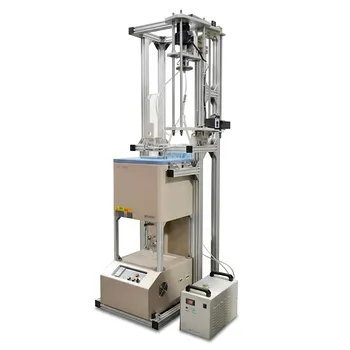
What are the key technical parameters for operating a Vacuum Hot Press Furnace? Master Heat, Pressure, and Vacuum.
Updated 5 months ago
Operating a vacuum hot press furnace requires precise control over four critical variables: temperature, uniaxial pressure, vacuum level, and time. Most high-performance applications operate between 1000°C and 2400°C with mechanical pressures ranging from 10 to 100 MPa. These parameters, maintained within a vacuum of $10^{-3}$ to $10^{-5}$ Pa, enable the production of high-density technical ceramics and refractory metals that would otherwise be impossible to manufacture.
The core objective of vacuum hot pressing is to drive material densification through the simultaneous application of heat and mechanical force. By managing the synergy between plastic flow, diffusion, and atmospheric purity, operators can achieve near-theoretical density while maintaining a fine grain structure.
Thermal Management and Kinetics
Temperature Range and Precision
The furnace must typically sustain temperatures between 1000°C and 2400°C depending on the material's melting point and sintering characteristics. Maintaining a uniform hot zone is critical to ensure that the entire volume of the powder compact reaches the required energy state for diffusion.
Control of Heating and Cooling Rates
Operators must carefully manage the heating ramp to soften particles and initiate diffusion without causing thermal shock. Similarly, controlled cooling rates are essential to prevent thermal gradients that can lead to internal cracking or residual stress in the finished part.
The Role of Peak Temperature Hold Times
Determining the optimal hold time at peak temperature is a balancing act between density and microstructure. While longer hold times ensure full consolidation, excessive duration can lead to unwanted grain growth, which degrades the mechanical properties of the material.
Mechanical Pressure and Densification
Uniaxial Pressure Application
Mechanical pressure, typically ranging from 10 to 100 MPa, is applied uniaxially through a hydraulic system. This force acts directly on the material inside a graphite die, providing the necessary energy to overcome particle friction and internal voids.
Mechanisms of Consolidation
The application of pressure triggers several physical processes, including particle rearrangement, plastic flow, and creep. These mechanisms work in tandem with heat to collapse pores and drive the material toward a fully dense solid state.
Structural Rigidity Requirements
The furnace body, often a double-walled stainless-steel vessel, must be engineered for high rigidity. This ensures the structure can withstand the combined forces of thermal expansion and mechanical pressing without losing alignment or vacuum integrity.
Atmospheric Control and Vacuum Integrity
High Vacuum Levels
Operating at vacuum levels between $10^{-3}$ and $10^{-5}$ Pa is necessary to remove air and volatile contaminants. This environment is crucial for processing materials that are sensitive to oxidation or nitrogen absorption at high temperatures.
Minimizing Atmospheric Interference
The vacuum environment serves to de-gas the powder compact, removing trapped moisture and gases that could cause porosity. By eliminating atmospheric interference, the furnace ensures the highest possible purity in the final sintered product.
Integrated Water Cooling
To maintain the vacuum seals and protect the outer structure, the furnace utilizes water-cooling jackets on all non-heating surfaces. This keeps the outer wall near room temperature even while the internal hot zone exceeds 2000°C.
Understanding the Trade-offs
Density vs. Grain Structure
Increasing the temperature and pressure will almost always increase density, but it often comes at the cost of grain enlargement. For many advanced ceramics, a fine grain structure is more important for toughness than reaching 100% density.
Tooling Limitations
While higher pressures accelerate densification, they are limited by the compressive strength of the die material. Pushing a graphite die beyond its mechanical limits at high temperatures can lead to catastrophic failure and contamination of the furnace.
Cycle Time vs. Equipment Longevity
Rapid cooling cycles can increase throughput but significantly increase thermal fatigue on the heating elements and insulation. Operators must choose between maximizing production speed and extending the maintenance intervals of the furnace.
Making the Right Choice for Your Goal
To achieve the best results with a vacuum hot press, your operational strategy should align with your specific material requirements:
- If your primary focus is Maximum Density: Prioritize higher uniaxial pressure and longer hold times at the peak sintering temperature.
- If your primary focus is Fine Grain Structure: Utilize the highest permissible pressure at the lowest possible sintering temperature to limit diffusion-driven grain growth.
- If your primary focus is Material Purity: Ensure the chamber reaches a high-vacuum state ($10^{-5}$ Pa) before initiating the heating ramp to remove all volatiles.
- If your primary focus is Throughput: Implement a controlled inert gas quench during the cooling phase to safely accelerate the cycle without damaging the furnace.
Success in vacuum hot pressing lies in the calculated balance of thermal energy and mechanical force within a pristine environment.
Summary Table:
| Technical Parameter | Typical Range / Value | Critical Role in Process |
|---|---|---|
| Temperature | 1000°C to 2400°C | Initiates diffusion and material softening. |
| Uniaxial Pressure | 10 to 100 MPa | Drives particle rearrangement and pore collapse. |
| Vacuum Level | $10^{-3}$ to $10^{-5}$ Pa | Prevents oxidation and removes volatile impurities. |
| Hold Time | Varies by Material | Balances final density against grain growth control. |
| Cooling System | Water-cooled Jackets | Protects furnace integrity and vacuum seals. |
Elevate Your Material Research with THERMUNITS Precision
As a leading manufacturer of high-temperature laboratory equipment for material science and industrial R&D, THERMUNITS provides the advanced thermal processing solutions you need to achieve near-theoretical density and superior material purity.
Our comprehensive range of equipment includes:
- Hot Press & Vacuum Induction Melting (VIM) Furnaces for high-performance alloys and ceramics.
- CVD/PECVD Systems and Vacuum, Atmosphere, Tube, and Muffle Furnaces.
- Rotary Kilns, Dental Furnaces, and high-quality Thermal Elements.
Whether you are working on refractory metals or technical ceramics, our equipment is designed to meet the most rigorous R&D standards. Contact THERMUNITS today to find the perfect heat treatment solution for your lab!
Mentioned Products
- High Pressure 600T Vacuum Induction Hot Press Furnace for Advanced Material Heat Treatment and Sintering
- High Temperature Vacuum Lamination Hot Press Furnace Machine for Semiconductor Wafer Bonding and Advanced Composite Thermal Processing
- Industrial Vacuum Hot Press Furnace Machine and High Temperature Heated Vacuum Press for Advanced Material Sintering
- Industrial High Temperature Vacuum Hot Press Furnace and Heated Vacuum Press Machine for Material Science Sintering
- Ultrafast Thermal Pressing Furnace 2900C Max Temperature 200K per Second Heating Rate Vacuum Atmosphere Rapid Processing System
People Also Ask
- What is a Vacuum Hot Press Furnace and what are its primary industrial applications? Achieve Maximum Material Density
- What are the structural features of the furnace body and chamber in a Vacuum Hot Press Furnace? Master Material Density
- What types of heating systems and insulation are used in Vacuum Hot Press Furnaces? Optimize Your Thermal Processing
- Why is graphite the preferred material for dies and heating elements in Vacuum Hot Press Furnaces? High-Temp Solutions
- What are the primary operational components and mechanisms of a vacuum hot press furnace? A Technical Breakdown

Tech Team · ThermUnits
Last updated on Apr 14, 2026
Related Products
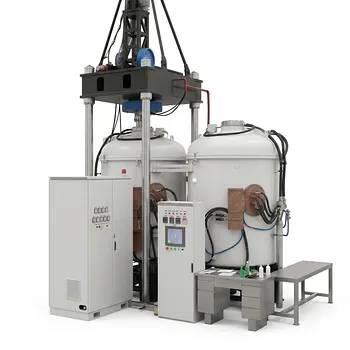
High Pressure 600T Vacuum Induction Hot Press Furnace for Advanced Material Heat Treatment and Sintering
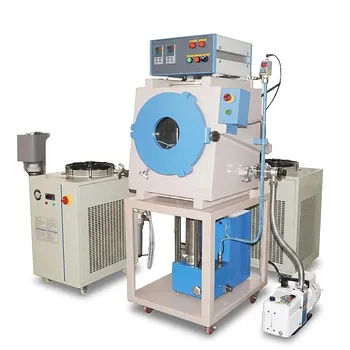
High Temperature Vacuum Lamination Hot Press Furnace Machine for Semiconductor Wafer Bonding and Advanced Composite Thermal Processing
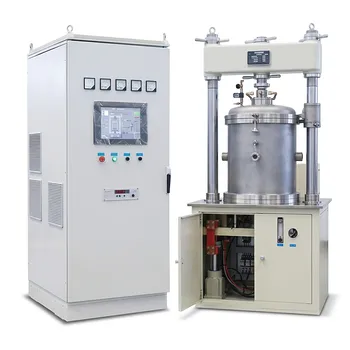
Industrial Vacuum Hot Press Furnace Machine and High Temperature Heated Vacuum Press for Advanced Material Sintering
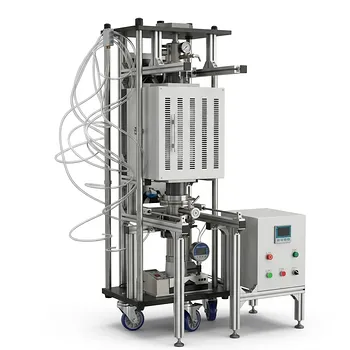
Industrial High Temperature Vacuum Hot Press Furnace and Heated Vacuum Press Machine for Material Science Sintering
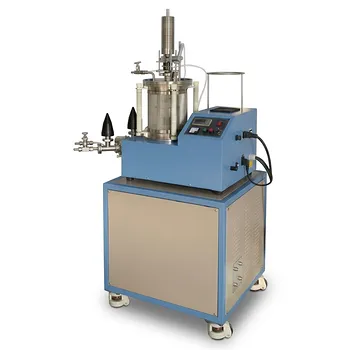
Ultrafast Thermal Pressing Furnace 2900C Max Temperature 200K per Second Heating Rate Vacuum Atmosphere Rapid Processing System
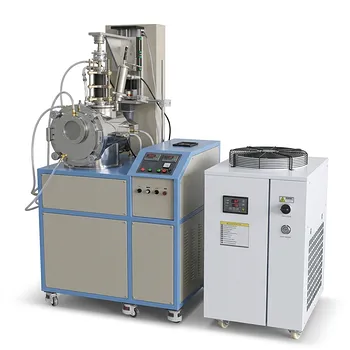
High Temperature Ultrafast Heating Pressing Furnace 2900C Max 100kgf Rapid Thermal Processing System
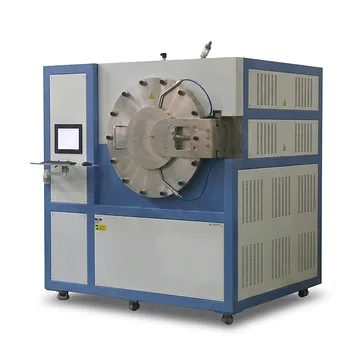
High Vacuum Pressure Chamber Furnace 800C 3.5 Bar Sintering System for Superconducting Materials
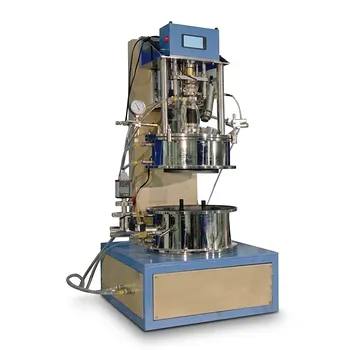
2500C High Vacuum Ultrafast Heating Pellet Press with Automated 8 Sample Loading System
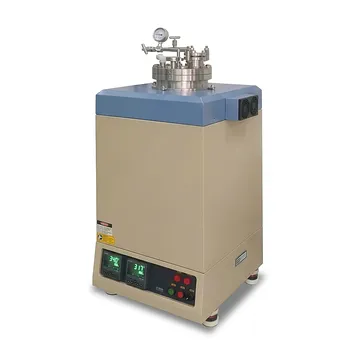
High Temperature 1000C Vacuum Furnace with 8 Inch ID Chamber for Material Sintering and Research Annealing
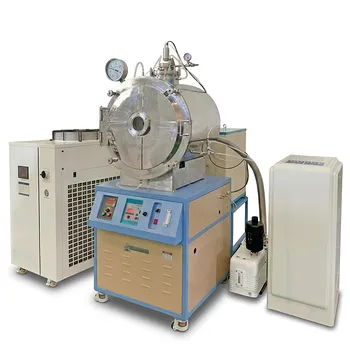
Ultra High Temperature Induction Heated Vacuum Furnace with Molten Salt Electrolysis Capability and 3000 Degree Precision Control
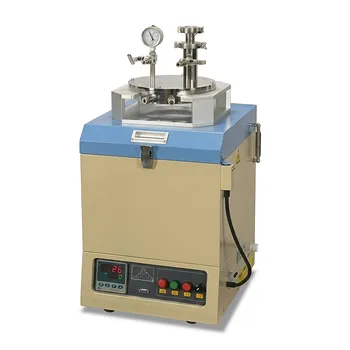
Vertical Vacuum Furnace 1100C High Temperature 8 Inch Quartz Chamber Water Cold Flange System
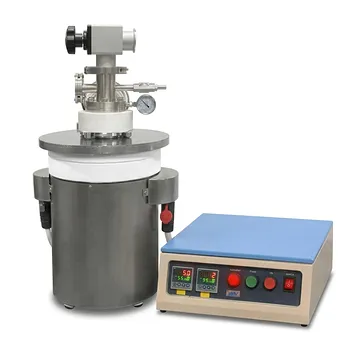
1100C High Temperature Vacuum Crucible Furnace with Quartz Chamber for Thermal Processing and Sintering
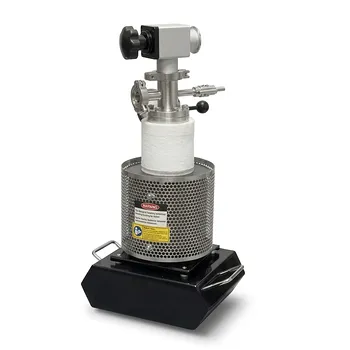
High Temperature 1100C Compact Top Loading Vertical Vacuum Tube Furnace for High Vacuum Noble Metal Melting and Material Research
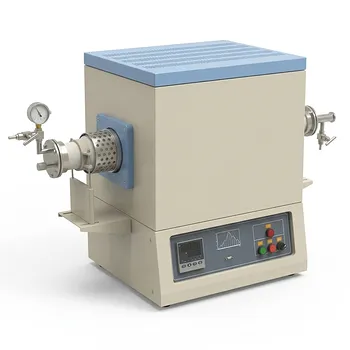
1750°C High Temperature Benchtop Vacuum Atmosphere Tube Furnace with Kanthal Super 1800 Heating Elements and 60mm Alumina Processing Tube

1800C High Temperature Compact Vacuum Tube Furnace with 60mm OD Alumina Tube and Kanthal MoSi2 Heating Elements

High Temperature 1700C Tube Furnace with High Vacuum Turbomolecular Pump System and Multi Channel Mass Flow Controller Gas Mixer
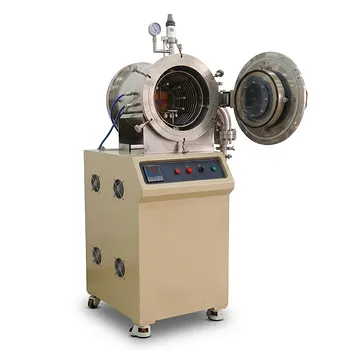
High Temperature Cold Wall High Vacuum Chamber Furnace 1400C for Advanced Material Processing
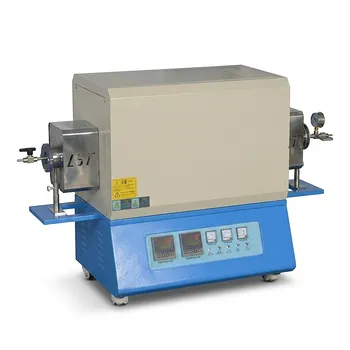
High Temperature Dual Zone Vacuum Tube Furnace for Material Research and CVD Processing
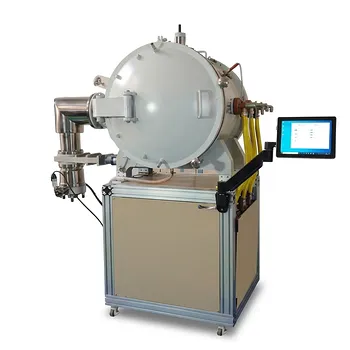
High Temperature Cold Wall Vacuum Furnace for Advanced Material Sintering and Annealing 1600C Heating Area 200x200x300mm