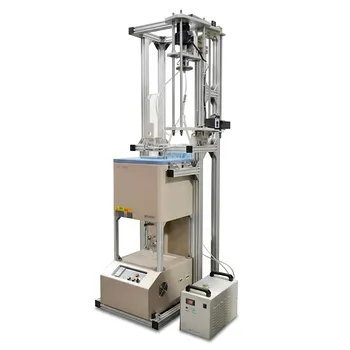
What microstructural mechanisms lead to material densification in a Vacuum Hot Press Furnace? Master Material Sintering
Updated 5 months ago
Densification in a vacuum hot press furnace is driven by the simultaneous application of uniaxial pressure and high thermal energy. This synergy accelerates particle rearrangement, triggers localized plastic deformation, and enhances diffusion mechanisms to eliminate internal porosity. By operating within a vacuum, the system removes trapped gases and surface contaminants that would otherwise inhibit grain boundary movement or cause material bloating.
Core Takeaway: Vacuum hot pressing achieves near-theoretical density by using mechanical stress to bypass the kinetic limitations of traditional sintering, facilitating rapid pore elimination and refined grain structures at significantly lower temperatures.
The Initial Stage: Mechanical Rearrangement
Breaking Agglomerates and Filling Voids
At the onset of the process, the application of uniaxial mechanical pressure (typically 10 to 50 MPa) forces powder particles to shift and slide. This physical force breaks down particle agglomerates and pushes smaller particles into the large voids between larger grains.
Reducing Particle Friction
The thermo-mechanical coupling within the furnace reduces the frictional forces between individual powder particles. This allows for a more efficient packing structure before the actual bonding of particles begins.
Intermediate Stage: Stress-Induced Deformation
Localized Plastic Flow
As the temperature rises, the yield strength of the material decreases, allowing the applied stress to cause plastic deformation at the contact points between particles. This "flattening" of the contact areas increases the surface area available for bonding and rapidly reduces the volume of open pores.
The Role of Creep Mechanisms
At sustained high temperatures and pressures, creep mechanisms become the dominant drivers of densification. Nabarro-Herring creep (lattice diffusion) and Coble creep (grain-boundary diffusion) allow the material to "flow" into remaining micro-voids under stresses that are lower than the standard yield point.
Final Stage: Mass Transport and Diffusion
Enhanced Atomic Mobility
The combination of heat and pressure significantly increases atomic mobility across the material. This heightened energy state allows atoms to migrate from the bulk of the grains toward the pore surfaces, effectively "filling" the gaps from the inside out.
Grain-Boundary and Volume Diffusion
Mass transport occurs primarily through grain-boundary diffusion and volume diffusion, which are the primary engines for pore shrinkage. Because the pressure provides an additional driving force, these diffusion processes occur much faster than in conventional atmospheric sintering.
The Influence of the Vacuum Environment
Removal of Trapped Gases
In a standard atmosphere, gases trapped within closing pores can create internal pressure that resists further densification. The vacuum environment evacuates these gases, preventing "bloating" and allowing pores to collapse completely.
Surface Decontamination
The vacuum assists in removing surface oxides and contaminants from the powder particles. This creates "clean" grain boundaries, which facilitates faster atomic bonding and prevents impurities from pinning grain boundaries in undesirable ways.
Understanding the Trade-offs
Geometry and Shape Limitations
Because a hot press uses uniaxial pressure (applied in one direction), it is generally limited to producing simple geometric shapes like disks, plates, or cylinders. Complex "near-net-shape" parts are difficult to achieve compared to Isostatic pressing.
Potential for Microstructural Anisotropy
The one-directional nature of the force can lead to anisotropy in the final material, where mechanical or thermal properties differ depending on whether they are measured parallel or perpendicular to the press direction.
Risk of Die Contamination
At the extreme temperatures required for refractory metals or ceramics (up to 2400 °C), the material may react with the graphite or ceramic dies. This requires careful selection of die liners or coatings to prevent carbon diffusion into the workpiece.
How to Apply This to Your Project
Selecting the Right Parameters
- If your primary focus is Fine Grain Size: Use higher mechanical pressure to drive densification at the lowest possible temperature to inhibit abnormal grain growth.
- If your primary focus is Maximum Density: Prioritize longer "dwell times" at peak temperature and pressure to allow diffusion mechanisms to eliminate the final 1-2% of porosity.
- If your primary focus is Material Purity: Utilize a high-vacuum (10⁻⁵ torr or better) to ensure all volatile surface contaminants are removed before the pores close.
The mastery of vacuum hot pressing lies in balancing mechanical load and thermal energy to manipulate the microstructure at the atomic level.
Summary Table:
| Stage | Primary Mechanism | Key Action |
|---|---|---|
| Initial | Mechanical Rearrangement | Pressure breaks agglomerates and fills large voids. |
| Intermediate | Plastic Flow & Creep | Stress-induced deformation and Nabarro-Herring/Coble creep. |
| Final | Mass Transport | Atomic mobility and diffusion fill remaining micro-pores. |
| Atmosphere | Vacuum Evacuation | Removes trapped gases and oxides to prevent bloating. |
Elevate Your Material Research with THERMUNITS Precision
Achieving near-theoretical density requires more than just heat—it requires the precise thermo-mechanical control found in THERMUNITS advanced thermal processing solutions. As a leading manufacturer for material science and industrial R&D, we provide a comprehensive range of equipment, including:
- Vacuum Hot Press & Spark Plasma Sintering Systems
- Muffle, Tube, and Atmosphere Furnaces
- CVD/PECVD and Vacuum Induction Melting (VIM) Furnaces
- Dental and Rotary Kilns
Whether you are developing refractory ceramics or advanced composites, our expert-engineered systems ensure superior microstructural control and repeatable results.
Contact THERMUNITS today to find the perfect furnace for your application!
Mentioned Products
- High Pressure 600T Vacuum Induction Hot Press Furnace for Advanced Material Heat Treatment and Sintering
- High Temperature Vacuum Lamination Hot Press Furnace Machine for Semiconductor Wafer Bonding and Advanced Composite Thermal Processing
- Industrial Vacuum Hot Press Furnace Machine and High Temperature Heated Vacuum Press for Advanced Material Sintering
- Industrial High Temperature Vacuum Hot Press Furnace and Heated Vacuum Press Machine for Material Science Sintering
- Ultrafast Thermal Pressing Furnace 2900C Max Temperature 200K per Second Heating Rate Vacuum Atmosphere Rapid Processing System
People Also Ask
- What is a Vacuum Hot Press Furnace and what are its primary industrial applications? Achieve Maximum Material Density
- What are the structural features of the furnace body and chamber in a Vacuum Hot Press Furnace? Master Material Density
- What types of heating systems and insulation are used in Vacuum Hot Press Furnaces? Optimize Your Thermal Processing
- Why is graphite the preferred material for dies and heating elements in Vacuum Hot Press Furnaces? High-Temp Solutions
- What are the primary operational components and mechanisms of a vacuum hot press furnace? A Technical Breakdown

Tech Team · ThermUnits
Last updated on Apr 14, 2026
Related Products
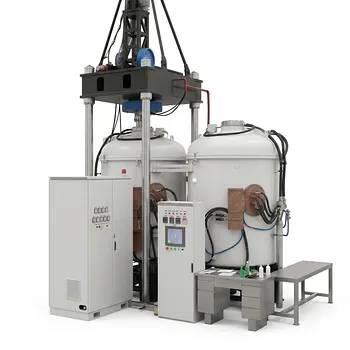
High Pressure 600T Vacuum Induction Hot Press Furnace for Advanced Material Heat Treatment and Sintering
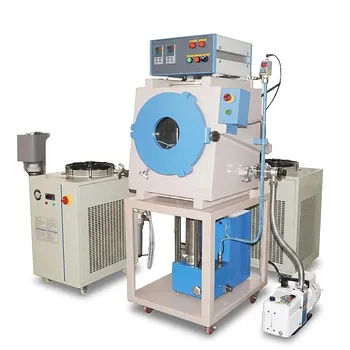
High Temperature Vacuum Lamination Hot Press Furnace Machine for Semiconductor Wafer Bonding and Advanced Composite Thermal Processing
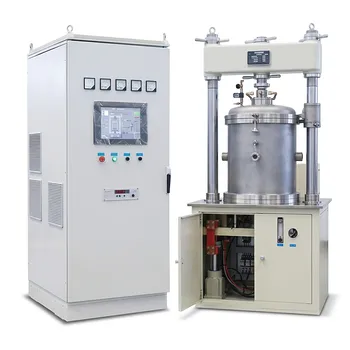
Industrial Vacuum Hot Press Furnace Machine and High Temperature Heated Vacuum Press for Advanced Material Sintering
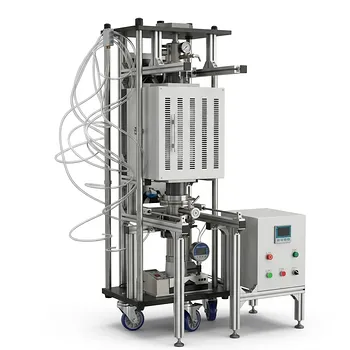
Industrial High Temperature Vacuum Hot Press Furnace and Heated Vacuum Press Machine for Material Science Sintering
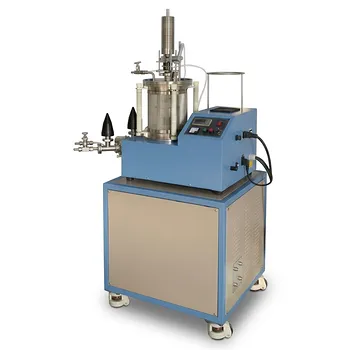
Ultrafast Thermal Pressing Furnace 2900C Max Temperature 200K per Second Heating Rate Vacuum Atmosphere Rapid Processing System
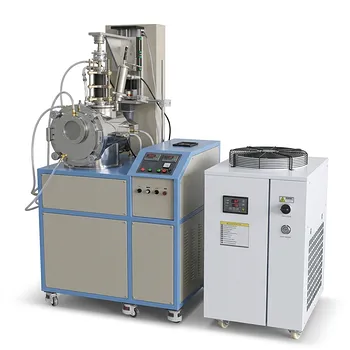
High Temperature Ultrafast Heating Pressing Furnace 2900C Max 100kgf Rapid Thermal Processing System
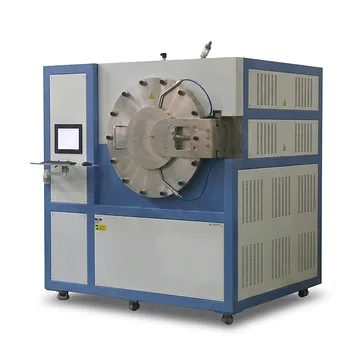
High Vacuum Pressure Chamber Furnace 800C 3.5 Bar Sintering System for Superconducting Materials
2500C High Vacuum Ultrafast Heating Pellet Press with Automated 8 Sample Loading System
High Temperature 1000C Vacuum Furnace with 8 Inch ID Chamber for Material Sintering and Research Annealing
Ultra High Temperature Induction Heated Vacuum Furnace with Molten Salt Electrolysis Capability and 3000 Degree Precision Control
Vertical Vacuum Furnace 1100C High Temperature 8 Inch Quartz Chamber Water Cold Flange System
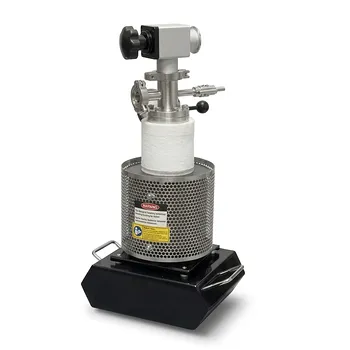
High Temperature 1100C Compact Top Loading Vertical Vacuum Tube Furnace for High Vacuum Noble Metal Melting and Material Research
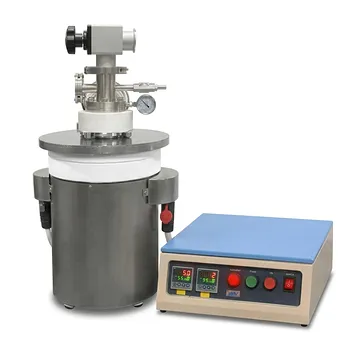
1100C High Temperature Vacuum Crucible Furnace with Quartz Chamber for Thermal Processing and Sintering
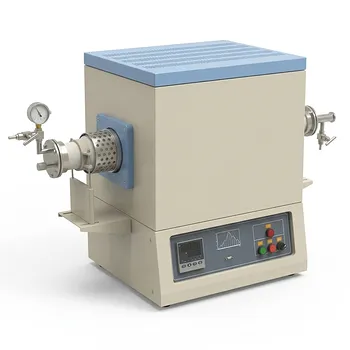
1750°C High Temperature Benchtop Vacuum Atmosphere Tube Furnace with Kanthal Super 1800 Heating Elements and 60mm Alumina Processing Tube

1800C High Temperature Compact Vacuum Tube Furnace with 60mm OD Alumina Tube and Kanthal MoSi2 Heating Elements

High Temperature 1700C Tube Furnace with High Vacuum Turbomolecular Pump System and Multi Channel Mass Flow Controller Gas Mixer
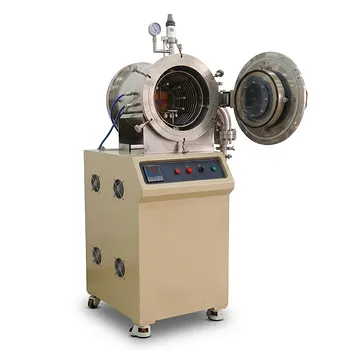
High Temperature Cold Wall High Vacuum Chamber Furnace 1400C for Advanced Material Processing
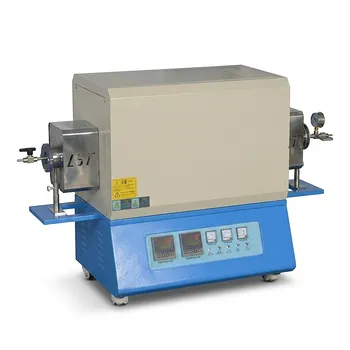
High Temperature Dual Zone Vacuum Tube Furnace for Material Research and CVD Processing
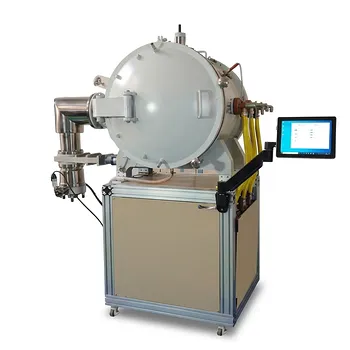
High Temperature Cold Wall Vacuum Furnace for Advanced Material Sintering and Annealing 1600C Heating Area 200x200x300mm