What is the standard four-step operating sequence for a Vacuum Hot Press Furnace? Master Material Densification
Updated 5 months ago
The standard operating sequence for a Vacuum Hot Press Furnace is a precise, four-stage process designed to achieve maximum material density. This sequence begins with the loading of materials into a die and the evacuation of the chamber to create a clean environment. It then transitions through a controlled heating ramp and a high-pressure sintering hold before concluding with a managed cooling phase.
This four-step workflow integrates high-temperature heating with uniaxial mechanical pressure under vacuum to drive material densification through diffusion and plastic flow while eliminating atmospheric contamination.
Phase 1: Preparation and Environmental Control
Material Loading and Chamber Evacuation
The process begins by placing the raw material—typically a powder or preform—into a high-strength graphite die assembly.
Once the furnace is sealed, the chamber is evacuated to remove air and volatile impurities. This creates a high-vacuum environment, often reaching levels between $10^{-3}$ and $10^{-5}$ Pa, which is essential for preventing oxidation and ensuring material purity.
Phase 2: Reaching Thermal Equilibrium
The Controlled Heating Ramp
The furnace temperature is increased at a specific, controlled rate to reach the target processing point, which typically ranges from 1000°C to 2400°C.
A steady heating ramp is vital to prevent thermal gradients, which can cause uneven expansion or internal cracking in the material. During this stage, particles begin to soften and initial diffusion mechanisms are activated.
Phase 3: Consolidation and Sintering
Simultaneous Pressure and Peak Temperature
Once the target temperature is reached, a uniaxial mechanical pressure—generally between 10 and 100 MPa—is applied to the material.
This combination of heat and pressure triggers plastic flow, creep, and particle rearrangement, which forces the material to reach near-theoretical density. The duration of this "hold" is critical; it must be long enough to ensure full consolidation but short enough to prevent undesirable grain growth.
Phase 4: Thermal Recovery and Ejection
Controlled Cooling and Unloading
After the sintering hold is complete, the heating elements are deactivated, and the furnace begins to cool under vacuum or an inert gas.
Careful management of the cooling rate is necessary to avoid thermal shock and minimize residual stresses within the finished part. Once the furnace reaches a safe temperature, the chamber is vented, and the fully densified component is ejected from the die.
Understanding the Trade-offs
Density vs. Microstructure
While higher temperatures and longer hold times guarantee a more dense material, they often lead to coarse grain structures. This can result in a loss of mechanical toughness, requiring a delicate balance between density and microscopic integrity.
Pressure Limits and Tooling Wear
Applying higher uniaxial pressure accelerates the densification process but places immense stress on the graphite dies. Frequent use at maximum pressure limits can lead to die deformation or catastrophic failure, increasing operational costs.
Thermal Lag in Large Components
In larger workpieces, the center of the material may heat or cool slower than the surface. This thermal lag can result in non-uniform properties across the part if the heating ramp and cooling phases are not sufficiently gradual.
How to Optimize Your Hot Pressing Strategy
- If your primary focus is material purity: Prioritize the evacuation phase to reach vacuum levels of $10^{-5}$ Pa to eliminate any risk of atmospheric contamination.
- If your primary focus is maximum densification: Focus on the peak temperature hold, applying uniaxial pressures toward the 100 MPa limit to drive plastic flow.
- If your primary focus is mechanical strength: Limit the duration of the peak temperature hold and use a controlled cooling rate to prevent excessive grain growth and residual stress.
By precisely governing the interaction of vacuum, heat, and pressure, you can transform raw powders into high-performance components with superior structural integrity.
Summary Table:
| Phase | Key Actions | Primary Objective |
|---|---|---|
| 1. Preparation | Loading dies & chamber evacuation ($10^{-3}$ to $10^{-5}$ Pa) | Prevent oxidation and remove impurities |
| 2. Heating Ramp | Controlled temperature rise ($1000^\circ$C to $2400^\circ$C) | Reach thermal equilibrium & avoid gradients |
| 3. Sintering | Simultaneous peak temp & uniaxial pressure (10-100 MPa) | Drive plastic flow & achieve max density |
| 4. Recovery | Managed cooling & gas venting | Minimize residual stress & prevent thermal shock |
Elevate Your Material Research with THERMUNITS
Is your lab achieving the theoretical density your materials require? THERMUNITS is a leading manufacturer of high-performance high-temperature laboratory equipment for material science and industrial R&D. We provide the precision and reliability needed for advanced heat treatment, offering a comprehensive range of solutions including:
- Advanced Furnaces: Vacuum Hot Press, Muffle, Vacuum, Atmosphere, Tube, and Rotary Furnaces.
- Specialized Systems: CVD/PECVD systems, Dental Furnaces, Electric Rotary Kilns, and Vacuum Induction Melting (VIM) furnaces.
- Components: High-quality Thermal Elements and custom lab equipment.
Whether you need to eliminate atmospheric contamination or optimize grain growth during sintering, our expert team is ready to help you select the ideal thermal processing solution.
Ready to optimize your sintering strategy? Contact us today to discuss your project!
Mentioned Products
- High Pressure 600T Vacuum Induction Hot Press Furnace for Advanced Material Heat Treatment and Sintering
- High Temperature Vacuum Lamination Hot Press Furnace Machine for Semiconductor Wafer Bonding and Advanced Composite Thermal Processing
- Industrial Vacuum Hot Press Furnace Machine and High Temperature Heated Vacuum Press for Advanced Material Sintering
- Industrial High Temperature Vacuum Hot Press Furnace and Heated Vacuum Press Machine for Material Science Sintering
- Ultrafast Thermal Pressing Furnace 2900C Max Temperature 200K per Second Heating Rate Vacuum Atmosphere Rapid Processing System
People Also Ask
- What is a Vacuum Hot Press Furnace and what are its primary industrial applications? Achieve Maximum Material Density
- What are the structural features of the furnace body and chamber in a Vacuum Hot Press Furnace? Master Material Density
- What types of heating systems and insulation are used in Vacuum Hot Press Furnaces? Optimize Your Thermal Processing
- Why is graphite the preferred material for dies and heating elements in Vacuum Hot Press Furnaces? High-Temp Solutions
- What are the primary operational components and mechanisms of a vacuum hot press furnace? A Technical Breakdown

Tech Team · ThermUnits
Last updated on Apr 14, 2026
Related Products
High Pressure 600T Vacuum Induction Hot Press Furnace for Advanced Material Heat Treatment and Sintering
High Temperature Vacuum Lamination Hot Press Furnace Machine for Semiconductor Wafer Bonding and Advanced Composite Thermal Processing
Industrial Vacuum Hot Press Furnace Machine and High Temperature Heated Vacuum Press for Advanced Material Sintering
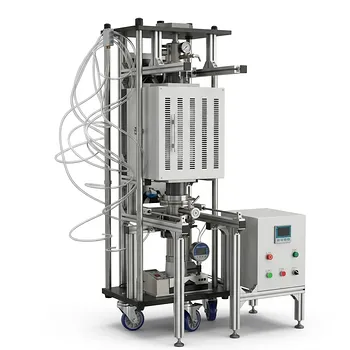
Industrial High Temperature Vacuum Hot Press Furnace and Heated Vacuum Press Machine for Material Science Sintering
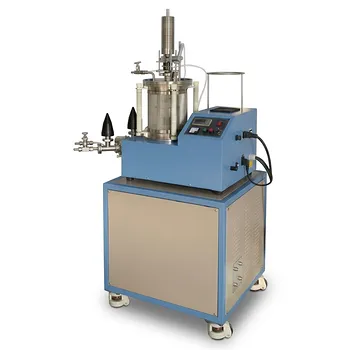
Ultrafast Thermal Pressing Furnace 2900C Max Temperature 200K per Second Heating Rate Vacuum Atmosphere Rapid Processing System
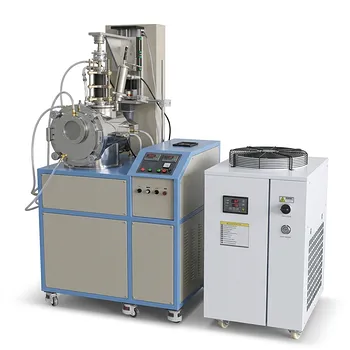
High Temperature Ultrafast Heating Pressing Furnace 2900C Max 100kgf Rapid Thermal Processing System
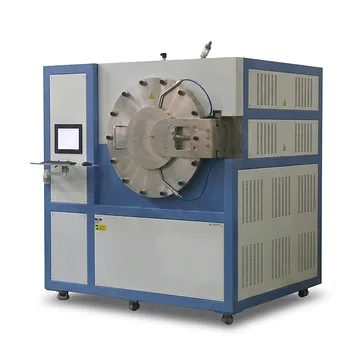
High Vacuum Pressure Chamber Furnace 800C 3.5 Bar Sintering System for Superconducting Materials
2500C High Vacuum Ultrafast Heating Pellet Press with Automated 8 Sample Loading System
High Temperature 1000C Vacuum Furnace with 8 Inch ID Chamber for Material Sintering and Research Annealing
Ultra High Temperature Induction Heated Vacuum Furnace with Molten Salt Electrolysis Capability and 3000 Degree Precision Control
Vertical Vacuum Furnace 1100C High Temperature 8 Inch Quartz Chamber Water Cold Flange System
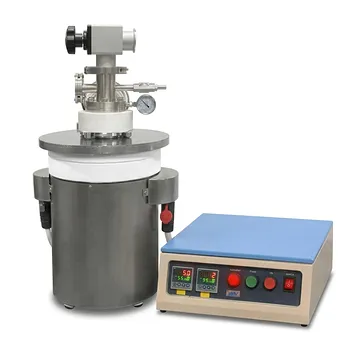
1100C High Temperature Vacuum Crucible Furnace with Quartz Chamber for Thermal Processing and Sintering
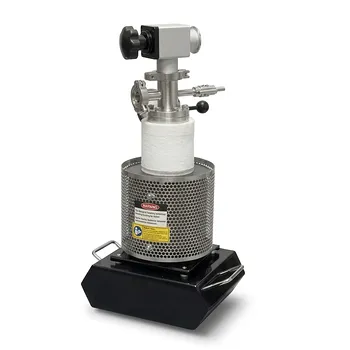
High Temperature 1100C Compact Top Loading Vertical Vacuum Tube Furnace for High Vacuum Noble Metal Melting and Material Research
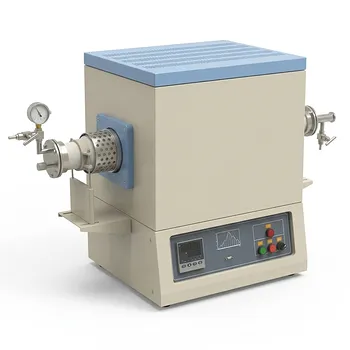
1750°C High Temperature Benchtop Vacuum Atmosphere Tube Furnace with Kanthal Super 1800 Heating Elements and 60mm Alumina Processing Tube

1800C High Temperature Compact Vacuum Tube Furnace with 60mm OD Alumina Tube and Kanthal MoSi2 Heating Elements

High Temperature 1700C Tube Furnace with High Vacuum Turbomolecular Pump System and Multi Channel Mass Flow Controller Gas Mixer
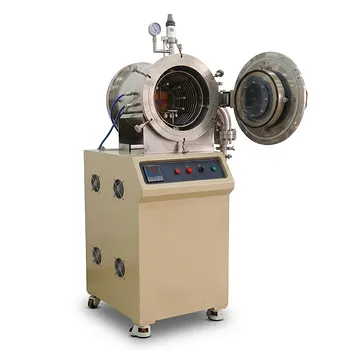
High Temperature Cold Wall High Vacuum Chamber Furnace 1400C for Advanced Material Processing
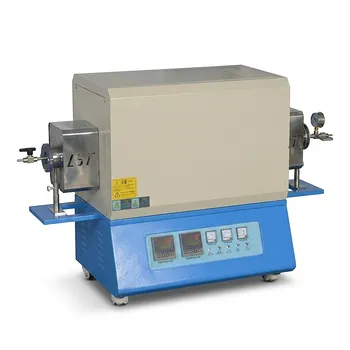
High Temperature Dual Zone Vacuum Tube Furnace for Material Research and CVD Processing
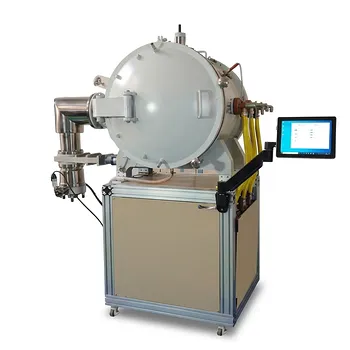
High Temperature Cold Wall Vacuum Furnace for Advanced Material Sintering and Annealing 1600C Heating Area 200x200x300mm