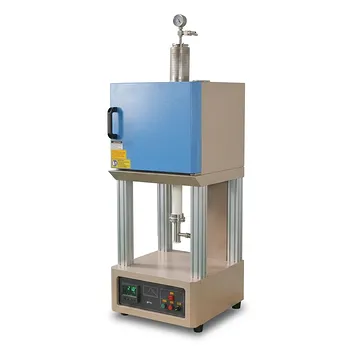
How does a programmable Box Furnace facilitate the curing of silver inks? Expert Thermal Control for Silicon Substrates
Updated 3 months ago
Programmable Box Furnaces facilitate the curing of metal-complex silver inks by providing a highly controlled environment for complex chemical transformations. By precisely managing heating rates and dwell times, the furnace ensures the orderly evaporation of ligands and the subsequent reduction of silver cations into a dense, conductive metallic film on silicon substrates.
The core value of a programmable furnace lies in its ability to synchronize the thermal budget with the chemical kinetics of the ink. This ensures that silver complexes decompose at a rate that allows for optimal film density and maximum electrical conductivity without compromising the bond with the silicon.
The Role of Precision Thermal Profiles
Managing the Heating Rate
A programmable furnace allows users to set a specific heating rate, such as 10 °C/min. This gradual increase prevents "thermal shock" to the ink, ensuring that volatile components do not boil off too violently, which could cause pinholes or cracks in the final film.
Strategic Temperature Dwell Points
The furnace is programmed to hold at specific temperatures, notably 160 °C and 300 °C. These plateaus provide the necessary energy to trigger specific chemical phases, allowing the ink to transition from a liquid state to a stable solid-state silver film.
The Chemical Transformation Process
Evaporation of Ammonia Ligands
The thermal treatment facilitates the steady evaporation of ammonia ligands from the metal-complex ink. Because the furnace environment is uniform, this removal happens consistently across the entire surface of the silicon substrate, preventing localized defects.
Reduction of Silver Cations
As the ligands are removed, the furnace provides the heat required to reduce silver cations into metallic silver. This molecular-level transformation is what converts the non-conductive ink into a functional electronic material.
Impact on Material Performance
Establishing Electrical Conductivity
By maintaining precise temperatures, the furnace ensures the resulting silver film is dense and highly conductive. Without this level of control, the silver might form a porous structure that inhibits electron flow.
Optimizing Adhesion to Silicon
The programmed cooling and heating cycles are critical for ensuring strong adhesion between the silver coating and the silicon substrate. Proper thermal management balances the different thermal expansion coefficients of the metal and the semiconductor.
Common Pitfalls to Avoid
Risks of Rapid Heating
If the heating rate is too aggressive, the ammonia ligands may evaporate faster than the silver can settle. This leads to delamination or a "popcorn" effect, where the coating peels away from the silicon surface.
Consequences of Incomplete Curing
Failing to reach or hold the 300 °C threshold may result in incomplete reduction. This leaves residual organic components within the film, significantly increasing electrical resistance and decreasing the longevity of the component.
How to Apply This to Your Project
When utilizing a programmable Box Furnace for silver ink curing, your settings should be dictated by your specific performance requirements.
- If your primary focus is maximum conductivity: Ensure the furnace dwell time at 300 °C is sufficient to complete the reduction of all silver cations into a dense metallic structure.
- If your primary focus is substrate integrity: Prioritize a slower heating rate (less than 10 °C/min) to minimize mechanical stress at the interface of the silver and the silicon.
- If your primary focus is high-throughput production: Experiment with the minimum required dwell time at 160 °C to find the fastest path to ligand evaporation without compromising film uniformity.
The success of your silver-on-silicon application depends entirely on using the furnace to bridge the gap between liquid chemistry and solid-state electronics.
Summary Table:
| Process Stage | Parameter/Action | Key Objective |
|---|---|---|
| Heating Ramp | 10 °C/min | Prevent thermal shock, pinholes, and cracks |
| Ligand Evaporation | 160 °C Dwell | Uniform removal of ammonia ligands from ink |
| Silver Reduction | 300 °C Dwell | Convert cations into a dense metallic film |
| Cooling Phase | Programmed Cycle | Optimize adhesion between silver and silicon |
Elevate Your Material Research with THERMUNITS
As a leading manufacturer of high-temperature laboratory equipment, THERMUNITS provides the precision thermal processing solutions required for advanced material science and industrial R&D. Our programmable Box, Vacuum, and Atmosphere furnaces are engineered to bridge the gap between liquid chemistry and solid-state electronics.
Our value to your lab:
- Comprehensive Solutions: We offer Muffle, Tube, Rotary, and Hot Press furnaces, CVD/PECVD systems, and Vacuum Induction Melting (VIM) furnaces.
- Unmatched Precision: Synchronize your thermal budget with chemical kinetics for optimal conductivity and film density.
- Expert Engineering: Specialized equipment for Dental, Industrial, and Laboratory heat treatment applications.
Ready to optimize your silver-on-silicon curing process? Contact our technical experts today for a tailored thermal solution!
References
- David L. Young, Melbs LeMieux. Metal-Complex Inks for Lower Cost and Improved Passivation for Silicon Photovoltaic Metallization. DOI: 10.52825/siliconpv.v1i.853
Mentioned Products
- 1700C Box Furnace with Sliding Platform for Rapid Heating and Cooling High Temperature Thermal Processing System
- 1200C Hydrogen Atmosphere Box Furnace with 5 Heated Sides and 64L Chamber
- 1400C Bottom Loaded Inert Gas Atmosphere Box Furnace with 125L Capacity and Precision Hydraulic Lift
- High Throughput Four Channel Box Furnace 1500C Max Independent Temperature Control Material Research Sintering System
- 1650C High Temperature Atmosphere Controlled Box Furnace with 65L Chamber for Advanced Material Sintering and Industrial Heat Treatment
People Also Ask
- What is the role of a high-temperature box furnace in the solid-state synthesis of Europium-doped M3MgSi2O8 phosphors?
- Why is a high-temperature box furnace required for 1250°C ferrite calcination? Ensure Precise Phase Transformation.
- What role does an industrial-grade high-temperature furnace play in C2F sintering? Achieve Pure Phase and High Strength
- How does a high-temp box furnace aid rare-earth oxysulfide phosphor synthesis? Enhance Purity & Luminescence
- What is the role of a high-temperature box furnace in Na3MnZr(PO4)3 synthesis? Engineering High-Performance NASICON.

Tech Team · ThermUnits
Last updated on Jun 02, 2026
Related Products
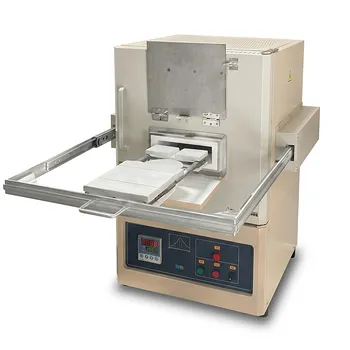
1700C Box Furnace with Sliding Platform for Rapid Heating and Cooling High Temperature Thermal Processing System
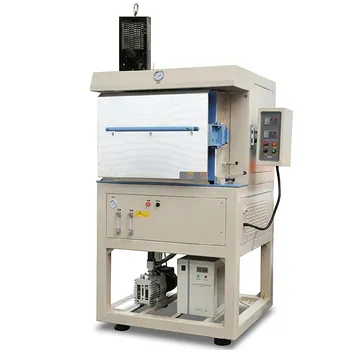
1200C Hydrogen Atmosphere Box Furnace with 5 Heated Sides and 64L Chamber
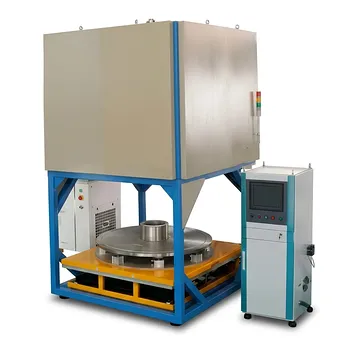
1400C Bottom Loaded Inert Gas Atmosphere Box Furnace with 125L Capacity and Precision Hydraulic Lift
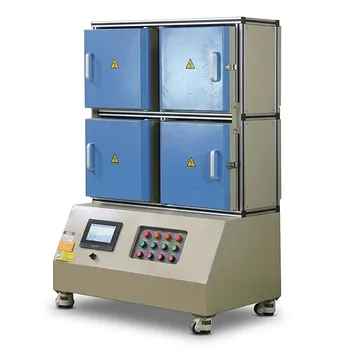
High Throughput Four Channel Box Furnace 1500C Max Independent Temperature Control Material Research Sintering System
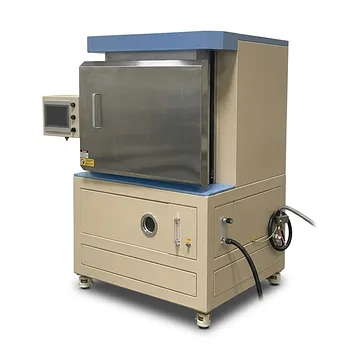
1650C High Temperature Atmosphere Controlled Box Furnace with 65L Chamber for Advanced Material Sintering and Industrial Heat Treatment
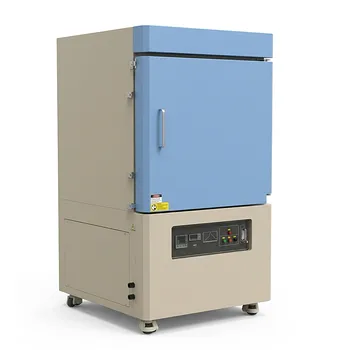
Industrial Large Box Furnace 1700C 216L High Temp Muffle Sintering System
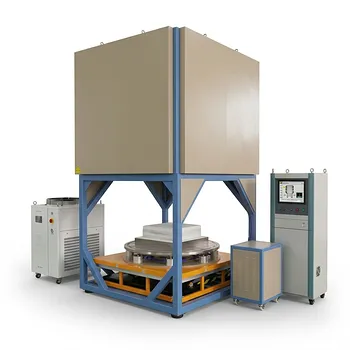
Bottom Loaded Inert Gas Atmosphere Box Furnace 1700C 1300C 216L Large Capacity Industrial Thermal Processing System
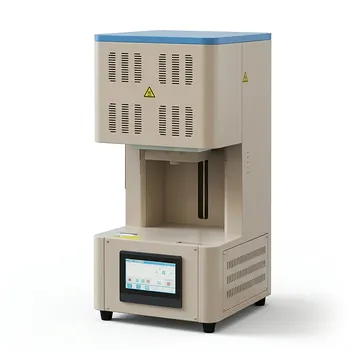
Automated 1700C High Temperature Bottom Loading Box Furnace with PC Software Control and Robotic Integration Capability
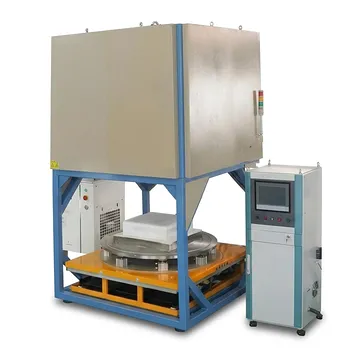
Bottom Loaded Inert Gas Atmosphere Box Furnace 1400C Maximum Temperature 125L High Capacity Laboratory Heat Treatment System
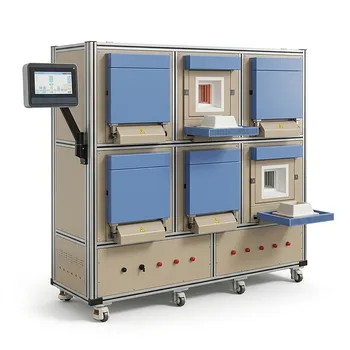
High Temperature 1700℃ Eight Chamber Box Furnace with Automatic Doors for Autonomous Material Research and High Throughput Heat Treatment
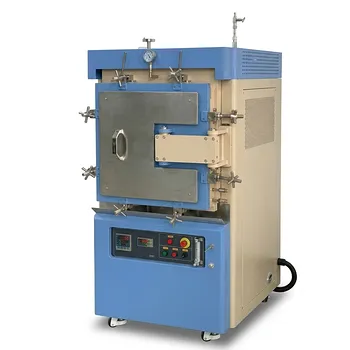
High Temperature Economic Hydrogen Gas Box Furnace 1600C Atmosphere Controlled Thermal Processing System 65L Capacity
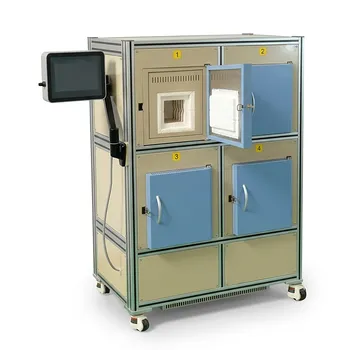
High Temperature Four Chamber Box Furnace for High Throughput Materials Research and Space Saving Thermal Processing
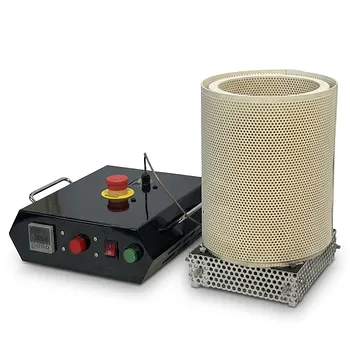
1250 C Compact Vertical Box Furnace for Glovebox Material Research Air Sensitive Samples
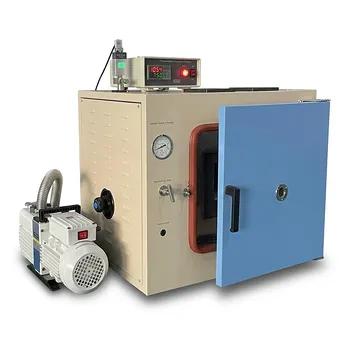
Compact High Vacuum Box Furnace 1050C Max 6.2L Ceramic Chamber Stainless Steel Shell Programmable Temperature Controller for Material Science Research
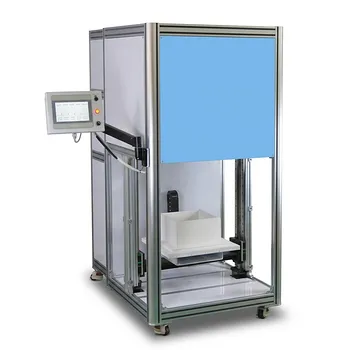
High Temperature 1600°C Three Zone Heated Bottom Loading Box Furnace with Rapid Thermal Processing Chamber 72L Volume
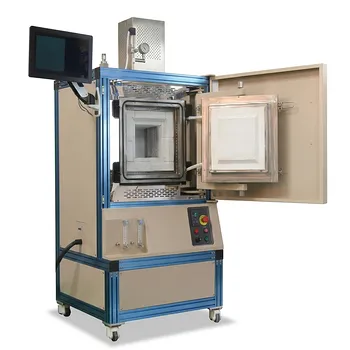
High Temperature Hydrogen Atmosphere Box Furnace 1650C Max Reducing Environment Material Synthesis System 8x8x8 Chamber
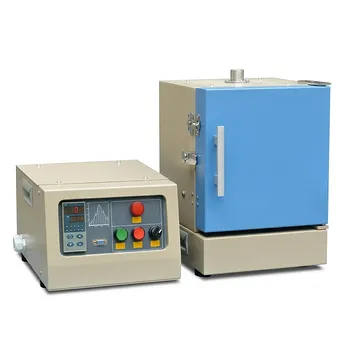
1200C Small Box Muffle Furnace with Separated Programmable Controller and 4.2L Alumina Fiber Chamber
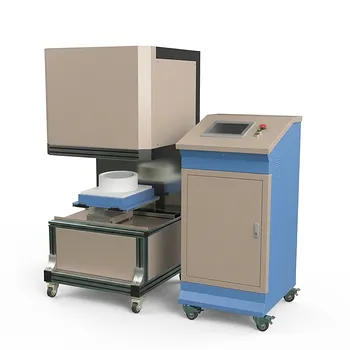
High Temperature Bottom Loading Box Furnace for Rapid Thermal Processing 1700C 40L Capacity
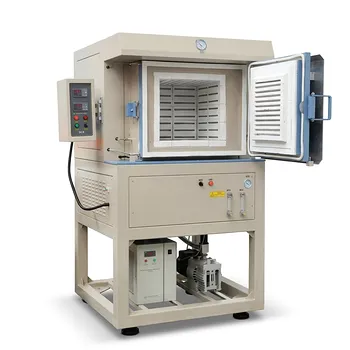
1200°C Five Side Heating Atmosphere Controlled Muffle Furnace 64 Liter High Uniformity Box Furnace for Material Synthesis