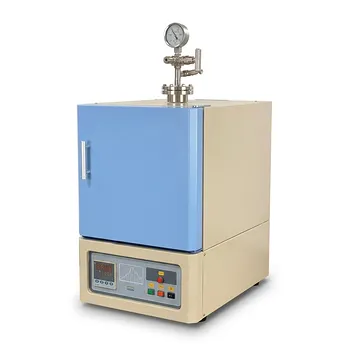
What function does a High-Temperature Box Resistance Furnace serve in transforming precursors into hollow MnCo2O4.5?
Updated 3 months ago
The High-Temperature Box Resistance Furnace serves as the precise thermal reactor required to drive the thermal oxidative decomposition of metal glycerate precursors into hollow $MnCo_2O_{4.5}$ structures. By maintaining a stable 400 °C environment in an air atmosphere, the furnace facilitates the removal of organic components and the in situ conversion of metal ions into a fully developed oxide crystalline phase.
The furnace acts as the primary catalyst for structural evolution, leveraging differential contraction rates between the material's interior and exterior to transform solid precursor spheres into hollow architectures. This controlled thermal energy ensures both the chemical purity and the specific morphological transition required for high-performance oxide materials.
The Mechanics of Thermal Oxidative Decomposition
Driving Organic Component Removal
The furnace provides a steady input of thermal energy that triggers the breakdown of the metal glycerate precursor. At the target temperature of 400 °C, organic ligands and binders are oxidized and expelled as volatile gases. This process is essential for transitioning from a carbon-rich precursor to a pure inorganic oxide.
In Situ Crystalline Phase Development
As the organic skeleton decomposes, the furnace environment allows metal components to reorganize into oxide crystals. This transformation happens in situ, meaning the crystals form directly within the footprint of the original precursor. The stable heat ensures the $MnCo_2O_{4.5}$ reaches its full crystalline maturity, which is vital for the material’s chemical stability.
Engineering the Hollow Morphology
The Interior-Exterior Contraction Gradient
The transition from solid spheres to hollow structures is a physical result of the furnace's heating profile. As the material is heated, the exterior shell reacts and shrinks at a different rate than the core. This contraction mismatch pulls material toward the surface, creating the internal void that defines the hollow structure.
Atmospheric Control and Uniformity
The "box" design of the furnace ensures a precise air atmosphere is maintained around the sample. Oxygen from the air is a necessary reactant for the oxidative part of the decomposition. Consistent airflow ensures that the transition occurs uniformly across all particles, preventing structural collapse or uneven phase distribution.
Understanding the Trade-offs
Balancing Temperature and Grain Growth
While high temperatures are necessary for phase purity, excessive heat can lead to uncontrolled grain growth. If the furnace temperature exceeds the ideal 400 °C threshold, the crystals may become too large, reducing the specific surface area of the $MnCo_2O_{4.5}$.
Heating Rate and Structural Fragility
The rate at which the furnace reaches its target temperature is a critical variable. A heating ramp that is too aggressive can cause rapid gas evolution, which may burst the delicate shells of the forming hollow spheres. Conversely, a rate that is too slow might not create the necessary contraction gradient required to pull the center open.
Making the Right Choice for Your Goal
How to Apply This to Your Project
To achieve the best results when synthesizing $MnCo_2O_{4.5}$ or similar spinel-structured oxides, consider your specific material requirements:
- If your primary focus is Phase Purity: Ensure the furnace is calibrated for a precise 400 °C soak time to guarantee the complete removal of all organic precursors and volatile impurities.
- If your primary focus is Hollow Morphology: Focus on the "ramp rate" or heating speed to optimize the contraction gradient between the interior and exterior of the spheres.
- If your primary focus is High Surface Area: Use a program-controlled thermal environment to prevent over-calcination and keep the oxide grain sizes as small as possible.
The High-Temperature Box Resistance Furnace is the indispensable tool that bridges the gap between amorphous chemical precursors and sophisticated, hollow-structured crystalline oxides.
Summary Table:
| Process Step | Furnace Role | Outcome |
|---|---|---|
| Organic Removal | Thermal Oxidative Decomposition | Transitions carbon-rich precursors to pure inorganic oxides |
| Crystallization | In Situ Phase Development | Ensures full crystalline maturity and chemical stability |
| Morphology Tuning | Differential Contraction Control | Transforms solid spheres into hollow structures via heat gradients |
| Atmosphere Sync | Uniform Air Environment | Prevents structural collapse and ensures even phase distribution |
Optimize Your Advanced Material Synthesis with THERMUNITS
As a leading manufacturer of high-temperature laboratory equipment, THERMUNITS provides the precision and reliability required for complex material transformations like hollow $MnCo_2O_{4.5}$ synthesis. Our comprehensive range of thermal processing solutions—including Muffle, Vacuum, Atmosphere, Tube, Rotary, and Hot Press furnaces, CVD/PECVD systems, Dental Furnaces, and Vacuum Induction Melting (VIM) furnaces—is engineered for superior thermal uniformity and precise atmosphere control in material science and industrial R&D.
Whether you are focusing on phase purity, hollow morphology, or high specific surface area, our expert-grade equipment ensures your research yields repeatable, high-performance results.
Contact our experts today to find the perfect thermal solution for your lab!
References
- Gaofeng Li, Dianbo Ruan. Synergy of Oxygen Vacancy and Surface Modulation Endows Hollow Hydrangea-like MnCo2O4.5 with Enhanced Capacitive Performance. DOI: 10.3390/ijms25105075
Mentioned Products
- 1650C High Temperature Atmosphere Controlled Box Furnace with 65L Chamber for Advanced Material Sintering and Industrial Heat Treatment
- High Temperature 1700℃ Eight Chamber Box Furnace with Automatic Doors for Autonomous Material Research and High Throughput Heat Treatment
- 1700C Box Furnace with Sliding Platform for Rapid Heating and Cooling High Temperature Thermal Processing System
- High Temperature Four Chamber Box Furnace for High Throughput Materials Research and Space Saving Thermal Processing
- Hybrid High Temperature Tube and Box Furnace 1700C with 2 Inch Alumina Tube for Material Research
People Also Ask
- What role does atmosphere control play in technical ceramics and glass? Master Material Purity and Precision
- What role does a high-temperature atmosphere furnace play in the direct electrochemical reduction of CO2? - Key Insights
- What is the role of a high-temperature box furnace in the solid-state synthesis of Europium-doped M3MgSi2O8 phosphors?
- What is the role of a high-temperature box furnace in Na3MnZr(PO4)3 synthesis? Engineering High-Performance NASICON.
- What physical conditions does a high-temperature atmosphere furnace provide for MXene exfoliation? Process Guide

Tech Team · ThermUnits
Last updated on Jun 02, 2026
Related Products
1650C High Temperature Atmosphere Controlled Box Furnace with 65L Chamber for Advanced Material Sintering and Industrial Heat Treatment
High Temperature 1700℃ Eight Chamber Box Furnace with Automatic Doors for Autonomous Material Research and High Throughput Heat Treatment
1700C Box Furnace with Sliding Platform for Rapid Heating and Cooling High Temperature Thermal Processing System
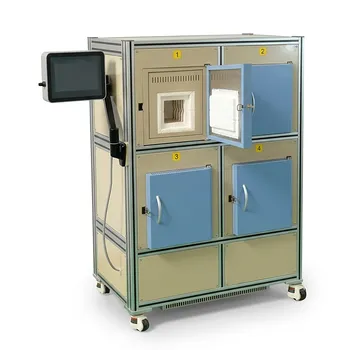
High Temperature Four Chamber Box Furnace for High Throughput Materials Research and Space Saving Thermal Processing
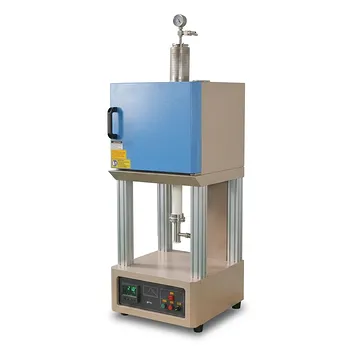
Hybrid High Temperature Tube and Box Furnace 1700C with 2 Inch Alumina Tube for Material Research
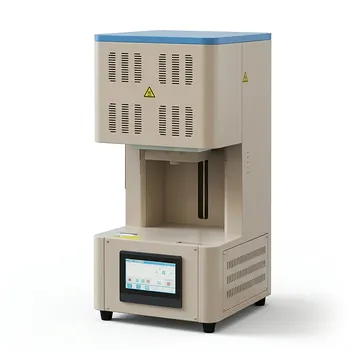
Automated 1700C High Temperature Bottom Loading Box Furnace with PC Software Control and Robotic Integration Capability
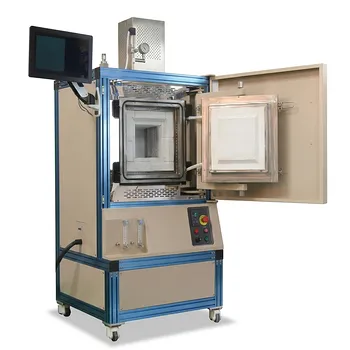
High Temperature Hydrogen Atmosphere Box Furnace 1650C Max Reducing Environment Material Synthesis System 8x8x8 Chamber
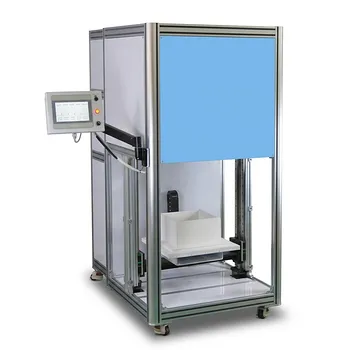
High Temperature 1600°C Three Zone Heated Bottom Loading Box Furnace with Rapid Thermal Processing Chamber 72L Volume
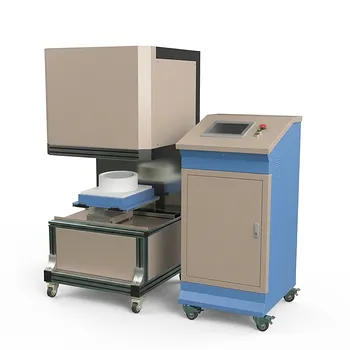
High Temperature Bottom Loading Box Furnace for Rapid Thermal Processing 1700C 40L Capacity
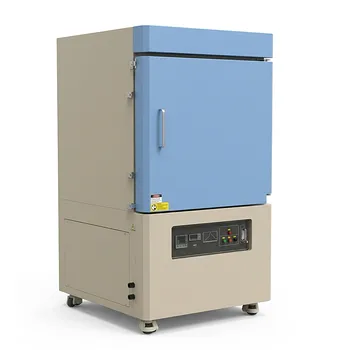
Industrial Large Box Furnace 1700C 216L High Temp Muffle Sintering System
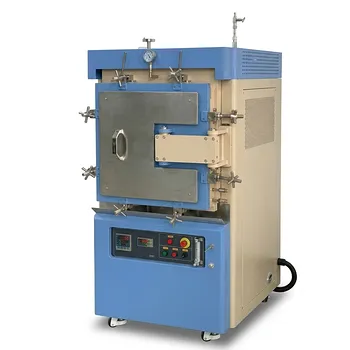
High Temperature Economic Hydrogen Gas Box Furnace 1600C Atmosphere Controlled Thermal Processing System 65L Capacity
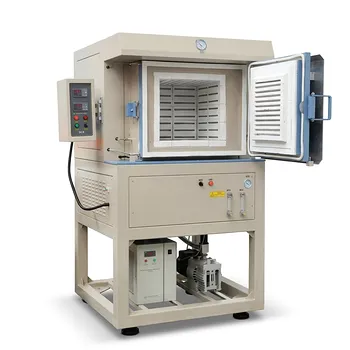
1200°C Five Side Heating Atmosphere Controlled Muffle Furnace 64 Liter High Uniformity Box Furnace for Material Synthesis
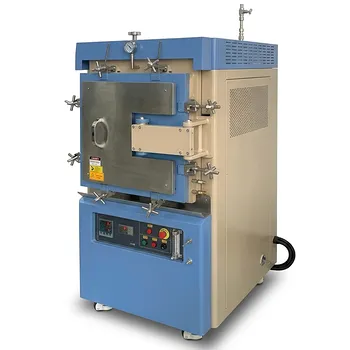
Atmosphere Controlled Muffle Furnace 1700C Maximum Temperature 80L High Capacity Vacuum Inert Gas Box Furnace
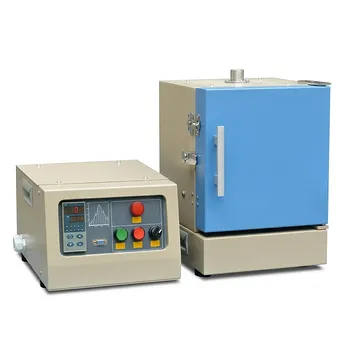
1200C Small Box Muffle Furnace with Separated Programmable Controller and 4.2L Alumina Fiber Chamber
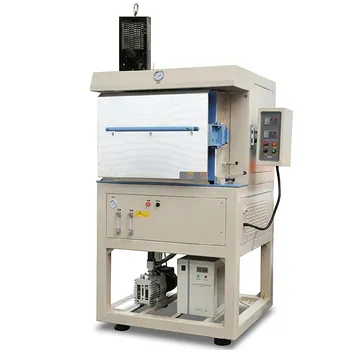
1200C Hydrogen Atmosphere Box Furnace with 5 Heated Sides and 64L Chamber
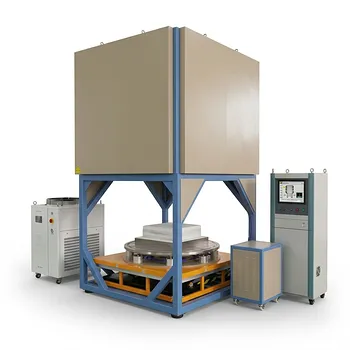
Bottom Loaded Inert Gas Atmosphere Box Furnace 1700C 1300C 216L Large Capacity Industrial Thermal Processing System
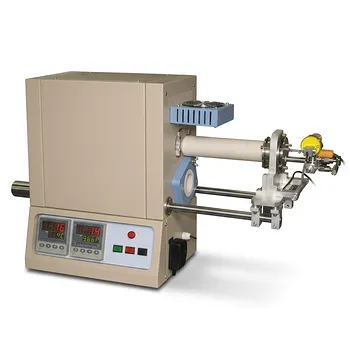
High Temperature Tube Furnace 1500C with Sliding Flanges and 50mm OD for Rapid Thermal Processing Fast Heating and Cooling
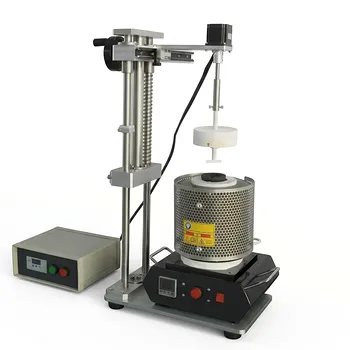
1100C Crucible Melting Furnace with Stirring Function for Glovebox and Air Sensitive Alloy Research

High Temperature 1700C Tube Furnace with High Vacuum Turbomolecular Pump System and Multi Channel Mass Flow Controller Gas Mixer