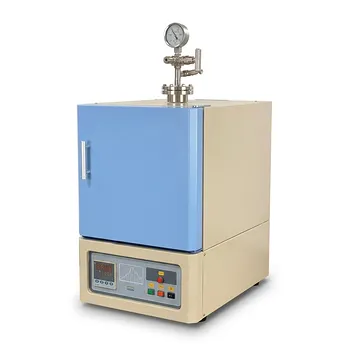
How does a high-temp box furnace aid rare-earth oxysulfide phosphor synthesis? Enhance Purity & Luminescence
Updated 3 months ago
A laboratory high-temperature box furnace acts as the primary catalyst for solid-state synthesis by providing the thermal activation energy required for chemical precursors to react in their solid form. It ensures that sulfur ions successfully integrate into the host lattice to form a long-range ordered monoclinic structure, which is the foundational requirement for high-efficiency luminescence in oxysulfide phosphors.
Core Takeaway: The box furnace serves as a precision-controlled thermal environment that dictates the phase purity and crystalline quality of phosphors by governing the kinetics of atomic diffusion and the uniform distribution of rare-earth dopants.
Driving Atomic Diffusion and Phase Transformation
Providing Thermal Activation Energy
Solid-state reactions require significant energy to break existing chemical bonds and allow atoms to move across grain boundaries. The box furnace provides a stable thermal platform, often exceeding 1000°C, to drive this essential diffusion and recombination process.
Facilitating Long-Range Ordering
For oxysulfide phosphors, the furnace facilitates the entry of sulfur ions into the crystal lattice. This process is critical for transitioning amorphous precursors into a highly ordered monoclinic structure, which directly determines the material's final optical properties.
Controlling Reaction Kinetics
By utilizing programmable heating rates (such as 10 °C/min) and specific isothermal dwell times, the furnace allows researchers to control the speed of the reaction. This precision prevents secondary phases from forming and ensures a complete phase transition to the target host structure.
Ensuring Dopant Integration and Lattice Integrity
Achieving Uniform Dopant Distribution
Rare-earth ions like Europium (Eu³⁺) or Gadolinium (Gd³⁺) must be perfectly distributed within the host lattice to function as effective luminescent centers. The continuous and uniform thermal environment of a box furnace ensures these dopants substitute into the correct lattice sites without clustering.
Eliminating Internal Stress and Defects
Stable, high-temperature calcination allows the crystal structure to "settle," which helps in eliminating internal stresses and reducing lattice defects. Fewer defects mean fewer non-radiative recombination paths, resulting in a brighter and more efficient phosphor.
Guaranteeing Experimental Repeatability
The excellent temperature field uniformity within a high-quality box furnace ensures that the entire sample experiences the same thermal history. This consistency is vital for maintaining repeatability across different experimental batches and scaling up synthesis protocols.
Understanding the Trade-offs and Limitations
Atmospheric Constraints
Standard box furnaces typically operate in an ambient air atmosphere, which can be problematic for oxysulfides that are sensitive to oxidation. While they provide excellent thermal stability, they may require the use of sealed crucibles or specific fluxing agents to prevent the loss of sulfur or the oxidation of rare-earth dopants.
Thermal Gradients and Mass Transport
Despite high uniformity, the center of a large powder mass may heat slower than the exterior, potentially leading to "core-shell" variations in the phosphor particles. Researchers must balance sample volume with dwell time to ensure the thermal energy reaches the center of the reactant mixture.
Refractory Interactions
At the high temperatures required for phosphor synthesis (often up to 1350°C), the choice of crucible material becomes a potential source of contamination. There is a constant trade-off between the high temperatures needed for high crystallinity and the risk of the crucible leaching impurities into the phosphor.
How to Optimize Your Synthesis Results
To achieve the highest quality rare-earth doped oxysulfide phosphors, your approach to furnace management should depend on your specific research objective.
- If your primary focus is phase purity: Prioritize a furnace with high temperature-control precision and utilize a slow heating rate to allow sulfur ions sufficient time to integrate into the lattice without forming impurities.
- If your primary focus is maximum brightness (Quantum Yield): Extend the isothermal dwell time at the peak temperature to minimize lattice defects and ensure the full substitution of rare-earth dopants into the host sites.
- If your primary focus is particle size control: Experiment with lower peak temperatures and shorter dwell times to limit grain growth while maintaining the necessary monoclinic structure.
The high-temperature box furnace remains an indispensable tool for transforming raw chemical precursors into the high-performance luminescent materials required for modern optoelectronics.
Summary Table:
| Furnace Function | Impact on Phosphor Quality | Key Control Parameter |
|---|---|---|
| Thermal Activation | Drives solid-state diffusion & phase transformation | Peak Temp (>1000°C) |
| Kinetic Control | Ensures long-range ordering & monoclinic structure | Heating Rate (e.g., 10°C/min) |
| Dopant Integration | Achieves uniform Eu³/Gd³ distribution; prevents clustering | Thermal Field Uniformity |
| Lattice Stabilization | Eliminates internal stress & reduces lattice defects | Isothermal Dwell Time |
| Repeatability | Guarantees consistent optical properties across batches | Precision PID Control |
Elevate Your Material Research with THERMUNITS Precision
Are you looking to optimize the phase purity and luminescence of your rare-earth phosphors? THERMUNITS is a leading manufacturer of high-performance thermal equipment tailored for material science and industrial R&D. We provide the precise thermal environments necessary for advanced solid-state synthesis.
Our comprehensive range of solutions includes:
- High-Temperature Muffle & Atmosphere Furnaces for controlled calcination.
- Vacuum, Tube, and Rotary Furnaces for specialized material processing.
- CVD/PECVD & Hot Press Furnaces for advanced thin-film and structural R&D.
- Vacuum Induction Melting (VIM) & Dental Furnaces for diverse industrial needs.
Whether you are reducing lattice defects or scaling up synthesis protocols, our equipment ensures the temperature uniformity and reliability your lab demands.
Contact THERMUNITS today to find your thermal solution!
References
- Maharram Jabrayilov, James A. Dorman. Impact of Structural Changes on Energy Transfer in the Anion-Engineered Re<sup>3+</sup>:Y<sub>2</sub>O<sub>3</sub> Through Low-Temperature Synthesis Approach. DOI: 10.1021/acs.jpcc.3c07132
Mentioned Products
- High Temperature 1700℃ Eight Chamber Box Furnace with Automatic Doors for Autonomous Material Research and High Throughput Heat Treatment
- 1650C High Temperature Atmosphere Controlled Box Furnace with 65L Chamber for Advanced Material Sintering and Industrial Heat Treatment
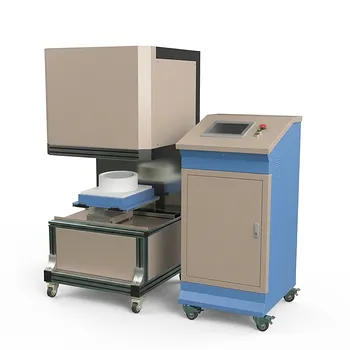
- Automated 1700C High Temperature Bottom Loading Box Furnace with PC Software Control and Robotic Integration Capability
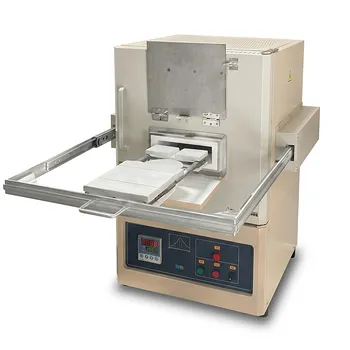
- 1700C Box Furnace with Sliding Platform for Rapid Heating and Cooling High Temperature Thermal Processing System
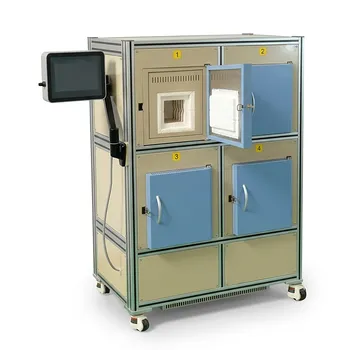
- High Temperature Four Chamber Box Furnace for High Throughput Materials Research and Space Saving Thermal Processing
People Also Ask
- What is the role of a high-temperature box furnace in the solid-state synthesis of Europium-doped M3MgSi2O8 phosphors?
- What is the role of a high-temperature box furnace in Na3MnZr(PO4)3 synthesis? Engineering High-Performance NASICON.
- Why is a high-temperature box furnace required for 1250°C ferrite calcination? Ensure Precise Phase Transformation.
- What role does an industrial-grade high-temperature furnace play in C2F sintering? Achieve Pure Phase and High Strength
- Why is an industrial high-temperature box furnace used for the pre-sintering of calcium silicate carriers? Key Benefits

Tech Team · ThermUnits
Last updated on Jun 03, 2026
Related Products
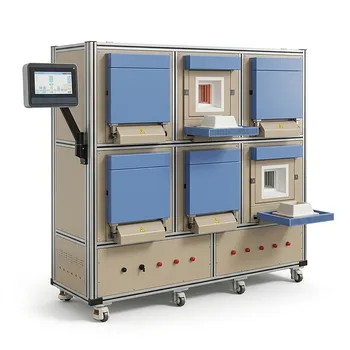
High Temperature 1700℃ Eight Chamber Box Furnace with Automatic Doors for Autonomous Material Research and High Throughput Heat Treatment
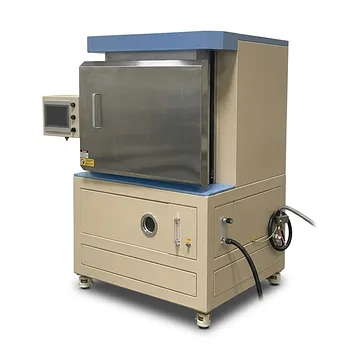
1650C High Temperature Atmosphere Controlled Box Furnace with 65L Chamber for Advanced Material Sintering and Industrial Heat Treatment
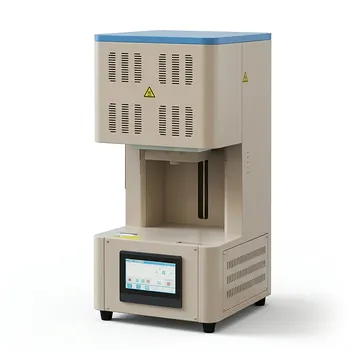
Automated 1700C High Temperature Bottom Loading Box Furnace with PC Software Control and Robotic Integration Capability
1700C Box Furnace with Sliding Platform for Rapid Heating and Cooling High Temperature Thermal Processing System
High Temperature Four Chamber Box Furnace for High Throughput Materials Research and Space Saving Thermal Processing
High Temperature Hydrogen Atmosphere Box Furnace 1650C Max Reducing Environment Material Synthesis System 8x8x8 Chamber
High Temperature Bottom Loading Box Furnace for Rapid Thermal Processing 1700C 40L Capacity
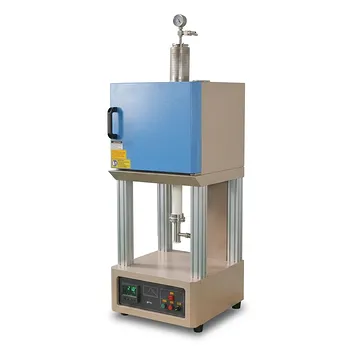
Hybrid High Temperature Tube and Box Furnace 1700C with 2 Inch Alumina Tube for Material Research
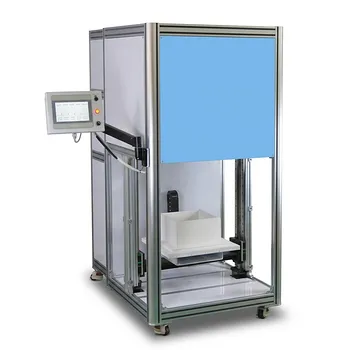
High Temperature 1600°C Three Zone Heated Bottom Loading Box Furnace with Rapid Thermal Processing Chamber 72L Volume
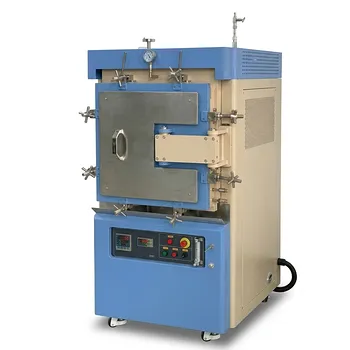
High Temperature Economic Hydrogen Gas Box Furnace 1600C Atmosphere Controlled Thermal Processing System 65L Capacity
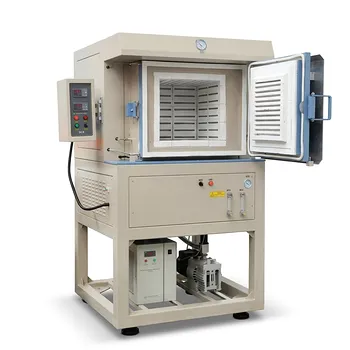
1200°C Five Side Heating Atmosphere Controlled Muffle Furnace 64 Liter High Uniformity Box Furnace for Material Synthesis
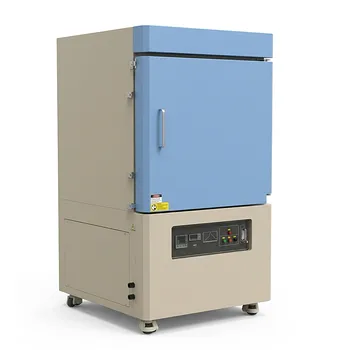
Industrial Large Box Furnace 1700C 216L High Temp Muffle Sintering System
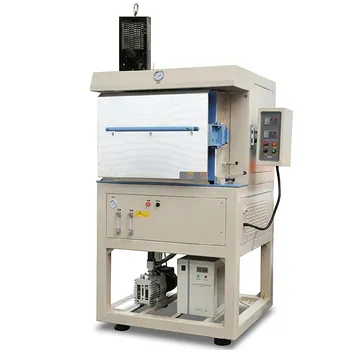
1200C Hydrogen Atmosphere Box Furnace with 5 Heated Sides and 64L Chamber
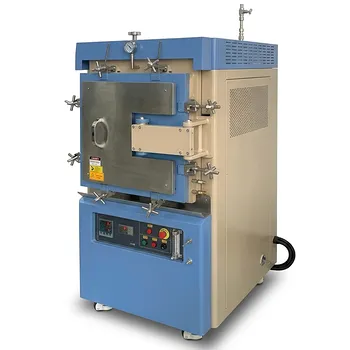
Atmosphere Controlled Muffle Furnace 1700C Maximum Temperature 80L High Capacity Vacuum Inert Gas Box Furnace

High Temperature 1700C Tube Furnace with High Vacuum Turbomolecular Pump System and Multi Channel Mass Flow Controller Gas Mixer
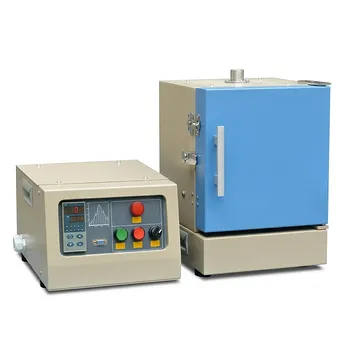
1200C Small Box Muffle Furnace with Separated Programmable Controller and 4.2L Alumina Fiber Chamber

High Temperature Tube Furnace 1500C with Sliding Flanges and 50mm OD for Rapid Thermal Processing Fast Heating and Cooling
Bottom Loaded Inert Gas Atmosphere Box Furnace 1700C 1300C 216L Large Capacity Industrial Thermal Processing System
High Temperature 1500C Benchtop Muffle Furnace 3.6L Alumina Fiber Chamber Programmable Controller Sintering Annealing Carbonization Thermal Processing System