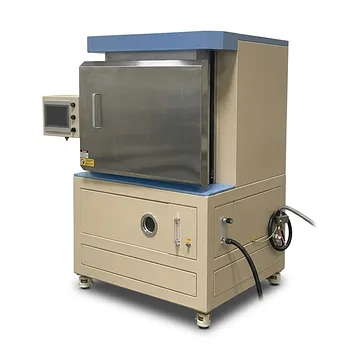
How does a two-stage heating process function for SiOC ceramics? Master Curing and Pyrolysis for Material Integrity
Updated 3 months ago
The transformation of polymer precursors into Silicon Oxycarbide (SiOC) ceramics relies on a precise, two-stage thermal cycle consisting of low-temperature curing and high-temperature pyrolysis. During the first stage, the precursor is held at approximately 300°C to facilitate molecular crosslinking into a rigid 3D network. This is followed by a ramp to 1000°C, where organic components are chemically converted into a stable ceramic glass while maintaining the material's structural integrity.
Core Takeaway: A controlled, two-stage heating process ensures structural integrity by "locking" the material's geometry through crosslinking before the volatile-heavy transition to ceramic. This gradient approach manages internal stresses and prevents the catastrophic cracking often associated with the rapid release of organic gases.
The Role of Stage One: Curing and Structural Stabilization
Crosslinking at 300°C
The first stage of the process involves long-term insulation at approximately 300°C. At this temperature, the liquid or semi-solid polymer precursor undergoes crosslinking, a chemical process that bonds polymer chains together.
Locking the Nanostructure Shape
This stage is critical because it transforms the precursor into a stable three-dimensional network. By creating these bonds early, the material "locks" its nanostructure shape, ensuring that the intricate details of the design do not collapse or melt during the transition to higher temperatures.
The Role of Stage Two: Pyrolysis and Ceramic Conversion
Reaching the 1000°C Threshold
The second stage utilizes a high-precision programmable furnace to increase the temperature to 1000°C. This is the pyrolysis phase, where the organic precursor is fundamentally changed into an inorganic Silicon Oxycarbide ceramic.
Controlled Volatile Release
As the temperature rises, organic side groups within the polymer break down and escape as gases. The gradient heating scheme ensures these volatiles are released steadily rather than all at once, which is vital for maintaining the density and clarity of the final photonic glass.
Understanding the Trade-offs and Critical Pitfalls
Processing Time vs. Material Integrity
One of the primary trade-offs in this process is the duration of the curing stage. While shorter curing times might speed up production, insufficient crosslinking leads to structural failure or warping when the material reaches the pyrolysis stage.
The Risk of Stress Concentration
In complex or delicate structures, stress concentration is a major risk during the conversion from organic to ceramic. If the heating gradient is too steep, the internal pressure from escaping gases can cause catastrophic cracking, destroying the material's functional properties.
Managing Thermal Shrinkage
Transitioning from a polymer to a ceramic naturally involves volume shrinkage. Without the rigid framework established in the first stage, this shrinkage occurs unevenly, leading to dimensional inaccuracies that can ruin high-precision components.
How to Apply This to Your Project
When implementing a two-stage heating process for SiOC ceramics, your thermal profile should be dictated by the complexity of your structure.
- If your primary focus is Dimensional Precision: Prioritize an extended curing stage at 300°C to ensure the 3D network is fully established before any organic-to-inorganic conversion begins.
- If your primary focus is Structural Integrity in Complex Optics: Utilize an extremely slow heating gradient during the pyrolysis stage to allow for the non-destructive escape of volatiles through the glass matrix.
- If your primary focus is Minimizing Processing Defects: Ensure the use of a high-precision programmable furnace to avoid temperature "overshoot," which can cause localized stress and cracking.
A disciplined approach to gradient heating is the only way to successfully bridge the gap between volatile polymers and stable, high-performance ceramics.
Summary Table:
| Stage | Temperature | Primary Chemical Process | Key Material Outcome |
|---|---|---|---|
| Stage 1: Curing | ~300°C | Molecular Crosslinking | Locks 3D nanostructure and geometry |
| Stage 2: Pyrolysis | ~1000°C | Organic-to-Inorganic Conversion | Stable Silicon Oxycarbide (SiOC) ceramic |
| Control Focus | Gradient Ramp | Volatile Gas Management | Prevents cracking and manages shrinkage |
Optimize Your SiOC Ceramic Production with THERMUNITS
Precise thermal gradients are critical for transitioning from polymers to high-performance ceramics without catastrophic cracking. THERMUNITS is a leading manufacturer of high-temperature laboratory equipment, providing the precision required for complex material science R&D.
Our comprehensive range of thermal solutions, including Tube Furnaces, Atmosphere Furnaces, Vacuum Furnaces, and CVD/PECVD systems, offers the programmable control necessary for delicate two-stage heating cycles. Whether you are managing volatile release or ensuring dimensional precision, our equipment is designed for industrial-grade reliability.
Ready to enhance your lab's heat treatment capabilities? Contact THERMUNITS today to find the perfect furnace for your SiOC research.
References
- Benedikt F. Winhard, Kaline P. Furlan. Achieving High-Temperature Stable Structural Color through Nanostructuring in Polymer-Derived Ceramics. DOI: 10.1021/acsami.4c01047
Mentioned Products
- 1500C Three Zone Vertical Pyrolysis Furnace for Nanoparticle Synthesis and Advanced Oxide Coating
- Electric Rotary Kiln Continuous Working Small Rotary Furnace Heating Pyrolysis Plant
- Electric Rotary Kiln Small Rotary Furnace Biomass Pyrolysis Plant
- Gas Pre-Heating Tube Furnace for High Temperature Pyrolysis Reactors and Material Science Research
- High Temperature Oxygen and Inert Atmosphere Controlled Furnace 8 Liter 1700C Sintering System for Advanced Materials RD
People Also Ask
- Why is high-precision temperature control essential in a pyrolysis furnace? Master Pd NPs/NO-C Catalyst Synthesis
- What is the technical necessity of multiple high-temperature thermocouples in a pyrolysis furnace? Precision Control
- Why is it necessary to maintain a strict nitrogen (N2) atmosphere during the operation of a pyrolysis furnace? (Pro Tips)
- Why is Nitrogen (N2) required for 3D carbon electrodes? Ensure material purity and structural integrity.
- Why are precise nitrogen supply systems and flow meters necessary in the pyrolysis process? Optimize Purity & Yield.

Tech Team · ThermUnits
Last updated on Jun 02, 2026
Related Products
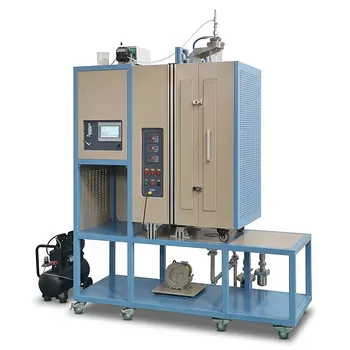
1500C Three Zone Vertical Pyrolysis Furnace for Nanoparticle Synthesis and Advanced Oxide Coating
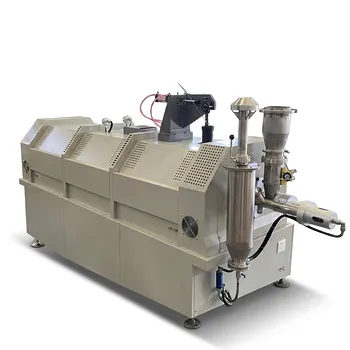
Electric Rotary Kiln Continuous Working Small Rotary Furnace Heating Pyrolysis Plant
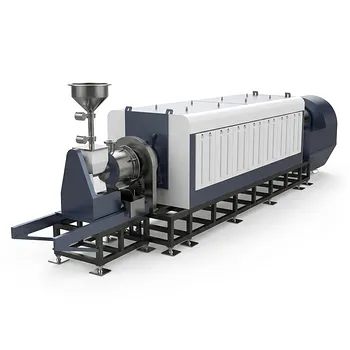
Electric Rotary Kiln Small Rotary Furnace Biomass Pyrolysis Plant
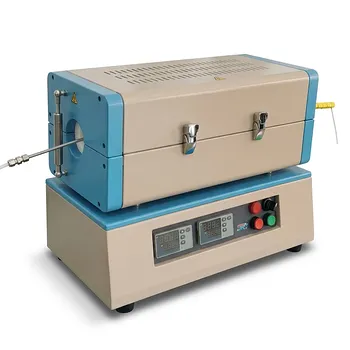
Gas Pre-Heating Tube Furnace for High Temperature Pyrolysis Reactors and Material Science Research
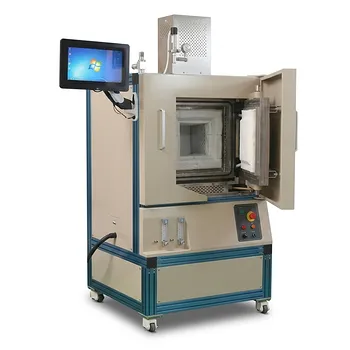
High Temperature Oxygen and Inert Atmosphere Controlled Furnace 8 Liter 1700C Sintering System for Advanced Materials RD

High Temperature 1700C Vertical Tube Furnace for Powder Spherification and Material Sintering
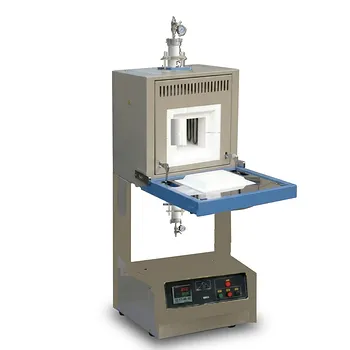
High Temperature Vertical Hybrid Furnace with Alumina Tube and SiC Heating for SOFC Coin Cell Testing and Atmosphere Processing
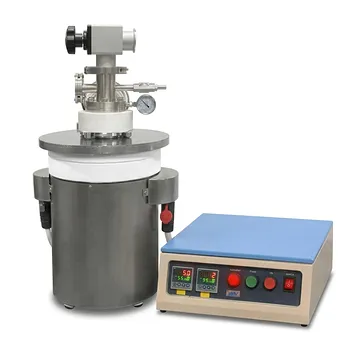
1100C High Temperature Vacuum Crucible Furnace with Quartz Chamber for Thermal Processing and Sintering
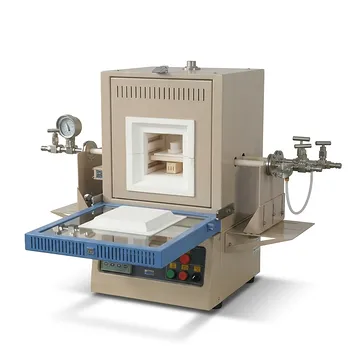
1700C Compact Hybrid Furnace with Dual Layer Box Sintering and Controlled Atmosphere Alumina Tubes