How does an Infrared Pyrometer assist in temperature control during the rapid RAS process? Enhance Precision & Stability
Updated 3 months ago
The Infrared Pyrometer serves as the high-speed sensory organ of the Radiation-Assisted Sintering (RAS) system. By providing non-contact, real-time temperature data through an observation port, the pyrometer allows the closed-loop control system to adjust heating power instantaneously. This ensures that even during ultra-fast heating cycles, the sintering temperature remains stable at critical targets like 1100°C.
The core value of an Infrared Pyrometer in RAS is its ability to provide instantaneous, non-contact feedback that compensates for material emissivity. This precision is vital for managing the rapid thermal transitions that dictate the final phase transformations and metallurgical integrity of the workpiece.
Bridging the Speed Gap in Rapid Sintering
The Necessity of Rapid Feedback
Radiation-Assisted Sintering involves extremely fast heating rates that traditional contact sensors cannot effectively track. The Infrared Pyrometer captures temperature data at the speed of light, providing the immediate feedback necessary for a closed-loop control system to maintain stability.
Non-Contact Measurement Mechanics
The pyrometer measures the surface temperature of the graphite crucible wall through a dedicated observation port. This non-contact method prevents sensor degradation and ensures the measurement does not interfere with the high-energy radiation environment of the furnace.
Maintaining Stability During Short Holds
Because RAS cycles often feature very brief holding periods, there is no room for thermal oscillation. The pyrometer ensures the system reaches and stays at the target value (e.g., 1100 °C) without overshooting or lagging, which is critical for consistent results.
Managing Material-Specific Variables
Overcoming Emissivity Challenges
The emissivity of sintering boats and workpieces is usually less than 1, which frequently causes a gap between the furnace's set temperature and the actual heat of the material. A pyrometer allows technicians to account for these surface properties, providing a more accurate reflection of the actual temperature than standard furnace sensors.
Precision at Critical Thermal Nodes
Specific metallurgical milestones, such as those at 1120°C and 1200°C, require pinpoint accuracy to manage chemical properties. The pyrometer provides the resolution needed to determine if phosphorus has exceeded its solubility limit or if a permanent liquid phase has formed.
Ensuring Phase Transformation Consistency
Accurate temperature tracking is the only way to ensure that final phase transformations occur as intended. By monitoring the exact thermal state of the crucible, the pyrometer guarantees that the material properties remain uniform across different production batches.
Understanding the Trade-offs
Line-of-Sight Requirements
A pyrometer requires a clear, unobstructed line-of-sight to the target through an observation port. If the port becomes clouded by vapors or debris released during sintering, the temperature readings will become inaccurate, potentially leading to system errors.
Surface vs. Core Disparity
The pyrometer captures the surface temperature of the graphite crucible, not necessarily the internal core of the workpiece. While this is an excellent proxy for control, users must understand the thermal gradient between the crucible wall and the center of the part being sintered.
How to Apply This to Your Process
When integrating an Infrared Pyrometer into your RAS workflow, your configuration should be driven by your specific metallurgical requirements.
- If your primary focus is thermal stability during rapid cycles: Prioritize the integration of the pyrometer into a high-speed closed-loop controller to prevent temperature overshoots.
- If your primary focus is metallurgical phase control: Focus on calibrating the pyrometer for the specific emissivity of your sintering boats to ensure accuracy at nodes like 1120°C.
Precise, non-contact thermal monitoring is the definitive factor in transforming a high-speed sintering experiment into a repeatable industrial process.
Summary Table:
| Feature | Benefit in RAS Process | Key Impact |
|---|---|---|
| Non-Contact Sensing | Prevents sensor degradation | Measures surface heat through observation ports without interference. |
| High-Speed Feedback | Real-time closed-loop control | Enables stability during ultra-fast heating cycles (e.g., to 1100°C). |
| Emissivity Adjustment | Accurate thermal readings | Compensates for sintering boat properties to find actual material temp. |
| Precision Monitoring | Metallurgical integrity | Ensures accuracy at critical nodes (1120°C/1200°C) for phase control. |
Optimize Your Research with THERMUNITS High-Temperature Expertise
At THERMUNITS, we specialize in empowering material science and industrial R&D with precision thermal solutions. As a leading manufacturer, we provide the advanced hardware necessary to execute complex processes like Radiation-Assisted Sintering with total confidence.
Our comprehensive product range includes:
- Laboratory Furnaces: Muffle, Vacuum, Atmosphere, Tube, Rotary, and Dental Furnaces.
- Advanced Systems: CVD/PECVD systems, Hot Press Furnaces, and Vacuum Induction Melting (VIM) furnaces.
- Industrial Solutions: Electric rotary kilns and high-quality thermal elements.
Whether you need to integrate high-speed pyrometry for rapid sintering or require a custom CVD setup, THERMUNITS delivers the reliability and accuracy your project demands.
Ready to elevate your heat treatment precision? Contact our technical team today for a tailored solution!
References
- Tomaž Tomše, Kristina Žužek. A Rapid Thermal‐Radiation‐Assisted Sintering Strategy for Nd–Fe–B‐Type Magnets. DOI: 10.1002/adem.202401404
Mentioned Products
- High Temperature Horizontal Electrical Assisted Sintering Furnace with 3KW Programmable Power Source for Advanced Ceramic Materials
- 1750C Compact Muffle Furnace 1.7L Ultra High Temperature Laboratory Sintering System for Advanced Ceramics and Material Science Research
- Induction Heating System with Temperature Control for High Temperature Vacuum Sintering and Melting
- High Temperature Oxygen and Inert Atmosphere Controlled Furnace 8 Liter 1700C Sintering System for Advanced Materials RD
- Two Zone IR Heating Rapid Thermal Processing RTP Tube Furnace with 4 Inch ID Quartz Tube and Sliding Sample Holders
People Also Ask
- How does the temperature control precision of a high-temperature sintering furnace affect Na1+xLa1-xZr2O6-δ ceramics?
- How does a high-temperature sintering furnace environment enhance NdFeB magnets? Achieve 98%+ density with precision.
- Why is a high-temperature sintering furnace required for the preparation of Li(Nb,Ta)O3 precursors? Essential Insights
- How does a high-temperature sintering furnace contribute to the interfacial strengthening of SS316L and zirconia?
- What role does a sintering furnace play with silver paste? Essential Thermal Management for Power Device Packaging

Tech Team · ThermUnits
Last updated on Jun 03, 2026
Related Products
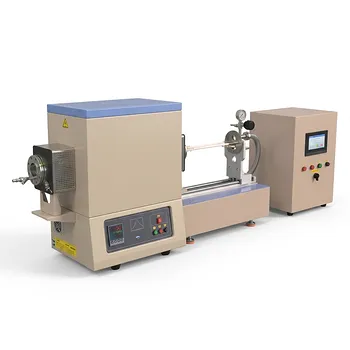
High Temperature Horizontal Electrical Assisted Sintering Furnace with 3KW Programmable Power Source for Advanced Ceramic Materials
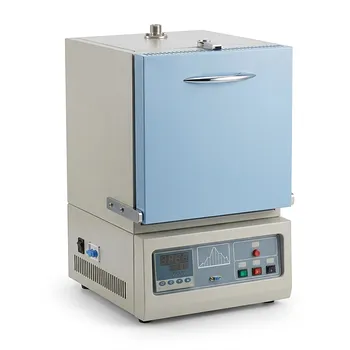
1750C Compact Muffle Furnace 1.7L Ultra High Temperature Laboratory Sintering System for Advanced Ceramics and Material Science Research
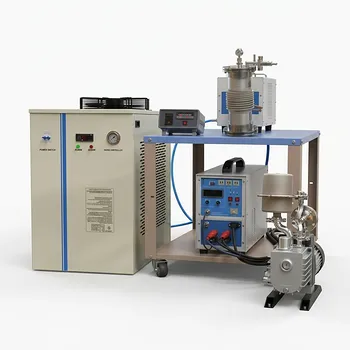
Induction Heating System with Temperature Control for High Temperature Vacuum Sintering and Melting
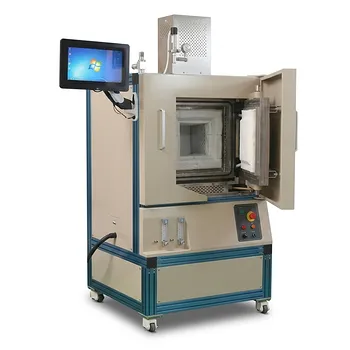
High Temperature Oxygen and Inert Atmosphere Controlled Furnace 8 Liter 1700C Sintering System for Advanced Materials RD
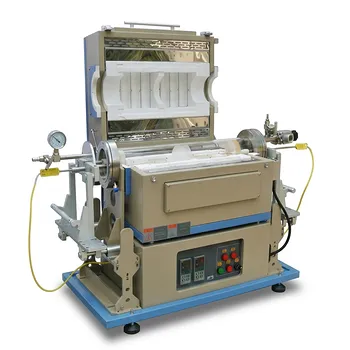
Two Zone IR Heating Rapid Thermal Processing RTP Tube Furnace with 4 Inch ID Quartz Tube and Sliding Sample Holders