Why is a high-temperature sintering furnace required for the preparation of Li(Nb,Ta)O3 precursors? Essential Insights
Updated 3 months ago
The preparation of Li(Nb,Ta)O3 precursors requires a high-temperature sintering furnace to provide the thermal energy necessary for solid-phase reactions. Specifically, a stable environment—typically maintained at 1000 °C—is required to transform pressed powder green bodies into a pre-synthesized polycrystalline phase. This step ensures that the raw materials achieve the necessary chemical homogenization and stoichiometric fixation before they are used to grow single crystals via the Czochralski method.
High-temperature sintering acts as a critical preparatory bridge, converting raw powders into a chemically stable and uniform polycrystalline matrix. This process overcomes kinetic barriers to ensure the precursor has the exact stoichiometry and phase purity required for high-quality single-crystal growth.
Overcoming Kinetic Barriers and Initiating Solid-Phase Reactions
Driving Atomic Diffusion
Solid-state reactions do not occur spontaneously at room temperature because the atoms lack the energy to migrate across particle boundaries. A high-temperature furnace provides the thermal energy required to overcome kinetic barriers, allowing atoms to diffuse and rearrange into the desired $Li(Nb,Ta)O_3$ structure.
Phase Pre-Synthesis
The sintering process enables the pre-synthesis of the polycrystalline phase from the initial raw material mixture. By reaching temperatures around 1000 °C, the material transitions from a simple mixture of powders (green bodies) into a complex, bonded crystalline structure that serves as the foundation for subsequent processing.
Ensuring Stoichiometric Precision and Homogenization
Chemical Homogenization
In the production of $Li(Nb,Ta)O_3$, "preliminary chemical homogenization" is essential to prevent localized variations in material properties. The furnace provides a constant thermal field that ensures elements like Niobium (Nb) and Tantalum (Ta) are distributed uniformly throughout the material volume.
Stoichiometric Fixation
Maintaining the correct ratio of elements, or stoichiometry, is vital for the performance of piezoelectric and optoelectronic materials. The sintering stage "fixes" this stoichiometry, ensuring the precursor remains stable and predictable when it is later melted for single-crystal growth.
Managing Lithium Volatilization
Lithium-based materials are sensitive to $Li_2O$ volatilization at elevated temperatures, which can lead to performance drift or structural defects. A specialized furnace allows for precise temperature control to balance the need for reaction energy against the risk of losing lithium to evaporation.
Achieving Structural Integrity and Crystalline Order
Eliminating Structural Defects
High-temperature treatment promotes the long-range ordered arrangement of cations within the lattice. This process is necessary to eliminate structural defects and "vacancies" that could otherwise degrade the electrical or optical properties of the final crystal.
Increasing Material Density
As sintering progresses, atomic diffusion eliminates pores and increases the material density of the precursor. This denser, more robust polycrystalline matrix is easier to handle and more efficient to melt during the Czochralski growth process.
Understanding the Trade-offs and Pitfalls
The Risk of Excessive Temperature
While high heat is necessary, exceeding the optimal temperature (typically 1000 °C for this material) can cause material degradation or non-uniform grain growth. If primary particles grow too large or inconsistently, it can interfere with the uniformity of the subsequent melt.
Thermal Stability vs. Processing Time
There is a direct trade-off between sintering temperature and duration. While lower temperatures might reduce lithium loss, they often require significantly longer dwell times to achieve the same level of phase purity, which can decrease laboratory throughput and increase energy costs.
How to Apply This to Your Project
Recommendations for Precursor Synthesis
- If your primary focus is phase purity: Ensure the furnace maintains a high level of thermal stability (within ±1 °C) to prevent the formation of secondary, unwanted phases.
- If your primary focus is preventing lithium loss: Monitor the sintering duration closely and consider using a slightly lower temperature (e.g., 900 °C) for a longer period if $Li_2O$ volatilization is detected.
- If your primary focus is maximizing crystal quality: Prioritize the homogenization stage to ensure that the "feed" material for the Czochralski method is chemically identical throughout the batch.
The high-temperature sintering furnace is the indispensable tool that transforms raw chemical powders into a sophisticated, stoichiometrically fixed precursor ready for advanced crystal engineering.
Summary Table:
| Key Requirement | Technical Function | Impact on Precursor Quality |
|---|---|---|
| Atomic Diffusion | Overcomes kinetic barriers at 1000°C | Transforms green bodies into polycrystalline phase |
| Stoichiometric Fixation | Maintains precise Li:Nb:Ta ratios | Ensures performance consistency in final crystals |
| Chemical Homogenization | Constant thermal field distribution | Prevents localized material property variations |
| Structural Density | Eliminates pores and lattice defects | Creates a robust matrix for Czochralski growth |
| Volatilization Control | Precise temperature management | Minimizes Li2O loss during the heating cycle |
Elevate Your Material Synthesis with THERMUNITS
Precision is non-negotiable when preparing precursors for high-performance crystals. THERMUNITS is a leading manufacturer of high-temperature laboratory equipment, providing the advanced thermal processing solutions required for complex material science.
Our comprehensive range—including Muffle, Vacuum, Atmosphere, and Tube furnaces, as well as specialized CVD/PECVD systems—is engineered to provide the stable thermal environments necessary for stoichiometric fixation and chemical homogenization. Whether you are managing lithium volatilization or optimizing solid-phase reactions, our equipment ensures your R&D achieves repeatable, high-quality results.
Ready to optimize your heat treatment process? Contact THERMUNITS today to discuss our custom furnace solutions for your laboratory's specific needs.
References
- Éva Tichy‐Rács, Yuriy Suhak. Influence of Li‐Stoichiometry on Electrical and Acoustic Properties and Temperature Stability of Li(Nb,Ta)O<sub>3</sub> Solid Solutions up to 900 °C. DOI: 10.1002/pssa.202300962
Mentioned Products
- High Temperature Horizontal Electrical Assisted Sintering Furnace with 3KW Programmable Power Source for Advanced Ceramic Materials
- Ultra High Temperature Bench Top Muffle Furnace 1750C Sintering System with Kanthal Super Heating Elements and Precision Digital Control
- High Temperature 1700C Vertical Tube Furnace for Powder Spherification and Material Sintering
- 1200C High Temperature Muffle Furnace with Motorized Door and Automated PC Control for Industrial Sintering and Material Processing 27 Liter
- 1100C High Temperature Vacuum Crucible Furnace with Quartz Chamber for Thermal Processing and Sintering
People Also Ask
- How does the temperature control precision of a high-temperature sintering furnace affect Na1+xLa1-xZr2O6-δ ceramics?
- How does a high-temperature sintering furnace environment enhance NdFeB magnets? Achieve 98%+ density with precision.
- How does a high-temperature sintering furnace contribute to the interfacial strengthening of SS316L and zirconia?
- What role does a sintering furnace play with silver paste? Essential Thermal Management for Power Device Packaging
- Why is a sintering furnace or Rapid Thermal Processing (RTP) equipment necessary for the formation of electrodes? Master Solar Ohmic Contacts.

Tech Team · ThermUnits
Last updated on Jun 03, 2026
Related Products
High Temperature Horizontal Electrical Assisted Sintering Furnace with 3KW Programmable Power Source for Advanced Ceramic Materials
Ultra High Temperature Bench Top Muffle Furnace 1750C Sintering System with Kanthal Super Heating Elements and Precision Digital Control

High Temperature 1700C Vertical Tube Furnace for Powder Spherification and Material Sintering
1200C High Temperature Muffle Furnace with Motorized Door and Automated PC Control for Industrial Sintering and Material Processing 27 Liter
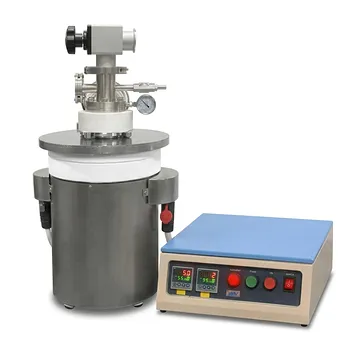
1100C High Temperature Vacuum Crucible Furnace with Quartz Chamber for Thermal Processing and Sintering
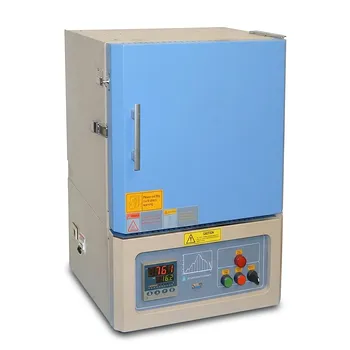
High Temperature 1700C Bench Top Muffle Furnace with Alumina Fiber Insulation and 3.6L Chamber Capacity for Precision Sintering and Heat Treatment
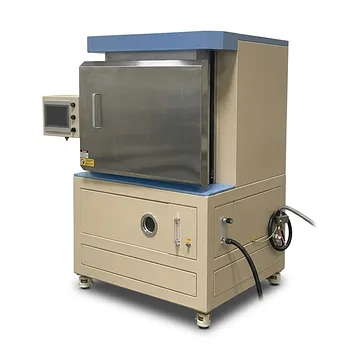
1650C High Temperature Atmosphere Controlled Box Furnace with 65L Chamber for Advanced Material Sintering and Industrial Heat Treatment

Compact High Temperature 1600C Tube Furnace with 50mm Alumina Tube and Vacuum Flanges for Material Sintering
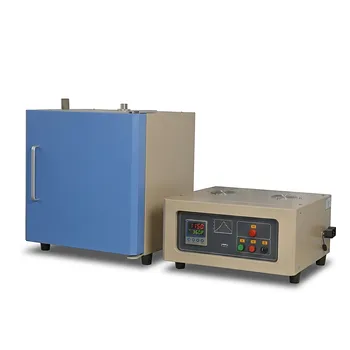
High Temperature Muffle Furnace with Alloy Chamber for Debinding and Sintering Applications
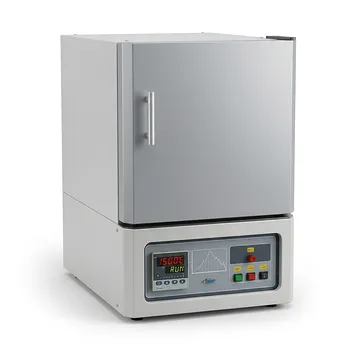
High Temperature 1500C Benchtop Muffle Furnace 3.6L Alumina Fiber Chamber Programmable Controller Sintering Annealing Carbonization Thermal Processing System
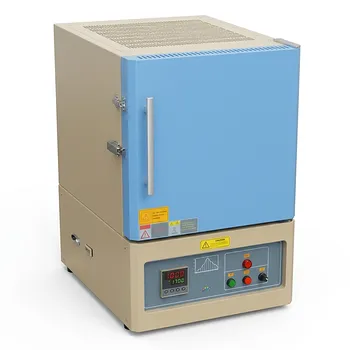
Large Bench Top 1700C High Temperature Muffle Furnace with 19L Chamber for Advanced Material Sintering and Annealing
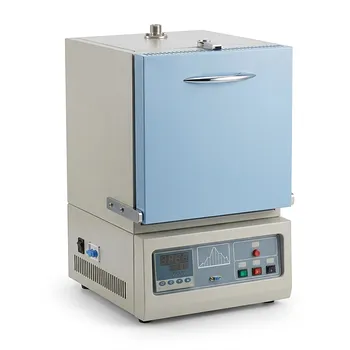
1750C Compact Muffle Furnace 1.7L Ultra High Temperature Laboratory Sintering System for Advanced Ceramics and Material Science Research
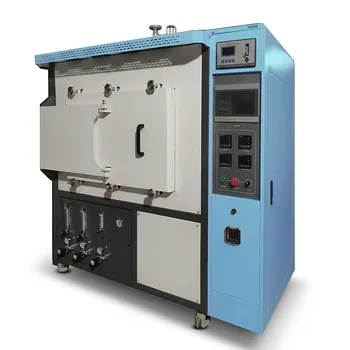
Roller Table Atmosphere Furnace 1500C High Temperature Battery Material Sintering System 112L Capacity
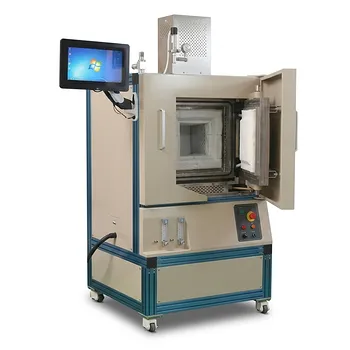
High Temperature Oxygen and Inert Atmosphere Controlled Furnace 8 Liter 1700C Sintering System for Advanced Materials RD
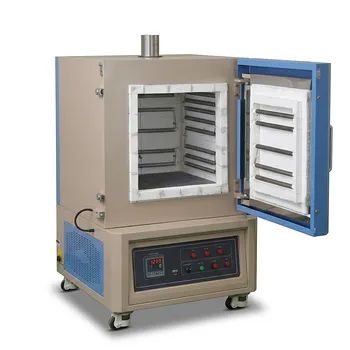
1200C High Temperature 125L Muffle Furnace 5 Side Heating for Large Batch Sintering with Optional Alloy Debinding Chamber
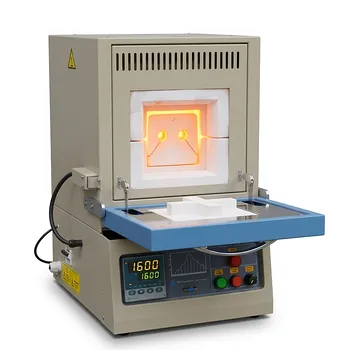
High Temperature Compact Muffle Furnace 1700 C with 30 Segment Programmable Controller and 1.7L Cubic Chamber
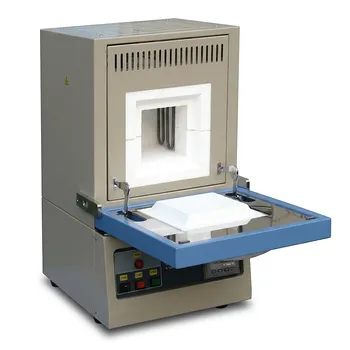
High Temperature 1800C Compact Muffle Furnace with Kanthal Super 1900 Heating Elements and 1.7L Alumina Chamber
Industrial Large Box Furnace 1700C 216L High Temp Muffle Sintering System
1200C Five Side Heating Muffle Furnace with Sliding Door 125L Volume High Temperature Heat Treatment System for Large Scale Sintering and Annealing