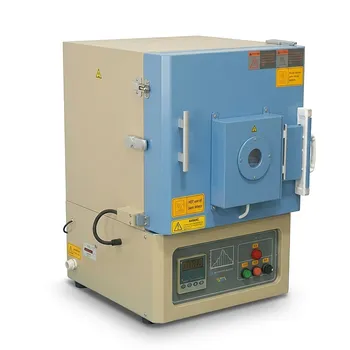
How does sintering in a 1600°C box furnace affect high-entropy thermistor ceramics? Achieve 98%+ Densification
Updated 3 months ago
Sintering high-entropy thermistor ceramics at 1600°C in a high-temperature box resistance furnace is the critical catalyst for achieving full densification and a stable single-phase pyrochlore structure. This 10-hour pressureless process provides the intense thermal energy necessary to overcome the "sluggish diffusion effect" inherent in high-entropy systems. The resulting material achieves a relative density exceeding 98%, which is fundamental to its high resistivity and long-term high-temperature stability.
The 1600°C sintering process is the essential stage where atomic migration overcomes entropy-driven resistance to form a dense, uniform microstructure. This transformation is what dictates the ceramic's final electrical performance and structural integrity.
Overcoming Sluggish Diffusion in High-Entropy Systems
The Role of High Activation Energy
High-entropy ceramics contain multiple principal elements that naturally resist organized movement, a phenomenon known as the sluggish diffusion effect. The 1600°C environment provides the massive thermal activation energy required to break these atomic bonds and initiate movement.
Driving Long-Range Atomic Migration
Maintaining this temperature for 10 hours ensures that atoms have sufficient time for long-range migration across the lattice. This duration is vital for achieving a uniform component distribution, preventing the localized "clumping" of elements that can degrade thermistor performance.
Structural Evolution and Densification
Formation of the Single-Phase Pyrochlore
The furnace environment facilitates the transition of the raw material into a definitive single-phase pyrochlore structure. This specific crystal arrangement is highly stable and is the preferred state for high-performance thermistor applications.
Elimination of Residual Porosity
At 1600°C, grain boundary movement and particle migration work to close internal voids, resulting in a relative density exceeding 98%. Eliminating these pores is critical because residual air pockets can act as electrical weak points or sites for mechanical failure.
Developing Clear Grain Boundaries
Precise temperature maintenance promotes the development of clear, well-defined grain boundaries. These boundaries act as the primary internal structures that regulate electrical flow, directly contributing to the material's high volume resistivity.
Impact on Electrical and Thermal Performance
High-Temperature Stability
The thermodynamic stability of the lattice, achieved through full diffusion at 1600°C, ensures the thermistor does not drift during operation. This allows the ceramic to maintain its electrical properties even when exposed to harsh, high-heat environments.
Optimized Microstructure for Insulation
The dense microscopic structure significantly enhances the material's ability to withstand intense electric fields. By maximizing densification, the furnace process ensures the ceramic functions as a reliable insulator where needed, preventing leakage currents.
Understanding the Trade-offs
The Risk of Excessive Grain Growth
While high temperatures are necessary for density, prolonged exposure can lead to excessive grain growth. If grains become too large, the mechanical strength of the ceramic may actually decrease, potentially leading to brittleness.
Energy Consumption and Equipment Wear
Operating a box resistance furnace at 1600°C for 10 hours requires significant energy expenditure. Additionally, consistent operation at these thermal limits accelerates the degradation of heating elements and furnace linings, increasing maintenance costs.
Precise Cooling Requirements
Rapid cooling after a 1600°C soak can induce thermal shock, leading to micro-cracks in the ceramic bulk. A controlled cooling rate is necessary to allow the crystal structure to transition stably from its high-temperature state to the required room-temperature phase.
Applying This Process to Your Project
Recommendations for Sintering Success
- If your primary focus is maximum resistivity: Prioritize the full 10-hour soak at 1600°C to ensure the complete elimination of pores and the formation of clear grain boundaries.
- If your primary focus is mechanical toughness: Carefully monitor the heating rate and consider slightly shorter durations to prevent over-firing and excessive grain coarsening.
- If your primary focus is phase purity: Ensure the furnace provides a highly uniform temperature field to avoid "local under-firing," which can leave traces of secondary phases.
The precision of the 1600°C thermal cycle is the ultimate arbiter of whether a high-entropy ceramic becomes a high-performance thermistor or a failed experiment.
Summary Table:
| Parameter | Sintering Effect at 1600°C | Impact on Ceramic Performance |
|---|---|---|
| Relative Density | Exceeds 98% | Maximizes resistivity and mechanical integrity |
| Crystal Structure | Single-phase Pyrochlore | Ensures long-term thermodynamic stability |
| Diffusion | Overcomes sluggish diffusion | Achieves uniform elemental distribution |
| Microstructure | Clear grain boundary development | Regulates electrical flow and insulation quality |
| Thermal Process | 10-hour pressureless soak | Eliminates residual porosity and internal voids |
Elevate Your Material Research with THERMUNITS Precision Furnaces
Achieving 98% densification in high-entropy ceramics requires extreme temperature precision and reliability. THERMUNITS is a leading manufacturer of high-performance laboratory equipment tailored for material science and industrial R&D.
Whether you are sintering high-entropy thermistors, developing advanced alloys, or researching CVD/PECVD applications, our comprehensive range of equipment—including High-Temperature Box, Vacuum, Atmosphere, Tube, and Rotary Furnaces—is designed to provide the uniform thermal environment your project demands.
Why partner with THERMUNITS?
- Precision Control: Master the "sluggish diffusion effect" with accurate temperature ramp and soak cycles up to 1800°C.
- Versatile Solutions: From Dental Furnaces to Vacuum Induction Melting (VIM) systems, we cover all heat treatment needs.
- Expert Support: Our team helps you select the right thermal elements and furnace configurations to prevent excessive grain growth and equipment wear.
Ready to optimize your sintering results? Contact our technical experts today to find the perfect furnace solution for your laboratory!
References
- Yi‐An Chen, Bo Gao. High-Entropy Thermistor Ceramics (La1/3Nd1/3M1/3)2(Zr1/2Sn1/2)2O7 (M = Sm, Eu, Gd, or Dy) with High Sensitivity for High-Temperature Measurements. DOI: 10.3390/s24237523
Mentioned Products
- High Temperature 1600°C Three Zone Heated Bottom Loading Box Furnace with Rapid Thermal Processing Chamber 72L Volume
- High Temperature Economic Hydrogen Gas Box Furnace 1600C Atmosphere Controlled Thermal Processing System 65L Capacity
- 1600C High Temperature Automatic Bottom Loading Furnace for Thermal Shock Cycling and Material Fatigue Testing
- High Temperature 1700℃ Eight Chamber Box Furnace with Automatic Doors for Autonomous Material Research and High Throughput Heat Treatment
- 1650C High Temperature Atmosphere Controlled Box Furnace with 65L Chamber for Advanced Material Sintering and Industrial Heat Treatment
People Also Ask
- What are the advantages of using a Bottom-Loading High-Temperature Furnace in Barium Titanate Fast Firing? Superior Microstructure
- What is the role of a high-temperature box furnace in the solid-state synthesis of Europium-doped M3MgSi2O8 phosphors?
- What is the role of a high-temperature box furnace in Na3MnZr(PO4)3 synthesis? Engineering High-Performance NASICON.
- How does a high-temp box furnace aid rare-earth oxysulfide phosphor synthesis? Enhance Purity & Luminescence
- Why is a high-temperature box furnace required for 1250°C ferrite calcination? Ensure Precise Phase Transformation.

Tech Team · ThermUnits
Last updated on Jun 02, 2026
Related Products
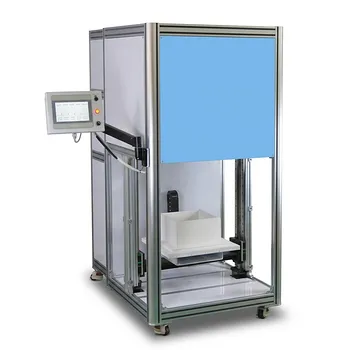
High Temperature 1600°C Three Zone Heated Bottom Loading Box Furnace with Rapid Thermal Processing Chamber 72L Volume
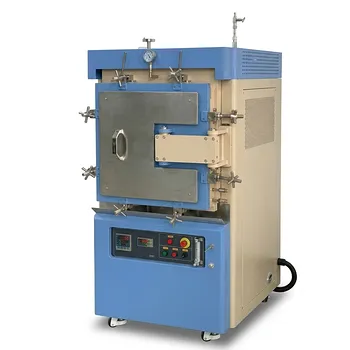
High Temperature Economic Hydrogen Gas Box Furnace 1600C Atmosphere Controlled Thermal Processing System 65L Capacity
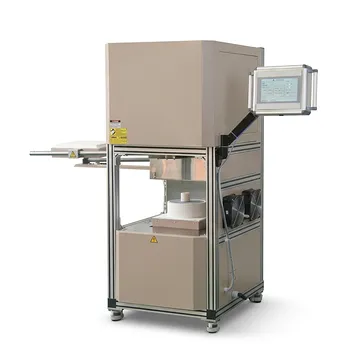
1600C High Temperature Automatic Bottom Loading Furnace for Thermal Shock Cycling and Material Fatigue Testing
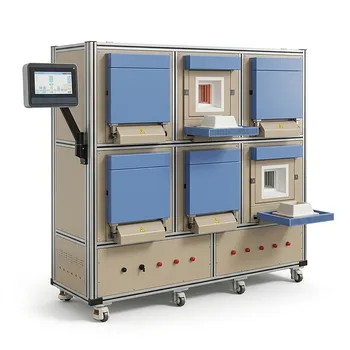
High Temperature 1700℃ Eight Chamber Box Furnace with Automatic Doors for Autonomous Material Research and High Throughput Heat Treatment
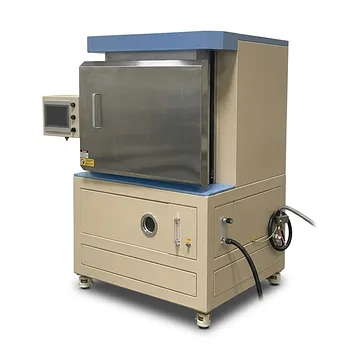
1650C High Temperature Atmosphere Controlled Box Furnace with 65L Chamber for Advanced Material Sintering and Industrial Heat Treatment
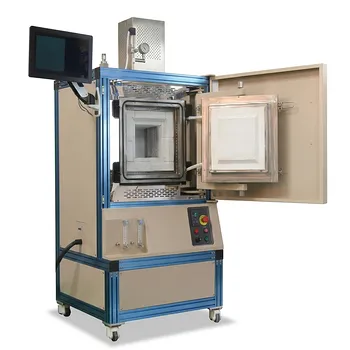
High Temperature Hydrogen Atmosphere Box Furnace 1650C Max Reducing Environment Material Synthesis System 8x8x8 Chamber
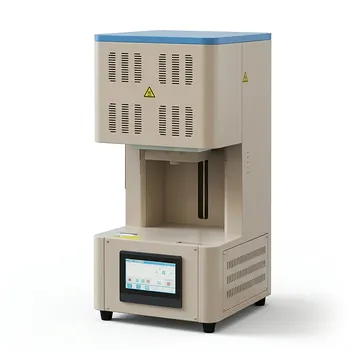
Automated 1700C High Temperature Bottom Loading Box Furnace with PC Software Control and Robotic Integration Capability
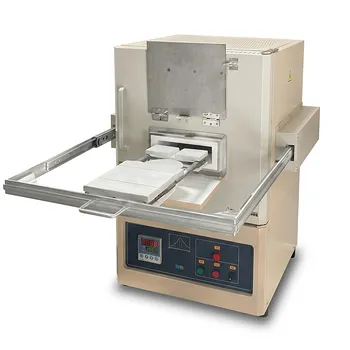
1700C Box Furnace with Sliding Platform for Rapid Heating and Cooling High Temperature Thermal Processing System
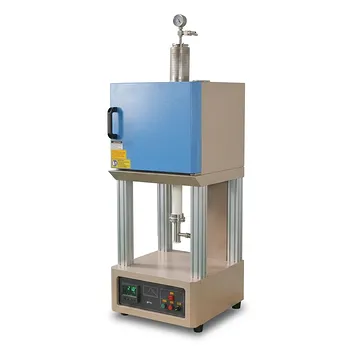
Hybrid High Temperature Tube and Box Furnace 1700C with 2 Inch Alumina Tube for Material Research
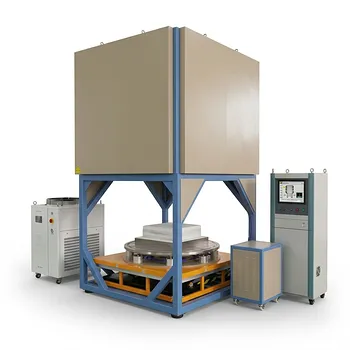
Bottom Loaded Inert Gas Atmosphere Box Furnace 1700C 1300C 216L Large Capacity Industrial Thermal Processing System
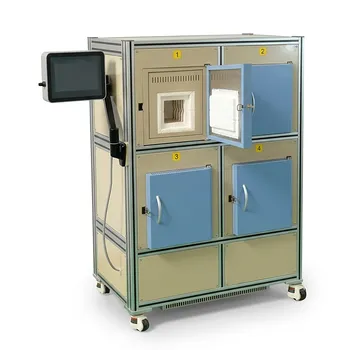
High Temperature Four Chamber Box Furnace for High Throughput Materials Research and Space Saving Thermal Processing
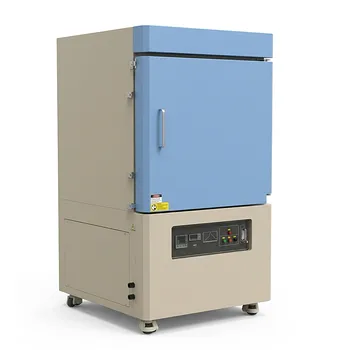
Industrial Large Box Furnace 1700C 216L High Temp Muffle Sintering System
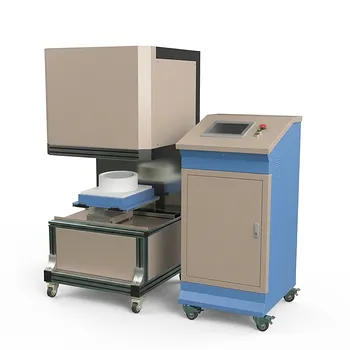
High Temperature Bottom Loading Box Furnace for Rapid Thermal Processing 1700C 40L Capacity
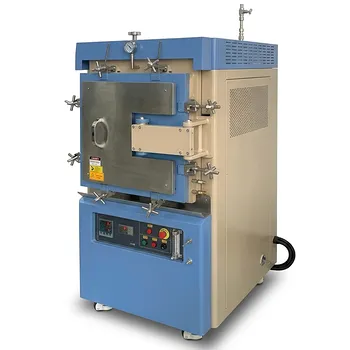
Atmosphere Controlled Muffle Furnace 1700C Maximum Temperature 80L High Capacity Vacuum Inert Gas Box Furnace
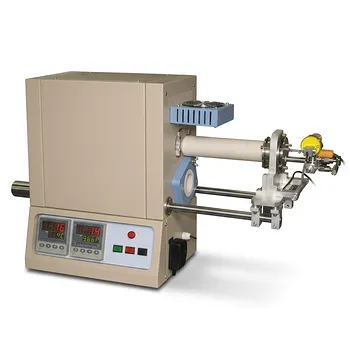
High Temperature Tube Furnace 1500C with Sliding Flanges and 50mm OD for Rapid Thermal Processing Fast Heating and Cooling

High Temperature 1700C Tube Furnace with High Vacuum Turbomolecular Pump System and Multi Channel Mass Flow Controller Gas Mixer
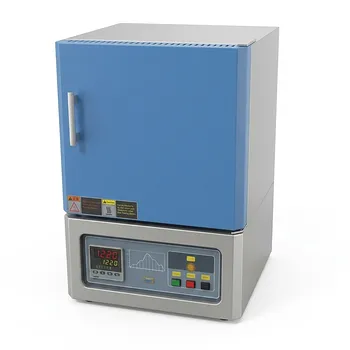
High Temperature Benchtop Muffle Furnace 1700C 10L Chamber Alumina Fiber Insulation MoSi2 Heating Elements
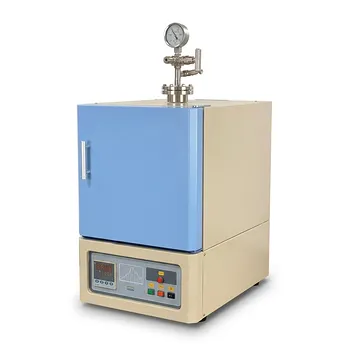
Hybrid High Temperature Muffle and Tube Furnace with 1500C Capability and Vacuum Flange Assembly
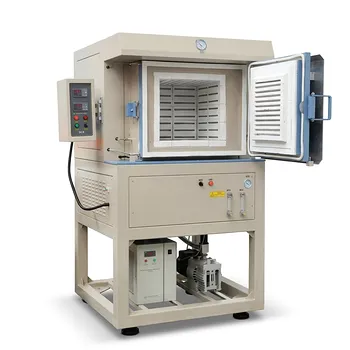
1200°C Five Side Heating Atmosphere Controlled Muffle Furnace 64 Liter High Uniformity Box Furnace for Material Synthesis