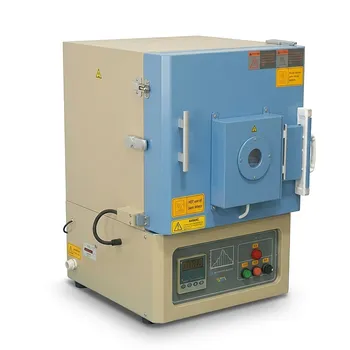
What is the role of a high-temperature box furnace in Na3MnZr(PO4)3 synthesis? Engineering High-Performance NASICON.
Updated 3 months ago
The high-temperature box or tube furnace is the critical thermal reactor used to transform sol-gel precursors into the final NASICON-structured $Na_3MnZr(PO_4)_3$ crystalline active material. It provides the controlled environment necessary to decompose organic gel components, drive solid-state chemical reactions, and promote the growth of specific crystal phases required for sodium-ion battery performance.
The furnace serves as the definitive tool for governing the phase purity and crystallinity of $Na_3MnZr(PO_4)_3$. By precisely managing temperature and atmosphere, it ensures the formation of the NASICON framework essential for high-voltage stability and rapid ion transport.
Facilitating the Transition from Gel to Solid State
Decomposition of Metal-Organic Precursors
In the sol-gel process, the furnace provides the thermal energy required to break down the metal-organic complex gels. This stage involves the evaporation of residual solvents and the decomposition of organic binders, such as citric acid, into volatile gases like carbon dioxide and water vapor.
Removal of Volatile Impurities
As the temperature rises, the furnace facilitates the removal of unwanted chemical byproducts. This purification step is vital to ensure that the resulting $Na_3MnZr(PO_4)_3$ powder is free from residual carbon or moisture that could interfere with electrochemical reactions.
Engineering the NASICON Crystal Structure
Promotion of Precise Crystal Growth
The furnace provides a stable thermal field that allows atoms to reorganize into a highly ordered lattice. For $Na_3MnZr(PO_4)_3$, this results in a NASICON-structured framework with specific space group symmetry.
Ensuring High Crystallinity
High-temperature calcination is necessary to achieve high crystallinity, which directly impacts the material's structural stability. A well-crystallized lattice provides the "tunnels" required for efficient sodium-ion diffusion and maintains a stable high-voltage platform during battery cycling.
Facilitating Solid-State Diffusion
During the final sintering stages, the furnace drives the thorough solid-state diffusion of sodium, manganese, zirconium, and phosphate ions. This ensures a homogeneous phase distribution throughout the active material, preventing the formation of inactive secondary phases.
Managing Atmosphere and Surface Chemistry
Control of Oxidation States
Tube furnaces, in particular, allow for the use of specific atmospheres (such as Argon or Nitrogen) to protect the valence states of transition metals like Manganese. This prevents unwanted oxidation that could degrade the capacity or voltage of the $Na_3MnZr(PO_4)_3$ cathode.
In-Situ Carbon Coating
If organic additives are present in the gel, the furnace can facilitate the conversion of these precursors into a conductive carbon layer on the particle surfaces. This occurs during the high-temperature treatment under an inert atmosphere, significantly improving the electronic conductivity of the final composite.
Understanding the Trade-offs
Temperature vs. Particle Size
Higher temperatures generally improve crystallinity and phase purity, but they also promote grain growth and particle agglomeration. Excessive sintering can result in large particles with long ion-diffusion paths, which negatively impacts the rate capability of the battery.
Heating Rates and Structural Defects
Rapid heating (ramping) can lead to non-uniform thermal gradients within the precursor mixture, potentially causing structural defects or incomplete reactions. Conversely, excessively slow heating protocols increase energy consumption and manufacturing time without always providing a proportional benefit to material quality.
How to Optimize Thermal Treatment for Your Goal
Application Guidance
- If your primary focus is Maximum Ion Conductivity: Prioritize higher calcination temperatures and longer soaking times to ensure high crystallinity and a fully developed NASICON framework.
- If your primary focus is High Rate Performance: Utilize a staged heating profile with a shorter final sintering time to limit grain growth and maintain small primary particle sizes.
- If your primary focus is Surface Conductivity: Use a tube furnace with an inert atmosphere (Argon) to facilitate the simultaneous crystallization of the active material and the formation of a conductive carbon network.
Achieving the ideal $Na_3MnZr(PO_4)_3$ active material requires a precise balance between the thermal energy provided by the furnace and the specific chemical requirements of the NASICON lattice.
Summary Table:
| Synthesis Stage | Furnace Function | Key Benefit for Na3MnZr(PO4)3 |
|---|---|---|
| Pre-heating | Decomposition of metal-organic gels | Removal of volatile impurities & carbon residue |
| Calcination | Engineering NASICON lattice growth | High phase purity & stable high-voltage platform |
| Sintering | Facilitating solid-state diffusion | Homogeneous ion distribution & structural stability |
| Atmosphere Control | Inert gas shielding (Ar/N2) | Prevents Mn oxidation & enables carbon coating |
| Thermal Management | Precise cooling & ramping control | Minimizes structural defects and grain agglomeration |
Elevate Your Battery Material R&D with THERMUNITS
Precise thermal control is the backbone of high-performance sodium-ion battery research. As a global leader in high-temperature laboratory equipment, THERMUNITS provides the advanced technology needed to master the NASICON framework. Our specialized Tube, Atmosphere, Muffle, and Vacuum furnaces are designed to give researchers absolute control over oxidation states and crystallinity.
Whether you are working on sol-gel synthesis, CVD/PECVD, or vacuum induction melting (VIM), our comprehensive range—including Rotary kilns, Hot Press furnaces, and Thermal Elements—is engineered for the rigorous demands of material science.
Ready to optimize your synthesis process? Contact our technical experts today to find the ideal thermal solution for your lab and accelerate your industrial R&D breakthroughs.
References
- Debora Maria Conti, Doretta Capsoni. Design of Na3MnZr(PO4)3/Carbon Nanofiber Free-Standing Cathodes for Sodium-Ion Batteries with Enhanced Electrochemical Performances through Different Electrospinning Approaches. DOI: 10.3390/molecules29081885
Mentioned Products
- High Temperature 1700℃ Eight Chamber Box Furnace with Automatic Doors for Autonomous Material Research and High Throughput Heat Treatment
- 1650C High Temperature Atmosphere Controlled Box Furnace with 65L Chamber for Advanced Material Sintering and Industrial Heat Treatment
- Automated 1700C High Temperature Bottom Loading Box Furnace with PC Software Control and Robotic Integration Capability
- High Temperature Four Chamber Box Furnace for High Throughput Materials Research and Space Saving Thermal Processing
- 1700C Box Furnace with Sliding Platform for Rapid Heating and Cooling High Temperature Thermal Processing System
People Also Ask
- What is the role of a high-temperature box furnace in the solid-state synthesis of Europium-doped M3MgSi2O8 phosphors?
- Why is a high-temperature box furnace required for 1250°C ferrite calcination? Ensure Precise Phase Transformation.
- How does a high-temp box furnace aid rare-earth oxysulfide phosphor synthesis? Enhance Purity & Luminescence
- What role does an industrial-grade high-temperature furnace play in C2F sintering? Achieve Pure Phase and High Strength
- Why is an industrial high-temperature box furnace used for the pre-sintering of calcium silicate carriers? Key Benefits

Tech Team · ThermUnits
Last updated on Jun 02, 2026
Related Products
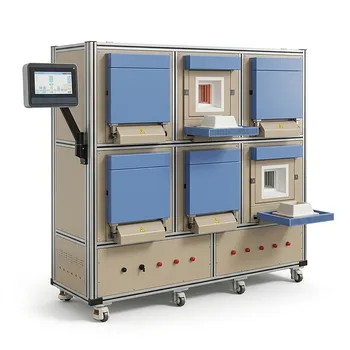
High Temperature 1700℃ Eight Chamber Box Furnace with Automatic Doors for Autonomous Material Research and High Throughput Heat Treatment
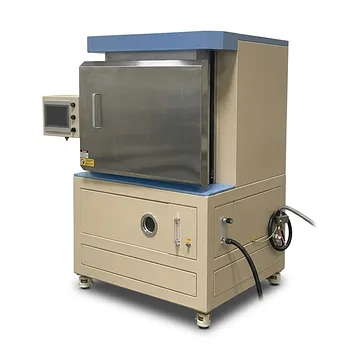
1650C High Temperature Atmosphere Controlled Box Furnace with 65L Chamber for Advanced Material Sintering and Industrial Heat Treatment
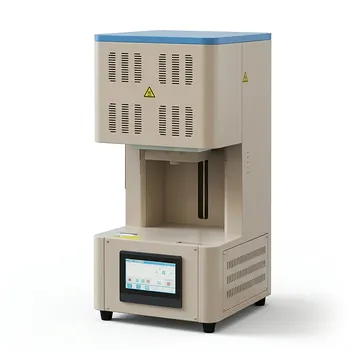
Automated 1700C High Temperature Bottom Loading Box Furnace with PC Software Control and Robotic Integration Capability
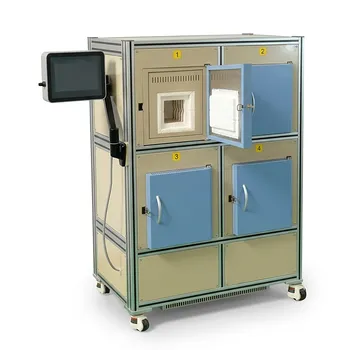
High Temperature Four Chamber Box Furnace for High Throughput Materials Research and Space Saving Thermal Processing
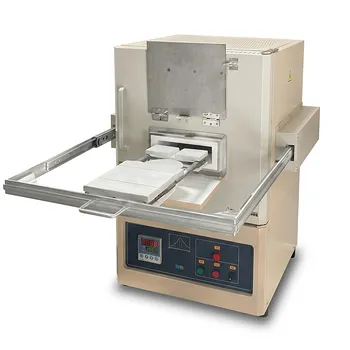
1700C Box Furnace with Sliding Platform for Rapid Heating and Cooling High Temperature Thermal Processing System
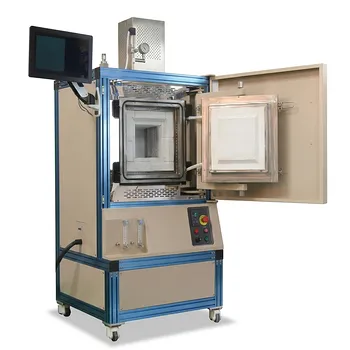
High Temperature Hydrogen Atmosphere Box Furnace 1650C Max Reducing Environment Material Synthesis System 8x8x8 Chamber
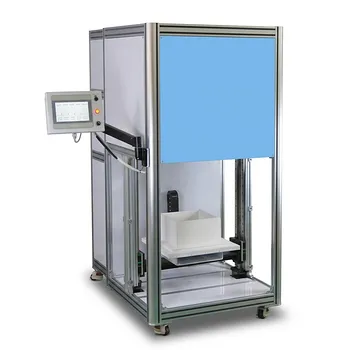
High Temperature 1600°C Three Zone Heated Bottom Loading Box Furnace with Rapid Thermal Processing Chamber 72L Volume
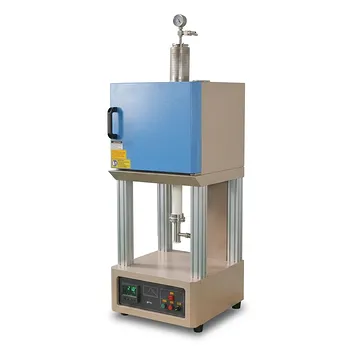
Hybrid High Temperature Tube and Box Furnace 1700C with 2 Inch Alumina Tube for Material Research
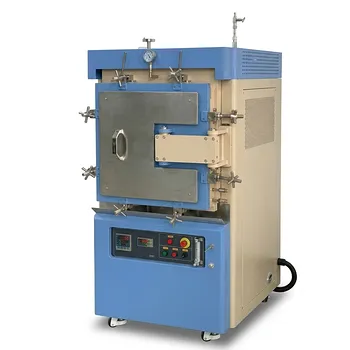
High Temperature Economic Hydrogen Gas Box Furnace 1600C Atmosphere Controlled Thermal Processing System 65L Capacity
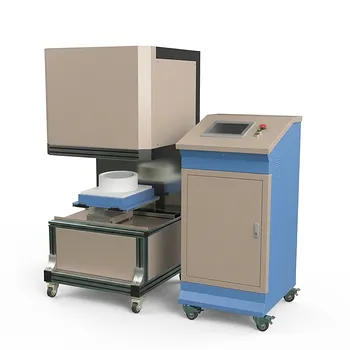
High Temperature Bottom Loading Box Furnace for Rapid Thermal Processing 1700C 40L Capacity
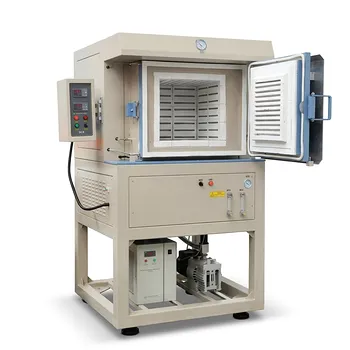
1200°C Five Side Heating Atmosphere Controlled Muffle Furnace 64 Liter High Uniformity Box Furnace for Material Synthesis
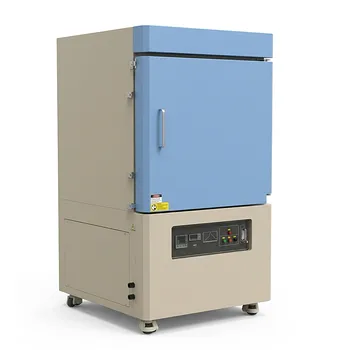
Industrial Large Box Furnace 1700C 216L High Temp Muffle Sintering System
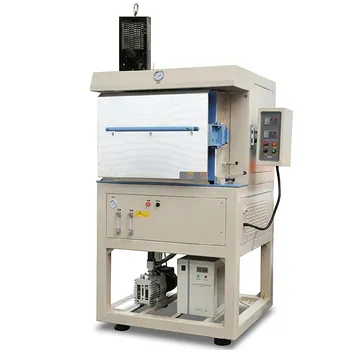
1200C Hydrogen Atmosphere Box Furnace with 5 Heated Sides and 64L Chamber
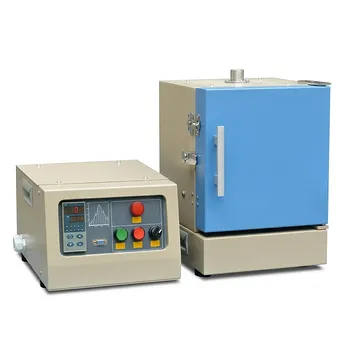
1200C Small Box Muffle Furnace with Separated Programmable Controller and 4.2L Alumina Fiber Chamber
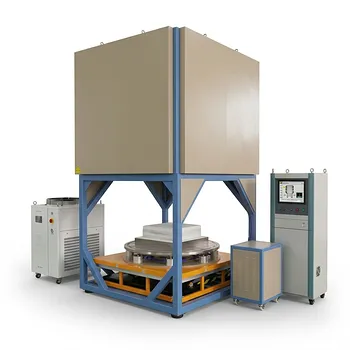
Bottom Loaded Inert Gas Atmosphere Box Furnace 1700C 1300C 216L Large Capacity Industrial Thermal Processing System
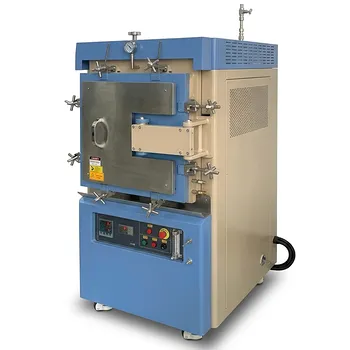
Atmosphere Controlled Muffle Furnace 1700C Maximum Temperature 80L High Capacity Vacuum Inert Gas Box Furnace
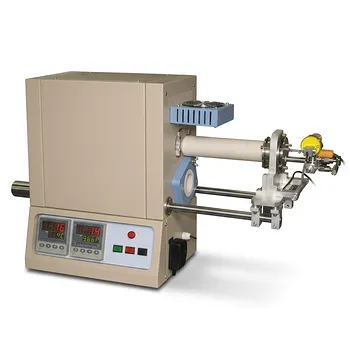
High Temperature Tube Furnace 1500C with Sliding Flanges and 50mm OD for Rapid Thermal Processing Fast Heating and Cooling

High Temperature 1700C Tube Furnace with High Vacuum Turbomolecular Pump System and Multi Channel Mass Flow Controller Gas Mixer
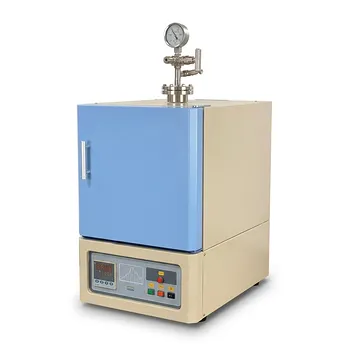
Hybrid High Temperature Muffle and Tube Furnace with 1500C Capability and Vacuum Flange Assembly