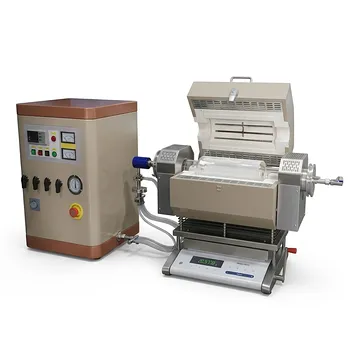
What are the advantages of a continuous Rotary Kiln compared to batch kilns? Scaling Efficiency & Material Uniformity
Updated 3 months ago
The continuous Rotary Kiln offers a decisive advantage in industrial processing by transforming thermal treatment from a static, batch-limited event into a dynamic, high-throughput flow. For granular active materials, it provides superior uniformity in heat and mass transfer through constant material tumbling, ensuring that every particle undergoes an identical thermal history. This results in significantly higher production efficiency and consistent product quality that batch processes cannot replicate at scale.
Moving from batch to continuous rotary processing eliminates the "edge-to-center" heating gradients common in static beds. By ensuring every granule receives identical thermal exposure, manufacturers can achieve high-volume throughput without sacrificing the chemical or physical integrity of the active material.
Superior Material Uniformity and Quality Control
Dynamic Tumbling vs. Static Bed Heating
In a batch kiln, material often sits in a static bed where heat must conduct through the outer layers to reach the core, often leading to uneven sintering. A rotary kiln utilizes a rotating cylinder to keep materials constantly tumbling, which maximizes the contact area between the granules and the thermal atmosphere.
Consistency in Thermal History
One of the greatest challenges in batch processing is "batch-to-batch variation," where slight changes in timing or loading affect the final product. Continuous rotary kilns ensure a consistent thermal history for all materials because every particle passes through the same temperature zones at a controlled speed.
Prevention of Localized Overheating
Because the material is in constant motion, the risk of localized hotspots or "over-cooking" specific sections of the feedstock is virtually eliminated. This dynamic heating method is essential for phase transformation and chemical uniformity, ensuring that the active materials maintain high purity levels.
Industrial Efficiency and Scalable Throughput
Continuous Feed and Discharge
Unlike batch systems that require cooling and reloading cycles, a rotary kiln operates on a continuous feeding and discharging basis. This process eliminates downtime, significantly increasing production throughput to levels reaching thousands of tons per day.
Optimized Heat Exchange
Industrial rotary kilns often incorporate internal features like lifters and chains to further agitate the material and improve heat transfer. These features, combined with the kiln's ability to integrate with preheaters and waste-heat recovery systems, drastically reduce specific energy consumption compared to batch furnaces.
Handling Heterogeneous Feedstocks
The inclined, rotating structure of the kiln is naturally resilient to variations in the feedstock. It can process varying particle sizes and heterogeneous materials effectively, making it a versatile tool for diverse industrial applications, from biomass carbonization to advanced mineral calcination.
Understanding the Trade-offs
Mechanical Complexity and Maintenance
Continuous rotary kilns involve large, heavy rotating parts that operate under extreme heat, leading to higher mechanical wear than static batch kilns. This necessitates a robust preventative maintenance schedule for seals, bearings, and drive components to prevent unexpected downtime.
Operational Rigidity
While highly efficient, these systems are designed for steady-state operation and are less flexible than batch kilns for frequent product changeovers. Startup and shutdown procedures are time-consuming and energy-intensive, meaning they are best suited for long, uninterrupted production runs.
Residence Time Distribution
Ensuring that every particle stays in the kiln for the exact same amount of time requires precise control over the kiln’s incline and rotation speed. If not calibrated correctly, some material may "short-circuit" through the kiln, leading to incomplete reactions or inconsistent quality.
How to Apply This to Your Project
Making the Right Choice for Your Goal
To determine if a continuous rotary kiln is the right fit for your active material production, consider your specific operational priorities.
- If your primary focus is maximum throughput and scale: The continuous rotary kiln is the industry standard, offering the ability to produce thousands of tons with minimal manual intervention.
- If your primary focus is precise phase purity for powder materials: The dynamic tumbling action is superior to static heating, as it prevents the material accumulation that causes uneven reaction progress.
- If your primary focus is energy cost reduction: Invest in a system that integrates waste-heat recovery and preheaters, which are far more effective in continuous setups than in batch configurations.
The continuous rotary kiln remains the most effective solution for scaling active material production while maintaining the rigorous quality standards required by modern industrial applications.
Summary Table:
| Feature | Continuous Rotary Kiln | Batch Kiln |
|---|---|---|
| Operation | Continuous feed and discharge | Static loading and cooling cycles |
| Heating Method | Dynamic tumbling (uniform exposure) | Static bed (edge-to-center gradients) |
| Throughput | High-volume industrial scale | Limited by batch size and downtime |
| Quality Control | Consistent thermal history per particle | Potential batch-to-batch variation |
| Efficiency | Optimized for heat recovery | Higher energy loss during cycling |
Scale Your Production with Precision Thermal Solutions
Ready to transition from batch to high-throughput continuous processing? THERMUNITS is a leading manufacturer of high-temperature laboratory and industrial equipment for material science and R&D.
We offer a comprehensive range of thermal processing solutions tailored to your specific needs, including:
- Industrial Systems: Electric rotary kilns, Vacuum Induction Melting (VIM) furnaces, and CVD/PECVD systems.
- Laboratory Equipment: Muffle, Vacuum, Atmosphere, Tube, and Hot Press furnaces.
- Specialized Applications: Dental furnaces and high-quality Thermal Elements.
Our advanced equipment ensures superior uniformity and efficiency for your granular active materials. Contact THERMUNITS today to discuss how our heat treatment technology can optimize your production line.
References
- Yan Li, Chunmei Li. Fabrication of Hierarchically Porous “Fish Cage”‐like Carbonaceous Nanomaterials via Soft Template‐assisted Strategy for Cr Removal: Accelerated Stepped Adsorption and Enhanced Coordination Effect. DOI: 10.1002/ejic.202400328
Mentioned Products
- Electric Rotary Kiln Continuous Working Small Rotary Furnace Heating Pyrolysis Plant
- Continuous Feeding Rotary Tube Furnace for Industrial Powder Heat Treatment and Material Research
- 1500C 3-Zone Rotary Tube Furnace 60mm with Automatic Powder Feeding and Receiving System for Continuous Material Synthesis
- Three Zone Rotary Tube Furnace for High Temperature Powder Processing and Material Research
- Electric Rotary Kiln Small Rotary Furnace for Activated Carbon Regeneration
People Also Ask
- What thermal efficiency can be expected from an electric rotary kiln compared to fuel-fired alternatives? Gain 95% efficiency.
- How does the use of an electric rotary kiln facilitate CO2 capture in cement and lime production? Achieve High-Purity CCUS
- What are the maintenance and service life advantages of an electric rotary kiln? 25+ Year Longevity & Low Maintenance
- How does the electric rotary kiln support environmental compliance and sustainability? Achieve Zero-Emission Production
- What are the primary components and heating mechanisms of an electric rotary kiln? Optimize High-Purity Heat Treatment

Tech Team · ThermUnits
Last updated on Jun 02, 2026
Related Products
Electric Rotary Kiln Continuous Working Small Rotary Furnace Heating Pyrolysis Plant
Continuous Feeding Rotary Tube Furnace for Industrial Powder Heat Treatment and Material Research
1500C 3-Zone Rotary Tube Furnace 60mm with Automatic Powder Feeding and Receiving System for Continuous Material Synthesis
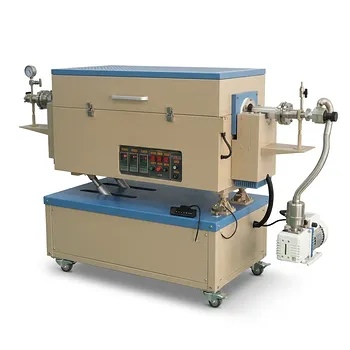
Three Zone Rotary Tube Furnace for High Temperature Powder Processing and Material Research
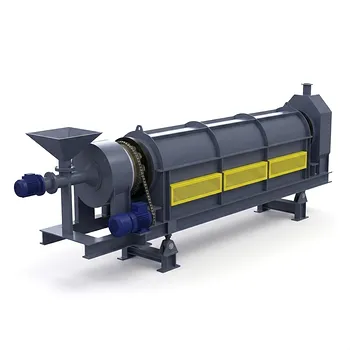
Electric Rotary Kiln Small Rotary Furnace for Activated Carbon Regeneration
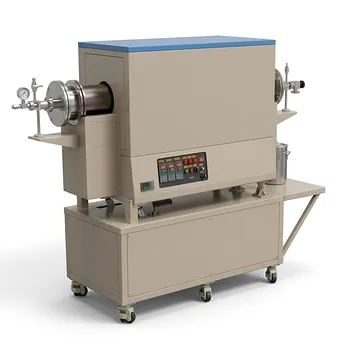
900°C Max Rotary Tube Furnace with 8 Inch 310S Alloy Tube and Optional Multi Zone Heating for Industrial Material Calcination
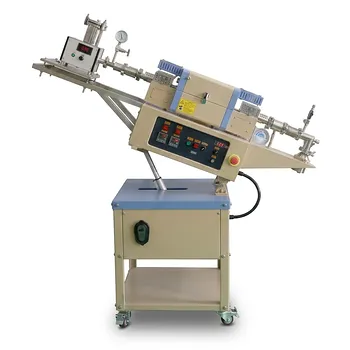
1100°C Dual Zone Rotary Tube Furnace with Automatic Feeding and Collection System for Continuous Powder Processing
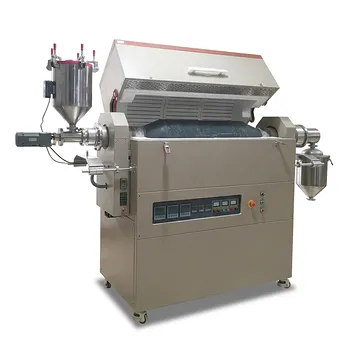
High Temperature Tilting Rotary Tubular Furnace for Continuous Powder Thermal Processing and Controlled Atmosphere Sintering
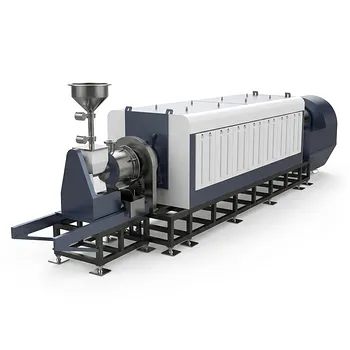
Electric Rotary Kiln Small Rotary Furnace Biomass Pyrolysis Plant
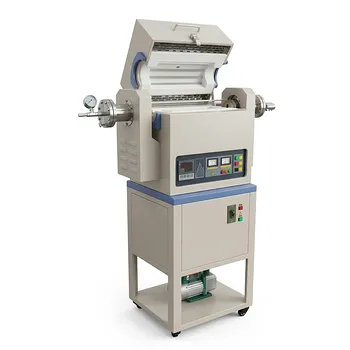
High Temperature Rotary Tilt Tubular Furnaces for Advanced Powder Sintering and Material Processing
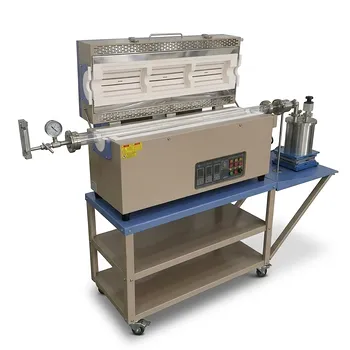
5 Inch Two Zone Rotary Tube Furnace 1100C for Powder CVD and Material Synthesis
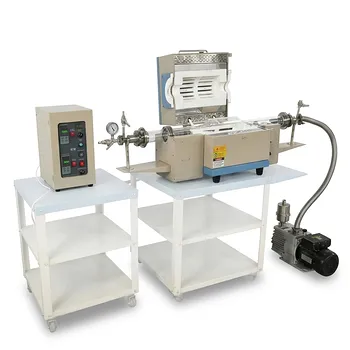
Two Zone Rotary Tube Furnace for Powder CVD Coating and Core Shell Material Synthesis 1100C
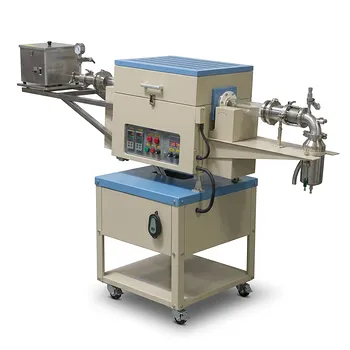
Two Zone Rotary CVD Furnace with Automatic Feeding and Receiving System for Powder Processing
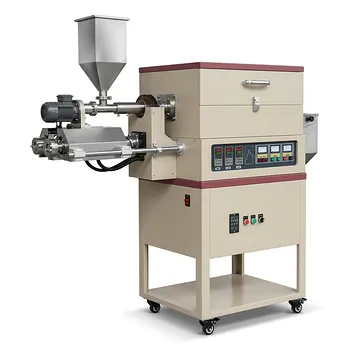
Laboratory Tilting Rotary Tubular Furnaces for Material Science and Industrial Heat Treatment
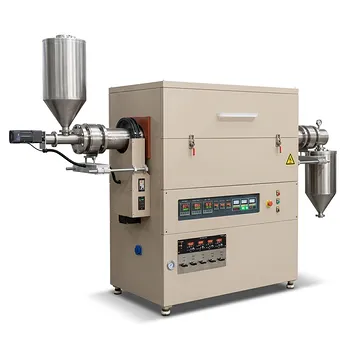
High Temperature Tilting Rotary Tube Furnace with Integrated Mass Flow Control and Multi Zone Heating

5 Inch Three Zone Rotary Tube Furnace with Integrated Gas Delivery System and 1200C Capability for Advanced Material CVD Processing
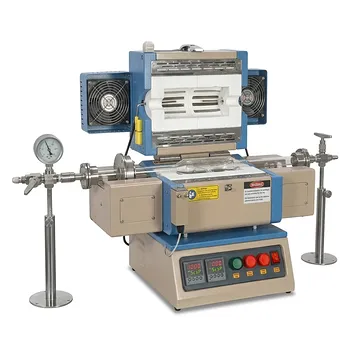
Dual Zone Rotary Tube Furnace for Uniform Powder Calcination 1000C 2 Inch Quartz Tube
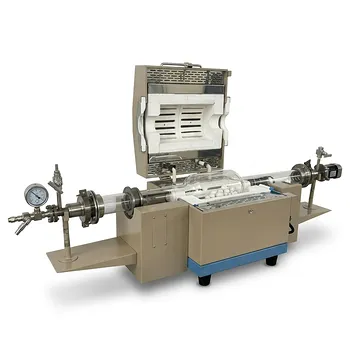
High Temperature Rotary Tube Furnace with Integrated Ball Milling and Gas Flow Function for Powder Nitriding
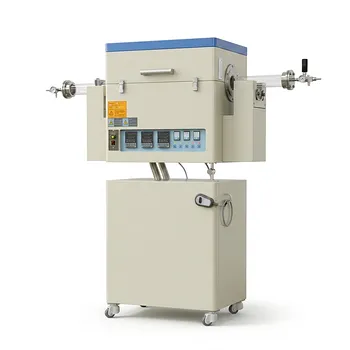
Three Temperature Zone Rotating Tube Furnace for Material Sintering and Controlled Atmospheric Heat Treatment