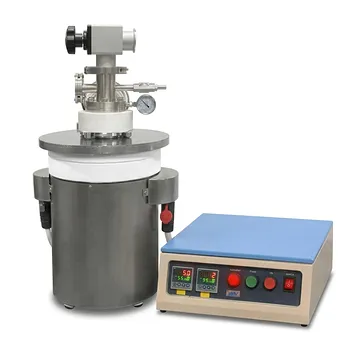
What are the advantages of using a VIM furnace for amorphous alloys? Achieve Precision & High Material Purity
Updated 3 months ago
High-vacuum induction melting (VIM) is the superior method for amorphous alloy replication because it eliminates atmospheric oxidation while enabling the precision casting of sub-micron features. By combining rapid induction heating with high-pressure gas injection, VIM allows reactive materials like zirconium-based alloys to reach a molten state of 1300 °C while maintaining extreme chemical purity and structural integrity.
Core Takeaway: VIM technology provides a controlled environment that simultaneously purifies the alloy melt and ensures high-pressure replication accuracy. This dual capability is essential for producing high-performance amorphous components with complex geometries and sub-micron surface details.
Achieving Material Purity and Structural Integrity
Prevention of Metal Oxidation
Zirconium-based and other amorphous alloys often contain highly active metallic elements that react instantly with oxygen at high temperatures. The high-vacuum environment of a VIM furnace suppresses these oxidation reactions, preserving the intended chemical composition of the alloy.
Effective Degassing and Purification
The vacuum system significantly reduces the partial pressure of ambient air and moisture, effectively removing dissolved gases such as oxygen, nitrogen, and hydrogen. This process eliminates the root cause of gas pore formation, resulting in a significantly higher material density and improved mechanical properties like fatigue strength and toughness.
Atomic-Level Compositional Uniformity
VIM furnaces utilize electromagnetic induction to generate eddy currents, which create an automatic stirring effect within the melt. This electromagnetic stirring ensures that multi-component elements achieve a uniform mixture at the atomic level, which is critical for the stability of amorphous structures.
Precision Replication of Micro-Scale Features
Rapid Heating and Thermal Management
Induction melting allows the alloy to reach a molten state of 1300 °C in a very short time. This speed is vital for amorphous alloys to prevent premature crystallization and to maintain the fluidity necessary for intricate casting processes.
High-Pressure Mold Filling
Once the metal is molten, the furnace applies high-pressure argon gas to force the liquid into quartz glass micro-molds. This pressure overcomes surface tension, ensuring high filling rates even in molds with complex, sub-micron architectures.
High Replication Accuracy
The combination of a clean, oxide-free melt and gas-driven pressure allows for sub-micron feature replication. This level of precision is unattainable with traditional melting methods, where oxidation and atmospheric resistance hinder the flow of the molten metal into fine cavities.
Understanding the Trade-offs
Equipment Complexity and Cost
VIM systems require sophisticated vacuum seals, high-pressure gas handling, and induction power supplies, making the initial capital investment much higher than atmospheric furnaces. Maintaining the integrity of the vacuum chamber and the induction coils also demands specialized technical expertise.
Material and Crucible Interactions
While VIM minimizes container contamination through non-contact induction principles, the high temperatures required (up to 1300 °C) can still lead to minor reactions between the melt and the crucible or mold. Selecting the correct refractory material, such as quartz glass for micro-molds, is essential to prevent unintended chemical shifts.
Operational Throughput
The need to achieve a high vacuum before melting and the subsequent cooling cycle under pressure can limit production speed. Unlike continuous casting methods, VIM replication is typically a batch process, which may impact the total volume of parts produced per shift.
How to Apply This to Your Project
When deciding if a VIM furnace is the right choice for your amorphous alloy casting, consider the specific requirements of your end product.
- If your primary focus is sub-micron surface detail: VIM is the only reliable option, as the high-pressure argon injection is necessary to force the melt into micro-molds.
- If your primary focus is maximum mechanical strength: Prioritize VIM for its degassing capabilities, which remove the hydrogen and oxygen that cause embrittlement and internal voids.
- If your primary focus is chemical homogeneity: Utilize the electromagnetic stirring feature of the VIM furnace to ensure all alloying elements are perfectly distributed throughout the master alloy.
The integration of VIM technology ensures that the transition from raw material to replicated amorphous part maintains the highest possible standards of purity and precision.
Summary Table:
| Key Feature | Benefit for Amorphous Alloy Casting |
|---|---|
| High-Vacuum Environment | Eliminates oxidation and preserves chemical composition. |
| Electromagnetic Stirring | Ensures atomic-level uniformity and structural stability. |
| Rapid Induction Heating | Prevents premature crystallization by reaching 1300°C quickly. |
| High-Pressure Injection | Enables sub-micron replication of intricate mold features. |
| Effective Degassing | Removes O2, N2, and H2 to eliminate pores and increase density. |
Elevate Your Material Research with THERMUNITS Precision Engineering
Are you looking to achieve unparalleled purity and precision in your amorphous alloy projects? THERMUNITS is a leading manufacturer of high-temperature laboratory equipment dedicated to supporting material science and industrial R&D.
Our advanced Vacuum Induction Melting (VIM) furnaces are specifically designed to meet the rigorous demands of reactive alloy processing, ensuring high-density results and sub-micron replication accuracy. Beyond VIM technology, we offer a comprehensive suite of thermal solutions, including:
- Furnaces: Muffle, Vacuum, Atmosphere, Tube, Rotary, and Hot Press models.
- Systems: CVD/PECVD systems, Dental Furnaces, and Electric Rotary Kilns.
- Specialized Equipment: Thermal Elements and diverse laboratory heat treatment tools.
Ready to optimize your thermal processing workflow? Contact our technical experts today to find the perfect equipment solution tailored to your R&D requirements!
References
- Sebastian Kluck, Frederik Kotz. Sub‐Micron Replication of Fused Silica Glass and Amorphous Metals for Tool‐Based Manufacturing. DOI: 10.1002/advs.202405320
Mentioned Products
- 1900C Maximum High Temperature 7KW Vacuum Induction Melting System with 60mm Quartz Tube and Manual Temperature Control for Metallic Alloy Research
- Induction Melting Casting Furnace 1750C Vacuum High Frequency Metal Processing Unit
- High Pressure 600T Vacuum Induction Hot Press Furnace for Advanced Material Heat Treatment and Sintering
- High Vacuum Melting Casting Furnace with Mechanical Stirring and Secondary Charge for Metallic Alloy Research
- Atmosphere Controlled Induction Melting Granulating Casting Furnace 1500C 5kg Capacity
People Also Ask
- What is the primary role of a Vacuum Induction Melting furnace in the smelting of Fe-Cr-N alloys? Ensuring High Purity
- How does a Vacuum Induction Melting furnace heat materials while preventing atmospheric contamination? Achieve High Purity
- What are the key structural components that make up a Vacuum Induction Melting (VIM) furnace system? Full Guide
- How does the skin effect influence VIM frequency selection? Optimize Heat Penetration & Stirring Efficiency
- What technical advantages does Vacuum Induction Melting offer regarding alloy homogeneity and purity? Enhance Performance

Tech Team · ThermUnits
Last updated on Jun 02, 2026
Related Products
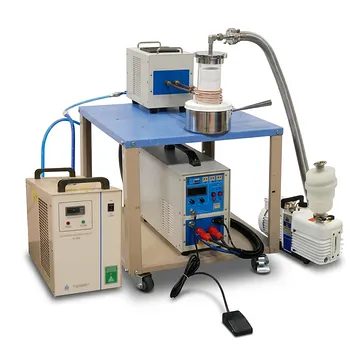
1900C Maximum High Temperature 7KW Vacuum Induction Melting System with 60mm Quartz Tube and Manual Temperature Control for Metallic Alloy Research
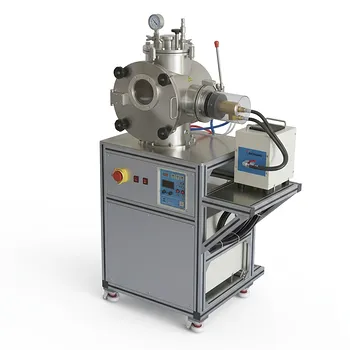
Induction Melting Casting Furnace 1750C Vacuum High Frequency Metal Processing Unit
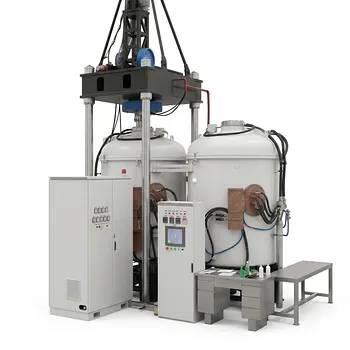
High Pressure 600T Vacuum Induction Hot Press Furnace for Advanced Material Heat Treatment and Sintering
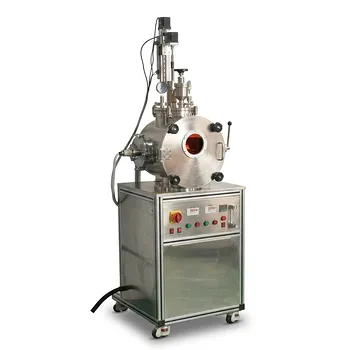
High Vacuum Melting Casting Furnace with Mechanical Stirring and Secondary Charge for Metallic Alloy Research
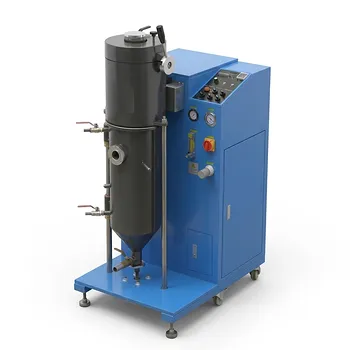
Atmosphere Controlled Induction Melting Granulating Casting Furnace 1500C 5kg Capacity
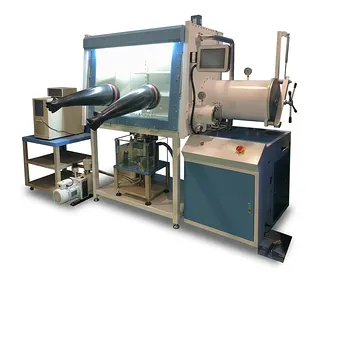
High Temperature Induction Melting System with Integrated Ultra High Purity Glove Box for Metallic Alloy Processing
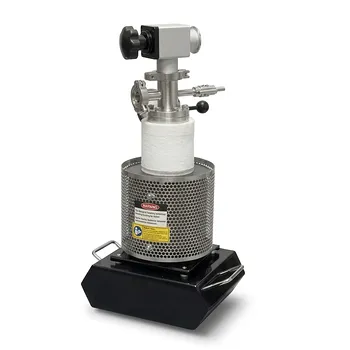
High Temperature 1100C Compact Top Loading Vertical Vacuum Tube Furnace for High Vacuum Noble Metal Melting and Material Research
High Throughput Induction Melting and Casting Furnace for Superalloy Research 1700C Atmosphere Controlled Multi Sample System
High Temperature Induction Melting System with Multi Cavity Crucible and 15KW Precision Digital Temperature Control
Induction Heating System with Temperature Control for High Temperature Vacuum Sintering and Melting
Ultra High Temperature Induction Heated Vacuum Furnace with Molten Salt Electrolysis Capability and 3000 Degree Precision Control
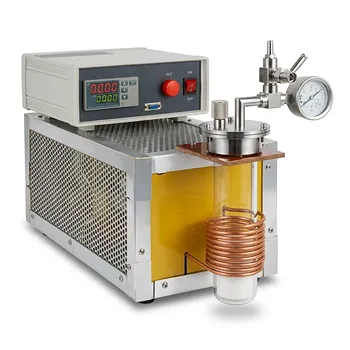
High Temperature Mini Induction Heating Furnace 1600C Laboratory Material Melting System
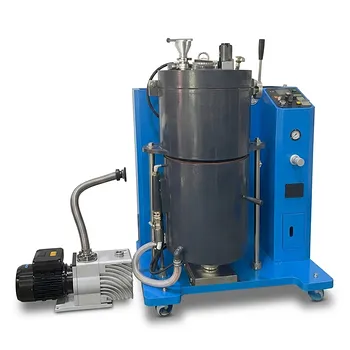
Atmosphere Controlled Induction Melting Casting System 1600C 10L Capacity
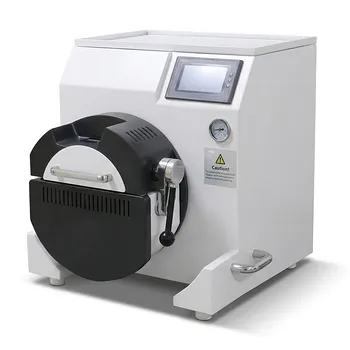
Desktop Induction Melting Furnace with Automatic Rotary Casting Function up to 1700C for Advanced Metal Alloy Research
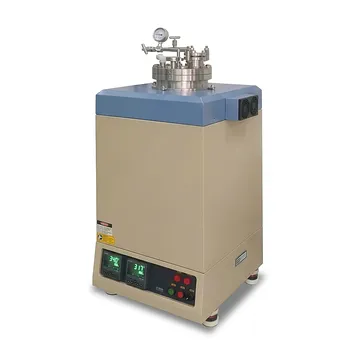
High Temperature 1000C Vacuum Furnace with 8 Inch ID Chamber for Material Sintering and Research Annealing
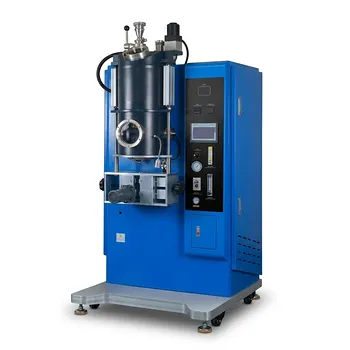
Atmosphere Controlled Continuous Casting Furnace with Secondary Charge Function for Induction Melting and Metal Alloy Wire Production
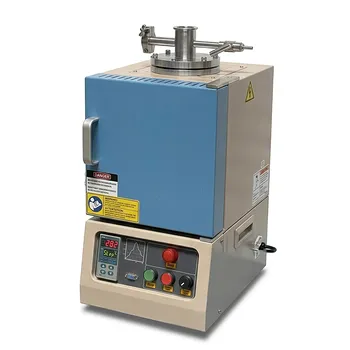
High Temperature Hybrid Muffle and Tube Furnace with Vacuum Capability and PID Control
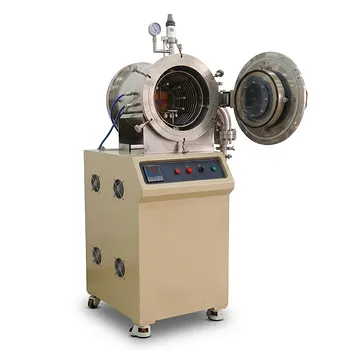
High Temperature Cold Wall High Vacuum Chamber Furnace 1400C for Advanced Material Processing

High Temperature 1700C Vertical Tube Furnace for Powder Spherification and Material Sintering