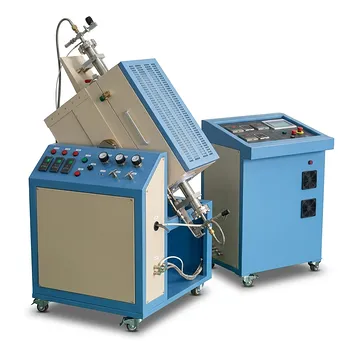
What are the advantages of using a Hot Isostatic Press (HIP) for 3D-printed thermoelectrics? Achieve Perfect Density
Updated 3 months ago
Hot Isostatic Pressing (HIP) offers a transformative advantage for complex 3D-printed thermoelectrics by providing omnidirectional pressure. Unlike uniaxial pressing, which applies force along a single axis, HIP achieves near-theoretical density in intricate geometries like tilted or hexagonal tubes without distorting their fine structural details. This uniform densification is critical for maximizing the thermoelectric figure of merit (zT) while preserving the high-resolution features of the 3D-printed design.
Core Takeaway: HIP is the superior consolidation method for complex 3D-printed geometries because its use of high-pressure argon gas ensures uniform material density and structural integrity, which are essential for optimizing thermoelectric performance.
The Mechanics of Omnidirectional Pressure
Overcoming the Limits of Uniaxial Consolidation
Uniaxial hot pressing relies on directional force, typically around 45 MPa, to consolidate powder compacts into bulk samples. While effective for simple shapes, this directional pressure creates "dead zones" in complex geometries where the force cannot reach or is applied unevenly. This often leads to internal voids or structural failure in components with non-planar surfaces.
Preserving Intricate 3D Geometries
A Hot Isostatic Press (HIP) utilizes high-pressure argon gas (e.g., 200 MPa) to apply force from every angle simultaneously. This omnidirectional uniform pressure allows 3D-printed features, such as internal channels or tilted walls, to be densified without the risk of crushing or "pancaking" the structure. This capability is essential for manufacturing advanced thermoelectric generators that require specific, non-traditional shapes to fit into compact spaces.
Enhancing Thermoelectric Performance
Achieving Near-Theoretical Density
To function efficiently, thermoelectric materials must reach near-theoretical density to ensure consistent electrical and thermal pathways. The extreme pressure of the HIP process (often significantly higher than uniaxial methods) eliminates microscopic pores that hinder electron flow. This high-density state is a prerequisite for high-performance thermoelectric applications.
Maximizing the Figure of Merit (zT)
The ultimate goal of processing these materials is to maximize the dimensionless figure of merit (zT) by minimizing thermal conductivity. HIP processing at specific temperatures, such as 480 °C, allows for the necessary consolidation without the grain growth that can occur at higher temperatures. By maintaining a fine microstructure and high density, the material achieves the optimal balance of electrical conductivity and thermal resistance.
Understanding the Trade-offs
Process Complexity and Cost
While HIP provides superior structural results, it is generally a more complex and expensive process than uniaxial pressing. The requirement for specialized high-pressure argon chambers and careful "canning" or sealing of samples can increase production time and cost. For simple, flat-plate thermoelectric components, the simpler uniaxial hot press may still be more cost-effective.
Atmosphere and Temperature Control
Uniaxial pressing often utilizes a reducing atmosphere (such as Ar-7% H2) and higher temperatures (up to 923 K) to lower sintering temperatures and retain specific microstructures. HIP, conversely, relies more on extreme pressure than extreme heat to achieve density. Choosing between them requires balancing the need for specific chemical phases against the need for geometric precision.
How to Apply This to Your Project
Choosing the Right Consolidation Method
- If your primary focus is geometric complexity: Use Hot Isostatic Pressing (HIP) to ensure that intricate 3D-printed features like hexagonal tubes or lattices remain intact during densification.
- If your primary focus is maximizing zT in complex shapes: Prioritize HIP at lower temperatures (around 480 °C) to achieve high density while preventing the thermal degradation of the material’s performance.
- If your primary focus is rapid prototyping of simple bulk samples: Use a uniaxial hot press, as it is more efficient for consolidating standard powder compacts where geometric distortion is not a concern.
By selecting the pressure application method that aligns with your component's geometry, you can ensure both structural integrity and peak thermoelectric efficiency.
Summary Table:
| Feature | Hot Isostatic Pressing (HIP) | Uniaxial Hot Pressing |
|---|---|---|
| Pressure Direction | Omnidirectional (Uniform) | Single Axis (Directional) |
| Typical Pressure | High (~200 MPa) | Moderate (~45 MPa) |
| Geometry Support | Complex 3D/Internal Channels | Simple/Flat Shapes Only |
| Densification | Near-Theoretical (High zT) | Risk of "Dead Zones" |
| Structural Integrity | Preserves Fine Features | Risk of Distortion/Pancaking |
Optimize Your Thermal Processing with THERMUNITS
As a leading manufacturer of high-temperature laboratory equipment for material science and industrial R&D, THERMUNITS empowers your research with precision and reliability. We offer a comprehensive range of thermal processing solutions tailored to your specific needs, including:
- Advanced Furnaces: Muffle, Vacuum, Atmosphere, Tube, Rotary, and Hot Press furnaces.
- Specialized Systems: CVD/PECVD systems, Dental Furnaces, and Vacuum Induction Melting (VIM) furnaces.
- Industrial Kilns: Electric rotary kilns and high-pressure thermal elements.
Whether you are processing complex 3D-printed components or developing next-generation thermoelectric materials, our equipment ensures maximum structural integrity and performance.
Ready to upgrade your laboratory capabilities? Contact us today to discuss your project requirements!
References
- Kaidong Song, Yanliang Zhang. Machine learning-assisted 3D printing of thermoelectric materials of ultrahigh performances at room temperature. DOI: 10.1039/d4ta03062a
Mentioned Products
- High Temperature Vacuum Lamination Hot Press Furnace Machine for Semiconductor Wafer Bonding and Advanced Composite Thermal Processing
- Industrial Vacuum Hot Press Furnace Machine and High Temperature Heated Vacuum Press for Advanced Material Sintering
- Industrial High Temperature Vacuum Hot Press Furnace and Heated Vacuum Press Machine for Material Science Sintering
- 2500C High Vacuum Ultrafast Heating Pellet Press with Automated 8 Sample Loading System
- High Pressure 600T Vacuum Induction Hot Press Furnace for Advanced Material Heat Treatment and Sintering
People Also Ask
- What types of heating systems and insulation are used in Vacuum Hot Press Furnaces? Optimize Your Thermal Processing
- What is a Vacuum Hot Press Furnace and what are its primary industrial applications? Achieve Maximum Material Density
- What are the structural features of the furnace body and chamber in a Vacuum Hot Press Furnace? Master Material Density
- Why is graphite the preferred material for dies and heating elements in Vacuum Hot Press Furnaces? High-Temp Solutions
- What are the primary operational components and mechanisms of a vacuum hot press furnace? A Technical Breakdown

Tech Team · ThermUnits
Last updated on Jun 03, 2026
Related Products
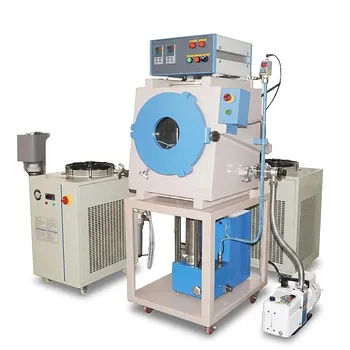
High Temperature Vacuum Lamination Hot Press Furnace Machine for Semiconductor Wafer Bonding and Advanced Composite Thermal Processing
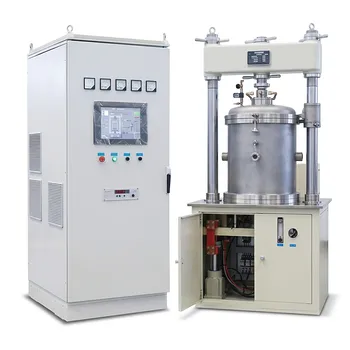
Industrial Vacuum Hot Press Furnace Machine and High Temperature Heated Vacuum Press for Advanced Material Sintering
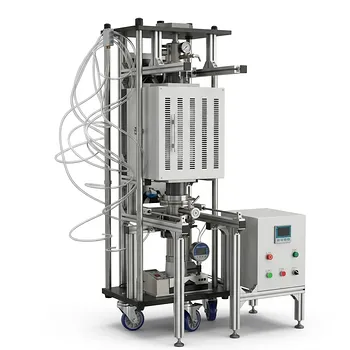
Industrial High Temperature Vacuum Hot Press Furnace and Heated Vacuum Press Machine for Material Science Sintering
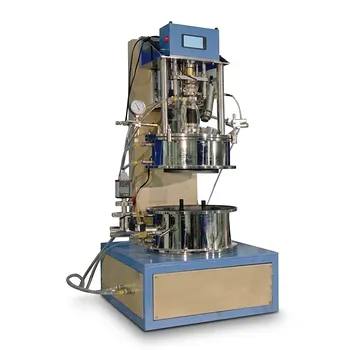
2500C High Vacuum Ultrafast Heating Pellet Press with Automated 8 Sample Loading System
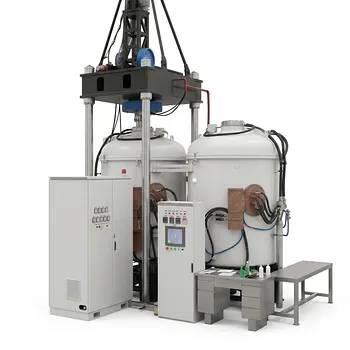
High Pressure 600T Vacuum Induction Hot Press Furnace for Advanced Material Heat Treatment and Sintering
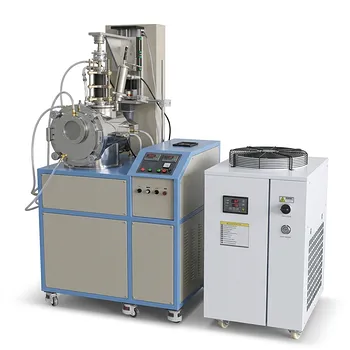
High Temperature Ultrafast Heating Pressing Furnace 2900C Max 100kgf Rapid Thermal Processing System
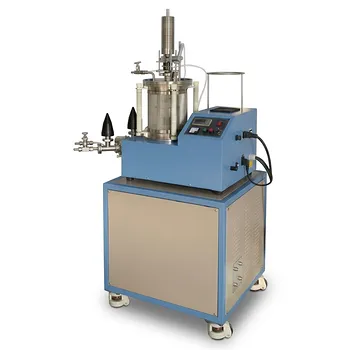
Ultrafast Thermal Pressing Furnace 2900C Max Temperature 200K per Second Heating Rate Vacuum Atmosphere Rapid Processing System
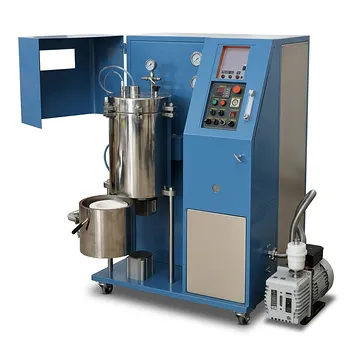
High Pressure Induction Melting Casting System 1700C Max for Alloy Granulation and Infiltration Equipment