What are the advantages of using a laboratory vacuum oven for PrFeO3? Ensure High Phase Purity & Chemical Homogeneity
Updated 3 months ago
The use of a laboratory vacuum oven is critical for $PrFeO_3$ synthesis because it enables rapid dehydration at reduced temperatures while preventing the degradation of the precursor. By lowering the boiling point of solvents through negative pressure, vacuum ovens eliminate the risk of component segregation and oxidation caused by the local overheating common in standard convection ovens. This precise control ensures that the resulting powder maintains a uniform chemical composition and high phase purity during subsequent high-temperature calcination.
Core Takeaway: A laboratory vacuum oven provides a low-oxygen, low-temperature environment that preserves the chemical homogeneity and structural integrity of $PrFeO_3$ precursors, preventing oxidation and ensuring superior catalytic performance.
Preserving Chemical Homogeneity and Phase Purity
Prevention of Component Segregation
During the drying of precursor solutions, standard ovens can cause "wicking" or uneven evaporation, leading to component segregation. In a vacuum oven, the uniform reduction in pressure allows for more consistent solvent removal across the entire sample volume.
Ensuring Uniform Chemical Composition
Uniform drying is essential for producing calcium-doped $PrFeO_3$ catalysts. Without the precise environment of a vacuum, the distribution of dopants may become uneven, which negatively impacts the material's final catalytic activity.
Facilitating Pure Phase Transformation
The high phase purity of the final solid powder is dependent on the state of the dried precursor. By avoiding local chemical imbalances during drying, the vacuum oven prepares the sample for a successful conversion into a pure phase during high-temperature calcination.
Thermal Management and Solvent Efficiency
Lowering the Boiling Point of Solvents
Vacuum ovens operate by creating a negative pressure environment, which significantly reduces the boiling point of water and organic solvents. This allows for rapid dehydration and "deep drying" at temperatures far lower than those required in standard atmospheric ovens.
Elimination of Local Overheating
Standard drying ovens rely on air circulation, which can create thermal gradients and localized "hot spots." A vacuum oven avoids these issues, ensuring the sample is not exposed to temperatures that could cause premature decomposition or unwanted side reactions.
Removal of High-Boiling Point Residues
For precursors involving complex solvents, a vacuum environment is more effective at removing trace moisture and residual solvents trapped within pores. This is particularly important for maintaining the integrity of sensitive crystal structures before they are stabilized.
Protection Against Oxidative Degradation
The Role of an Oxygen-Deficient Environment
By removing air, the vacuum oven creates an oxygen-deficient atmosphere that is critical for oxygen-sensitive materials. This environment prevents the thermal oxidation of the sample, which could otherwise alter the oxidation states of the Praseodymium or Iron ions.
Maintaining Surface Activity and Morphology
Vacuum drying is a gentler process that helps maintain the micro-morphology of nanomaterials, such as delicate wrinkled structures or specific surface functional groups. This ensures the material remains in a completely dehydrated, active state for characterization and testing.
Understanding the Trade-offs
Equipment Complexity and Maintenance
Vacuum ovens require a dedicated vacuum pump and high-quality seals to maintain the low-pressure environment. This adds a layer of complexity to the laboratory setup and necessitates regular maintenance of the pumping system to prevent oil backstreaming or seal failure.
Heat Transfer Mechanisms
In a vacuum, heat cannot be transferred via air convection; it relies primarily on conduction and radiation. This can result in slower heating cycles compared to forced-air ovens, requiring the user to ensure samples are in good thermal contact with the shelving.
How to Apply This to Your Project
Choosing the Right Drying Method
To achieve the best results with your $PrFeO_3$ samples, consider your specific experimental goals:
- If your primary focus is phase purity and dopant uniformity: Utilize a vacuum oven to ensure the precursor dries evenly without component segregation.
- If your primary focus is preventing oxidation of metallic components: The low-oxygen environment of a vacuum oven is mandatory to avoid unwanted oxide formation.
- If your primary focus is preserving delicate nanostructures: Use a vacuum oven at a lower temperature (e.g., 70°C to 80°C) to gently remove solvents without collapsing the material's morphology.
By prioritizing vacuum-based dehydration, you ensure the chemical and structural foundation of your $PrFeO_3$ catalyst is optimized for high-performance applications.
Summary Table:
| Feature | Laboratory Vacuum Oven | Standard Drying Oven |
|---|---|---|
| Drying Environment | Negative pressure (Vacuum) | Atmospheric pressure (Convection) |
| Oxidation Risk | Extremely Low (Oxygen-deficient) | High (Oxygen-rich) |
| Boiling Point | Significantly reduced | Standard boiling point |
| Thermal Control | Uniform, prevents local overheating | Prone to thermal gradients/hot spots |
| Sample Integrity | Prevents component segregation | Risk of "wicking" and uneven drying |
| Best For | Oxygen-sensitive & high-purity powders | General-purpose moisture removal |
Optimize Your Material Synthesis with THERMUNITS Precision Equipment
Achieving phase purity and chemical homogeneity in advanced materials like $PrFeO_3$ requires precise thermal control. THERMUNITS is a leading manufacturer specializing in high-performance laboratory equipment tailored for material science and industrial R&D.
Our thermal processing solutions include:
- Vacuum & Atmosphere Furnaces: Perfect for oxygen-sensitive synthesis.
- Muffle, Tube, and Rotary Furnaces: For versatile heat treatment and calcination.
- CVD/PECVD Systems: For advanced thin-film and carbon research.
- Specialized Units: Including Hot Press, Dental, and Vacuum Induction Melting (VIM) furnaces.
Whether you are developing next-generation catalysts or conducting fundamental heat treatment research, our expert team is ready to provide the ideal hardware configuration for your lab.
Contact THERMUNITS Today to Upgrade Your Lab
References
- Bradley G. Lewis, Salvador Eslava. Ca‐Doped PrFeO<sub>3</sub> Photocathodes with Enhanced Photoelectrochemical Activity. DOI: 10.1002/solr.202400308
Mentioned Products
- Bottom Loading Vacuum Furnace 1200C Rapid Cooling Atmosphere Control Quartz Chamber
- High Temperature 1000C Vacuum Furnace with 8 Inch ID Chamber for Material Sintering and Research Annealing
- High Temperature Cold Wall High Vacuum Chamber Furnace 1400C for Advanced Material Processing
- High Vacuum Compact Tube Furnace 1200C with Integrated Turbo Pump System and 8 Inch Heating Zone
People Also Ask
- How does the choice of hot-zone materials, such as graphite or refractory metals, affect vacuum furnace performance? Guide
- What role does vacuum furnace technology play in the aerospace and aviation industry? | Advanced Heat Treatment
- What are the technical advantages of using a vacuum furnace over a traditional atmosphere furnace? Maximize Purity
- How do vacuum furnaces facilitate high purity in the electronics and semiconductor industry? Elevate Material Standards
- Why is vacuum-assisted firing important for the production of dental veneers? Enhance Strength and Aesthetic Realism

Tech Team · ThermUnits
Last updated on Jun 02, 2026
Related Products
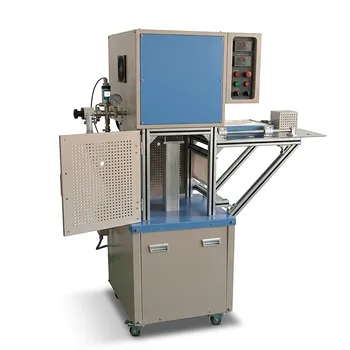
Bottom Loading Vacuum Furnace 1200C Rapid Cooling Atmosphere Control Quartz Chamber
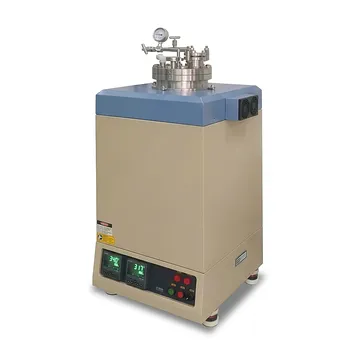
High Temperature 1000C Vacuum Furnace with 8 Inch ID Chamber for Material Sintering and Research Annealing
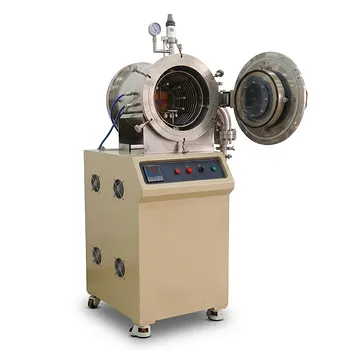
High Temperature Cold Wall High Vacuum Chamber Furnace 1400C for Advanced Material Processing
