What are the advantages of using a molybdenum crucible for CaAlSiN3 sintering? Ensure Purity & Peak Luminescence
Updated 3 months ago
The primary advantage of using a molybdenum crucible for $CaAlSiN_3$ sintering is its ability to maintain an ultra-pure reaction environment at extreme temperatures. Its high melting point and chemical inertness prevent metallic contamination during the nitridation process. This isolation is critical for achieving the high luminescence efficiency required for high-performance red phosphors.
Core Takeaway: Molybdenum crucibles provide a chemically inert, high-temperature shell that prevents luminescence quenching and ensures the structural integrity of the phosphor. By resisting reaction with the sample, they maintain the precise stoichiometry necessary for peak optical performance.
Exceptional Thermal and Chemical Stability
High-Temperature Endurance
Molybdenum possesses an exceptionally high melting point, allowing it to remain structurally sound at temperatures exceeding 1700 degrees Celsius. This makes it an ideal container for the high-temperature nitridation required to form the $CaAlSiN_3$ crystal lattice.
Chemical Inertness in Reducing Atmospheres
Under vacuum or reducing conditions, molybdenum exhibits extreme chemical stability. It does not react with the $CaAlSiN_3$ reaction system, ensuring that the crucible material does not become a variable in the chemical synthesis.
Preservation of Stoichiometry
Because it is highly compatible with the reaction environment, molybdenum helps ensure the correct stoichiometry of the final product. It acts as a reliable barrier that prevents the loss of volatile components or the introduction of unwanted elements.
Preservation of Optical and Structural Integrity
Prevention of Luminescence Quenching
The introduction of even trace metallic impurities can lead to luminescence quenching, which drastically reduces the brightness of the phosphor. Molybdenum crucibles do not introduce these impurities, protecting the high-performance optical properties of the red phosphor.
Protection of Microstructure
The stability of the crucible protects the microstructural integrity of the processed samples during the sintering phase. This leads to more uniform crystal growth and more predictable light-emission characteristics across the batch.
Uniform Heat Distribution
Molybdenum components assist in achieving uniform heat distribution throughout the sample container. This thermal consistency is vital for creating a homogeneous phosphor phase and avoiding localized defects.
Understanding the Trade-offs
Sensitivity to Oxygen
Molybdenum reacts strongly with oxygen at relatively low temperatures, forming volatile oxides. It must be used strictly in vacuum or reducing atmospheres (such as Nitrogen, Hydrogen, or Argon) to prevent the crucible from degrading.
Cost and Handling
While molybdenum is highly durable, it is a refractory metal that requires specialized manufacturing and handling. Its initial cost is higher than some ceramic alternatives, though its performance in nitridation often justifies the investment.
Compatibility Limitations
While excellent for $CaAlSiN_3$, molybdenum may not be suitable for every chemical environment. Its performance depends heavily on the absence of oxidizing agents that would compromise its mechanical strength and chemical stability.
How to Apply This to Your Project
When selecting a container for phosphor synthesis, your choice depends on the specific requirements of your reaction environment and the desired purity of your final product.
- If your primary focus is maximizing brightness: Utilize a molybdenum crucible to eliminate metallic contamination and prevent the luminescence quenching that ruins high-performance red phosphors.
- If your primary focus is process consistency: Use molybdenum for its high-temperature mechanical strength to ensure the container remains stable throughout repeated sintering cycles.
- If your primary focus is cost efficiency in air: Avoid molybdenum and look for ceramic alternatives, as molybdenum will oxidize and fail if exposed to oxygen at sintering temperatures.
By leveraging the high-temperature stability and inertness of molybdenum, you can achieve the extreme purity required for the next generation of LED phosphors.
Summary Table:
| Feature | Advantage for CaAlSiN3 Sintering | Technical Environment |
|---|---|---|
| Melting Point | Withstands temperatures >1700°C without deformation | High-temperature nitridation |
| Chemical Inertness | Prevents metallic contamination and luminescence quenching | Vacuum or reducing atmospheres |
| Thermal Conductivity | Ensures uniform heat distribution for homogeneous crystal growth | Heat treatment cycles |
| Stoichiometry Control | Acts as a stable barrier to maintain precise chemical ratios | Precision R&D |
| Stability | Resists reaction with phosphor materials under reducing conditions | Nitrogen, Hydrogen, or Argon gas |
Elevate Your Material Research with THERMUNITS
Achieving the perfect red phosphor requires precision tools that withstand extreme conditions. THERMUNITS is a leading manufacturer of high-performance laboratory equipment, providing the thermal processing solutions essential for advanced material science and industrial R&D.
Whether you are performing high-temperature sintering, nitridation, or CVD processes, our equipment ensures the purity and consistency your project demands. Our comprehensive product range includes:
- Advanced Furnaces: Muffle, Vacuum, Atmosphere, Tube, Rotary, and Hot Press Furnaces.
- Specialized Systems: CVD/PECVD systems, Vacuum Induction Melting (VIM), and Dental Furnaces.
- Precision Components: High-quality Thermal Elements and heat treatment accessories.
Ready to optimize your sintering process? Our experts are here to provide tailored solutions for your specific heat treatment challenges.
Contact THERMUNITS Today to Request a Quote
References
- Wei Dong, W.S. Su. Synthesis and Luminescence Improvement of CaAlSiN<sub>3 </sub>Phosphors Doped with Eu<sup>2+</sup> and Mn<sup>2+</sup> for White LEDs. DOI: 10.37188/cjl.20240168
Mentioned Products
- Molybdenum Disilicide MoSi2 Thermal Elements Electric Furnace Heating Element High Temperature Resistance
- Compact Crucible Melting Furnace 1100C Programmable Temperature Controller Metal Sintering Equipment
- High Temperature Vertical Crucible Furnace with 22L Heating Chamber and 1200C Maximum Temperature
- Vertical Crucible Furnace 1000C High Temperature Laboratory Equipment 4.7 Inch Diameter Chamber SS316 Anti Corrosive Enclosure
- 1750C Bench Top Muffle Furnace 3.6L High Grade Molybdenum Disilicide Heating Elements Laboratory Heat Treatment Equipment
People Also Ask
- What role do MoSi2 heating elements play in high-temperature smelting? Precision for Ferronickel & Slag Research
- Why is the selection of high-performance thermal elements critical for high-temperature testing? Ensure Data Integrity.
- How do electric thermal elements compare to combustion-based heating systems? Maximize Your Lab's Energy Efficiency
- What are the primary functions of an electric resistance furnace? Enhancing Precision in Industrial Thermal Processing
- How do optimized control schemes for electric resistance furnaces ensure accuracy? Enhance Heat Treatment Stability.

Tech Team · ThermUnits
Last updated on Jun 03, 2026
Related Products
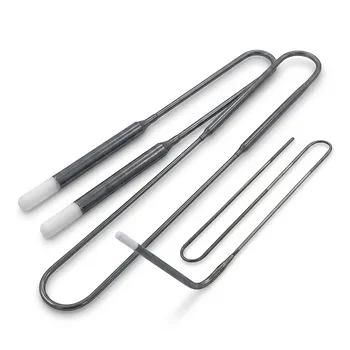
Molybdenum Disilicide MoSi2 Thermal Elements Electric Furnace Heating Element High Temperature Resistance
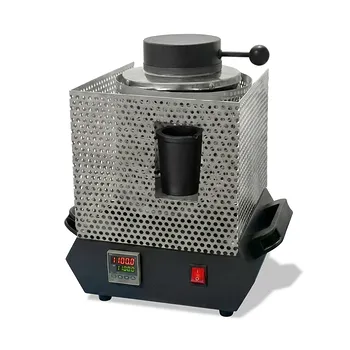
Compact Crucible Melting Furnace 1100C Programmable Temperature Controller Metal Sintering Equipment
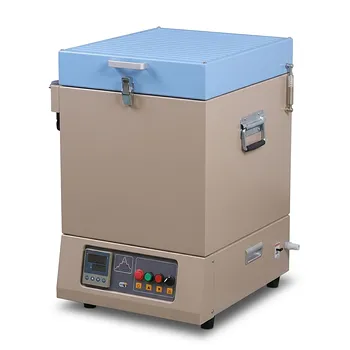
High Temperature Vertical Crucible Furnace with 22L Heating Chamber and 1200C Maximum Temperature
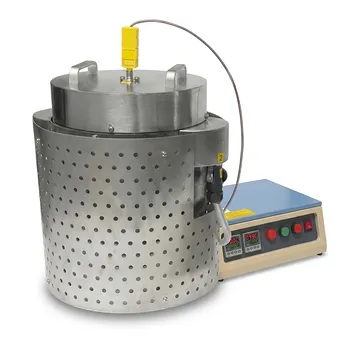
Vertical Crucible Furnace 1000C High Temperature Laboratory Equipment 4.7 Inch Diameter Chamber SS316 Anti Corrosive Enclosure
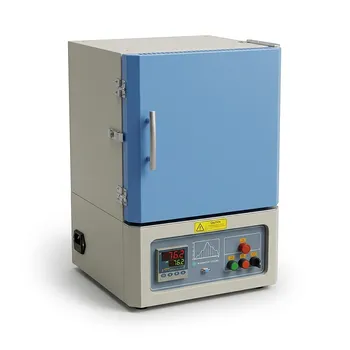
1750C Bench Top Muffle Furnace 3.6L High Grade Molybdenum Disilicide Heating Elements Laboratory Heat Treatment Equipment
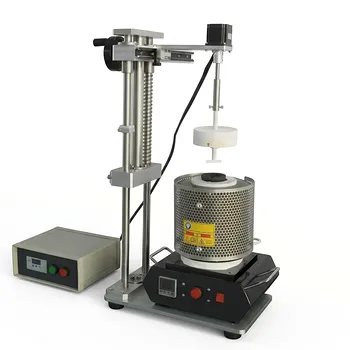
1100C Crucible Melting Furnace with Stirring Function for Glovebox and Air Sensitive Alloy Research
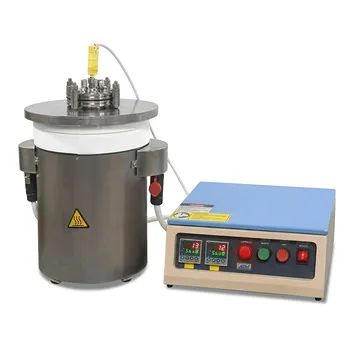
600°C Vertical Crucible Furnace with SS316 Alloy Reactor and 6 Port Vacuum Flange
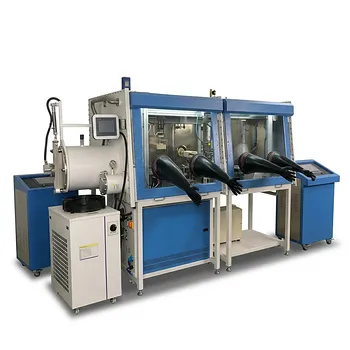
Automatic 10 Crucible Induction Melting and Casting System with Stirring Function and Glovebox Integration 2000C

Top Loading Muffle Furnace 1200°C High Temperature Crucible Furnace with 9 Liter Chamber and Programmable PID Controller
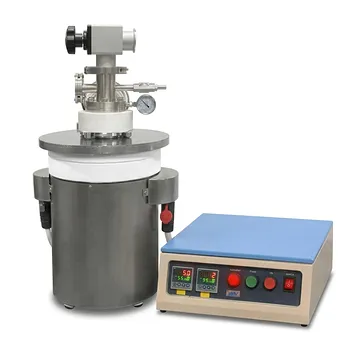
1100C High Temperature Vacuum Crucible Furnace with Quartz Chamber for Thermal Processing and Sintering