What are the advantages of high-purity graphite crucibles for 1400°C-1600°C synthesis? Unlock Superior Material Purity
Updated 3 months ago
High-purity graphite crucibles are the preferred choice for high-temperature synthesis because they offer a unique combination of extreme thermal stability, superior thermal conductivity, and chemical inertness between 1400 °C and 1600 °C. Unlike standard ceramic vessels, these crucibles ensure uniform sample heating and resist adhesion or chemical interference, even in demanding nitrogen or reducing atmospheres.
Core Takeaway: For material synthesis in the 1400 °C to 1600 °C range, high-purity graphite crucibles provide the necessary structural integrity and chemical neutrality to prevent sample contamination while ensuring uniform thermal distribution.
Thermal Performance and Structural Integrity
Superior Thermal Conductivity for Sample Uniformity
High-purity graphite excels at transferring heat efficiently across its surface and through its walls. This high thermal conductivity ensures that the samples inside—such as carbonaceous and alumina mixtures—receive uniform heating. Uniformity is critical for maintaining the consistency of sensitive structures, such as the microcrystalline formation in hard carbon.
Stability at Extreme Temperatures
At the 1400 °C to 1600 °C threshold, many materials begin to soften or lose structural form. High-purity graphite maintains its structural integrity and does not deform or crack under these intense conditions. In fact, graphite heating elements can remain stable at much higher temperatures, reaching up to 2500 °C in vacuum or inert environments.
Chemical Inertness and Purity Control
Resistance to Chemical Interference
One of the primary advantages of graphite is its chemical inertness toward specific reactants, including alumina and rare earth elements. In nitrogen atmospheres, graphite resists the chemical adhesion and interference that often plague standard ceramic vessels. This makes it an ideal container for synthesizing Rare Earth Hexaborides without risking material contamination.
Gas Pressure Management in Micro-zones
The design of covered graphite crucibles allows for the creation of an enclosed micro-zone during thermal processing. This environment is essential for maintaining the partial pressure balance of gases like silicon monoxide (SiO) and carbon monoxide (CO). Controlling these pressures is a prerequisite for the high-quality growth of silicon carbide (SiC) nanofibers.
Durability Against Corrosive Slag and Melts
High-purity graphite is exceptionally resistant to chemical erosion from molten materials. It can withstand the intense action of molten slag during smelting reactions or corrosive fluoride melts. Because it does not introduce metallic impurities into these melts, it ensures the purity of the final product.
Understanding the Trade-offs
Sensitivity to Oxygen
While graphite is remarkably stable in inert, reducing, or vacuum environments, it is highly susceptible to oxidation in the presence of oxygen at high temperatures. If the furnace atmosphere is not strictly controlled, the crucible will rapidly degrade and sublimate.
Compatibility with Specific Metals
Graphite can react with certain metals to form carbides, which may be undesirable depending on the specific synthesis goal. While it is inert to many oxides and carbon-based materials, its carbon-rich nature means it is not a "universal" container for all metallic smelting processes.
Porosity and Mechanical Wear
Depending on the grade, graphite can exhibit varying levels of porosity. Over time, repeated thermal cycling and exposure to aggressive chemical agents can lead to mechanical wear, requiring periodic replacement to maintain the safety and precision of the smelting process.
How to Apply This to Your Project
When selecting a crucible for synthesis between 1400 °C and 1600 °C, your choice should be dictated by the chemical environment and the required purity levels of your sample.
- If your primary focus is sample purity in reducing atmospheres: Use high-purity graphite to prevent the leaching of metallic impurities often found in lower-grade ceramic alternatives.
- If your primary focus is uniform crystal growth (like SiC): Utilize a covered graphite crucible to leverage its ability to maintain gas partial pressure and ensure even heat distribution.
- If your primary focus is processing corrosive molten slag: Opt for high-purity graphite specifically for its resistance to chemical erosion and its ability to maintain structural integrity under intense chemical action.
- If your primary focus is avoiding carbon contamination: Carefully evaluate if your reactants are "carbon-active," as an alumina crucible may be a safer choice if the sample cannot tolerate carbon contact.
Choosing high-purity graphite provides a stable, predictable environment that protects the integrity of complex material synthesis at extreme temperatures.
Summary Table:
| Key Advantage | Benefit to Material Synthesis | Ideal Application |
|---|---|---|
| High Thermal Conductivity | Ensures uniform heating and consistent microstructures. | Hard carbon synthesis |
| Structural Integrity | Resists deformation and cracking up to 1600°C+. | High-temp inert processing |
| Chemical Inertness | Prevents contamination from alumina or rare earths. | Rare Earth Hexaborides |
| Gas Pressure Control | Manages SiO/CO partial pressure in micro-zones. | SiC nanofiber growth |
| Corrosion Resistance | Withstands aggressive molten slag and fluoride melts. | Smelting and metal refining |
Elevate Your Material Research with THERMUNITS
Precision in high-temperature synthesis requires more than just the right crucible—it requires a perfectly controlled thermal environment. THERMUNITS is a leading manufacturer of advanced laboratory equipment, providing high-performance Muffle, Vacuum, Atmosphere, and Tube furnaces, as well as specialized CVD/PECVD and Hot Press systems optimized for material science R&D.
Whether you are synthesizing SiC nanofibers or refining rare earth elements, our equipment ensures the stability and atmosphere control needed to maximize the advantages of high-purity graphite.
Ready to optimize your heat treatment process? Contact our technical experts today to find the ideal thermal solution for your lab!
References
- Zhongyuan Liu, Jiatai Zhao. Experimental and Kinetic Study of Biochar in N-Absorption Reaction of Chemical Looping Ammonia Generation. DOI: 10.3390/pr12122870
Mentioned Products
- High Temperature Vertical Crucible Furnace with 22L Heating Chamber and 1200C Maximum Temperature
- Vertical Crucible Furnace 1000C High Temperature Laboratory Equipment 4.7 Inch Diameter Chamber SS316 Anti Corrosive Enclosure
- 600°C Vertical Crucible Furnace with SS316 Alloy Reactor and 6 Port Vacuum Flange
- High Temperature Vacuum Graphitization Chamber Furnace 2800C Graphite Heating Elements Bottom Loading
- Ultra High Temperature 2300C Induction Heated Graphite Tube Furnace with Infrared Control
People Also Ask
- What role does a high-temperature vertical tube furnace play in simulating high-carbon ferromanganese slag formation?
- How should the choice between a Quartz crucible and an Alumina crucible be made for La2O2S? Optimize Material Purity
- Why use ceramic crucibles for coal nano-hybrid heat treatment? Ensure Purity and Thermal Stability.
- How does a high-temperature solution furnace affect the evolution of strengthening phases in Fe-Co-Mo alloys? Expert Guide
- What critical conditions does a high-temperature electric heating furnace provide for rice husk ash melting research?

Tech Team · ThermUnits
Last updated on Jun 02, 2026
Related Products
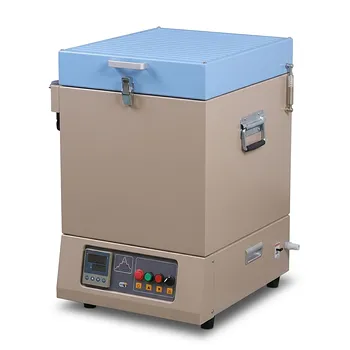
High Temperature Vertical Crucible Furnace with 22L Heating Chamber and 1200C Maximum Temperature
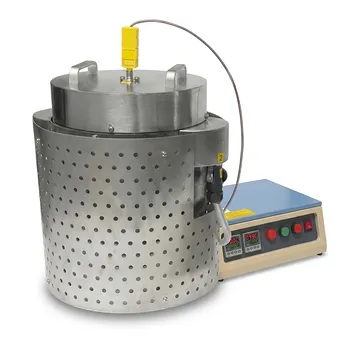
Vertical Crucible Furnace 1000C High Temperature Laboratory Equipment 4.7 Inch Diameter Chamber SS316 Anti Corrosive Enclosure
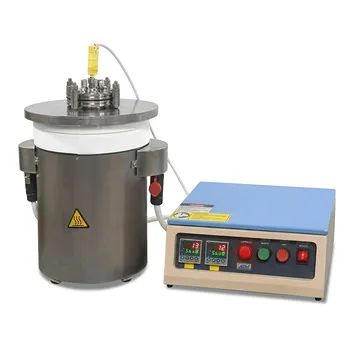
600°C Vertical Crucible Furnace with SS316 Alloy Reactor and 6 Port Vacuum Flange
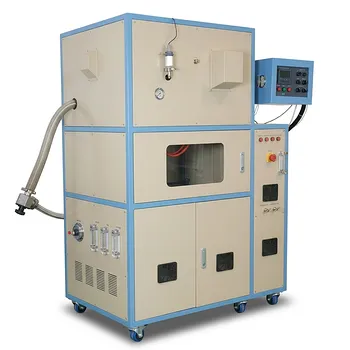
High Temperature Vacuum Graphitization Chamber Furnace 2800C Graphite Heating Elements Bottom Loading
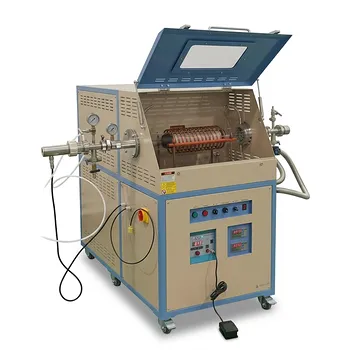
Ultra High Temperature 2300C Induction Heated Graphite Tube Furnace with Infrared Control
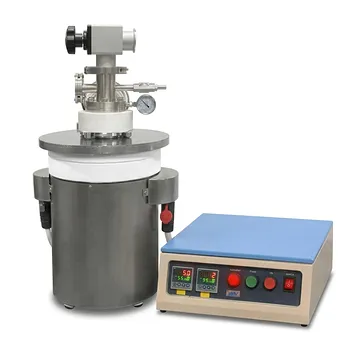
1100C High Temperature Vacuum Crucible Furnace with Quartz Chamber for Thermal Processing and Sintering
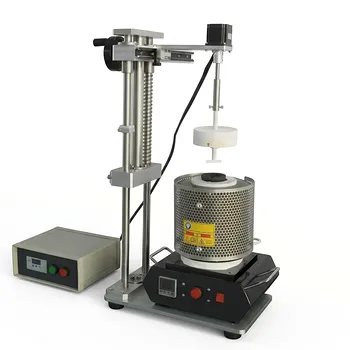
1100C Crucible Melting Furnace with Stirring Function for Glovebox and Air Sensitive Alloy Research
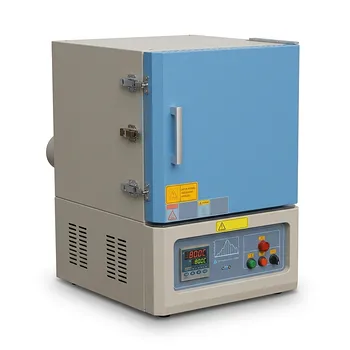
1800C Bench Top Muffle Furnace 18 Liters with Kanthal Super 1900 Heating Elements for High Purity Ceramic Sintering and Material Research
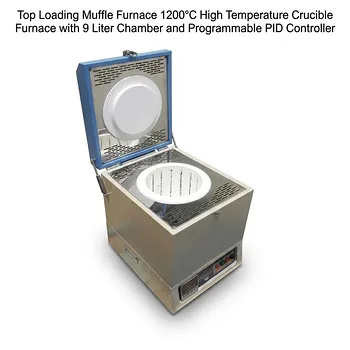
Top Loading Muffle Furnace 1200°C High Temperature Crucible Furnace with 9 Liter Chamber and Programmable PID Controller