How does a high-temperature solution furnace affect the evolution of strengthening phases in Fe-Co-Mo alloys? Expert Guide
Updated 3 months ago
The high-temperature solution furnace is the critical catalyst for microstructural transformation in Fe-Co-Mo alloys. By maintaining precise thermal control between 1120°C and 1210°C, the furnace facilitates the partial dissolution of coarse, brittle $\mu$ phases—specifically (Fe,Co)$_7$Mo$_6$ particles—into the iron matrix. This process creates a supersaturated solid solution that refines grain size and ensures a dense reservoir of solute atoms is available for the uniform precipitation of nanoscale strengthening phases during subsequent aging.
The furnace acts as a metallurgical "reset" button, breaking down large, detrimental particles to create a uniform atomic distribution. This precise thermal environment is the foundational requirement for achieving high-strength properties through controlled precipitation hardening.
Mechanisms of Phase Transformation
Dissolution of Coarse $\mu$ Phases
The primary role of the furnace is to provide the energy required to break the atomic bonds of (Fe,Co)$_7$Mo$_6$ particles. In the 1120°C to 1210°C range, these coarse phases partially dissolve, releasing molybdenum and cobalt atoms back into the iron lattice.
Creation of a Supersaturated Solid Solution
As the coarse phases dissolve, the iron matrix becomes "overloaded" with solute atoms. This supersaturated state is unstable at lower temperatures, which is exactly what allows for the high-density precipitation of reinforcing phases later in the production cycle.
Thermal Uniformity and Diffusion
A high-performance furnace ensures a uniform thermal field, which is essential for consistent atomic diffusion. Without this stability, the alloy would suffer from chemical segregation, leading to "soft spots" or inconsistent mechanical properties across the material.
Preparing the Matrix for Secondary Hardening
Solute Reserving for Nanoscale Precipitation
The furnace does not create the final strength; rather, it reserves the necessary building blocks. By holding the alloy at solutionizing temperatures, it ensures that molybdenum atoms are perfectly distributed to form nanoscale strengthening phases during the aging process.
Grain Size Refinement and Stability
The dissolution process also plays a secondary role in managing the grain boundary energy. Controlled solution treatment helps in refining the grain structure, which improves the overall toughness and fatigue resistance of the Fe-Co-Mo alloy.
Establishing the Phase Template
Just as in Fe-Mn-Al-C steels, where the furnace creates a stable austenite structure, in Fe-Co-Mo alloys, the furnace establishes a single-phase-like matrix. This clean slate is necessary to prevent the uncontrolled growth of large, brittle carbides or intermetallics.
Understanding the Trade-offs and Pitfalls
Temperature Precision vs. Grain Growth
If the furnace temperature exceeds the 1210°C threshold, the alloy may suffer from excessive grain coarsening. While higher temperatures speed up dissolution, they can permanently weaken the material's structural integrity.
The Risk of Incomplete Dissolution
Operating below the 1120°C threshold results in undissolved primary $\mu$ phases. These remaining coarse particles act as stress concentrators, which can lead to premature fracture and lower the effectiveness of the subsequent aging treatment.
Cooling Rate Dependencies
The furnace's role ends at the soaking period, but the transition to cooling is vital. Like the quenching strategies used in muffle furnaces for martensite control, the Fe-Co-Mo alloy must be cooled rapidly enough to "lock in" the supersaturated state created by the solution furnace.
Applying This to Your Alloy Development
Making the Right Choice for Your Goal
- If your primary focus is Maximum Tensile Strength: Aim for the higher end of the temperature range (near 1210°C) to ensure the highest possible volume of solute atoms are dissolved for later precipitation.
- If your primary focus is Fatigue Resistance: Use the lower end of the solutionizing range (near 1120°C) to prioritize grain refinement and prevent the formation of large, crack-initiating grains.
- If your primary focus is Chemical Homogeneity: Extend the holding time within the stable thermal field of the furnace to allow for complete diffusion of segregated alloying elements.
Through precise thermal management, the solution furnace transforms a coarse, heterogeneous casting into a high-potential matrix ready for advanced strengthening.
Summary Table:
| Parameter | Range / Mechanism | Impact on Fe-Co-Mo Alloy |
|---|---|---|
| Solution Temperature | 1120°C to 1210°C | Dissolves coarse $\mu$ phases into the iron matrix |
| Phase Transformation | (Fe,Co)7Mo6 Dissolution | Creates a supersaturated solid solution for hardening |
| Thermal Stability | Uniform Diffusion | Prevents chemical segregation and "soft spots" |
| Microstructure | Grain Refinement | Enhances toughness and overall fatigue resistance |
| Secondary Hardening | Solute Reserving | Prepares matrix for nanoscale precipitate formation |
Elevate Your Material Research with THERMUNITS
At THERMUNITS, we specialize in providing the precision thermal environments necessary for advanced material science and industrial R&D. Achieving the perfect supersaturated solid solution in Fe-Co-Mo alloys requires exact temperature uniformity—a hallmark of our high-performance laboratory equipment.
As a leading manufacturer, we offer a comprehensive range of thermal processing solutions tailored for your specific research needs, including:
- Muffle, Vacuum, and Atmosphere Furnaces
- Tube, Rotary, and Hot Press Furnaces
- CVD/PECVD Systems and Dental Furnaces
- Vacuum Induction Melting Furnaces (VIM)
- Electric Rotary Kilns and High-Quality Thermal Elements
Don't let inconsistent heat treatment compromise your alloy development. THERMUNITS provides the stability and control required to refine grain size and maximize tensile strength.
Ready to optimize your laboratory’s heat treatment capabilities?
Contact Our Experts Today to find the ideal thermal solution for your high-temperature applications.
References
- Shiteng Lu, Lei Lü. Precipitation and Age-Hardening in Fe-25Co-15Mo Carbon-Free High-Speed Steel via Hot Isostatic Pressing. DOI: 10.3390/met14121400
Mentioned Products
- High Temperature 1500C Benchtop Muffle Furnace 3.6L Alumina Fiber Chamber Programmable Controller Sintering Annealing Carbonization Thermal Processing System
- High Temperature 1700C Tube Furnace with High Vacuum Turbomolecular Pump System and Multi Channel Mass Flow Controller Gas Mixer
- High Temperature Muffle Furnace with Alloy Chamber for Debinding and Sintering Applications
- 1750°C High Temperature Benchtop Vacuum Atmosphere Tube Furnace with Kanthal Super 1800 Heating Elements and 60mm Alumina Processing Tube
- High Temperature Tube Furnace 1500C with Sliding Flanges and 50mm OD for Rapid Thermal Processing Fast Heating and Cooling
People Also Ask
- Why is annealing in a high-temperature muffle furnace necessary for SiO2/Si substrate pretreatment before monolayer WS2 synthesis?
- What is the purpose of using muffle or tube furnaces in glass synthesis? Achieve Precise Melt-Quenching & Homogeneity
- What is the role of a high-temperature muffle furnace in the synthesis of graphitic carbon nitride (g-C3N4)? - Guide
- What is the necessity of 950 °C muffle furnace for aluminate spinel supports? Achieve Phase Purity & Lattice Integration
- What is the function of a high-temp muffle furnace in Ni-V oxide synthesis? Optimize your material's performance.

Tech Team · ThermUnits
Last updated on Jun 02, 2026
Related Products
High Temperature 1500C Benchtop Muffle Furnace 3.6L Alumina Fiber Chamber Programmable Controller Sintering Annealing Carbonization Thermal Processing System

High Temperature 1700C Tube Furnace with High Vacuum Turbomolecular Pump System and Multi Channel Mass Flow Controller Gas Mixer
High Temperature Muffle Furnace with Alloy Chamber for Debinding and Sintering Applications
1750°C High Temperature Benchtop Vacuum Atmosphere Tube Furnace with Kanthal Super 1800 Heating Elements and 60mm Alumina Processing Tube
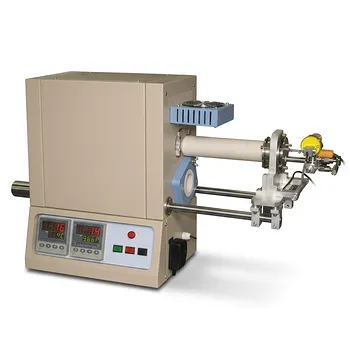
High Temperature Tube Furnace 1500C with Sliding Flanges and 50mm OD for Rapid Thermal Processing Fast Heating and Cooling
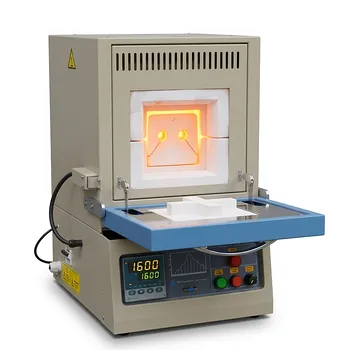
High Temperature Compact Muffle Furnace 1700 C with 30 Segment Programmable Controller and 1.7L Cubic Chamber
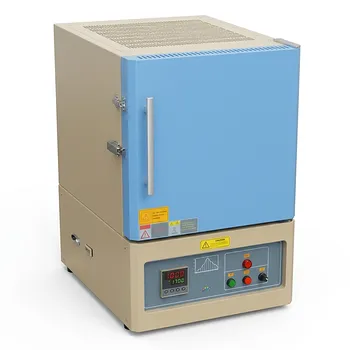
Large Bench Top 1700C High Temperature Muffle Furnace with 19L Chamber for Advanced Material Sintering and Annealing
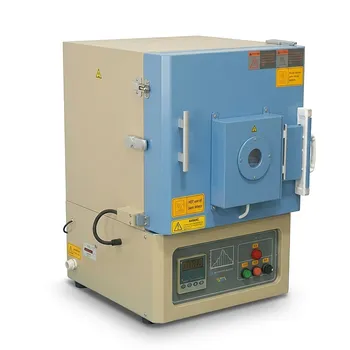
High Temperature Benchtop Muffle Furnace 1500C with 3.6L Chamber and Quartz Observation Window
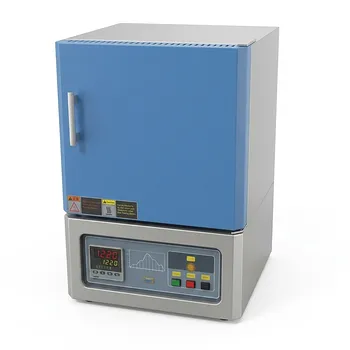
High Temperature Benchtop Muffle Furnace 1700C 10L Chamber Alumina Fiber Insulation MoSi2 Heating Elements
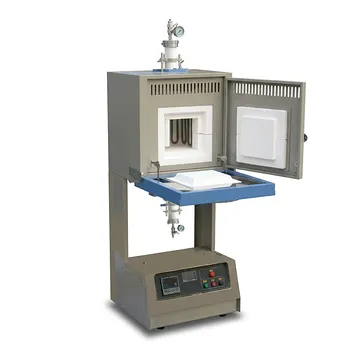
Vertical Hybrid High Temperature Furnace 1500C Alumina Tube SOFC Fuel Cell Testing Laboratory Heat Treatment Research Equipment
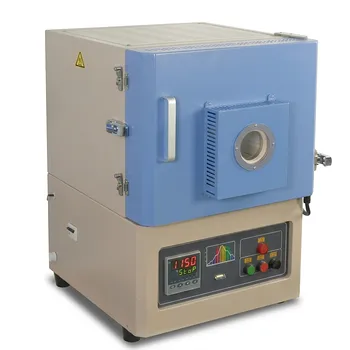
High Temperature Benchtop Muffle Furnace with Quartz Observation Window for Thermal Imaging and Material Analysis
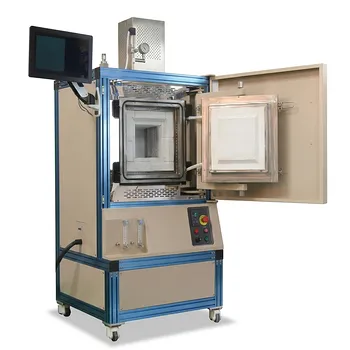
High Temperature Hydrogen Atmosphere Box Furnace 1650C Max Reducing Environment Material Synthesis System 8x8x8 Chamber
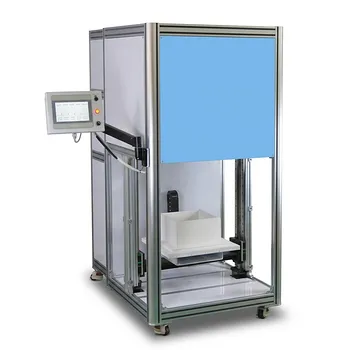
High Temperature 1600°C Three Zone Heated Bottom Loading Box Furnace with Rapid Thermal Processing Chamber 72L Volume
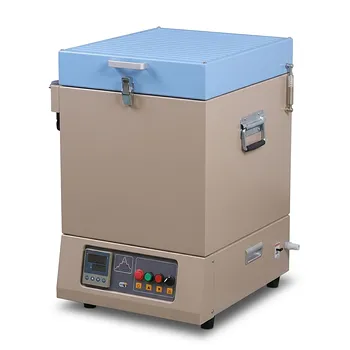
High Temperature Vertical Crucible Furnace with 22L Heating Chamber and 1200C Maximum Temperature
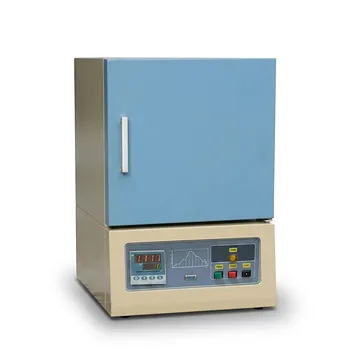
Ultra High Temperature Bench Top Muffle Furnace 1750C Sintering System with Kanthal Super Heating Elements and Precision Digital Control
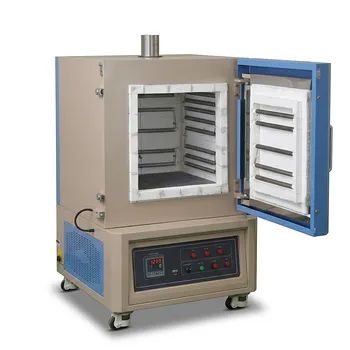
1200C High Temperature 125L Muffle Furnace 5 Side Heating for Large Batch Sintering with Optional Alloy Debinding Chamber
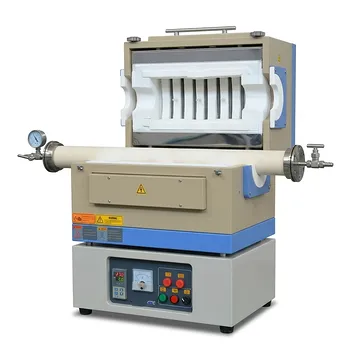
High Temperature 1600C Split Tube Furnace Vacuum Flanges Valves Optional 60mm 80mm Alumina Tube
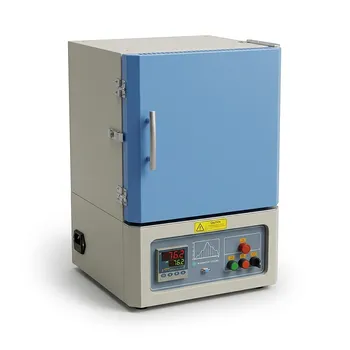
1750C Bench Top Muffle Furnace 3.6L High Grade Molybdenum Disilicide Heating Elements Laboratory Heat Treatment Equipment
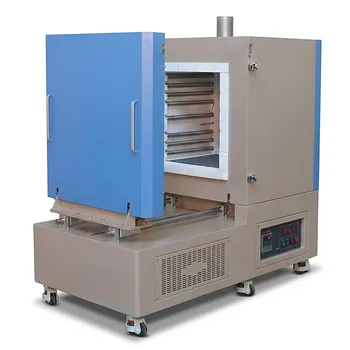
1200C Five Side Heating Muffle Furnace with Sliding Door 125L Volume High Temperature Heat Treatment System for Large Scale Sintering and Annealing