What are the advantages of using platinum crucibles for XRF slag analysis? Ensure High Purity & Precise Results.
Updated 3 months ago
Platinum crucibles are the industry standard for slag processing because they provide a non-reactive environment at temperatures often exceeding 1500°C. By eliminating the risk of crucible erosion and impurity leaching, they ensure that X-ray Fluorescence (XRF) analysis reflects the true chemical composition of the slag sample. This level of purity is vital for accurately calculating basicity and monitoring major components like Silicon Dioxide (SiO2) and Magnesium Oxide (MgO).
Platinum crucibles ensure analytical precision by acting as a chemically inert vessel that survives aggressive slag melts without contaminating the sample. This allows for the reliable quantification of major and trace elements necessary for process control and metallurgical research.
The Critical Role of Chemical Inertness
Preventing Sample Contamination
The primary advantage of platinum is its extreme chemical inactivity, which prevents the introduction of impurity elements into the sample. Unlike standard ceramic containers, platinum does not undergo solid-phase reactions with active silicates or metallic oxides during high-temperature calcination.
Resisting Corrosive Slag Compositions
Molten slags, particularly those from BOS converters or those containing boron and sodium, are highly corrosive to most materials. Platinum and its alloys effectively resist erosion from these aggressive melts, ensuring the slag maintains its designed compositional ratio for accurate phase equilibrium research.
Protecting Trace Element Integrity
For advanced applications like trace element analysis in nano-forsterite, the prevention of crucible element penetration is mandatory. Platinum's resistance ensures that even minute concentrations of magnesium, nickel, or cobalt remain uncontaminated by the vessel material.
High-Temperature Performance and Stability
Thermal Integrity up to 1600°C
Standard laboratory equipment often fails under the extreme heat required for glass fusion; however, Platinum-Rhodium alloys offer exceptional stability. These crucibles can withstand temperatures exceeding 1600°C, providing a reliable platform for processing complex silicate-based slags.
Facilitating Precise Calibration
Because platinum does not leach elements like alumina or silica into the melt, the resulting fusion beads are pure representations of the original sample. This allows for the precise calibration of the actual basicity of synthetic slags, which is a critical metric in metallurgical quality control.
Superior Thermal Conductivity
Platinum possesses high thermal conductivity, which promotes uniform heating throughout the slag sample. This consistency is essential for creating homogenous glass beads, which are required for repeatable and reproducible XRF results.
Understanding the Trade-offs
Material Sensitivity and Reduction Risks
While platinum is inert to oxygen, it can be damaged if processed under strongly reducing conditions in the presence of certain metals. If metallic iron or phosphorus are reduced from the slag, they can alloy with the platinum, leading to embrittlement and eventual crucible failure.
Cost and Maintenance Requirements
The significant capital investment required for platinum necessitates rigorous maintenance and cleaning protocols. Users must balance the high initial cost against the long-term benefits of durability and the high resale value of the precious metal scrap.
Comparison to Graphite
In specific reduction smelting scenarios, graphite may be preferred because it provides an auxiliary reductive atmosphere. However, for standard XRF sample preparation (fusion), graphite cannot match platinum’s ability to produce the high-quality glass beads necessary for optical transparency and analytical accuracy.
Making the Right Choice for Your Goal
When selecting a vessel for slag processing, your choice should align with the specific requirements of your analytical workflow:
- If your primary focus is high-precision XRF quantification: Use platinum or platinum-rhodium crucibles to ensure no alumina or silica from the vessel contaminates your basicity calculations.
- If your primary focus is processing aggressive boron-rich slags: Opt for platinum alloys to prevent the chemical reactions that typically degrade standard ceramic or porcelain labware.
- If your primary focus is trace element research at extreme temperatures: Utilize high-specification platinum to guarantee that no crucible components leach into the melt at temperatures up to 1600°C.
Ultimately, the use of platinum crucibles is an investment in the reliability of your data, ensuring that your analytical results are a true reflection of your process chemistry.
Summary Table:
| Feature | Advantage for Slag Processing | Impact on XRF Analysis |
|---|---|---|
| Chemical Inertness | Prevents sample contamination from the vessel | Ensures accurate SiO2, MgO, and trace element data |
| High Thermal Stability | Withstands temperatures exceeding 1600°C | Enables processing of complex silicates and molten glass |
| Corrosion Resistance | Resists aggressive boron and sodium-rich slags | Maintains sample composition and extends crucible life |
| Thermal Conductivity | Promotes rapid and uniform heating | Creates homogenous fusion beads for repeatable results |
| Non-Wetting Property | Easy removal of the cooled fusion bead | Minimizes sample loss and simplifies cleaning procedures |
Elevate Your Laboratory’s Thermal Processing Precision
At THERMUNITS, we understand that high-precision analysis like XRF requires not just the right vessels, but the most reliable thermal environments. As a leading manufacturer of high-temperature laboratory equipment, we provide the cutting-edge solutions necessary for material science and industrial R&D.
Whether you are processing slag in platinum crucibles or conducting complex chemical vapor deposition, our equipment ensures uniform heat distribution and precise temperature control. Our comprehensive range includes:
- Advanced Furnaces: Muffle, Vacuum, Atmosphere, Tube, Rotary, and Hot Press furnaces.
- Specialized Systems: CVD/PECVD systems, Vacuum Induction Melting (VIM) furnaces, and Electric Rotary Kilns.
- Lab Essentials: Dental Furnaces, Thermal Elements, and various heat treatment equipment.
Ready to optimize your heat treatment workflow? Contact THERMUNITS today to discuss how our thermal solutions can enhance your research accuracy and industrial efficiency.
References
- Erdenebold Urtnasan, Jei‐Pil Wang. Artificial Slags with Modulated Properties for Controlled Nickel Dissolution in Smelting Process. DOI: 10.1007/s12666-024-03304-0
Mentioned Products
- 1100C Crucible Melting Furnace with Stirring Function for Glovebox and Air Sensitive Alloy Research
- Top Loading Muffle Furnace 1200°C High Temperature Crucible Furnace with 9 Liter Chamber and Programmable PID Controller
- High Temperature Vertical Crucible Furnace with 22L Heating Chamber and 1200C Maximum Temperature
- Compact Crucible Melting Furnace 1100C Programmable Temperature Controller Metal Sintering Equipment
- 600°C Vertical Crucible Furnace with SS316 Alloy Reactor and 6 Port Vacuum Flange
People Also Ask
- Why are internal getters such as Titanium used during the synthesis of oxygen-sensitive materials in a melting furnace?
- How should the choice between a Quartz crucible and an Alumina crucible be made for La2O2S? Optimize Material Purity
- What technical capabilities must a high-temperature furnace possess for 1100°C HEA annealing? Precision & Stability.
- Why use ceramic crucibles for coal nano-hybrid heat treatment? Ensure Purity and Thermal Stability.
- Alumina Plates in Polymer Carbonization: Ensure Flatness and Suppress Shrinkage

Tech Team · ThermUnits
Last updated on Jun 03, 2026
Related Products
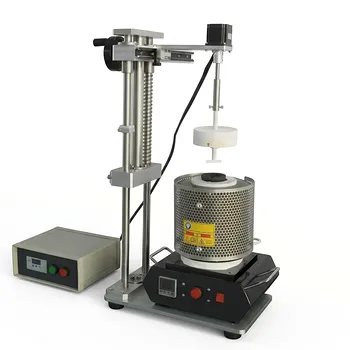
1100C Crucible Melting Furnace with Stirring Function for Glovebox and Air Sensitive Alloy Research

Top Loading Muffle Furnace 1200°C High Temperature Crucible Furnace with 9 Liter Chamber and Programmable PID Controller
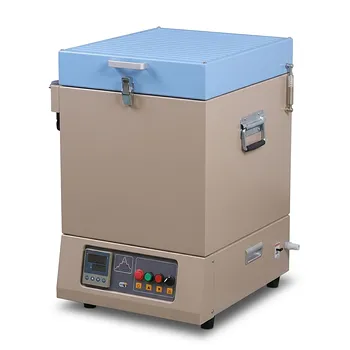
High Temperature Vertical Crucible Furnace with 22L Heating Chamber and 1200C Maximum Temperature
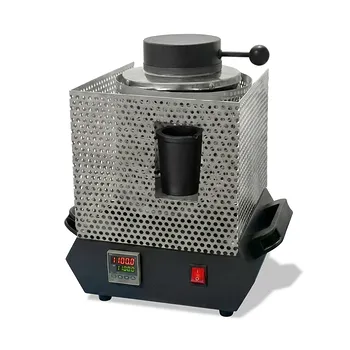
Compact Crucible Melting Furnace 1100C Programmable Temperature Controller Metal Sintering Equipment
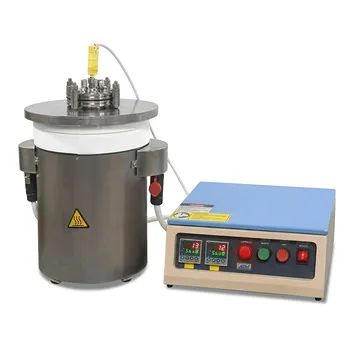
600°C Vertical Crucible Furnace with SS316 Alloy Reactor and 6 Port Vacuum Flange
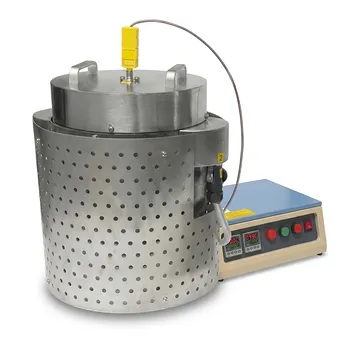
Vertical Crucible Furnace 1000C High Temperature Laboratory Equipment 4.7 Inch Diameter Chamber SS316 Anti Corrosive Enclosure
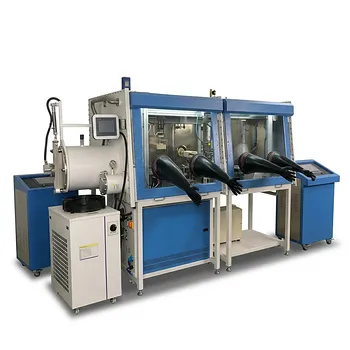
Automatic 10 Crucible Induction Melting and Casting System with Stirring Function and Glovebox Integration 2000C
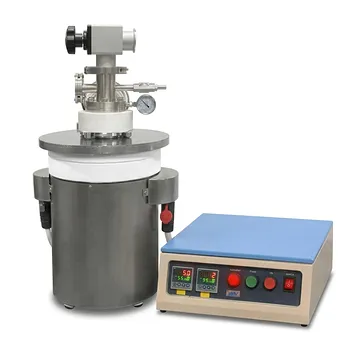
1100C High Temperature Vacuum Crucible Furnace with Quartz Chamber for Thermal Processing and Sintering