What are the advantages of vacuum sealing technology for Bi2Te3 annealing? Boost Thermoelectric Efficiency Today
Updated 3 months ago
Vacuum sealing technology provides a superior environment for $Bi_2Te_3$ processing by eliminating oxidation and controlling elemental volatility. By sealing samples in evacuated quartz tubes, researchers can create a self-regulating micro-environment that preserves the material's chemical integrity. This method ensures that the stoichiometry and thermoelectric properties remain stable during high-temperature grain growth, which is often compromised in traditional furnaces.
The primary advantage of vacuum sealing lies in its ability to prevent the loss of volatile Tellurium while providing an absolute barrier against oxygen. This dual-action protection preserves the material's stoichiometry and enhances its thermoelectric power factor far more effectively than traditional atmosphere furnaces.
Preventing Material Degradation
Total Suppression of Oxidation
Using high-vacuum pumps to evacuate quartz tubes isolates the Bismuth Telluride ($Bi_2Te_3$) thick films from oxygen molecules. This prevents the formation of oxide scales that degrade surface conductivity and thermoelectric performance.
Preservation of Stoichiometric Balance
In a confined, sealed environment, volatile Tellurium ($Te$) rapidly reaches its saturated vapor pressure. This physical equilibrium stops further elemental loss, ensuring the stability of the material's chemical composition.
Surface Integrity and Cleanliness
Vacuum processing produces oxidation-free and scale-free surfaces, which are critical for electronic applications. This environment also facilitates the removal of outgassed volatiles and gaseous by-products, resulting in higher material purity.
Optimizing Thermoelectric Performance
Structural Transition and Grain Growth
The vacuum environment provides the necessary thermal energy to drive the transition from an amorphous state to a polycrystalline rhombohedral structure. Controlled annealing between 150°C and 300°C promotes grain growth while reducing point defects.
Enhancement of Carrier Mobility
By precisely controlling the thermal environment, vacuum sealing helps balance lattice defects, such as tellurium vacancies, with carrier concentrations. This optimization is essential for increasing material mobility and the overall power factor of the film.
Synergistic Electrical Improvements
A stable vacuum environment allows for the simultaneous improvement of electrical conductivity and the Seebeck coefficient. This synergy is difficult to achieve in atmosphere furnaces where oxygen interference can create unwanted carrier scattering.
Understanding the Trade-offs
Process Complexity and Cost
Vacuum sealing requires specialized high-vacuum pump systems and quartz tube sealing equipment. This makes the preparation phase more labor-intensive and technically demanding than standard atmosphere furnace cycles.
Scalability Constraints
Because each sample or batch must be individually sealed in quartz tubes, this method is less suited for high-volume industrial production. It is primarily a high-precision technique used in research and high-value component manufacturing.
Residual Stress and Distortion
While vacuum environments reduce some types of part distortion, the sealing process itself can introduce variables. If the cooling rate is not strictly controlled within the sealed tube, residual stresses can occasionally impact the thin or thick film's adhesion.
How to Apply This to Your Project
Depending on your specific research or production goals, the choice between vacuum sealing and atmosphere annealing should be strategic:
- If your primary focus is maximizing ZT (Thermoelectric Figure of Merit): Use vacuum sealing to prevent $Te$ loss and ensure the stoichiometric precision required for peak performance.
- If your primary focus is material purity and research: Utilize the quartz tube method to eliminate oxygen interference and isolate the effects of temperature on crystal structure.
- If your primary focus is high-throughput manufacturing: Evaluate high-purity inert gas atmosphere furnaces, but implement localized "sacrificial" $Te$ sources to mitigate elemental loss.
By utilizing vacuum sealing technology, you ensure the highest level of chemical and structural stability for Bismuth Telluride thick films.
Summary Table:
| Feature | Vacuum Sealing Technology | Traditional Atmosphere Furnace |
|---|---|---|
| Oxidation Control | Total suppression; oxygen-free environment | Limited; risk of oxide scale formation |
| Stoichiometry | Preserves Te via saturated vapor pressure | High risk of volatile Tellurium loss |
| Surface Quality | Scale-free and high purity | Potential for surface degradation |
| Performance | Higher power factor and carrier mobility | Often compromised by oxygen interference |
| Scalability | Best for high-precision R&D | Higher throughput for industrial use |
Elevate Your Material Research with THERMUNITS
As a leading manufacturer of high-temperature laboratory equipment, THERMUNITS provides the precision tools required for advanced material science and industrial R&D. Whether you are optimizing Bismuth Telluride thick films or exploring new thermoelectric alloys, our comprehensive thermal solutions—including Vacuum, Atmosphere, Tube, and Muffle furnaces, as well as CVD/PECVD systems—are engineered to deliver unmatched stoichiometric control and heating uniformity.
Don't let oxidation or elemental loss compromise your results. Contact us today to consult with our experts on the ideal furnace configuration for your specific heat treatment needs and drive your innovation forward.
References
- Xiaowen Sun, Yuan Deng. General strategy for developing thick-film micro-thermoelectric coolers from material fabrication to device integration. DOI: 10.1038/s41467-024-48346-6
Mentioned Products
- High Temperature Vacuum Lamination Hot Press Furnace Machine for Semiconductor Wafer Bonding and Advanced Composite Thermal Processing
- 2500C High Vacuum Ultrafast Heating Pellet Press with Automated 8 Sample Loading System
- High Temperature 1000C Vacuum Furnace with 8 Inch ID Chamber for Material Sintering and Research Annealing
- High Vacuum Pressure Chamber Furnace 800C 3.5 Bar Sintering System for Superconducting Materials
- Industrial High Temperature Vacuum Hot Press Furnace and Heated Vacuum Press Machine for Material Science Sintering
People Also Ask
- What types of heating systems and insulation are used in Vacuum Hot Press Furnaces? Optimize Your Thermal Processing
- What is a Vacuum Hot Press Furnace and what are its primary industrial applications? Achieve Maximum Material Density
- What are the structural features of the furnace body and chamber in a Vacuum Hot Press Furnace? Master Material Density
- Why is graphite the preferred material for dies and heating elements in Vacuum Hot Press Furnaces? High-Temp Solutions
- What are the primary operational components and mechanisms of a vacuum hot press furnace? A Technical Breakdown

Tech Team · ThermUnits
Last updated on Jun 02, 2026
Related Products
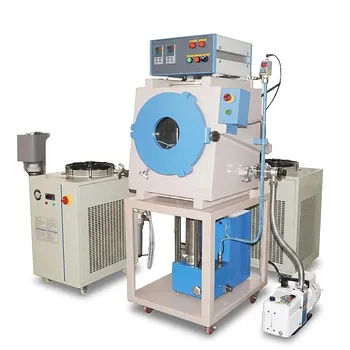
High Temperature Vacuum Lamination Hot Press Furnace Machine for Semiconductor Wafer Bonding and Advanced Composite Thermal Processing
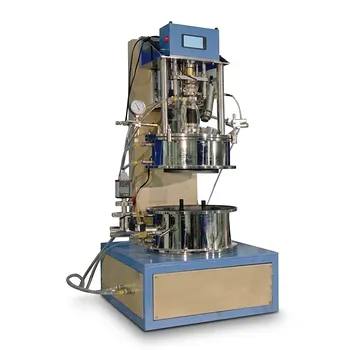
2500C High Vacuum Ultrafast Heating Pellet Press with Automated 8 Sample Loading System
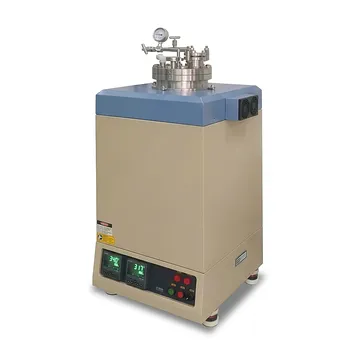
High Temperature 1000C Vacuum Furnace with 8 Inch ID Chamber for Material Sintering and Research Annealing
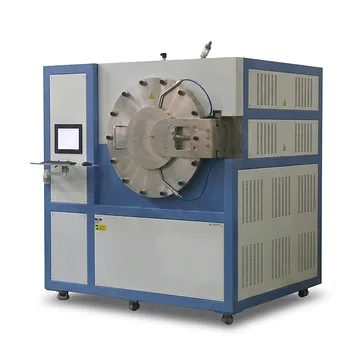
High Vacuum Pressure Chamber Furnace 800C 3.5 Bar Sintering System for Superconducting Materials
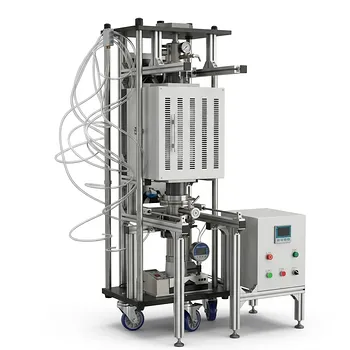
Industrial High Temperature Vacuum Hot Press Furnace and Heated Vacuum Press Machine for Material Science Sintering
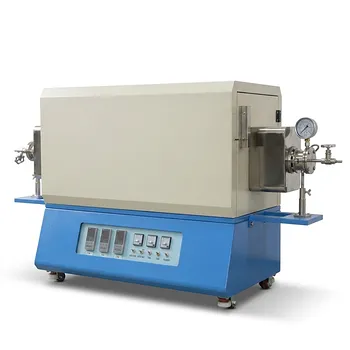
Three Temperature Zone High Temperature Vacuum Tube Furnace for CVD and Material Sintering
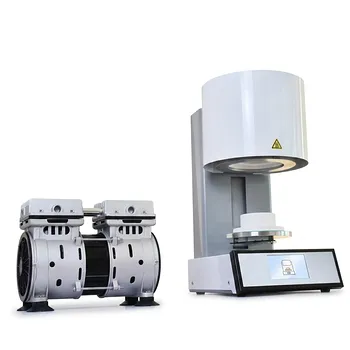
Vacuum Dental Porcelain Sintering Furnace for High Precision Ceramic Restorations
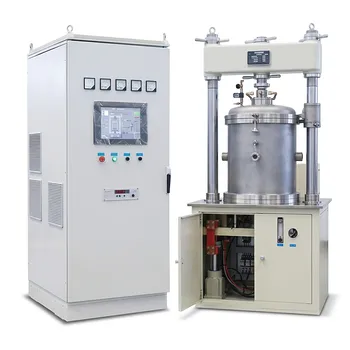
Industrial Vacuum Hot Press Furnace Machine and High Temperature Heated Vacuum Press for Advanced Material Sintering
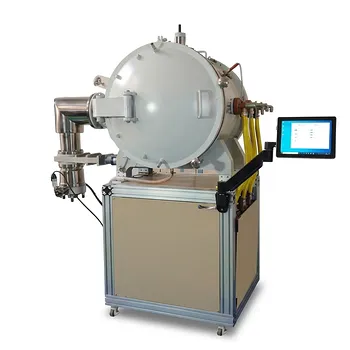
High Temperature Cold Wall Vacuum Furnace for Advanced Material Sintering and Annealing 1600C Heating Area 200x200x300mm
