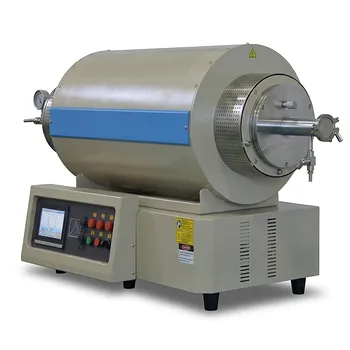
What are the benefits of using a Tube Furnace with gas-tight seals for W-Cr-Y alloy oxidation experiments?
Updated 3 months ago
A Tube Furnace with integrated gas-tight seals provides the precise environmental isolation required to simulate extreme nuclear fusion conditions and accurately measure the chemical stability of W-Cr-Y alloys. By enabling a strictly controlled atmosphere—such as specific argon-oxygen mixtures with regulated humidity—this equipment allows researchers to observe long-term isothermal oxidation behavior (typically 8 to 20 hours or more) without interference from ambient air.
Using a gas-tight tube furnace is essential for isolating the oxidation kinetics of advanced alloys from external atmospheric variables. This precision ensures that the resulting data on oxide film evolution and chemical stability is both reproducible and reflective of real-world service environments like a Loss of Coolant Accident (LOCA).
Precision Environmental Control
Mastery Over Atmospheric Composition
The primary advantage of integrated gas-tight seals is the ability to create and maintain a high-purity environment. For W-Cr-Y alloys, this allows for the introduction of specific Ar/O2 mixtures that mimic the specific chemical stresses of a fusion reactor.
Without these seals, oxygen ingress from the surrounding air would contaminate the experiment. This would make it impossible to determine if the alloy's oxidation resistance is functioning as designed under specific low-oxygen or high-humidity scenarios.
Regulation of Humidity and Flow Rates
Advanced tube furnaces allow for the precise regulation of gas flow and moisture content. This is critical for simulating a LOCA, where steam and high temperatures interact with the reactor's first wall.
By controlling these variables, researchers can verify the "smart" properties of W-Cr-Y alloys. They can specifically observe how chromium forms a protective oxide layer to prevent the sublimation of radioactive tungsten oxides.
Thermal Stability and Kinetic Accuracy
Maintaining Isothermal Consistency
Long-term oxidation experiments, which can span from 8 hours to over 1,000 hours, require exceptional thermal stability. Industrial-grade tube furnaces minimize temperature fluctuations that could lead to experimental errors or cracked oxide scales.
Consistent heat ensures that the alloy reaches a steady state. This stability is the foundation for capturing the true oxidation kinetic behavior of the material over extended periods.
Calculation of Oxidation Rate Constants
A stable temperature environment is non-negotiable for calculating the parabolic rate constant (Kp). This value determines how quickly an alloy will degrade over its service life.
Precise regulation between 800°C and 1200°C allows researchers to map the evolution of oxide films. This data is vital for predicting the long-term durability of components in high-temperature industrial or nuclear applications.
Understanding the Trade-offs
Complexity of System Maintenance
While gas-tight seals offer superior control, they increase the complexity of the experimental setup. Seals must be regularly inspected for degradation caused by high-temperature cycling, as even a microscopic leak can invalidate long-term kinetic data.
Gas Consumption and Saturation Times
Operating a sealed system requires a continuous, regulated flow of high-purity gases. Achieving the desired atmospheric "steady state" within the tube can take significant time, extending the overall duration of the experimental protocol.
How to Apply This to Your Project
Making the Right Choice for Your Goal
To maximize the utility of a tube furnace for W-Cr-Y or similar alloy research, consider your primary experimental objective:
- If your primary focus is simulating reactor accidents (LOCA): Use a furnace with integrated flow meters and humidity controllers to replicate steam-driven oxidation at specific flow rates.
- If your primary focus is calculating long-term life expectancy: Prioritize a furnace known for high thermal mass and PID control to ensure temperature fluctuations remain below ±1°C over hundreds of hours.
- If your primary focus is studying oxide film morphology: Ensure the gas-tight system allows for controlled cooling rates to prevent the "spalling" or flaking of the oxide layer upon completion of the test.
By leveraging the atmospheric isolation and thermal precision of a sealed tube furnace, you transform a simple heating process into a definitive simulation of material survival in the world's most demanding environments.
Summary Table:
| Feature | Benefit for W-Cr-Y Research | Experimental Impact |
|---|---|---|
| Gas-tight Seals | High-purity Ar/O2 isolation | Prevents air contamination; ensures reproducible data |
| Atmospheric Control | Regulated humidity & gas flow | Accurate simulation of LOCA/steam-driven oxidation |
| Thermal Stability | PID Control (±1°C) | Precise calculation of parabolic rate constants (Kp) |
| Isothermal Consistency | Stable long-term heating | Accurate mapping of oxide film evolution (8-1000+ hrs) |
Optimize Your Advanced Material Research with THERMUNITS
Is your research demanding extreme atmospheric precision and thermal stability? THERMUNITS is a leading manufacturer of high-temperature laboratory equipment for material science and industrial R&D. Our high-performance Tube Furnaces and Atmosphere Furnaces are engineered with the integrated gas-tight seals necessary for critical oxidation kinetics and alloy stability studies.
From simulating nuclear fusion environments to standard heat treatments, we offer a comprehensive range of solutions, including:
- Muffle, Vacuum, and Rotary Furnaces
- CVD/PECVD Systems & Hot Press Furnaces
- Vacuum Induction Melting Furnaces (VIM)
- Dental Furnaces & Electric Rotary Kilns
Ensure your experimental data is both accurate and reproducible. Contact THERMUNITS today to discuss your specific thermal processing requirements and let us help you achieve superior heat treatment results.
References
- Anicha Reuban, Jesús González‐Julián. The Effect of Y Addition on Oxidation Resistance of Bulk W-Cr Alloys. DOI: 10.3390/ma17235749
Mentioned Products
- High Temperature 1700C Tube Furnace with 4 Inch OD Alumina Tube and Vacuum Sealing Flanges
- 1700C High Temperature Alumina Tube Furnace with 18 Inch Heated Zone and Vacuum Sealing Flanges
- High Temperature 1700C Benchtop Tube Furnace with 5 Inch Heating Zone High Purity Alumina Tube and Vacuum Sealing Flanges
- Three Zone Hydrogen Gas Tube Furnace with 82mm Superalloy Tube and Dual Hydrogen Detectors 1200C High Temperature Material Processing System
- Compact Vertical Split Quartz Tube Furnace with Stainless Steel Vacuum Flanges for Rapid Thermal Quenching and Controlled Atmosphere Material Processing
People Also Ask
- What is the function of a high-temperature tube furnace in zirconia catalyst prep? Optimize phase and performance.
- How does a high-temp tube furnace ensure stability for Rare Earth Hexaborides? Expert Atmospheric & Thermal Control
- What is the function of a high-temperature tube furnace in the synthesis of g-C3N4? Optimize Thermal Polycondensation
- What impact does the heating rate of a tube furnace have on biochar microstructure? Optimize Your Material R&D.
- What is the primary function of a high-temperature tube furnace in Cu1-N-C synthesis? Precision Thermal Control.

Tech Team · ThermUnits
Last updated on Jun 02, 2026
Related Products
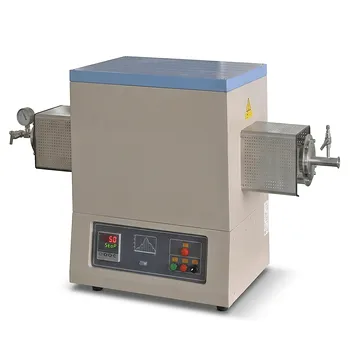
High Temperature 1700C Tube Furnace with 4 Inch OD Alumina Tube and Vacuum Sealing Flanges
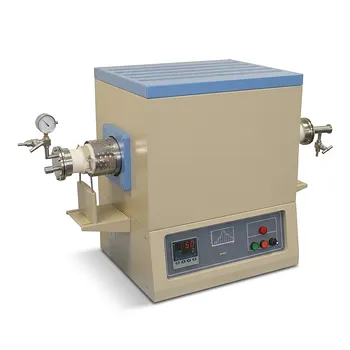
1700C High Temperature Alumina Tube Furnace with 18 Inch Heated Zone and Vacuum Sealing Flanges

High Temperature 1700C Benchtop Tube Furnace with 5 Inch Heating Zone High Purity Alumina Tube and Vacuum Sealing Flanges
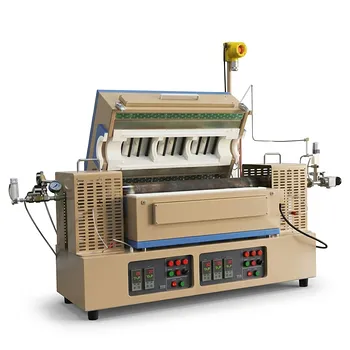
Three Zone Hydrogen Gas Tube Furnace with 82mm Superalloy Tube and Dual Hydrogen Detectors 1200C High Temperature Material Processing System

Compact Vertical Split Quartz Tube Furnace with Stainless Steel Vacuum Flanges for Rapid Thermal Quenching and Controlled Atmosphere Material Processing
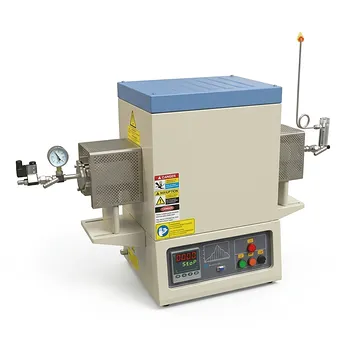
1700C Hydrogen Gas Tube Furnace with 60mm Alumina Process Tube and Integrated Hydrogen Safety Detector

Compact High Temperature 1600C Tube Furnace with 50mm Alumina Tube and Vacuum Flanges for Material Sintering

Vertical 1700C Vacuum and Atmosphere Tube Furnace with 80mm Alumina Tube
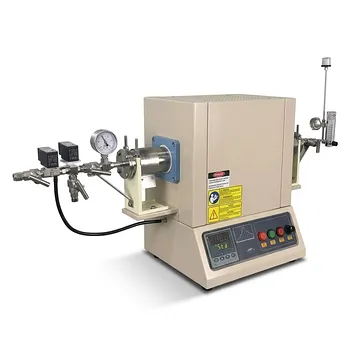
1500C Compact Hydrogen Gas Tube Furnace with 2 Inch Alumina Tube and Hydrogen Detector
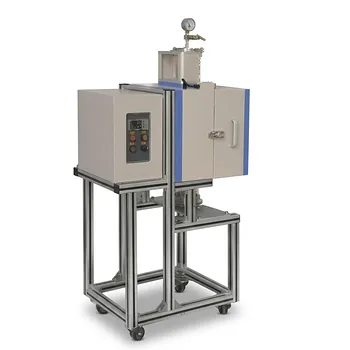
1200°C 5 Inch Vertical Quartz Tube Furnace with Stainless Steel Vacuum Flanges
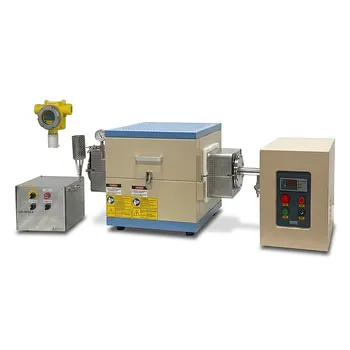
1100C Hydrogen Gas Atmosphere Tube Furnace with 5 Inch Fused Quartz Tube and Integrated Safety Monitoring System
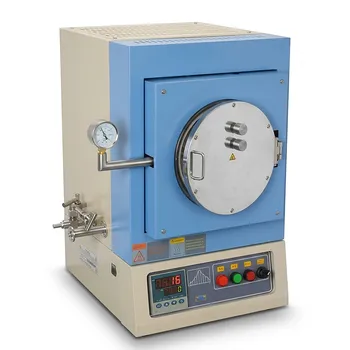
1100°C High Temperature Quartz Chamber Furnace 8 Inch OD with 7.6 Liter Capacity and Vacuum Atmosphere Capability
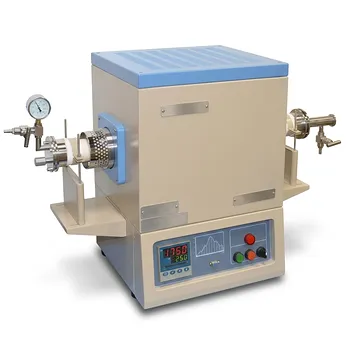
High Temperature Compact Vacuum Tube Furnace 1750C Max 60mm OD Alumina Tube
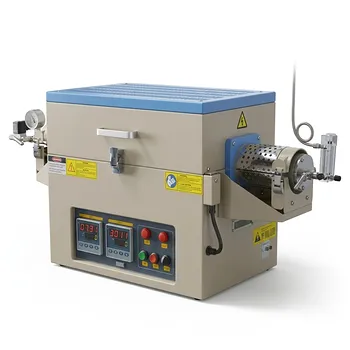
1100C Dual Zone Hydrogen Gas Tube Furnace with Quartz Tube and Integrated H2 Leak Detection System
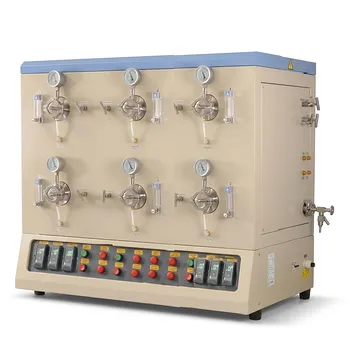
1200C High Throughput Multi Channel Tube Furnace with 50mm Quartz Tubes for Annealing and Material Phase Diagram Research
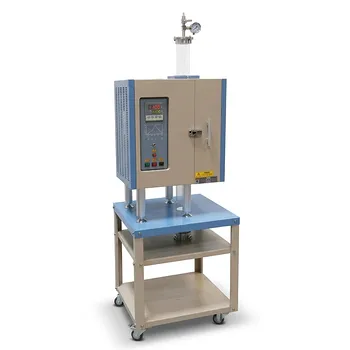
1100°C Split Vertical Tube Furnace with 80mm Quartz Tube and Stainless Steel Vacuum Flanges

High Temperature 1700C Vertical Tube Furnace for Powder Spherification and Material Sintering

1800C High Temperature Compact Vacuum Tube Furnace with 60mm OD Alumina Tube and Kanthal MoSi2 Heating Elements
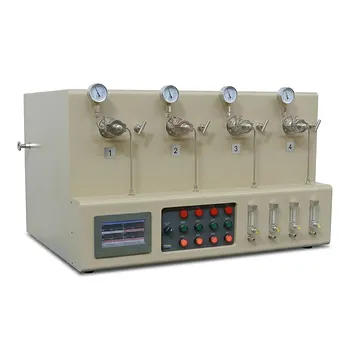
High Temperature 1700C 4 Channel Tube Furnace 1 Inch Alumina Tube for Hi-Throughput Annealing