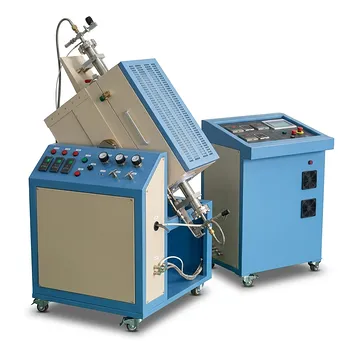
What is the function of a high-temperature tube furnace in zirconia catalyst prep? Optimize phase and performance.
Updated 3 months ago
The high-temperature tube furnace is the primary instrument for "activating" catalyst precursors through precise thermal calcination. In the context of supported zirconia, it provides the controlled environment required to decompose chemical precursors, transform amorphous materials into a stable tetragonal crystal structure, and securely anchor active metal components onto the carrier surface.
The tube furnace serves as a precision thermal reactor that dictates the final crystalline phase, surface area, and active site distribution of the catalyst. Without its controlled environment, zirconia remains an inactive amorphous mass rather than an effective catalytic support.
Phase Transformation and Crystallization
Converting Amorphous Precursors
Initial zirconia precursors usually exist in an amorphous hydroxide state that lacks catalytic utility. The tube furnace provides the thermal energy, typically starting around 500°C, to drive the transition from this disordered state into a functional crystalline structure.
Stabilizing the Tetragonal Phase
For many catalytic applications, the tetragonal phase of zirconia (t-ZrO2) is the desired outcome. Operating the furnace at a specific set point—most critically around 650°C—facilitates this phase transformation, ensuring the support remains stable during subsequent chemical reactions.
Increasing Material Crystallinity
Beyond the phase type, the furnace environment promotes grain growth and material densification. This leads to a highly crystalline catalyst structure, which provides the mechanical and thermal durability required for industrial environments.
Surface Engineering and Active Site Loading
Anchoring Active Components
The furnace is essential for the "activation" of the catalyst, where active metal components are firmly anchored onto the zirconia carrier. This thermal bonding prevents the loss of these active sites during the catalyst’s operational lifespan.
Regulating Pore Structure and Surface Area
The thermal profile of the furnace directly influences the specific surface area and pore volume of the zirconia. By adjusting the temperature curve, researchers can manipulate the surface hydroxyl density, which serves as the foundation for how active metals are distributed.
Removing Volatiles and Impurities
A tube furnace effectively "cleans" the support by removing adsorbed water, residual organic impurities, and volatile substances from the pores. This ensures that the active acidic or metallic sites are fully exposed and available for the catalytic reaction.
Understanding the Trade-offs
The Surface Area vs. Stability Paradox
As the furnace temperature increases to improve crystallinity and phase stability, the specific surface area of the zirconia typically decreases due to sintering. Finding the "sweet spot" is critical, as excessive heat will cause particles to fuse, reducing the number of available active sites.
Atmospheric Sensitivity
Tube furnaces allow for controlled atmospheres (such as nitrogen or argon), which is a significant advantage over standard muffle furnaces. However, using the wrong gas or an inconsistent flow rate during calcination can lead to incomplete decomposition or unwanted oxidation states in the active components.
Thermal Gradient Risks
In a tube furnace, the sample is often concentrated in a specific "hot zone." If the temperature ramp is too aggressive or the sample is too large, thermal gradients can lead to uneven calcination, resulting in a catalyst with inconsistent performance across different batches.
Applying This to Your Catalyst Synthesis
Choose Your Thermal Profile Based on Your Goal
- If your primary focus is Maximum Surface Area: Utilize a lower calcination temperature (approx. 500°C) to convert the precursor while minimizing grain growth and sintering.
- If your primary focus is Phase Purity and Stability: Set the tube furnace to a higher range (650°C–700°C) to ensure a complete transition to the stable tetragonal phase.
- If your primary focus is Contamination Control: Use a tube furnace with a high-purity inert gas stream (Nitrogen or Argon) to ensure the removal of organic residues without oxidizing sensitive active metals.
- If your primary focus is Durability in Complex Reactions: Perform a secondary steam treatment or high-temperature aging in the furnace to optimize the ratio of acid sites and enhance the catalyst's resistance to deactivation.
A properly calibrated tube furnace transforms raw chemical precursors into a sophisticated, high-performance tool tailored for specific chemical transformations.
Summary Table:
| Function | Key Process | Benefit to Zirconia Catalyst |
|---|---|---|
| Phase Transformation | Calcination (500°C - 700°C) | Converts amorphous precursors to stable tetragonal phase. |
| Surface Engineering | Controlled Sintering | Regulates pore structure, surface area, and hydroxyl density. |
| Active Site Loading | Thermal Anchoring | Securely bonds active metal components to the zirconia carrier. |
| Impurity Removal | Volatilization | Eliminates water, organic residues, and contaminants from pores. |
| Atmosphere Control | Inert Gas Purging | Prevents unwanted oxidation and ensures high-purity chemical states. |
Elevate Your Catalyst Research with THERMUNITS Precision Furnaces
As a leading manufacturer of high-temperature laboratory equipment for material science and industrial R&D, THERMUNITS understands that precision is the key to successful catalyst synthesis. Our advanced thermal processing solutions are designed to give you total control over phase transformation, crystallinity, and surface chemistry.
Our Comprehensive Product Range Includes:
- Tube & Rotary Furnaces: Perfect for precise calcination and catalyst activation.
- CVD/PECVD Systems: For advanced surface engineering and thin-film deposition.
- Vacuum & Atmosphere Furnaces: Ensuring high-purity environments for sensitive materials.
- Specialized Equipment: Muffle, Hot Press, Dental Furnaces, VIM systems, and high-quality Thermal Elements.
Why Partner with THERMUNITS? Whether you are scaling up industrial production or conducting fundamental laboratory research, our equipment provides the thermal uniformity and atmospheric stability required for high-performance catalysts.
Ready to optimize your heat treatment process?
Contact our technical experts today to find your solution!
References
- Widayat Widayat, Jeanette Mutiara Paula Saudale. Preparation of Zirconia Catalyst from Zircon Sand and Catalytic Testing for Biodiesel Production. DOI: 10.14710/reaktor.24.2.36-40
Mentioned Products
- High Temperature Tube Furnace 1500C with Sliding Flanges and 50mm OD for Rapid Thermal Processing Fast Heating and Cooling
- High Temperature 1700C Tube Furnace with High Vacuum Turbomolecular Pump System and Multi Channel Mass Flow Controller Gas Mixer
- 1750°C High Temperature Benchtop Vacuum Atmosphere Tube Furnace with Kanthal Super 1800 Heating Elements and 60mm Alumina Processing Tube
- High Temperature 1700C Benchtop Tube Furnace with 5 Inch Heating Zone High Purity Alumina Tube and Vacuum Sealing Flanges
- 1700C High Temperature Alumina Tube Furnace with 18 Inch Heated Zone and Vacuum Sealing Flanges
People Also Ask
- How are high-temperature tube furnaces utilized to repair etching damage? Precision Lattice Restoration Solutions
- What core conditions does a high-temperature tube furnace provide for rGO aerogels? Mastering Precision Synthesis.
- What role does a high-temperature tube furnace play in CVD synthesis of silicon nanowires? Master VLS Growth Precision.
- How does precision tube furnace control influence CoFe nanoparticle formation? Master Your Bimetallic Synthesis.
- What role does a high-temperature tube furnace play in the sulfidation heat treatment of CoS@C/MXene nanocomposites? Guide

Tech Team · ThermUnits
Last updated on Jun 03, 2026
Related Products
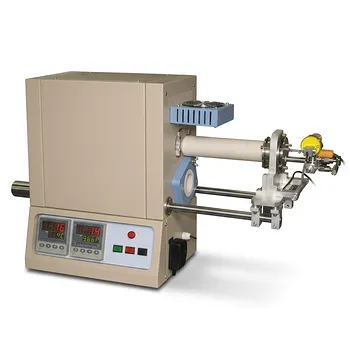
High Temperature Tube Furnace 1500C with Sliding Flanges and 50mm OD for Rapid Thermal Processing Fast Heating and Cooling

High Temperature 1700C Tube Furnace with High Vacuum Turbomolecular Pump System and Multi Channel Mass Flow Controller Gas Mixer
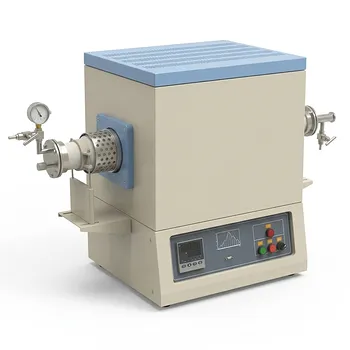
1750°C High Temperature Benchtop Vacuum Atmosphere Tube Furnace with Kanthal Super 1800 Heating Elements and 60mm Alumina Processing Tube

High Temperature 1700C Benchtop Tube Furnace with 5 Inch Heating Zone High Purity Alumina Tube and Vacuum Sealing Flanges
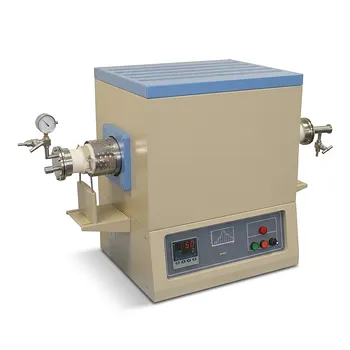
1700C High Temperature Alumina Tube Furnace with 18 Inch Heated Zone and Vacuum Sealing Flanges
High Temperature Split Tube Furnace 1500C for Material Research Vacuum and Atmosphere Thermal Processing

1800C High Temperature Compact Vacuum Tube Furnace with 60mm OD Alumina Tube and Kanthal MoSi2 Heating Elements

Compact High Temperature 1600C Tube Furnace with 50mm Alumina Tube and Vacuum Flanges for Material Sintering
High Temperature Three Zone Tube Furnace 1700C with Alumina Tube and Water Cooled Flanges
High Temperature Rocking Tube Furnace 1700°C Alumina Processing Tube with Precision Oscillation for Material Synthesis
High Temperature 1700C Tube Furnace with 4 Inch OD Alumina Tube and Vacuum Sealing Flanges

High Temperature 1700C Vertical Tube Furnace for Powder Spherification and Material Sintering
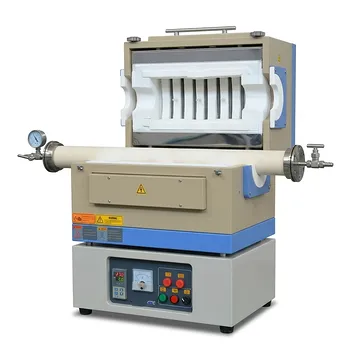
High Temperature 1600C Split Tube Furnace Vacuum Flanges Valves Optional 60mm 80mm Alumina Tube

High Temperature Automated 5 Inch Tube Furnace for Autonomous Material Research and Advanced Laboratory R&D

High Temperature 1700C Six Zone Split Tube Furnace with Alumina Tube and Water Cooled Flanges
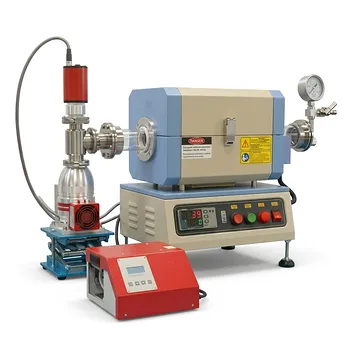
High Vacuum Compact Tube Furnace 1200C with Integrated Turbo Pump System and 8 Inch Heating Zone
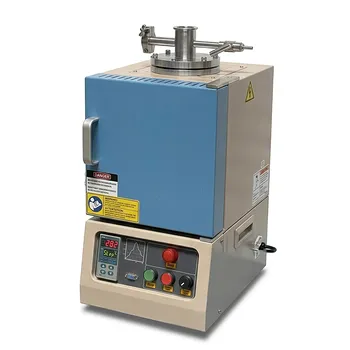
High Temperature Hybrid Muffle and Tube Furnace with Vacuum Capability and PID Control
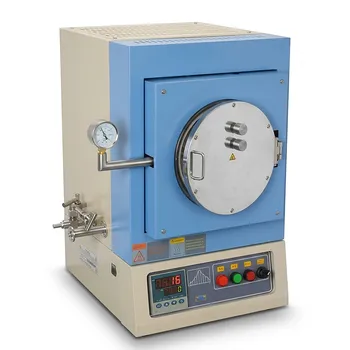
1100°C High Temperature Quartz Chamber Furnace 8 Inch OD with 7.6 Liter Capacity and Vacuum Atmosphere Capability
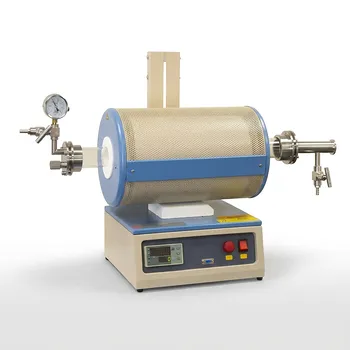
1100C Tube Furnace with Vacuum Flange and Programmable Temperature Controller for Material Science and Industrial Heat Treatment