What is the primary function of a high-temperature tube furnace in Cu1-N-C synthesis? Precision Thermal Control.
Updated 3 months ago
The high-temperature tube furnace serves as the critical reaction chamber for the controlled thermal transformation of precursor materials into active catalysts. Its primary function in synthesizing Cu1-N-C catalysts is to provide a stable, high-temperature environment (typically 900 °C) under an inert atmosphere to facilitate the carbonization of metal-organic framework (MOF) precursors. This precise thermal processing ensures that copper atoms are not merely present, but are effectively anchored and dispersed as single atoms throughout the resulting nitrogen-doped carbon matrix.
The tube furnace enables the simultaneous pyrolytic conversion of organic precursors into a conductive carbon framework and the atomic stabilization of copper, preventing the metal from aggregating into inactive clusters or nanoparticles.
Facilitating Complex Material Transformation
Pyrolytic Carbonization of Precursors
The furnace provides the heat necessary to drive the pyrolysis of metal-organic frameworks or polymer precursors. This process breaks down organic components to form a robust, nitrogen-doped carbon skeleton that serves as the catalyst support.
Facilitating Single-Atom Dispersion
At specific high temperatures, the furnace environment allows copper atoms to migrate and bond with nitrogen sites within the carbon lattice. This prevents the natural tendency of metal atoms to "clump" together, ensuring the formation of isolated copper active sites (Cu1) which are essential for high catalytic efficiency.
Induction of Porosity and Surface Area
The controlled heating environment facilitates the volatilization of sacrificial components, such as zinc in ZIF-8 precursors. This evaporation creates a hierarchical pore structure, significantly increasing the specific surface area and improving the accessibility of the copper active sites.
Maintaining a Controlled Chemical Environment
Prevention of Oxidation via Inert Atmosphere
By maintaining a continuous flow of argon or nitrogen, the tube furnace creates an anaerobic environment. This is vital to prevent the oxidation of the carbon framework and the copper atoms, which would otherwise destroy the catalyst's structural integrity and electronic properties.
Precision Temperature Management
The equipment offers precise control over heating rates and dwell times, which are critical for the phase purity of the material. Stable temperature control ensures that the nitrogen atoms are successfully doped into the carbon framework rather than being driven off as waste gas.
Support for Chemical Vapor Deposition (CVD)
In some configurations, the furnace facilitates the vapor-phase growth or deposition of nanostructures. This allows for the uniform distribution of metallic components across the substrate, ensuring consistency in the resulting heterogeneous interface.
Understanding the Trade-offs and Pitfalls
The Risk of Sintering and Aggregation
If the furnace temperature exceeds the optimal threshold (often above 1000 °C), the single copper atoms may gain enough kinetic energy to overcome their nitrogen anchors. This leads to sintering, where single atoms merge into large nanoparticles, drastically reducing the catalyst's effective surface area and activity.
Incomplete Carbonization at Low Temperatures
Conversely, maintaining the furnace at a temperature that is too low results in incomplete carbonization. This leaves behind organic residues that decrease the material's electrical conductivity and can block the active copper sites from participating in chemical reactions.
Atmosphere Contamination
Any leak in the tube furnace seal that introduces oxygen can lead to the combustion of the carbon support. Even trace amounts of oxygen at 900 °C can transform the desired Cu1-N-C structure into bulk copper oxides and ash, rendering the preparation a failure.
How to Apply This to Your Catalyst Synthesis
When utilizing a high-temperature tube furnace for Cu1-N-C preparation, your technical parameters should align with your specific performance goals:
- If your primary focus is Maximum Surface Area: Utilize a MOF precursor containing zinc and set the furnace to at least 900 °C to ensure complete zinc volatilization and pore creation.
- If your primary focus is Single-Atom Stability: Prioritize a slower heating ramp rate and a strictly maintained inert atmosphere (Argon) to allow copper atoms to find stable nitrogen-binding sites without aggregating.
- If your primary focus is Electrical Conductivity: Ensure a sufficiently long dwell time at high temperatures (e.g., 3 hours at 900 °C) to promote the development of a highly graphitic nitrogen-doped carbon framework.
By masterfully controlling the furnace's thermal and atmospheric variables, you dictate the fundamental physicochemical properties of the copper single-atom catalyst.
Summary Table:
| Key Function | Mechanism | Impact on Cu1-N-C Catalyst |
|---|---|---|
| Pyrolysis | Thermal breakdown at 900°C | Creates a robust, N-doped carbon framework |
| Inert Atmosphere | Argon/Nitrogen gas flow | Prevents oxidation of copper and carbon support |
| Atomic Dispersion | Controlled atomic migration | Anchors isolated single copper atoms (Cu1) |
| Porosity Control | Volatilization of zinc/sacrificials | Develops high surface area and hierarchical pores |
Elevate Your Catalyst Research with THERMUNITS
As a leading manufacturer of high-temperature laboratory equipment for material science and industrial R&D, THERMUNITS provides the precision heating solutions necessary for synthesizing advanced materials like Cu1-N-C catalysts. Our comprehensive range of equipment—including Tube Furnaces, CVD/PECVD systems, Vacuum Atmosphere Furnaces, and Rotary Kilns—is designed to offer the exact temperature stability and inert environment your research demands.
Don't let sintering or oxidation compromise your single-atom stability. Partner with us to achieve superior heat treatment and maximize your laboratory's efficiency.
Contact THERMUNITS Experts Today
References
- Yan Liu, Jie Zeng. Efficient tandem electroreduction of nitrate into ammonia through coupling Cu single atoms with adjacent Co3O4. DOI: 10.1038/s41467-024-48035-4
Mentioned Products
- High Temperature Tube Furnace 1500C with Sliding Flanges and 50mm OD for Rapid Thermal Processing Fast Heating and Cooling
- High Temperature 1700C Tube Furnace with High Vacuum Turbomolecular Pump System and Multi Channel Mass Flow Controller Gas Mixer
- 1750°C High Temperature Benchtop Vacuum Atmosphere Tube Furnace with Kanthal Super 1800 Heating Elements and 60mm Alumina Processing Tube
- High Temperature 1700C Benchtop Tube Furnace with 5 Inch Heating Zone High Purity Alumina Tube and Vacuum Sealing Flanges
- 1700C High Temperature Alumina Tube Furnace with 18 Inch Heated Zone and Vacuum Sealing Flanges
People Also Ask
- How are high-temperature tube furnaces utilized to repair etching damage? Precision Lattice Restoration Solutions
- What core conditions does a high-temperature tube furnace provide for rGO aerogels? Mastering Precision Synthesis.
- What role does a high-temperature tube furnace play in CVD synthesis of silicon nanowires? Master VLS Growth Precision.
- How does precision tube furnace control influence CoFe nanoparticle formation? Master Your Bimetallic Synthesis.
- What role does a high-temperature tube furnace play in the sulfidation heat treatment of CoS@C/MXene nanocomposites? Guide

Tech Team · ThermUnits
Last updated on Jun 03, 2026
Related Products
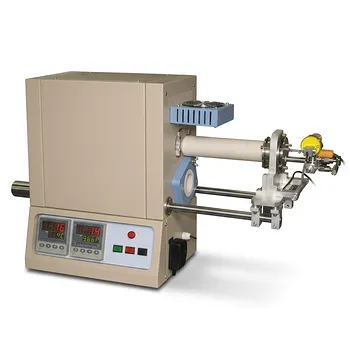
High Temperature Tube Furnace 1500C with Sliding Flanges and 50mm OD for Rapid Thermal Processing Fast Heating and Cooling

High Temperature 1700C Tube Furnace with High Vacuum Turbomolecular Pump System and Multi Channel Mass Flow Controller Gas Mixer
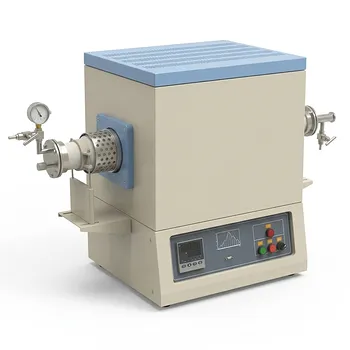
1750°C High Temperature Benchtop Vacuum Atmosphere Tube Furnace with Kanthal Super 1800 Heating Elements and 60mm Alumina Processing Tube
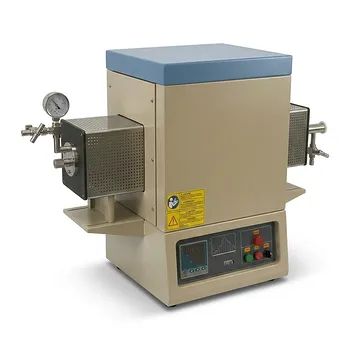
High Temperature 1700C Benchtop Tube Furnace with 5 Inch Heating Zone High Purity Alumina Tube and Vacuum Sealing Flanges
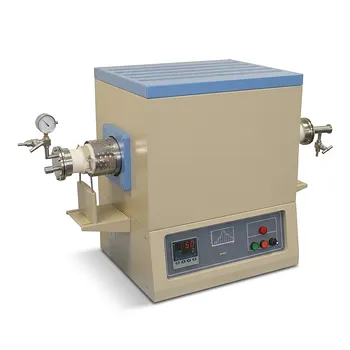
1700C High Temperature Alumina Tube Furnace with 18 Inch Heated Zone and Vacuum Sealing Flanges
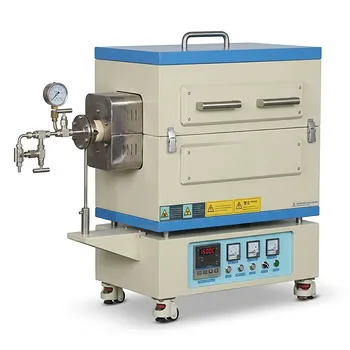
High Temperature Split Tube Furnace 1500C for Material Research Vacuum and Atmosphere Thermal Processing

1800C High Temperature Compact Vacuum Tube Furnace with 60mm OD Alumina Tube and Kanthal MoSi2 Heating Elements

Compact High Temperature 1600C Tube Furnace with 50mm Alumina Tube and Vacuum Flanges for Material Sintering
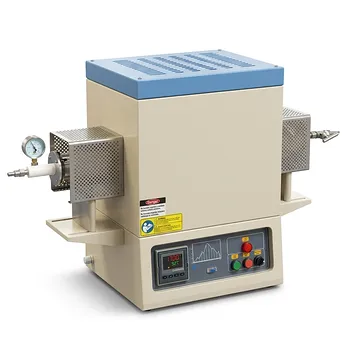
High Temperature Three Zone Tube Furnace 1700C with Alumina Tube and Water Cooled Flanges
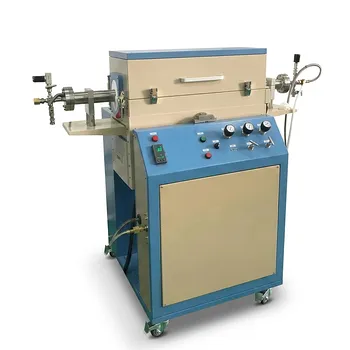
High Temperature Rocking Tube Furnace 1700°C Alumina Processing Tube with Precision Oscillation for Material Synthesis
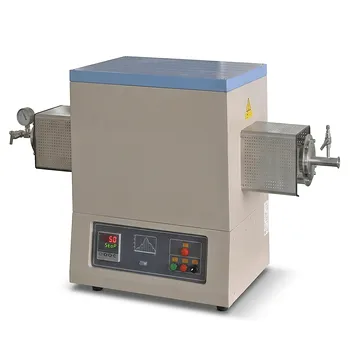
High Temperature 1700C Tube Furnace with 4 Inch OD Alumina Tube and Vacuum Sealing Flanges

High Temperature 1700C Vertical Tube Furnace for Powder Spherification and Material Sintering
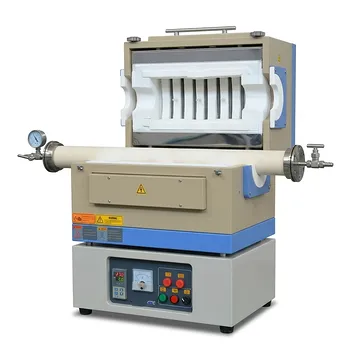
High Temperature 1600C Split Tube Furnace Vacuum Flanges Valves Optional 60mm 80mm Alumina Tube

High Temperature Automated 5 Inch Tube Furnace for Autonomous Material Research and Advanced Laboratory R&D
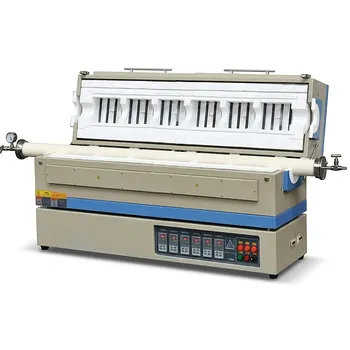
High Temperature 1700C Six Zone Split Tube Furnace with Alumina Tube and Water Cooled Flanges
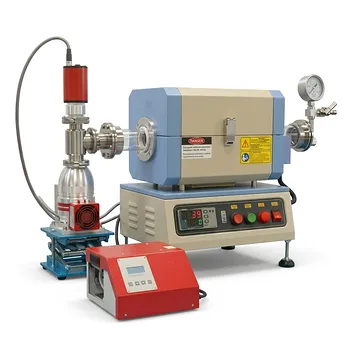
High Vacuum Compact Tube Furnace 1200C with Integrated Turbo Pump System and 8 Inch Heating Zone
High Temperature Hybrid Muffle and Tube Furnace with Vacuum Capability and PID Control
1100°C High Temperature Quartz Chamber Furnace 8 Inch OD with 7.6 Liter Capacity and Vacuum Atmosphere Capability

1100C Tube Furnace with Vacuum Flange and Programmable Temperature Controller for Material Science and Industrial Heat Treatment