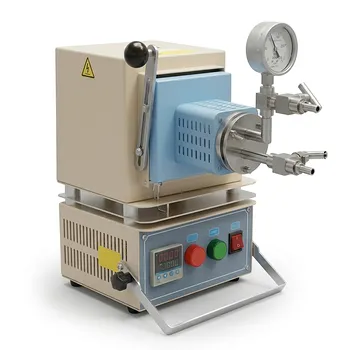
What are the equipment advantages of Spark Plasma Sintering (SPS)? Faster Densification & Superior Phase Control
Updated 3 months ago
The primary equipment advantages of Spark Plasma Sintering (SPS) and flash sintering lie in their ability to achieve ultra-high heating rates and significantly compressed sintering cycles through direct energy application. Unlike traditional roasting, which relies on slow external radiant heating, these technologies use pulsed electric current and mechanical pressure to densify materials in minutes rather than hours. This enables the production of high-entropy oxides with superior density while precisely maintaining the complex chemical homogeneity required for these systems.
These rapid thermal processing techniques replace slow, diffusion-limited heating with direct Joule heating, allowing for extreme densification without the penalty of grain coarsening. This transition from hours to minutes effectively "freezes" the desired high-entropy microstructure and prevents undesirable phase segregation.
Accelerated Thermal Kinetics and Processing Efficiency
Direct Joule Heating Mechanisms
SPS equipment utilizes pulsed direct current that flows through both the graphite mold and the powder particles. This generates internal Joule heat and plasma discharge between particles, leading to heating rates that far exceed those of traditional muffle furnaces.
Radical Reduction in Holding Times
Because heat is generated internally rather than conducted from an external element, the time required to reach sintering temperatures is minimized. Processing cycles that typically take a full day in traditional roasting can often be completed in 30 minutes or less.
Shortened R&D and Production Cycles
The rapid nature of these systems allows researchers to iterate on chemical compositions much faster. This speed is a critical advantage when exploring the vast compositional space of high-entropy oxides, where multiple trials are necessary to find stable phases.
Superior Microstructural and Phase Control
Inhibition of Excessive Grain Growth
Traditional long-duration roasting often leads to "abnormal" grain growth, which degrades mechanical and functional properties. The short duration of SPS and flash sintering suppresses grain coarsening, preserving fine-grained structures that enhance material strength and scattering properties.
Prevention of Phase Segregation
High-entropy oxides rely on maintaining a single-phase solid solution, which can break down during prolonged exposure to high heat. Rapid thermal cycles ensure that the atoms do not have the time to diffuse into undesirable secondary phases, locking in the high-entropy state.
Precision Defect Engineering
SPS systems often operate under vacuum or controlled atmospheres, which allows for the manipulation of defect kinetics. This is vital for high-entropy oxides used in electronics or catalysis, as it enables the adjustment of electrical conductivity and optical absorption.
Synergistic Effects of Mechanical Pressure
Enhanced Densification at Lower Temperatures
SPS equipment applies synchronous high pressure (often 60 MPa or more) during the heating cycle. This mechanical force assists in particle rearrangement and plastic flow, achieving relative densities over 97% at temperatures lower than those required for traditional roasting.
Overcoming High Melting Point Barriers
Many components of high-entropy systems are refractory metals or oxides with extremely high melting points. The combination of localized plasma heating and axial pressure allows these materials to be sintered into dense bulk forms without reaching the extreme temperatures that would damage traditional furnace linings.
Understanding the Technical Trade-offs
Geometry and Scalability Limitations
SPS and flash sintering are typically limited to simple geometries, such as discs or cylinders, due to the requirement for symmetrical current flow and pressure application. Creating complex, net-shape components remains significantly easier in traditional pressureless roasting environments.
Higher Initial Capital Investment
The equipment for SPS is substantially more complex and expensive than a standard muffle or tube furnace. Maintenance of graphite tooling and high-current electrical systems adds to the operational overhead compared to simpler roasting methods.
Risk of Thermal Gradients
In very large or non-conductive samples, the rapid heating can create internal temperature gradients. If not managed correctly, this can lead to non-uniform properties or internal stresses within the high-entropy oxide ceramic.
Making the Right Choice for Your Project
High-entropy oxide synthesis requires a balance between achieving a stable phase and maintaining a usable microstructure.
- If your primary focus is preserving nanostructure or fine grains: Utilize SPS to take advantage of short holding times that "freeze" the microstructure before grains can coarsen.
- If your primary focus is achieving maximum density in refractory oxides: Choose SPS for the synergistic benefit of simultaneous high pressure and localized Joule heating.
- If your primary focus is exploring new compositions rapidly: Use the high heating rates of SPS to reduce your experimental turnaround time from days to minutes.
- If your primary focus is producing complex, large-scale shapes: Stick to traditional long-duration roasting, as it avoids the geometric constraints imposed by current electrodes and pressure dies.
By leveraging the unique energy delivery of SPS and flash sintering, you can move beyond the limitations of traditional roasting to unlock the full functional potential of high-entropy materials.
Summary Table:
| Feature | Spark Plasma Sintering (SPS) | Traditional Roasting |
|---|---|---|
| Heating Mechanism | Direct Joule Heating (Internal) | Radiant/Convective (External) |
| Processing Time | Minutes (e.g., < 30 mins) | Hours to Days |
| Grain Growth | Suppressed (Fine-grained) | High Risk of Coarsening |
| Pressure Application | Simultaneous High Pressure | Typically Pressureless |
| Density | Ultra-high (>97%) at lower temps | Lower density or higher temps required |
| Microstructure | Homogeneous High-Entropy State | Risk of Phase Segregation |
Elevate Your Material Research with THERMUNITS
Are you looking to accelerate your high-entropy oxide R&D? THERMUNITS is a leading manufacturer of high-temperature laboratory equipment, providing the precision and power needed for cutting-edge material science.
Our comprehensive range of thermal solutions includes:
- Advanced Sintering: Spark Plasma Sintering (SPS) and Hot Press Furnaces for rapid densification.
- Versatile Systems: Vacuum, Atmosphere, Tube, and Muffle Furnaces.
- Industrial R&D: Rotary Kilns, CVD/PECVD systems, and Vacuum Induction Melting (VIM) furnaces.
- Specialized Equipment: Dental Furnaces and high-quality Thermal Elements.
Whether you are "freezing" complex microstructures or scaling up industrial heat treatments, our equipment delivers unmatched thermal kinetics and control. Contact our technical experts today to discuss how THERMUNITS can optimize your laboratory’s efficiency and performance!
References
- Lishan Dong, Zhifeng Wang. Porous High-Entropy Oxide Anode Materials for Li-Ion Batteries: Preparation, Characterization, and Applications. DOI: 10.3390/ma17071542
Mentioned Products
- Compact Spark Plasma Sintering SPS Furnace 1200 C Max 100 MPa Pressure High Speed Sintering System for Material Research
- 1750C Compact Muffle Furnace 1.7L Ultra High Temperature Laboratory Sintering System for Advanced Ceramics and Material Science Research
- High Vacuum Pressure Chamber Furnace 800C 3.5 Bar Sintering System for Superconducting Materials
- High Throughput Four Channel Box Furnace 1500C Max Independent Temperature Control Material Research Sintering System
- High Temperature Horizontal Electrical Assisted Sintering Furnace with 3KW Programmable Power Source for Advanced Ceramic Materials
People Also Ask
- SPS vs Hot Pressing for La2O2S: Faster Densification & Superior Grain Growth Control
- How does a modified Spark Plasma Sintering (SPS) system differ from traditional vacuum furnaces? Faster RAS Heat Cycles.
- What are the advantages of Spark Plasma Sintering (SPS) systems compared to traditional tube furnaces? | Nano-Cermets
- What are the unique advantages of a Spark Plasma Sintering (SPS) system? Achieve Rapid Densification & Fine Grain Control
- What role does a sintering furnace play with silver paste? Essential Thermal Management for Power Device Packaging

Tech Team · ThermUnits
Last updated on Jun 02, 2026
Related Products
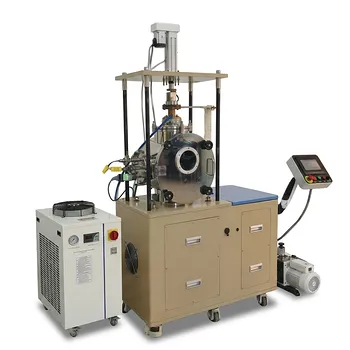
Compact Spark Plasma Sintering SPS Furnace 1200 C Max 100 MPa Pressure High Speed Sintering System for Material Research
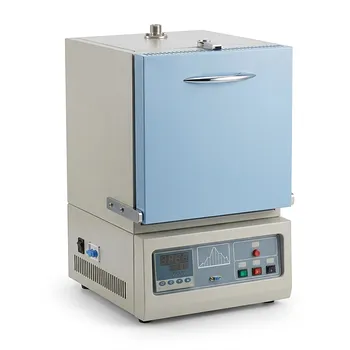
1750C Compact Muffle Furnace 1.7L Ultra High Temperature Laboratory Sintering System for Advanced Ceramics and Material Science Research
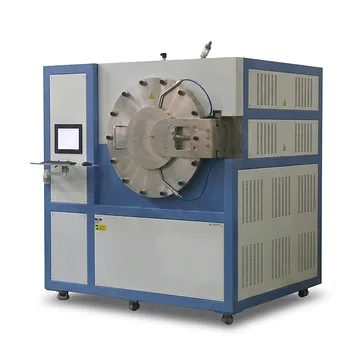
High Vacuum Pressure Chamber Furnace 800C 3.5 Bar Sintering System for Superconducting Materials
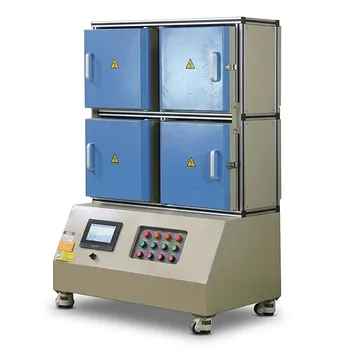
High Throughput Four Channel Box Furnace 1500C Max Independent Temperature Control Material Research Sintering System
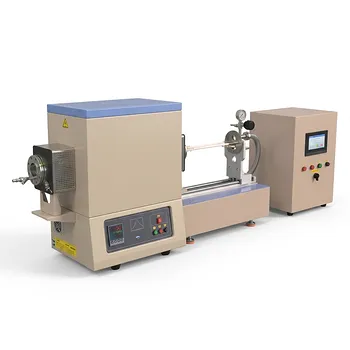
High Temperature Horizontal Electrical Assisted Sintering Furnace with 3KW Programmable Power Source for Advanced Ceramic Materials
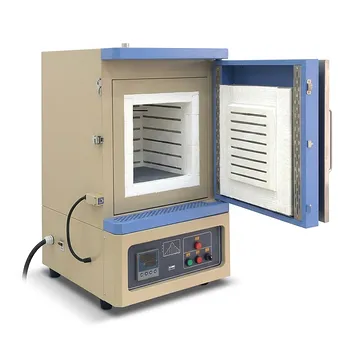
Five Side Heating Muffle Furnace High Purity Alumina Fiber 27L Chamber 1200C High Temperature Thermal Processing System for Sintering Annealing and Materials Research
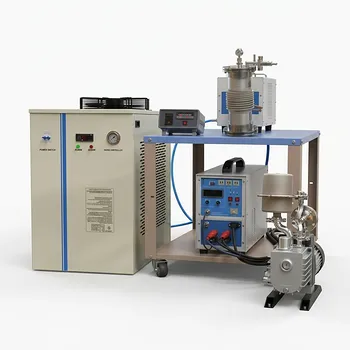
Induction Heating System with Temperature Control for High Temperature Vacuum Sintering and Melting
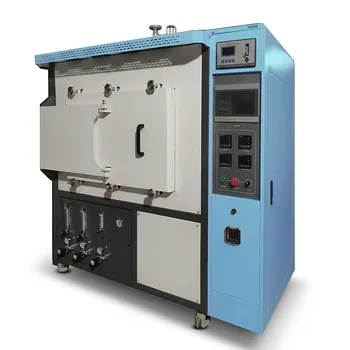
Roller Table Atmosphere Furnace 1500C High Temperature Battery Material Sintering System 112L Capacity
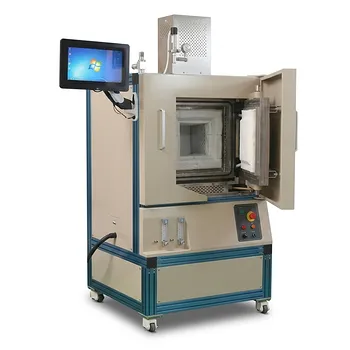
High Temperature Oxygen and Inert Atmosphere Controlled Furnace 8 Liter 1700C Sintering System for Advanced Materials RD
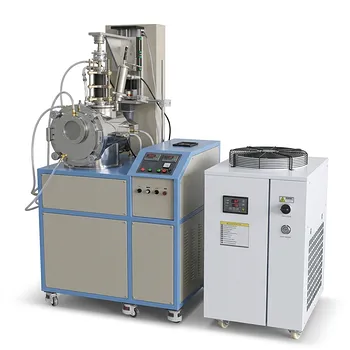
High Temperature Ultrafast Heating Pressing Furnace 2900C Max 100kgf Rapid Thermal Processing System
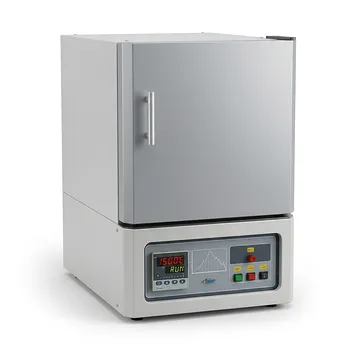
High Temperature 1500C Benchtop Muffle Furnace 3.6L Alumina Fiber Chamber Programmable Controller Sintering Annealing Carbonization Thermal Processing System
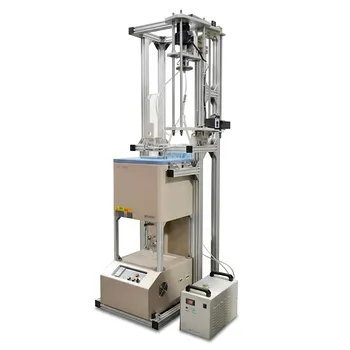
500C Vacuum Vertical Tube Furnace 84mm OD Sample Rotation Lifting System
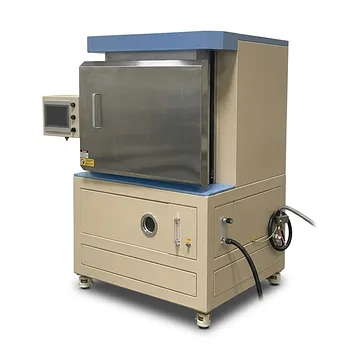
1650C High Temperature Atmosphere Controlled Box Furnace with 65L Chamber for Advanced Material Sintering and Industrial Heat Treatment
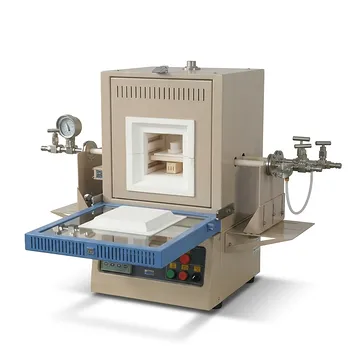
1700C Compact Hybrid Furnace with Dual Layer Box Sintering and Controlled Atmosphere Alumina Tubes
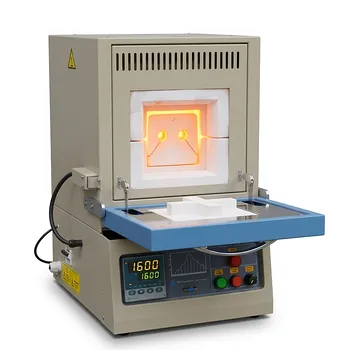
High Temperature Compact Muffle Furnace 1700 C with 30 Segment Programmable Controller and 1.7L Cubic Chamber
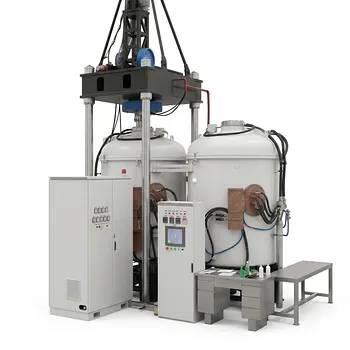
High Pressure 600T Vacuum Induction Hot Press Furnace for Advanced Material Heat Treatment and Sintering

High Temperature 1700C Vertical Tube Furnace for Powder Spherification and Material Sintering
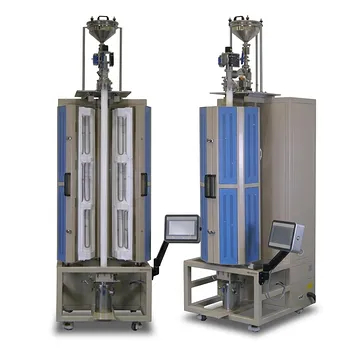
High Temperature Vertical Three Zone Powder Spheroidizing Furnace for Advanced Material Synthesis and Industrial Thermal Processing
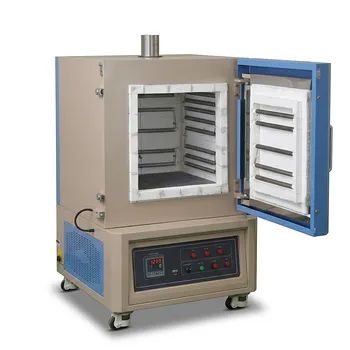
1200C High Temperature 125L Muffle Furnace 5 Side Heating for Large Batch Sintering with Optional Alloy Debinding Chamber