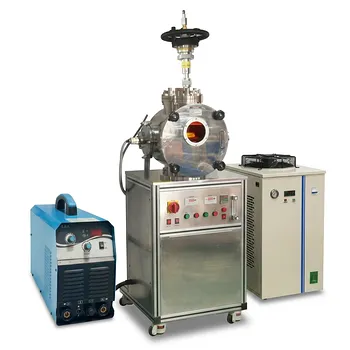
What are the unique advantages of a Spark Plasma Sintering (SPS) system? Achieve Rapid Densification & Fine Grain Control
Updated 3 months ago
Spark Plasma Sintering (SPS) represents a fundamental shift from traditional thermal processing by utilizing direct current pulses to heat materials from the inside out. Unlike a muffle furnace, which relies on slow radiant heating from external elements, an SPS system applies pulsed electric current directly through the mold and specimen while simultaneously exerting mechanical pressure. This synergy allows for extremely high heating rates and minimal holding times, enabling the creation of high-density materials with fine-grained microstructures that are often impossible to achieve through conventional methods.
Spark Plasma Sintering accelerates densification by combining internal Joule heating with synchronized axial pressure. This unique mechanism effectively "freezes" the microstructure of advanced materials, preventing the grain growth that typically compromises mechanical properties in traditional, slow-heating furnaces.
The Mechanism of Rapid Thermal Processing
Direct Joule Heating vs. Radiant Heat
In a traditional muffle furnace, heat must transfer from the heating elements to the air and eventually into the sample, a process that is inherently slow and inefficient. SPS utilizes pulsed direct current (DC) to generate Joule heat directly within the graphite mold and the material itself.
This internal heating method allows for extremely high heating rates (often exceeding 100 K/min). By bypassing the thermal lag of traditional furnaces, researchers can reach sintering temperatures in minutes rather than hours.
Synchronized Mechanical Pressure
While a muffle furnace typically operates at ambient or vacuum pressure without mechanical loading, SPS applies simultaneous axial pressure (often 40–50 MPa or higher). This pressure works in tandem with the heat to close original pores and cracks at the material interfaces.
The combination of heat and pressure significantly accelerates the formation of sintering necks. This allows for near-theoretical densification (up to 99.45%) at lower temperatures than those required in conventional sintering.
Preserving Superior Material Properties
Inhibition of Abnormal Grain Growth
The most significant advantage of the short holding times in SPS is the suppression of abnormal grain growth. In traditional furnaces, the long exposure to high temperatures causes grains to coarsen, which often degrades the material's strength and toughness.
SPS preserves nanometer or fine-grained structures, which are critical for high-performance ceramics and lightweight high-entropy alloys. By keeping the grains small, the system maintains the "fine-grain strengthening effect," resulting in superior hardness and fracture toughness.
Protection of Sensitive Phases
Advanced composites often contain sensitive components, such as carbon nanofibers or specific metallic phases, that can decompose or oxidize during the long heating cycles of a muffle furnace. The rapid processing of SPS completes the densification before these harmful reactions can occur.
For example, in aluminum-matrix composites, SPS minimizes harmful interfacial reactions between the metal and ceramic reinforcements. This ensures that the composite retains its intended chemical integrity and mechanical performance.
Precision Control of Material Physics
Atmosphere and Defect Engineering
SPS systems typically operate in a vacuum reducing atmosphere, which provides a unique environment for controlling defect generation kinetics. This allows researchers to adjust the visible light absorption and electrical conductivity of a material over a wide range.
By precisely controlling the pulsed current and vacuum levels, users can fine-tune the functional properties of semiconductors and functional ceramics. This level of kinetic control is rarely achievable in a standard muffle furnace.
Plasma and Diffusion Effects
The "Spark" in SPS refers to the potential for plasma discharge between powder particles, which is thought to strip away surface oxides and accelerate diffusion. While the existence of plasma is debated for all materials, the localized high-energy environment undoubtedly promotes faster atomic movement.
This effect allows for the rapid growth of intermetallic compounds at interfaces, such as those between copper and aluminum. It ensures a strong metallurgical bond in bilayer materials that would otherwise require much longer annealing times.
Understanding the Trade-offs
Geometry and Scalability Limitations
One of the primary drawbacks of SPS is its restriction to simple geometries, typically cylindrical pellets or discs. Because the process relies on axial pressure applied via a plunger, complex 3D shapes are difficult or impossible to sinter compared to the flexible loading of a muffle furnace.
Economic and Operational Costs
The initial capital investment for an SPS system is significantly higher than that of a traditional muffle furnace. Additionally, the graphite molds used in SPS are consumables that degrade over time due to high pressure and temperature, adding to the operational costs.
Sample Size Constraints
Due to the requirements for high current density and uniform pressure, SPS is often limited to smaller sample sizes. While industrial-scale SPS systems exist, they require massive power supplies, making the traditional furnace a more practical choice for bulk processing of large, non-critical components.
How to Apply This to Your Project
Making the Right Choice for Your Goal
- If your primary focus is preserving nanostructures: SPS is the definitive choice, as its rapid cycle prevents the grain coarsening inherent in muffle furnaces.
- If your primary focus is high-throughput R&D: Utilize SPS to drastically shorten development cycles, as it can complete sintering runs in a fraction of the time.
- If your primary focus is large-scale production of simple parts: Traditional furnaces may remain more cost-effective if the material properties do not require fine-grain control.
- If your primary focus is complex composite interfaces: Choose SPS to minimize harmful chemical reactions and ensure high interfacial density through simultaneous pressure.
By leveraging direct energy transfer rather than indirect heating, SPS transforms sintering from a slow diffusion process into a rapid, precision-controlled manufacturing technique.
Summary Table:
| Feature | Spark Plasma Sintering (SPS) | Traditional Muffle Furnace |
|---|---|---|
| Heating Method | Direct Joule Heating (Internal) | Radiant/Convection (External) |
| Heating Rate | Extremely High (>100 K/min) | Low to Moderate |
| Mechanical Pressure | Synchronized Axial Pressure | None (Pressureless) |
| Microstructure | Fine-grained & Nanostructured | Risk of Coarse Grain Growth |
| Processing Time | Minutes | Hours |
| Material Density | Near-Theoretical (Up to 99.45%) | Lower without added pressure |
Elevate Your Advanced Material Research with THERMUNITS
Are you looking to achieve superior material properties and shorten your R&D cycles? THERMUNITS is a leading manufacturer of high-temperature laboratory equipment, providing the precision environments necessary for cutting-edge material science and industrial R&D.
From high-performance Muffle, Vacuum, and Atmosphere Furnaces to specialized Hot Press Furnaces, CVD/PECVD systems, and Vacuum Induction Melting (VIM) units, our equipment is engineered to deliver exceptional thermal uniformity and control. Whether you are preserving nanostructures or scaling up production in an Electric Rotary Kiln, we provide the thermal processing solutions your project demands.
Ready to optimize your heat treatment process?
Contact our technical experts today to find the perfect furnace solution for your laboratory needs. Let THERMUNITS power your next breakthrough.
References
- Dawei Yi, H. J. Lü. Nano‐LaMnO<sub>3</sub> Modified Separator for Enhanced Redox Reaction Kinetics and Electrochemical Performance of Lithium‐Sulfur Batteries. DOI: 10.1002/cnma.202300633
Mentioned Products
- Compact Spark Plasma Sintering SPS Furnace 1200 C Max 100 MPa Pressure High Speed Sintering System for Material Research
- High Temperature Ultrafast Heating Pressing Furnace 2900C Max 100kgf Rapid Thermal Processing System
- High Vacuum Pressure Chamber Furnace 800C 3.5 Bar Sintering System for Superconducting Materials
- 1750C Compact Muffle Furnace 1.7L Ultra High Temperature Laboratory Sintering System for Advanced Ceramics and Material Science Research
- Induction Heating System with Temperature Control for High Temperature Vacuum Sintering and Melting
People Also Ask
- SPS vs Hot Pressing for La2O2S: Faster Densification & Superior Grain Growth Control
- What are the equipment advantages of Spark Plasma Sintering (SPS)? Faster Densification & Superior Phase Control
- How does a modified Spark Plasma Sintering (SPS) system differ from traditional vacuum furnaces? Faster RAS Heat Cycles.
- What are the advantages of Spark Plasma Sintering (SPS) systems compared to traditional tube furnaces? | Nano-Cermets
- What role does a sintering furnace play with silver paste? Essential Thermal Management for Power Device Packaging

Tech Team · ThermUnits
Last updated on Jun 02, 2026
Related Products
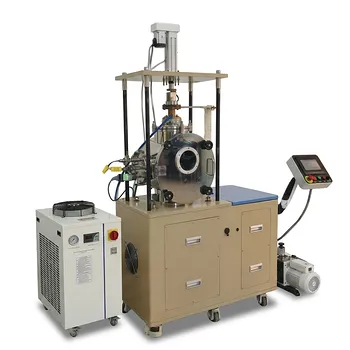
Compact Spark Plasma Sintering SPS Furnace 1200 C Max 100 MPa Pressure High Speed Sintering System for Material Research
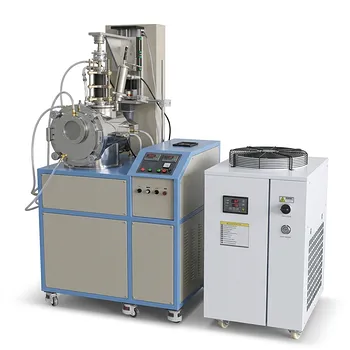
High Temperature Ultrafast Heating Pressing Furnace 2900C Max 100kgf Rapid Thermal Processing System
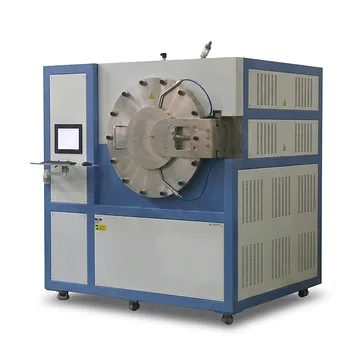
High Vacuum Pressure Chamber Furnace 800C 3.5 Bar Sintering System for Superconducting Materials
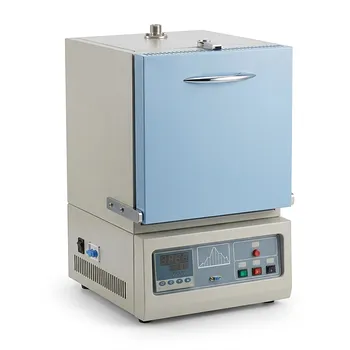
1750C Compact Muffle Furnace 1.7L Ultra High Temperature Laboratory Sintering System for Advanced Ceramics and Material Science Research
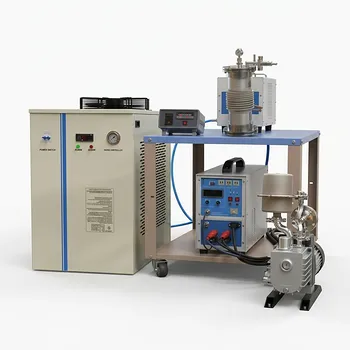
Induction Heating System with Temperature Control for High Temperature Vacuum Sintering and Melting
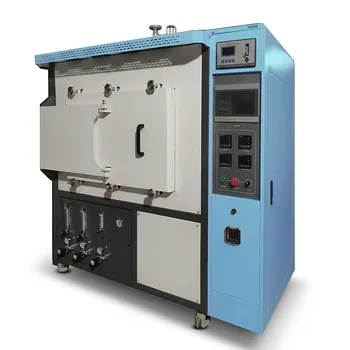
Roller Table Atmosphere Furnace 1500C High Temperature Battery Material Sintering System 112L Capacity
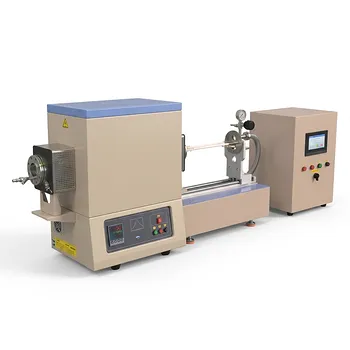
High Temperature Horizontal Electrical Assisted Sintering Furnace with 3KW Programmable Power Source for Advanced Ceramic Materials
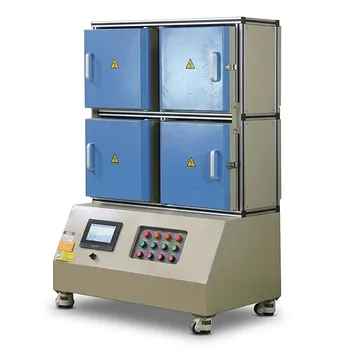
High Throughput Four Channel Box Furnace 1500C Max Independent Temperature Control Material Research Sintering System
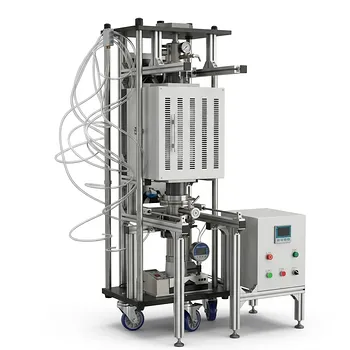
Industrial High Temperature Vacuum Hot Press Furnace and Heated Vacuum Press Machine for Material Science Sintering
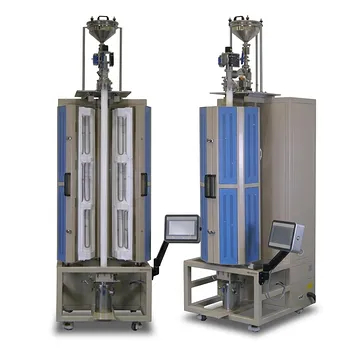
High Temperature Vertical Three Zone Powder Spheroidizing Furnace for Advanced Material Synthesis and Industrial Thermal Processing
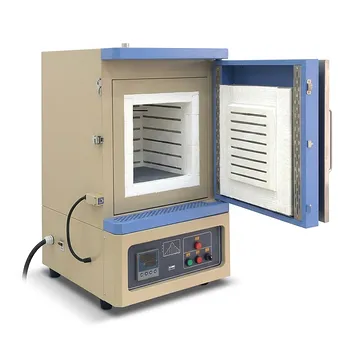
Five Side Heating Muffle Furnace High Purity Alumina Fiber 27L Chamber 1200C High Temperature Thermal Processing System for Sintering Annealing and Materials Research
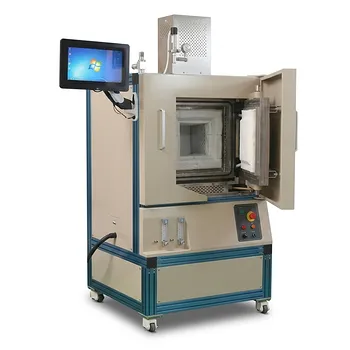
High Temperature Oxygen and Inert Atmosphere Controlled Furnace 8 Liter 1700C Sintering System for Advanced Materials RD

High Temperature 1700C Vertical Tube Furnace for Powder Spherification and Material Sintering
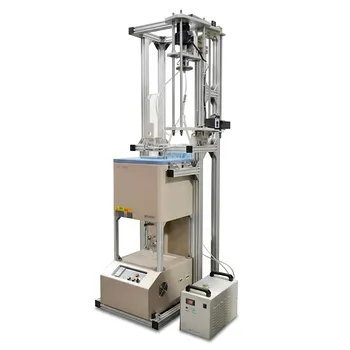
500C Vacuum Vertical Tube Furnace 84mm OD Sample Rotation Lifting System
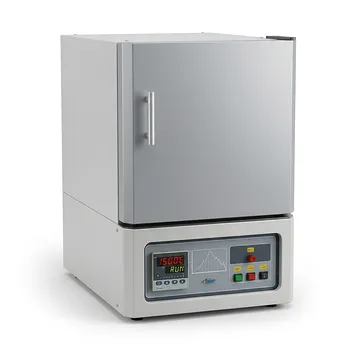
High Temperature 1500C Benchtop Muffle Furnace 3.6L Alumina Fiber Chamber Programmable Controller Sintering Annealing Carbonization Thermal Processing System
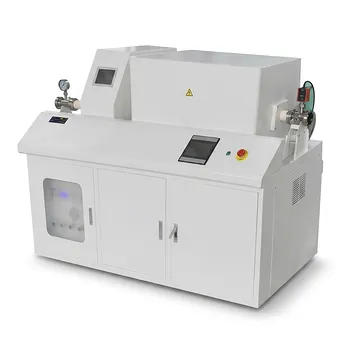
Chemical Vapor Deposition CVD System Slide PECVD Tube Furnace with Liquid Gasifier PECVD Machine
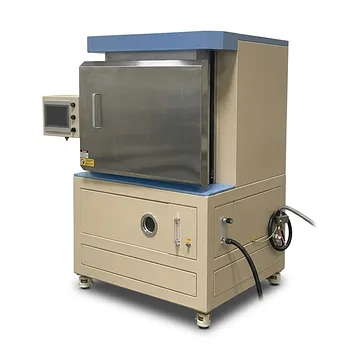
1650C High Temperature Atmosphere Controlled Box Furnace with 65L Chamber for Advanced Material Sintering and Industrial Heat Treatment
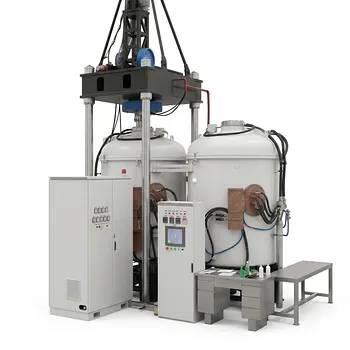
High Pressure 600T Vacuum Induction Hot Press Furnace for Advanced Material Heat Treatment and Sintering
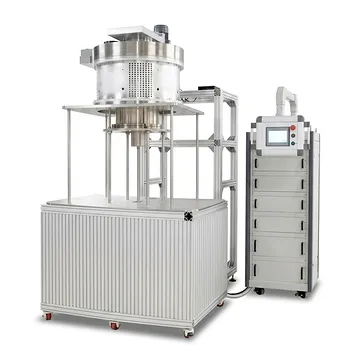
915MHz MPCVD Diamond Machine Microwave Plasma Chemical Vapor Deposition System Reactor