What are the primary considerations for choosing a ceramic boat as a sample carrier in high-temperature calcination experiments? Optimization Tips
Updated 3 months ago
Selecting a ceramic boat for high-temperature calcination is driven by the need for chemical isolation and thermal endurance. These carriers ensure that the sample—whether precursor powders, catalysts, or biomass—remains free from contamination while withstandng temperatures that often exceed 1000°C.
Ceramic boats are essential for maintaining the purity and structural integrity of samples during thermal processing. Their effectiveness relies on a balance between chemical inertness, resistance to thermal shock, and a geometry that facilitates uniform gas interaction.
Chemical Inertness and Sample Purity
Prevention of Side Reactions
The primary role of a ceramic boat, often made of high-purity alumina, is to act as a neutral vessel. It is specifically chosen because it does not react with sensitive compounds like platinum (Pt), sulfur-containing organic substances, or metal oxides.
Resistance to Corrosive Environments
In reduction or pyrolysis environments, the boat must resist corrosion from gases like hydrogen (H2) or sulfur vapors. This inertness prevents the introduction of impurities into the final product, ensuring that any observed activity or microstructure is a result of the sample itself, not container contamination.
Maintenance of Catalyst Integrity
For catalyst synthesis, the ceramic material provides a stable platform within the constant temperature zone of a furnace. It ensures that the heat treatment process only alters the precursor powders and does not result in the formation of unwanted composite materials or alloyed phases.
Thermal Stability and Mechanical Integrity
Refractoriness and High-Temperature Limits
Ceramic boats are engineered to withstand extreme heat, with some high-purity variants maintaining structural integrity well above 900°C to 1000°C. This high refractoriness prevents the boat from deforming, softening, or melting during prolonged calcination cycles.
Resistance to Thermal Cycling
A critical consideration is the material's ability to endure repeated thermal cycling. High-quality ceramics allow for multiple heating and cooling phases without cracking, which is vital for processes involving carbonization or iterative reduction steps.
Precision in Post-Process Analysis
Because these boats do not deform or lose mass at high temperatures, they allow for precise weighing and collection of the material after treatment. This is essential for calculating yields and performing accurate mass-balance assessments in biomass or biochar research.
Geometric Influence on Reaction Kinetics
Optimizing Gas Diffusion
The shallow trough design of a typical ceramic boat allows researchers to spread powder in a thin, uniform layer. This maximizes the surface area exposed to the atmosphere, ensuring that carrier gases or reducing agents can penetrate the sample layer consistently.
Control of Vapor Pressure
The opening area and spatial positioning of the boat within a tube furnace directly influence the local partial pressure of precursor vapors. This geometry is a critical process variable for controlling growth rates and film thickness in chemical vapor processes.
Removal of Reaction Byproducts
The open structure of ceramic boats facilitates the efficient removal of small gas molecules generated during pyrolysis or calcination. By allowing these byproducts to be swept away by the carrier gas, the boat helps maintain the desired reaction equilibrium.
Understanding the Trade-offs
Thermal Shock Sensitivity
While ceramics are highly heat-resistant, they are often sensitive to rapid temperature changes. Fast heating or cooling rates can induce internal stresses that lead to sudden cracking, necessitating controlled ramp-up and cool-down protocols.
Porosity vs. Cleanability
Lower-grade ceramics may possess higher porosity, which can lead to the absorption of precursor materials or byproducts. This makes the boats difficult to clean and increases the risk of cross-contamination between different experimental batches.
Material Fragility
Despite their thermal strength, ceramic boats are mechanically brittle. They are prone to chipping or breaking if handled roughly during the loading and unloading of the furnace, requiring specialized tools for placement.
How to Choose the Right Boat for Your Goal
Making the Right Choice for Your Project
To select the appropriate sample carrier, you must align the boat's material and design properties with your specific experimental conditions.
- If your primary focus is maximum sample purity: Select a high-purity alumina ceramic boat (99% or higher) to eliminate the risk of trace metal contamination.
- If your primary focus is uniform reduction or gas-solid reaction: Opt for a boat with a shallow, wide trough to ensure the gas can penetrate the entire thickness of the powder bed.
- If your primary focus is high-throughput thermal cycling: Prioritize boats specifically rated for thermal shock resistance to prevent cracking during rapid furnace transitions.
- If your primary focus is vapor deposition or film growth: Choose a boat with a specific opening area to precisely control the local concentration and diffusion of precursor vapors.
Proper ceramic boat selection transforms the sample carrier from a simple container into a controlled environment for precise material synthesis.
Summary Table:
| Selection Factor | Primary Consideration | Benefit for R&D |
|---|---|---|
| Material Purity | 99% Alumina or higher | Prevents side reactions and contamination |
| Thermal Stability | Refractoriness >1000°C | Maintains structural integrity during long cycles |
| Geometry | Shallow trough/Open area | Maximizes gas interaction and byproduct removal |
| Resistance | Thermal shock capacity | Prevents cracking during rapid heating/cooling |
| Porosity | Low-porosity ceramics | Ensures easy cleaning and prevents cross-batch contamination |
Elevate Your Material Research with THERMUNITS
Precision in high-temperature experiments starts with the right equipment. THERMUNITS is a leading manufacturer of high-performance laboratory solutions for material science and industrial R&D. We offer a comprehensive range of thermal processing equipment, including:
- Furnaces: Muffle, Vacuum, Atmosphere, Tube, Rotary, and Hot Press furnaces.
- Advanced Systems: CVD/PECVD systems, Vacuum Induction Melting (VIM) furnaces, and Dental Furnaces.
- Industrial & Components: Electric rotary kilns, Thermal Elements, and specialized heat treatment accessories.
Whether you are optimizing catalyst synthesis or conducting complex pyrolysis, our engineering expertise ensures you achieve uniform results and long-term durability.
Ready to upgrade your lab? Contact our technical experts today to find the perfect furnace or thermal solution for your specific application.
References
- Mou Zhang, Qingyi Lu. Platinum/Platinum Sulfide on Sulfur-Doped Carbon Nanosheets with Multiple Interfaces toward High Hydrogen Evolution Activity. DOI: 10.3390/molecules29194570
Mentioned Products
- 1750C Compact Muffle Furnace 1.7L Ultra High Temperature Laboratory Sintering System for Advanced Ceramics and Material Science Research
- 1800C Bench Top Muffle Furnace 18 Liters with Kanthal Super 1900 Heating Elements for High Purity Ceramic Sintering and Material Research
- Anti Corrosive Muffle Furnace with Sintered Corundum Chamber and 1050C Operating Range for Corrosive Material Calcination
- 900°C Max Rotary Tube Furnace with 8 Inch 310S Alloy Tube and Optional Multi Zone Heating for Industrial Material Calcination
- High Temperature Vertical Crucible Furnace with 22L Heating Chamber and 1200C Maximum Temperature
People Also Ask
- What role does a laboratory high-temperature muffle furnace play in the ash analysis phase of biomass co-firing research? [Guide]
- What is the function of a high-temp muffle furnace in Ni-V oxide synthesis? Optimize your material's performance.
- What role does a high-temperature muffle furnace play in the synthesis of Melem precursors? Precision Polymerization.
- What is the function of a high-temperature muffle furnace in phosphorus-modified zeolite catalyst preparation?
- What is the function of a muffle furnace in aluminoborosilicate glass prep? Stabilize Raw Materials for Superior Purity

Tech Team · ThermUnits
Last updated on Jun 02, 2026
Related Products
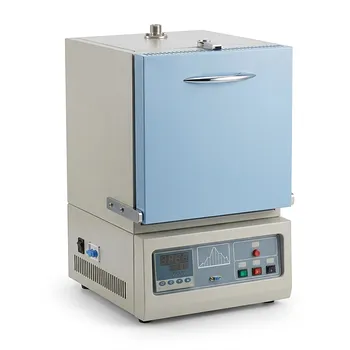
1750C Compact Muffle Furnace 1.7L Ultra High Temperature Laboratory Sintering System for Advanced Ceramics and Material Science Research
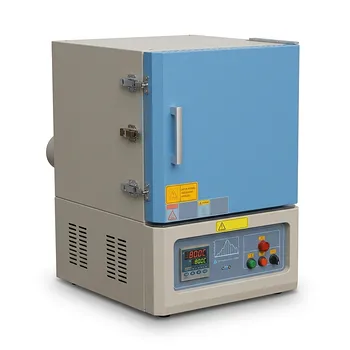
1800C Bench Top Muffle Furnace 18 Liters with Kanthal Super 1900 Heating Elements for High Purity Ceramic Sintering and Material Research
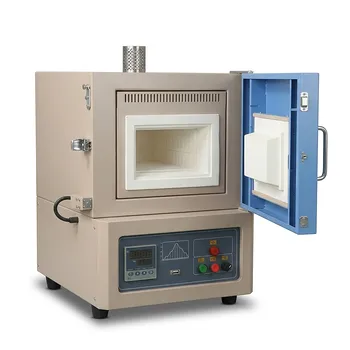
Anti Corrosive Muffle Furnace with Sintered Corundum Chamber and 1050C Operating Range for Corrosive Material Calcination
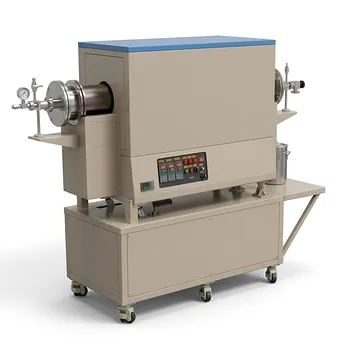
900°C Max Rotary Tube Furnace with 8 Inch 310S Alloy Tube and Optional Multi Zone Heating for Industrial Material Calcination
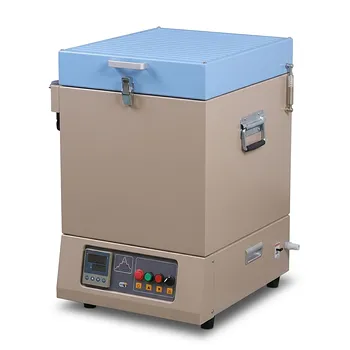
High Temperature Vertical Crucible Furnace with 22L Heating Chamber and 1200C Maximum Temperature

Compact High Temperature 1600C Tube Furnace with 50mm Alumina Tube and Vacuum Flanges for Material Sintering
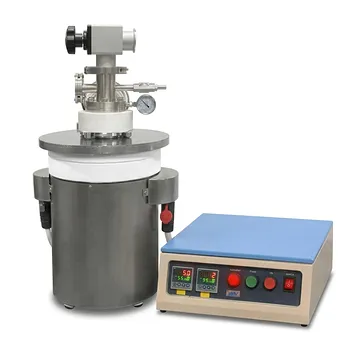
1100C High Temperature Vacuum Crucible Furnace with Quartz Chamber for Thermal Processing and Sintering
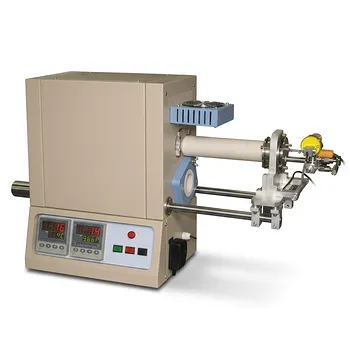
High Temperature Tube Furnace 1500C with Sliding Flanges and 50mm OD for Rapid Thermal Processing Fast Heating and Cooling

1100°C High Temperature Quartz Chamber Furnace 8 Inch OD with 7.6 Liter Capacity and Vacuum Atmosphere Capability
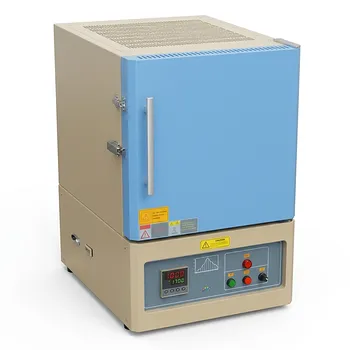
Large Bench Top 1700C High Temperature Muffle Furnace with 19L Chamber for Advanced Material Sintering and Annealing
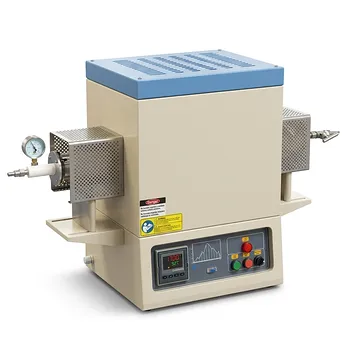
High Temperature Three Zone Tube Furnace 1700C with Alumina Tube and Water Cooled Flanges
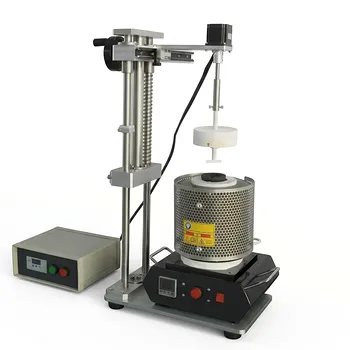
1100C Crucible Melting Furnace with Stirring Function for Glovebox and Air Sensitive Alloy Research
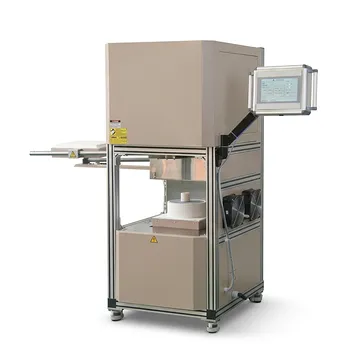
1600C High Temperature Automatic Bottom Loading Furnace for Thermal Shock Cycling and Material Fatigue Testing