What are the process advantages of using a semi-closed crucible? Maximize g-C3N4 Yield and Structural Quality.
Updated 3 months ago
The use of a semi-closed crucible in the synthesis of bulk g-C3N4 provides a controlled micro-environment that maximizes precursor utilization and structural quality. By maintaining a local vapor pressure and establishing a micro-positive pressure environment, this configuration prevents the premature escape of volatile intermediates, ensuring a higher yield and more robust polymerization of the dicyandiamide precursor.
The semi-closed crucible acts as a localized reaction chamber that optimizes the chemical kinetics of thermal polycondensation. By restricting the escape of gaseous intermediates, it facilitates the essential crosslinking of heptazine rings required to form a stable, high-quality graphitic carbon nitride structure.
Optimization of Vapor Dynamics and Reaction Yield
Establishing Micro-Positive Pressure
A semi-closed crucible with a lid creates a micro-positive pressure environment within a muffle furnace. This localized pressure effectively inhibits the rapid volatilization and sublimation of dicyandiamide and its intermediate products at high temperatures.
Extending Vapor Residence Time
The restricted headspace extends the residence time of precursor vapors in the reaction zone. This prolongs the interaction between gaseous intermediates, promoting more complete thermal polymerization and condensation.
Maximizing Material Yield
By limiting the escape of volatile precursors like melamine, the semi-closed system significantly reduces mass loss. This leads to a substantially higher final yield of bulk graphitic carbon nitride compared to open-crucible methods.
Enhancing Structural Integrity and Performance
Promoting Heptazine Ring Growth
The maintenance of local vapor pressure is critical for the full growth and crosslinking of heptazine rings. This structural development is the foundation of the g-C3N4 framework, ensuring the material achieves its intended chemical properties.
Improving Crystalline Quality
The semi-closed environment facilitates a more controlled polymerization process, which enhances the crystalline quality of the final product. This results in a better-developed layered structure and more consistent macroscopic morphology.
Ensuring Uniform Heating and Color
The presence of a lid reduces localized heat loss and ensures uniform thermal distribution within the material. This thermal stability leads to bulk g-C3N4 with consistent color and stable performance across the entire batch.
Understanding the Trade-offs
Risk of Pressure Build-up
While a semi-closed system is beneficial, a completely sealed crucible could lead to dangerous internal pressure build-up during the release of ammonia and other gases. The "semi-closed" nature is intentional, allowing for a controlled release of byproduct gases while retaining critical intermediates.
Selection of Crucible Materials
The choice of crucible material (e.g., alumina, ceramic, or quartz) is vital because it must remain chemically inert at 550°C. Lower-quality materials may react with the precursor, introducing impurities that can degrade the electronic and catalytic properties of the g-C3N4.
How to Apply This to Your Synthesis
When preparing bulk g-C3N4 from dicyandiamide, your choice of containment determines the efficiency and quality of your results.
- If your primary focus is maximum yield: Always utilize a ceramic or alumina crucible with a well-fitting lid to minimize precursor sublimation and ensure the highest possible conversion rate.
- If your primary focus is structural purity: Focus on maintaining a stable temperature of approximately 550°C within the semi-closed crucible to allow for the complete growth of the heptazine ring systems.
- If your primary focus is material consistency: Ensure the crucible size is appropriate for the sample volume to maintain a consistent local vapor atmosphere across the entire precursor mass.
The strategic use of a semi-closed crucible transforms a simple heating process into a controlled chemical synthesis, ensuring both the quantity and the quality of your graphitic carbon nitride.
Summary Table:
| Feature | Process Advantage | Impact on g-C3N4 Quality |
|---|---|---|
| Micro-Positive Pressure | Inhibits precursor sublimation | Increases material yield and prevents mass loss |
| Extended Residence Time | Prolongs vapor interaction | Promotes complete polymerization and crosslinking |
| Thermal Distribution | Reduces localized heat loss | Ensures uniform heating, consistent color, and stability |
| Semi-Closed Design | Allows controlled byproduct release | Prevents dangerous pressure build-up during synthesis |
Achieve Precise Thermal Synthesis with THERMUNITS
As a global leader in high-temperature laboratory equipment for material science, THERMUNITS understands that success in g-C3N4 synthesis depends on precise environmental control. We offer a comprehensive suite of thermal processing solutions, including Muffle, Vacuum, Atmosphere, Tube, and Rotary furnaces, as well as advanced CVD/PECVD systems and Vacuum Induction Melting (VIM) equipment.
Our furnaces are engineered to provide the stable, uniform heating required for high-quality chemical polycondensation and industrial R&D. Ready to upgrade your lab's capabilities? Contact our technical team today to discuss how our custom heating solutions can enhance your material research and production efficiency.
References
- Junwu Zhu, Mengxia Ji. Graphite Carbon Nitride Accelerating Interfacial Electron Transfer of Defect-Rich TiO2 for N2 Photofixation. DOI: 10.3390/catal15010019
Mentioned Products
- Vertical Crucible Furnace 1000C High Temperature Laboratory Equipment 4.7 Inch Diameter Chamber SS316 Anti Corrosive Enclosure
- Compact Crucible Melting Furnace 1100C Programmable Temperature Controller Metal Sintering Equipment
- High Temperature Vertical Crucible Furnace with 22L Heating Chamber and 1200C Maximum Temperature
- 1200C Sliding Internal Crucible Tube Furnace for Controlled Atmosphere Thin Film Deposition and Material Sublimation Research
- 600°C Vertical Crucible Furnace with SS316 Alloy Reactor and 6 Port Vacuum Flange
People Also Ask
- What is the function of a high-temperature laboratory furnace in the synthesis of Crystalline Carbon Nitride (PTI)?
- How Lab Furnaces Simulate Industrial Conditions for CPCM Stability: Optimize Your Thermal Cycling R&D
- Why is a low initial heating rate of 1 °C/min required for Rh–WNO precursors? Ensuring Structural Integrity & Dispersion
- Why is a laboratory furnace with ultra-high heating rate capabilities necessary for simulating coal injection processes?
- What is the objective of performing long-term annealing at 653 K on quenched PbTe-Ag2Te? Drive Ostwald Ripening.

Tech Team · ThermUnits
Last updated on Jun 02, 2026
Related Products
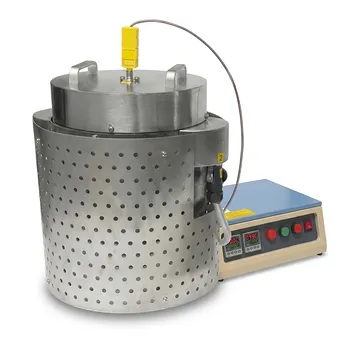
Vertical Crucible Furnace 1000C High Temperature Laboratory Equipment 4.7 Inch Diameter Chamber SS316 Anti Corrosive Enclosure
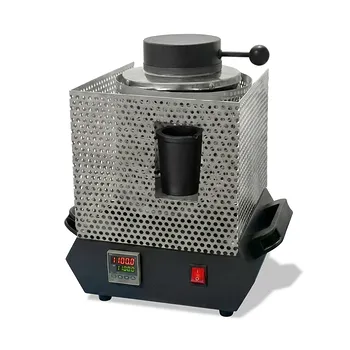
Compact Crucible Melting Furnace 1100C Programmable Temperature Controller Metal Sintering Equipment
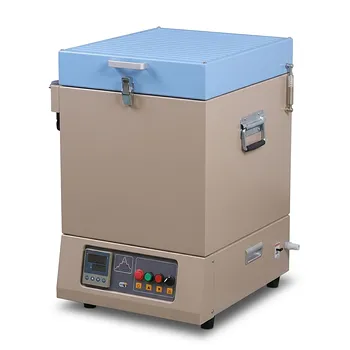
High Temperature Vertical Crucible Furnace with 22L Heating Chamber and 1200C Maximum Temperature
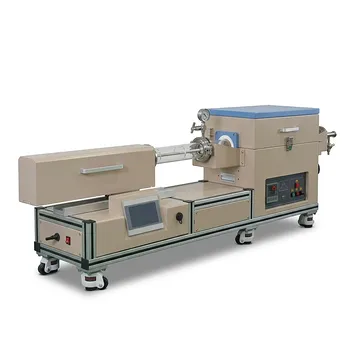
1200C Sliding Internal Crucible Tube Furnace for Controlled Atmosphere Thin Film Deposition and Material Sublimation Research
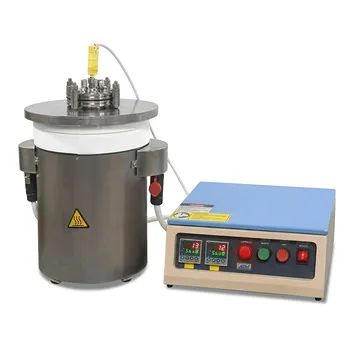
600°C Vertical Crucible Furnace with SS316 Alloy Reactor and 6 Port Vacuum Flange
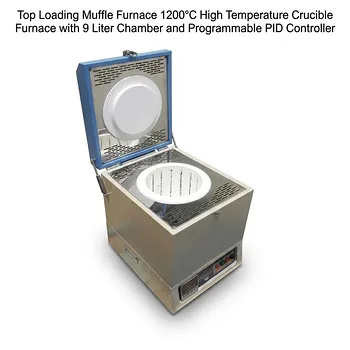
Top Loading Muffle Furnace 1200°C High Temperature Crucible Furnace with 9 Liter Chamber and Programmable PID Controller
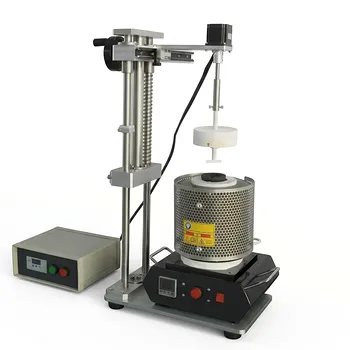
1100C Crucible Melting Furnace with Stirring Function for Glovebox and Air Sensitive Alloy Research
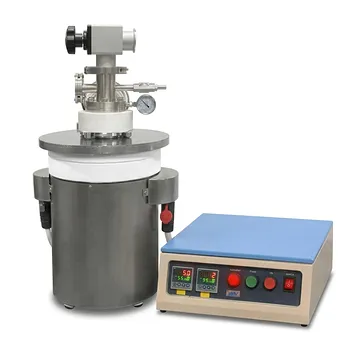
1100C High Temperature Vacuum Crucible Furnace with Quartz Chamber for Thermal Processing and Sintering