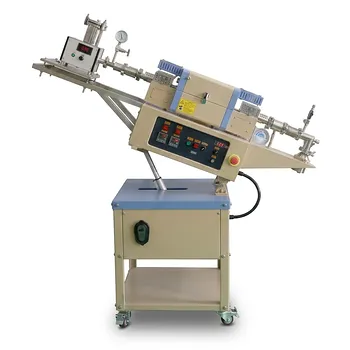
What are the structural advantages of stationary heating tube designs in rotary calcination furnaces? Boost Durability
Updated 3 months ago
Stationary heating tube designs revolutionize rotary calcination by isolating critical components from the most destructive elements of the furnace environment. By positioning heating tubes in a lower-temperature zone, this architecture prevents direct contact with corrosive gases and abrasive particles. This structural shift effectively eliminates the primary causes of equipment failure, such as creep deformation and thermomechanical fatigue.
Moving from rotating to stationary heating tubes fundamentally changes the furnace's durability profile. By shielding heating elements from thermal and chemical stress, operators can achieve significantly longer service lives and reduced maintenance intervals.
Combatting Material Degradation
Preventing Creep and Fatigue
Traditional rotating tubes must support their own weight and the weight of the material while enduring intense heat. This leads to creep deformation, where the metal slowly stretches and weakens over time.
Stationary designs remove these rotational mechanical stresses. This prevents thermomechanical fatigue, a major cause of structural failure in traditional furnace models that undergo constant physical cycling.
Minimizing Weld Point Fractures
Weld points are historically the weakest parts of a rotating furnace tube due to the combination of heat and motion. By keeping the tubes stationary and shielded, the risk of fractures at weld points is significantly reduced.
Strategic Component Placement
Protection from Corrosive Exposure
Stationary tubes are housed in a lower-temperature zone away from the active reaction chamber. This prevents direct contact with high-temperature corrosive gases and catalyst particles that can eat away at the tube material.
Thermal Zonal Optimization
By decoupling the heating tubes from the material tumbling zone, the furnace can maintain a stable heat source. This architecture ensures that the heating elements are not subjected to the harsh chemical environment required for the material reaction.
Enhancing Processing Uniformity
While the tubes remain stationary, the furnace still utilizes the dynamic mixing of a rotary system. This ensures every particle is uniformly exposed to the heat source, avoiding temperature gradients common in static stacking.
Understanding the Trade-offs
Heat Transfer Dynamics
Stationary tubes may require a more robust heat transfer interface to reach the rotating material vessel. This can sometimes result in a different thermal response time compared to designs where the heat source is in direct contact with the reaction atmosphere.
Structural Complexity
While the tubes themselves are more durable, the furnace housing must be designed to maintain distinct temperature zones. This requires high-quality insulation and precision engineering to ensure the stationary zone remains protected while the processing zone reaches target temperatures.
Making the Right Choice for Your Goal
Selecting the correct furnace architecture depends on your specific operational priorities and the nature of the materials being processed.
- If your primary focus is Equipment Longevity: Prioritize stationary tube designs to minimize structural fatigue and reduce the frequency of expensive component replacements.
- If your primary focus is Processing Harsh Chemicals: Choose the stationary model to protect your heating elements from the corrosive byproducts of high-temperature reactions.
- If your primary focus is Material Uniformity: Ensure that the furnace integrates dynamic rotation for the material bed, regardless of whether the heating tubes are stationary or rotating.
The shift toward stationary heating tube architecture represents a move toward industrial equipment designed for long-term mechanical stability and chemical resistance.
Summary Table:
| Feature | Traditional Rotating Tubes | Stationary Tube Designs |
|---|---|---|
| Mechanical Stress | High (supports self-weight + rotation) | Minimal (decoupled from rotation) |
| Primary Failure Risk | Creep deformation & weld fractures | Low thermomechanical fatigue |
| Corrosion Exposure | Direct contact with reactive gases | Shielded in lower-temperature zones |
| Maintenance Needs | Frequent due to structural wear | Reduced intervals & longer service life |
| Heat Stability | Variable due to physical cycling | Stable and optimized thermal zones |
Maximize Your Lab's Operational Excellence with THERMUNITS
Choosing the right furnace architecture is critical for long-term R&D success. THERMUNITS is a leading manufacturer of high-temperature laboratory equipment, providing precision-engineered solutions for material science and industrial research.
Whether you need the advanced durability of our Rotary furnaces with stationary heating designs, or require high-performance Muffle, Vacuum, Atmosphere, Tube, or Hot Press furnaces, we have the expertise to support your goals. Our product range also includes CVD/PECVD systems, Dental Furnaces, Electric Rotary Kilns, and Vacuum Induction Melting (VIM) furnaces tailored to harsh chemical environments.
Don't let equipment fatigue slow down your innovation. Contact our technical specialists today to discuss your specific heat treatment requirements and discover how our thermal processing solutions can enhance your efficiency.
References
- Tiezhuang Zhou, Wenchun Jiang. Impact of Structure Parameters on the Critical Performance of a Novel Calciner—A DEM-Based Study. DOI: 10.2478/pjct-2024-0036
Mentioned Products
- 900°C Max Rotary Tube Furnace with 8 Inch 310S Alloy Tube and Optional Multi Zone Heating for Industrial Material Calcination
- Dual Zone Rotary Tube Furnace for Uniform Powder Calcination 1000C 2 Inch Quartz Tube
- 4 Inch Two Zone Rotary CVD Tube Furnace for High Temperature Battery Material Synthesis and Advanced Material Calcination
- Mini Rotary Tubular Furnaces for Precision Powder Heat Treatment and Thermogravimetric Analysis
- High Temperature Tilting Rotary Tube Furnace with Integrated Mass Flow Control and Multi Zone Heating
People Also Ask
- How does a rotary tube furnace improve the processing of granular materials? Enhance Uniformity and Reaction Kinetics
- Why use a rotary tube furnace for FACS carbonization? Ensure uniform morphology and prevent sphere agglomeration.
- Why is the precise optimization of residence time essential in the catalyst calcination process? Maximize Your Yields.
- In what ways do rotary tube furnaces enhance chemical and specialty mineral processing? Drive Precision and Uniformity.
- What parameters must operators control to maintain product quality in a rotary furnace? Master Your Heat Treatment.

Tech Team · ThermUnits
Last updated on Jun 03, 2026
Related Products
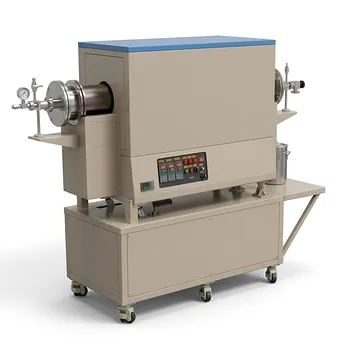
900°C Max Rotary Tube Furnace with 8 Inch 310S Alloy Tube and Optional Multi Zone Heating for Industrial Material Calcination
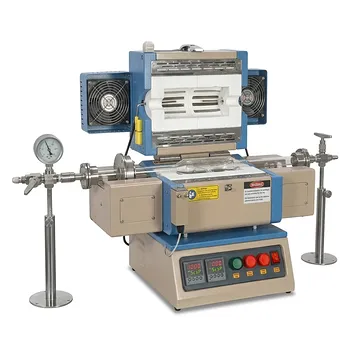
Dual Zone Rotary Tube Furnace for Uniform Powder Calcination 1000C 2 Inch Quartz Tube
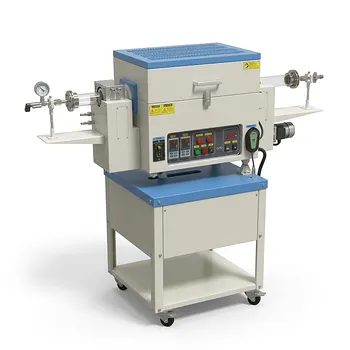
4 Inch Two Zone Rotary CVD Tube Furnace for High Temperature Battery Material Synthesis and Advanced Material Calcination
Mini Rotary Tubular Furnaces for Precision Powder Heat Treatment and Thermogravimetric Analysis
High Temperature Tilting Rotary Tube Furnace with Integrated Mass Flow Control and Multi Zone Heating
Laboratory Tilting Rotary Tubular Furnaces for Material Science and Industrial Heat Treatment
Continuous Feeding Rotary Tube Furnace for Industrial Powder Heat Treatment and Material Research
Electric Rotary Kiln Continuous Working Small Rotary Furnace Heating Pyrolysis Plant
Three Zone Rotary Tube Furnace for High Temperature Powder Processing and Material Research
Three Temperature Zone Rotating Tube Furnace for Material Sintering and Controlled Atmospheric Heat Treatment
High Temperature 1700C Dual Zone Rotary Tube Furnace with 60mm Alumina Tube and Precision Rotation Control
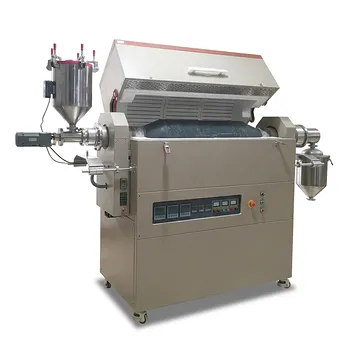
High Temperature Tilting Rotary Tubular Furnace for Continuous Powder Thermal Processing and Controlled Atmosphere Sintering
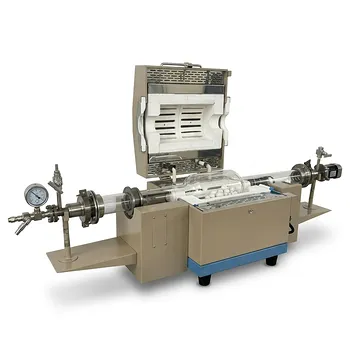
High Temperature Rotary Tube Furnace with Integrated Ball Milling and Gas Flow Function for Powder Nitriding
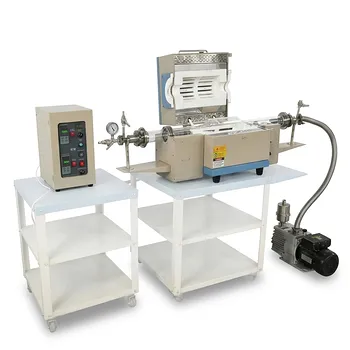
Two Zone Rotary Tube Furnace for Powder CVD Coating and Core Shell Material Synthesis 1100C
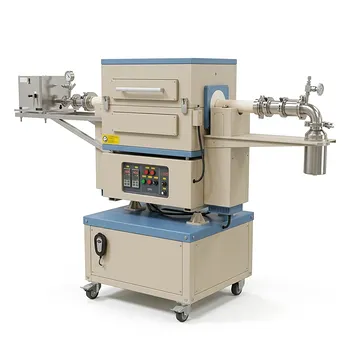
1500C Max Dual Zone Rotary Tube Furnace with 60 mm OD Alumina Tube for High Temperature Material Synthesis
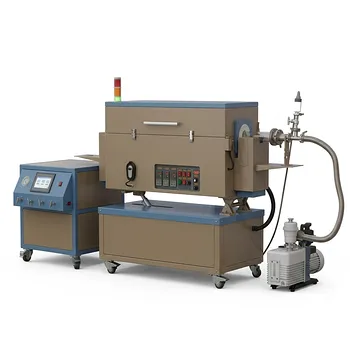
5 Inch Three Zone Rotary Tube Furnace with Integrated Gas Delivery System and 1200C Capability for Advanced Material CVD Processing
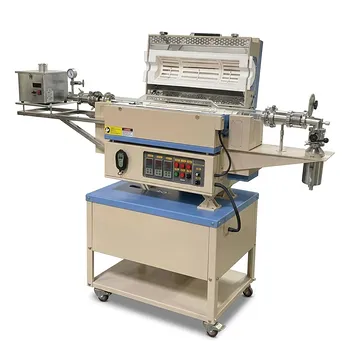
5 Inch Rotary Tube Furnace with Automatic Feeding and Receiving System 1200C Three Zone CVD Powder Processing
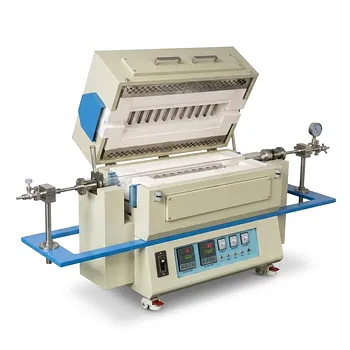
High Temperature Dual Zone Rotating Tube Furnace 1500C Silicon Carbide Heating for Advanced Material Synthesis
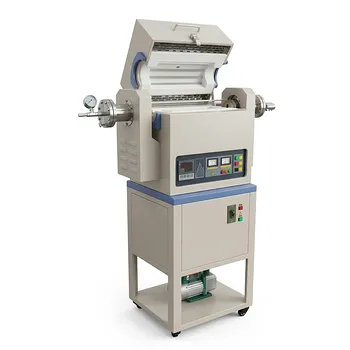
High Temperature Rotary Tilt Tubular Furnaces for Advanced Powder Sintering and Material Processing