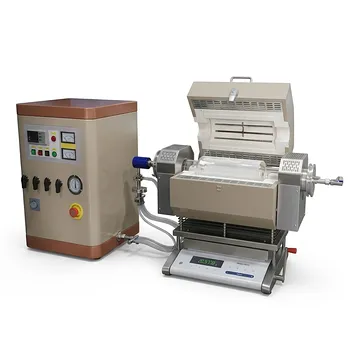
What are the technical advantages of using a tube furnace for biomass-derived carbon? Precise Control & Pore Engineering
Updated 3 months ago
A tube furnace equipped with a programmable control system provides the precise kinetic regulation and atmosphere isolation required to engineer biomass-derived carbon. By strictly managing heating rates (such as 5°C/min) and synchronized gas switching, these systems allow for the steady development of pore structures while preventing the structural collapse or premature pore closure that occurs with uncontrolled heating.
Core Takeaway: The technical advantage of a programmable tube furnace lies in its ability to synchronize thermal kinetics with chemical activation, ensuring the production of carbon materials with ultra-high specific surface areas and precise pore size distributions.
Precise Kinetic Regulation of Carbonization
Mastering Heating Rates for Pore Development
A programmable control system allows for the execution of specific heating rates, which is critical for regulating the kinetics of the carbonization reaction. A stable, controlled heating curve facilitates the steady development of pores within the biomass precursor.
Preventing Structural Collapse
Rapid, unmanaged heating often leads to the closure of delicate pore structures or the melting of the carbon skeleton. By maintaining a slow and steady temperature ramp, the furnace ensures the integrity of the internal architecture, resulting in self-doped porous materials.
Ensuring Uniform Multi-Stage Processing
Advanced furnaces enable multi-stage temperature control, allowing for a seamless transition between pre-carbonization (e.g., 500°C) and high-temperature activation (850°C - 950°C). This ensures that dehydration, degassing, and carbon enrichment occur in a logical, programmed sequence.
Atmospheric Control and Chemical Activation
Maintaining Oxygen-Free Environments
The sealed configuration of a tube furnace is essential for maintaining a strictly controlled inert atmosphere, typically using high-purity nitrogen. This prevents the biomass from oxidizing or burning, allowing organic components like proteins and polysaccharides to transform into a carbon skeleton under anaerobic conditions.
Dynamic Gas Switching for Physical Etching
Programmable systems allow for the automated switching between gases, such as transitioning from Nitrogen (N2) to Carbon Dioxide (CO2). In the physical activation stage, the CO2 acts as an agent that etches the carbon skeleton through controlled redox reactions, significantly increasing micropore and mesopore volumes.
Facilitating Intense Chemical Reactions
At high temperatures, the furnace provides the stable environment necessary for activation agents like potassium bicarbonate to react fully with the carbon precursor. This high-temperature calcination effectively removes volatiles and facilitates intense pore formation, which is vital for optimizing energy storage capabilities.
Understanding the Trade-offs and Limitations
Equipment Thermal Stress
While alumina tube furnaces offer superior thermal stability, they are susceptible to thermal shock if the programmable cooling rates are set too aggressively. Maintaining the structural integrity of the tube requires a balance between processing speed and material limits.
Throughput vs. Precision
Tube furnaces are optimized for high-precision batch processing rather than continuous high-volume production. While they provide unmatched control over pore distribution, they may present a bottleneck in industrial workflows compared to rotary kilns or fluidized bed reactors.
Complexity of Programming
The effectiveness of the system is entirely dependent on the accuracy of the programmed curve. Incorrectly timed gas switching or "soaking" (holding) times can lead to over-activation, where the carbon skeleton is consumed, reducing the overall yield.
How to Apply This to Your Carbon Synthesis
Choosing the Right Strategy for Your Goal
- If your primary focus is maximizing specific surface area: Program a slow heating rate (under 5°C/min) coupled with a high-temperature CO2 etching phase at 950°C.
- If your primary focus is preserving doping elements (N, S, O): Utilize a lower-temperature carbonization program (600°C - 700°C) under a constant nitrogen flow to prevent the volatilization of functional groups.
- If your primary focus is structural stability for battery anodes: Implement a multi-stage program with long holding times at 800°C to ensure the complete removal of volatiles and the formation of a robust carbon skeleton.
By leveraging the programmable precision of a tube furnace, researchers can transform raw biomass into a highly engineered material with properties tailored for specific electrochemical or filtration applications.
Summary Table:
| Feature | Technical Advantage | Resulting Benefit |
|---|---|---|
| Programmable Control | Precise kinetic regulation and multi-stage ramp/soak | Prevents structural collapse; ensures uniform carbonization |
| Atmosphere Isolation | Sealed anaerobic environment with high-purity gas flow | Prevents oxidation; allows organic transformation into carbon |
| Dynamic Gas Switching | Automated transition between gases (e.g., N2 to CO2) | Enables physical etching for higher specific surface area |
| Thermal Precision | Stable environments for chemical activation agents | Optimizes pore size distribution for energy storage applications |
Elevate Your Material Research with THERMUNITS
Are you looking to achieve ultra-high specific surface areas and precise pore distributions in your carbon materials? THERMUNITS is a leading manufacturer of high-performance thermal processing solutions designed for material science and industrial R&D.
Our advanced Tube Furnaces, Vacuum Systems, and CVD/PECVD equipment provide the precise temperature control and atmospheric integrity required for complex biomass activation and heat treatment. Whether you need standard muffle furnaces or custom-engineered rotary kilns and hot press systems, our technology ensures reproducible results for your most demanding projects.
Ready to optimize your thermal processing? Contact our expert engineering team today to find the perfect furnace solution for your laboratory or industrial facility.
References
- Yuhong Zhao, Jianmin Tang. Zanthoxylum bungeanum Waste-Derived High-Nitrogen Self-Doped Porous Carbons as Efficient Adsorbents for Methylene Blue. DOI: 10.3390/molecules29081809
Mentioned Products
- 1250C Compact Split Tube Furnace with 8 Inch Heating Zone and Programmable Controller
- 1100C Tube Furnace with Vacuum Flange and Programmable Temperature Controller for Material Science and Industrial Heat Treatment
- Automated 1200 C Tube Furnace for AI Material Research with 6 Inch OD and Sliding Flange
- High Temperature Hybrid Muffle and Tube Furnace 1700C Programmable PID Controlled Box System with Vacuum Flange and Alumina Processing Tube
- 5 Inch Three Zone Rotary Tube Furnace with Integrated Gas Delivery System and 1200C Capability for Advanced Material CVD Processing
People Also Ask
- What is the primary engineering purpose for using a customized ventilation hood when operating a split tube furnace? RCF Safety
- How does a split tube furnace facilitate debinding of ceramic green bodies? Master Precise Thermal & Atmosphere Control
- What are the advantages of using a split tube furnace for heating a catalytic reactor? Boost Efficiency and Precision
- How does a split tube furnace contribute to the thermal stabilization of Clignin@H-TiO2? Achieve Structural Precision
- What are the specific advantages and use cases for a split tube furnace? Optimize Lab Efficiency & Material Research

Tech Team · ThermUnits
Last updated on Jun 03, 2026
Related Products
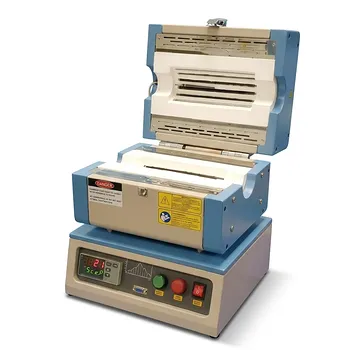
1250C Compact Split Tube Furnace with 8 Inch Heating Zone and Programmable Controller

1100C Tube Furnace with Vacuum Flange and Programmable Temperature Controller for Material Science and Industrial Heat Treatment
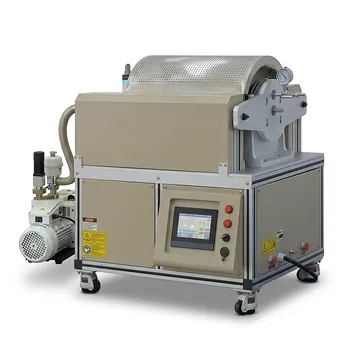
Automated 1200 C Tube Furnace for AI Material Research with 6 Inch OD and Sliding Flange
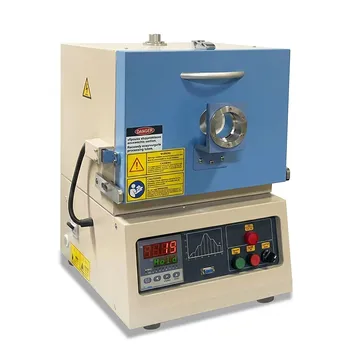
High Temperature Hybrid Muffle and Tube Furnace 1700C Programmable PID Controlled Box System with Vacuum Flange and Alumina Processing Tube
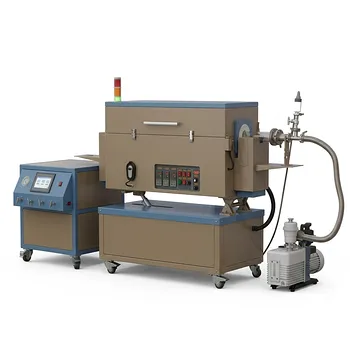
5 Inch Three Zone Rotary Tube Furnace with Integrated Gas Delivery System and 1200C Capability for Advanced Material CVD Processing

High Temperature 1700C Vertical Tube Furnace for Powder Spherification and Material Sintering
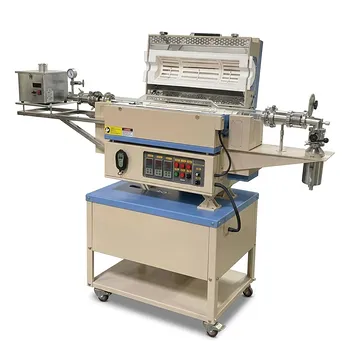
5 Inch Rotary Tube Furnace with Automatic Feeding and Receiving System 1200C Three Zone CVD Powder Processing
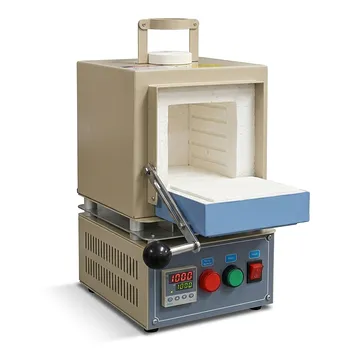
Compact 1000C Muffle Furnace with Programmable Controller and 2 Inch Top Port for Vacuum and Atmosphere Material Research
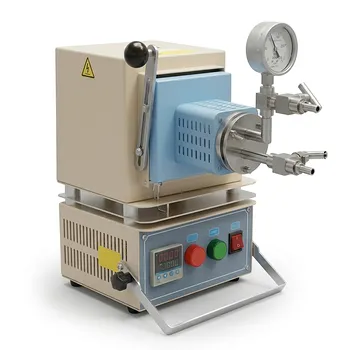
Compact Hybrid Muffle and Tube Furnace for 1000C Controlled Atmosphere Laboratory Material Sintering

High Temperature Automated 5 Inch Tube Furnace for Autonomous Material Research and Advanced Laboratory R&D
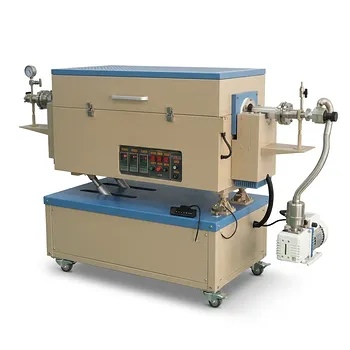
Three Zone Rotary Tube Furnace for High Temperature Powder Processing and Material Research
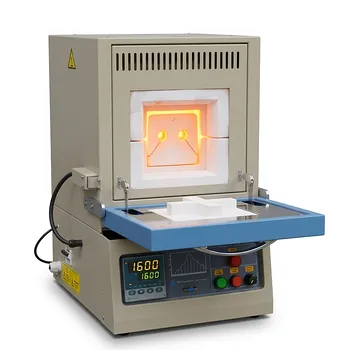
High Temperature Compact Muffle Furnace 1700 C with 30 Segment Programmable Controller and 1.7L Cubic Chamber
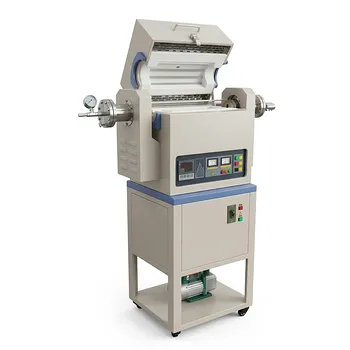
High Temperature Rotary Tilt Tubular Furnaces for Advanced Powder Sintering and Material Processing
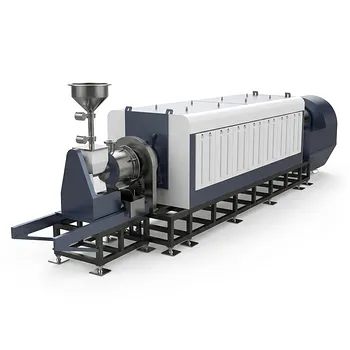
Electric Rotary Kiln Small Rotary Furnace Biomass Pyrolysis Plant
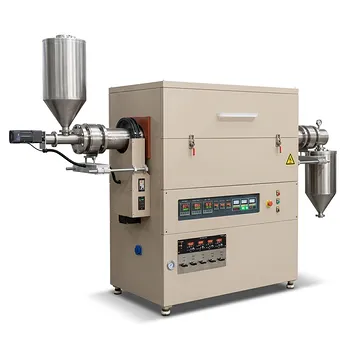
High Temperature Tilting Rotary Tube Furnace with Integrated Mass Flow Control and Multi Zone Heating
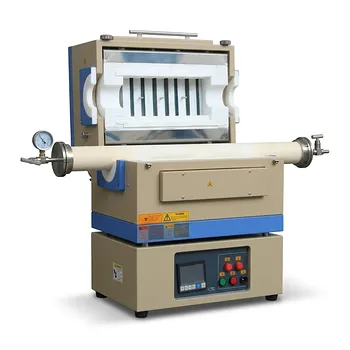
1500C Eight Zone Split Tube Furnace for Thermal Gradient Processing and Advanced Material Research
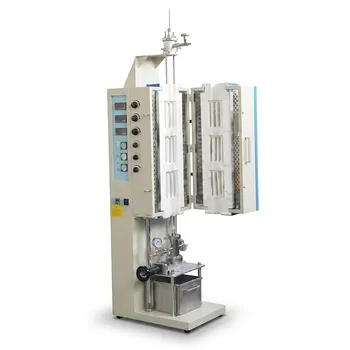
High Temperature Dual Zone Tube Furnace for Material Science Research and Professional Thermal Processing
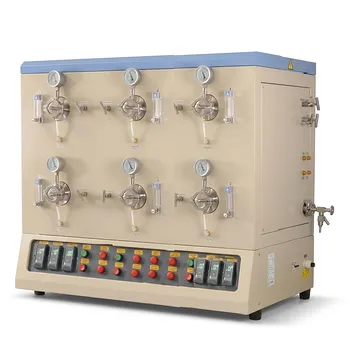
1200C High Throughput Multi Channel Tube Furnace with 50mm Quartz Tubes for Annealing and Material Phase Diagram Research

Compact High Temperature 1600C Tube Furnace with 50mm Alumina Tube and Vacuum Flanges for Material Sintering