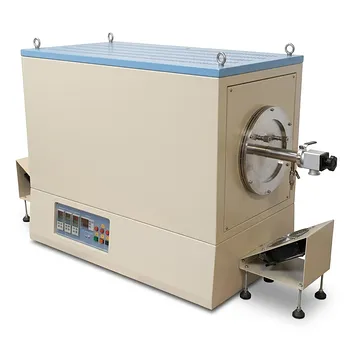
How does a program-controlled tube furnace contribute to the production of biochar from emergent aquatic plants? Guide
Updated 3 months ago
A program-controlled tube furnace acts as the precision reactor for biochar synthesis. By providing a strictly anaerobic environment and precise thermal regulation, the furnace facilitates the devolatilization, carbonization, and aromatization of plant organic matter. This controlled process transforms raw emergent aquatic plants into a stable carbon framework characterized by high porosity and specific surface functional groups.
The tube furnace is the critical enabling technology for biochar production, ensuring that biomass undergoes thermal degradation without combustion. By masterfully controlling the atmosphere and heating profile, it allows researchers to dictate the final chemical and structural properties of the biochar.
The Necessity of an Anaerobic Environment
Excluding Oxygen for Pyrolysis
The primary role of the tube furnace is to maintain a strictly anaerobic environment using high-purity nitrogen (N2) or other inert gases. This exclusion of oxygen is vital because it prevents the biomass from combusting into ash, ensuring instead that it undergoes pyrolysis.
Facilitating Specific Gas Reactions
The furnace’s gas circulation system allows for the introduction of specific flows like CO2 to induce physical activation. This process triggers gas-solid reactions that increase polar functional groups, such as hydroxyl (-OH) and carboxyl (-COOH) groups, which are essential for the biochar's chemical reactivity.
Precision Control of Thermochemical Phases
Regulating the Heating Ramp
Program-controlled settings allow for exact heating rates, typically around 5°C to 10°C per minute. This slow ramp ensures the uniform degradation of complex plant components like hemicellulose, cellulose, and lignin, preventing structural collapse and maximizing solid biochar yield.
Managing Peak Temperature and Residence Time
The furnace maintains constant temperatures—often between 300°C and 750°C—for specific residence times. These parameters are the primary "tuning knobs" for biochar quality, determining the degree of devolatilization and the final stability of the carbon framework.
Enabling Secondary Chemical Treatments
For advanced applications, the furnace conducts secondary thermal treatments following chemical pre-treatment (e.g., with phosphoric acid). This step, often held at specific intervals like 450°C for 120 minutes, promotes the reorganization of carbon into graphitic or amorphous frameworks.
Structural and Chemical Customization
Developing Porous Architectures
As the furnace drives off volatile matter, it leaves behind a raw biochar framework characterized by abundant pores. This high porosity and large specific surface area are critical for the biochar’s performance in environmental remediation or water-holding tasks.
Preserving Functional Groups
By precisely controlling the sintering duration and temperature, the furnace preserves or creates surface functional groups. These groups act as active sites for chemical bonding, allowing the biochar to interact effectively with pollutants or soil nutrients.
Understanding the Trade-offs
Equipment Throughput vs. Precision
While a tube furnace offers unparalleled precision for research-grade biochar, it is typically a batch process with limited volume. This makes it ideal for optimization and high-value material production but less efficient for large-scale industrial waste processing.
Energy Consumption and Cooling
Maintaining high temperatures for several hours requires significant energy input, and the cooling phase can be lengthy to prevent oxidation of the hot biochar. Rapid cooling is often avoided to maintain the structural integrity of the delicate pore network.
Applying This Technology to Your Project
Making the Right Choice for Your Goal
- If your primary focus is Maximizing Surface Area: Utilize a program-controlled ramp with a CO2 atmosphere to trigger physical activation and enhance pore development.
- If your primary focus is High Solid Yield: Opt for lower peak temperatures (around 400°C) and slower heating rates to ensure thorough carbonization without excessive mass loss.
- If your primary focus is Chemical Reactivity: Focus on secondary thermal treatments and specific residence times to optimize the density of hydroxyl and carboxyl functional groups.
The program-controlled tube furnace is the indispensable tool that bridges the gap between raw aquatic biomass and high-performance, engineered biochar.
Summary Table:
| Process Phase | Furnace Function | Key Outcome |
|---|---|---|
| Atmosphere Control | Maintains strictly anaerobic (N2/CO2) environment | Prevents combustion; enables physical activation |
| Heating Ramp | Precise 5°C - 10°C/min temperature increase | Prevents structural collapse; maximizes solid yield |
| Residence Time | Constant temperature hold (300°C - 750°C) | Determines carbon stability and devolatilization |
| Structural Tuning | Drives off volatiles & preserves functional groups | Creates high porosity and reactive surface sites |
Elevate Your Biochar Research with THERMUNITS Precision
Are you looking to achieve superior carbon stability and precise pore architecture in your material synthesis? THERMUNITS is a leading manufacturer of high-temperature laboratory equipment specifically designed for material science and industrial R&D.
Our program-controlled thermal solutions provide the exact atmosphere and temperature regulation required for complex biomass pyrolysis. Whether you need Tube Furnaces for biochar synthesis, Muffle, Vacuum, or Atmosphere Furnaces for advanced heat treatment, or specialized systems like CVD/PECVD and Vacuum Induction Melting (VIM), we deliver the reliability your research demands.
Why choose THERMUNITS?
- Precision Control: Master your heating ramps and residence times.
- Versatile Solutions: From Rotary and Hot Press furnaces to Dental and Electric Rotary Kilns.
- Expert Support: We help you select the right Thermal Elements and equipment for your specific application.
Contact our engineering team today to discuss your project requirements and discover how our laboratory furnaces can enhance your R&D outcomes!
References
- Hongjuan Xin, Xinqiang Liang. Potentials of emergent plant residue derived biochar to be alternative carbon-based phosphorus fertilizer by Fe(II)/Fe(III) magnetic modification. DOI: 10.1007/s42773-024-00300-x
Mentioned Products
- 1100C Tube Furnace with Vacuum Flange and Programmable Temperature Controller for Material Science and Industrial Heat Treatment
- 1250C Compact Split Tube Furnace with 8 Inch Heating Zone and Programmable Controller
- High Temperature Hybrid Muffle and Tube Furnace 1700C Programmable PID Controlled Box System with Vacuum Flange and Alumina Processing Tube
- Compact Vertical Split Quartz Tube Furnace with Stainless Steel Vacuum Flanges for Rapid Thermal Quenching and Controlled Atmosphere Material Processing
- Compact 1000C Muffle Furnace with Programmable Controller and 2 Inch Top Port for Vacuum and Atmosphere Material Research
People Also Ask
- What are the advantages of 1100°C tube furnaces for ORR catalysts? Boost Conductivity and Structural Stability.
- What role does a tube furnace play in PS template removal? Ensure ZnO/SiO2 Structural Integrity & High Performance.
- What core functions does a high-temperature vacuum tube furnace provide? Optimize np-CuSn Sintering & Joint Integrity
- What impact does the heating rate of a tube furnace have on biochar microstructure? Optimize Your Material R&D.
- What is the role of a high-temperature tube furnace in the calcination process of ZnO/In2O3 nanocomposites?

Tech Team · ThermUnits
Last updated on Jun 03, 2026
Related Products

1100C Tube Furnace with Vacuum Flange and Programmable Temperature Controller for Material Science and Industrial Heat Treatment
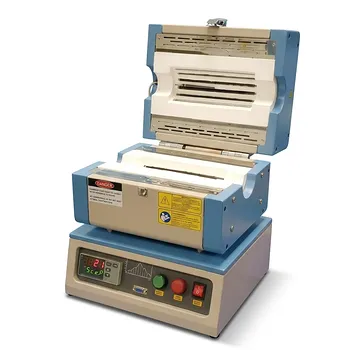
1250C Compact Split Tube Furnace with 8 Inch Heating Zone and Programmable Controller
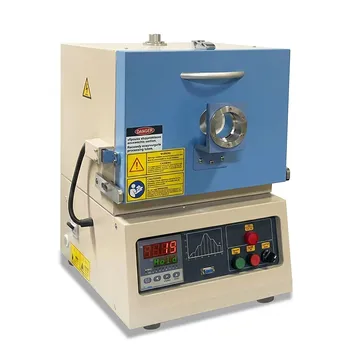
High Temperature Hybrid Muffle and Tube Furnace 1700C Programmable PID Controlled Box System with Vacuum Flange and Alumina Processing Tube

Compact Vertical Split Quartz Tube Furnace with Stainless Steel Vacuum Flanges for Rapid Thermal Quenching and Controlled Atmosphere Material Processing
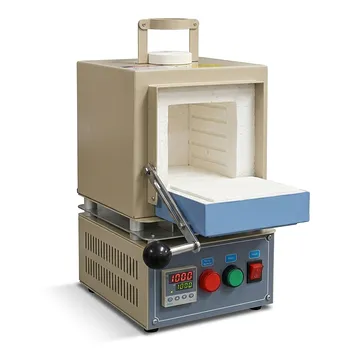
Compact 1000C Muffle Furnace with Programmable Controller and 2 Inch Top Port for Vacuum and Atmosphere Material Research
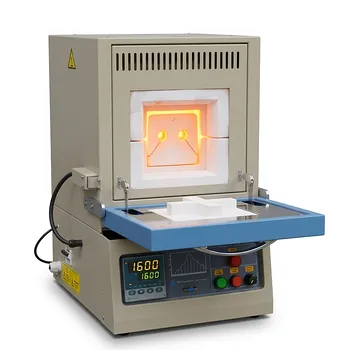
High Temperature Compact Muffle Furnace 1700 C with 30 Segment Programmable Controller and 1.7L Cubic Chamber
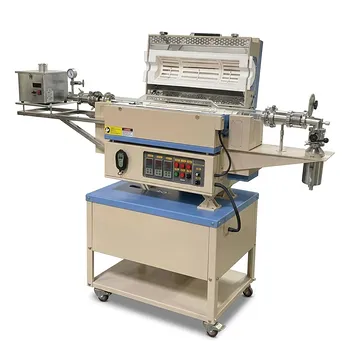
5 Inch Rotary Tube Furnace with Automatic Feeding and Receiving System 1200C Three Zone CVD Powder Processing
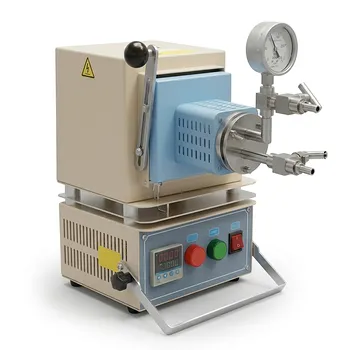
Compact Hybrid Muffle and Tube Furnace for 1000C Controlled Atmosphere Laboratory Material Sintering
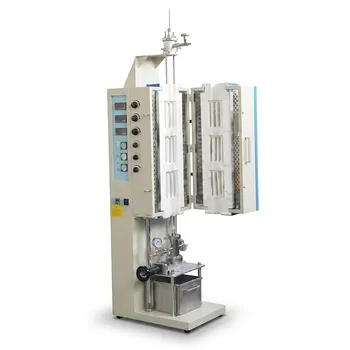
High Temperature Dual Zone Tube Furnace for Material Science Research and Professional Thermal Processing
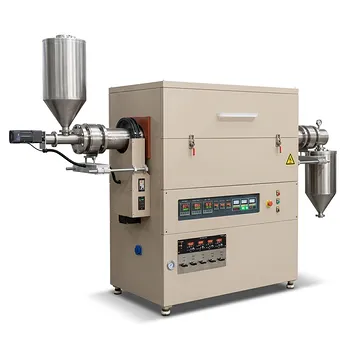
High Temperature Tilting Rotary Tube Furnace with Integrated Mass Flow Control and Multi Zone Heating

High Temperature 1700C Tube Furnace with High Vacuum Turbomolecular Pump System and Multi Channel Mass Flow Controller Gas Mixer

High Temperature Automated 5 Inch Tube Furnace for Autonomous Material Research and Advanced Laboratory R&D
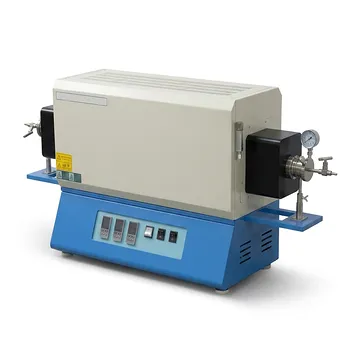
High Temperature Three Temperature Zone Tube Furnace for Advanced Material Science Sintering and Chemical Vapor Deposition Applications
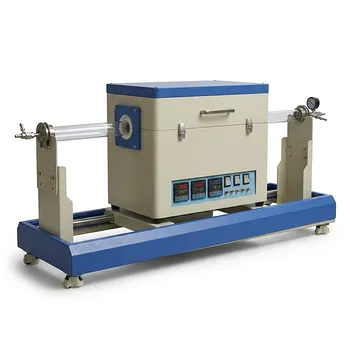
Double Temperature Zone Double Cover Tube Furnace for High Temperature CVD and Vacuum Annealing
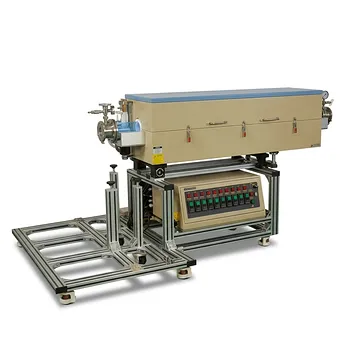
Ten Zone Multi Orientation Laboratory Tube Furnace for 1200C High Temperature Gradient Thermal Processing

1200C High Throughput Multi Channel Tube Furnace with 50mm Quartz Tubes for Annealing and Material Phase Diagram Research

High Temperature 1700C Vertical Tube Furnace for Powder Spherification and Material Sintering
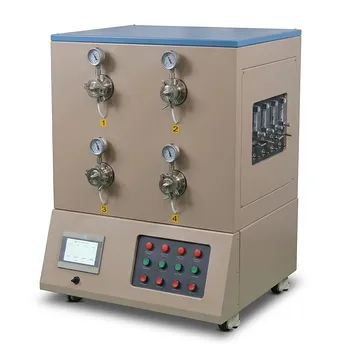
High Throughput 1200C Four Channel Tube Furnace with 3 Inch Quartz Tubes for Multi Zone Annealing and Material Research
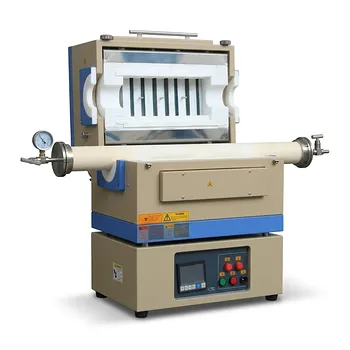
1500C Eight Zone Split Tube Furnace for Thermal Gradient Processing and Advanced Material Research