What are the technical advantages of using high-purity quartz boats? Optimize Purity & Heat for Oxygen Carriers
Updated 3 months ago
High-purity quartz boats provide an chemically inert and thermally stable environment that is essential for the high-temperature synthesis of iron-based oxygen carriers. These containers ensure that the final material remains free from metallic or silicon-based contaminants while facilitating uniform solid-phase reactions at temperatures approaching 1000°C.
Core Takeaway: High-purity quartz boats are the preferred calcination vessel for iron-based carriers because they eliminate container-to-sample chemical interference and withstand the thermal stresses of repeated heating cycles without degrading or releasing impurities.
Ensuring Material Purity Through Chemical Inertness
Prevention of Elemental Cross-Contamination
High-purity quartz is fundamentally chemically inert when in contact with iron-based or silicon-based raw materials. This prevents the diffusion of container elements into the oxygen carrier, which is critical for maintaining the specific stoichiometric ratios required for efficient chemical looping.
Stability in Oxidizing and Reducing Atmospheres
During calcination, oxygen carriers often undergo phase changes in various gas environments. Quartz boats do not react with these atmospheric precursors or the resulting iron oxides, ensuring that the electrochemical and kinetic properties of the carrier are not compromised by secondary chemical reactions.
Maintaining High-Purity Vapor Phases
In processes where volatile components are involved, quartz ensures that no unintended vapors are released from the container itself. This preservation of the vapor-source purity allows researchers to accurately study the effects of specific dopants or additives on the oxygen carrier's performance.
Thermal Performance and Structural Reliability
Resistance to Thermal Shock
Oxygen carrier synthesis often involves rapid heating or cooling cycles to achieve specific crystalline phases. Quartz possesses a low coefficient of thermal expansion, which provides superior thermal shock resistance and prevents the boat from cracking during sudden temperature shifts.
Operational Stability Near 1000°C
For iron-based carriers, calcination typically occurs at high temperatures to ensure structural integrity. High-purity quartz maintains its mechanical strength and shape at temperatures reaching 1000°C, providing a reliable support structure for long-duration thermal processing.
Consistent Heat Distribution
The material properties of high-purity quartz allow for efficient thermal transfer. This ensures that the bulk sample reaches the required reaction temperature simultaneously, preventing thermal gradients that could lead to non-uniform phase distribution within the oxygen carrier.
Geometric Advantages for Reaction Efficiency
Optimization of Gas-Solid Contact
The structural design of quartz boats, often featuring an open or flat geometry, maximizes the contact area between the solid precursor and the surrounding atmosphere. This facilitates uniform gas-solid phase reactions, ensuring that the entire batch of oxygen carrier is oxidized or reduced evenly.
Facilitating Large-Scale Uniformity
Whether operating under atmospheric or low-pressure conditions, the flat design of quartz boats ensures that samples are heated uniformly within the furnace chamber. This consistency is vital for scaling up production from laboratory samples to industrial-grade oxygen carrier batches.
Understanding the Trade-offs
Temperature Limitations
While quartz is highly effective up to 1000°C, it begins to soften as it approaches its transformation point. For reactions requiring temperatures significantly exceeding 1000°C, high-purity corundum (alumina) boats may be necessary, as they offer higher melting points and better stability in extreme thermal ranges.
Physical Fragility
Despite its thermal resilience, quartz remains a brittle material. It is susceptible to mechanical impact damage, and although it handles thermal shock well, it cannot match the extreme quenching capabilities of corundum, which can be moved directly from high-heat zones to room-temperature environments without failure.
Selecting the Right Container for Your Goal
How to Apply This to Your Project
When choosing a container for the calcination of oxygen carriers, your decision should be driven by the specific thermal and chemical requirements of your synthesis process.
- If your primary focus is absolute chemical purity at 1000°C: High-purity quartz is the optimal choice to prevent the leaching of container materials into your iron-based carriers.
- If your primary focus is extreme temperature (>1100°C) or rapid quenching: Consider using corundum (alumina) boats, which provide higher structural thresholds for extreme thermal processing.
- If your primary focus is reaction uniformity across large batches: Utilize flat-profile quartz boats to maximize surface area and ensure consistent gas-solid interactions.
The technical integrity of your oxygen carrier depends entirely on the stability of the environment in which it is created.
Summary Table:
| Technical Advantage | Key Benefit to Synthesis | Ideal Application |
|---|---|---|
| Chemical Inertness | Prevents metallic/silicon contamination | High-purity stoichiometric carriers |
| Thermal Shock Resistance | Withstands rapid heating/cooling cycles | Phase-specific crystalline synthesis |
| Uniform Heat Transfer | Eliminates thermal gradients in samples | Consistent phase distribution |
| Flat Geometry | Maximizes gas-solid contact area | Efficient oxidation/reduction reactions |
| 1000°C Stability | Maintains mechanical shape and strength | Standard high-temperature calcination |
Elevate Your Material Research with THERMUNITS
Precision in thermal processing is the foundation of breakthrough material science. THERMUNITS is a leading manufacturer of high-temperature laboratory equipment, providing industrial R&D teams with the tools needed for advanced heat treatment.
Our comprehensive range of solutions includes:
- Furnaces: Muffle, Vacuum, Atmosphere, Tube, Rotary, and Hot Press furnaces.
- Advanced Systems: CVD/PECVD systems, Dental Furnaces, and Vacuum Induction Melting (VIM) units.
- Specialized Components: Electric rotary kilns and high-purity Thermal Elements.
Whether you are calcining oxygen carriers or developing complex alloys, THERMUNITS delivers the temperature uniformity and atmospheric control your project requires.
Ready to optimize your laboratory's efficiency? Contact our technical experts today to find the perfect thermal solution for your specific application.
References
- Yue Lai, Mujun Long. Syngas Production by Fe2SiO4 Oxygen Carrier in Chemical Looping Partial Oxidation of Methane. DOI: 10.3390/catal14120866
Mentioned Products
- 1100°C High Temperature Quartz Chamber Furnace 8 Inch OD with 7.6 Liter Capacity and Vacuum Atmosphere Capability
- High Temperature Vertical Atmosphere Controlled Furnace with Automatic Bottom Loading and 1700°C Capacity for Advanced Material Research
- 1100C High Temperature Vacuum Crucible Furnace with Quartz Chamber for Thermal Processing and Sintering
- Vertical Vacuum Furnace 1100C High Temperature 8 Inch Quartz Chamber Water Cold Flange System
- 1200°C 5 Inch Vertical Quartz Tube Furnace with Stainless Steel Vacuum Flanges
People Also Ask
- Why is a quartz tube furnace necessary for phosphorus-doped MoS2/GO preparation? Ensure Purity & Precise Synthesis
- Benefits of high-vacuum quartz tube furnaces with N2 for Co3O4 nanosheets: Purity and Structural Integrity.
- What conditions does a quartz tube furnace provide for AlxCoCrFeNi steam corrosion tests? Achieve Precise R&D Control.
- Why is high-temperature annealing in a quartz tube furnace done after HfO2 deposition? Unlock peak film performance.
- Why is a high-purity quartz tube used for SP-Fe3O4-C? Ensure Chemical Purity & Catalytic Stability

Tech Team · ThermUnits
Last updated on Jun 02, 2026
Related Products
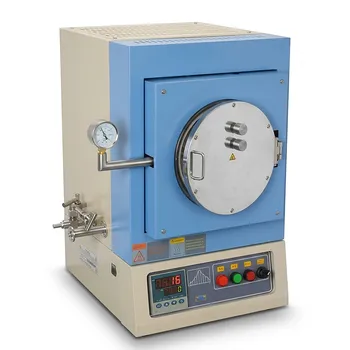
1100°C High Temperature Quartz Chamber Furnace 8 Inch OD with 7.6 Liter Capacity and Vacuum Atmosphere Capability
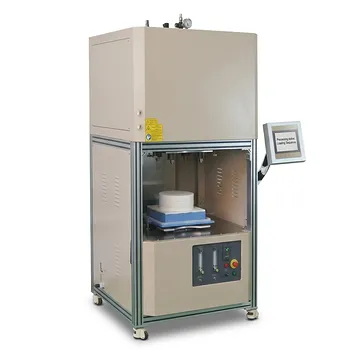
High Temperature Vertical Atmosphere Controlled Furnace with Automatic Bottom Loading and 1700°C Capacity for Advanced Material Research
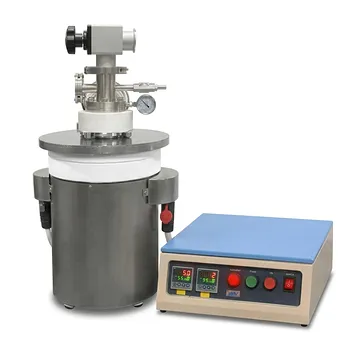
1100C High Temperature Vacuum Crucible Furnace with Quartz Chamber for Thermal Processing and Sintering
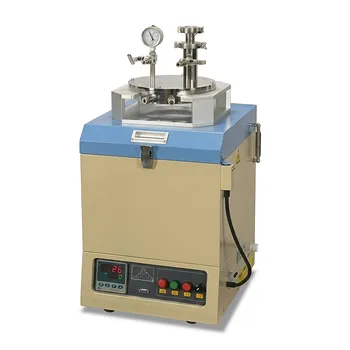
Vertical Vacuum Furnace 1100C High Temperature 8 Inch Quartz Chamber Water Cold Flange System
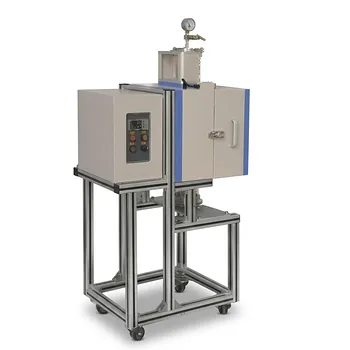
1200°C 5 Inch Vertical Quartz Tube Furnace with Stainless Steel Vacuum Flanges
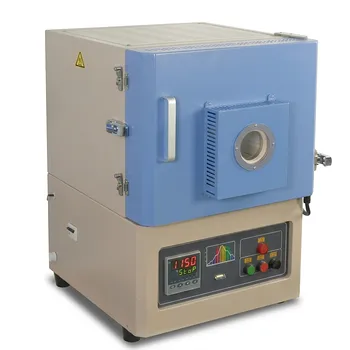
High Temperature Benchtop Muffle Furnace with Quartz Observation Window for Thermal Imaging and Material Analysis