What role does a single-temperature zone quartz tube furnace play in the growth of monolayer MoS2? Optimize 2D Synthesis
Updated 3 months ago
The single-temperature zone quartz tube furnace serves as the primary reactor for synthesizing monolayer Molybdenum Disulfide (MoS2) via Atmospheric Pressure Chemical Vapor Deposition (APCVD). It provides the precise thermal energy required to sublimate solid precursors and facilitates the gas-phase chemical reaction necessary to deposit high-quality, two-dimensional crystal structures onto a substrate.
The furnace acts as a strictly controlled environment that manages the sublimation, transport, and reaction of sulfur and molybdenum sources. Its ability to maintain stable temperatures and a clean atmosphere is the deciding factor in achieving uniform, high-crystalline-quality monolayer flakes.
Facilitating the Precursor Phase Transition
Sublimation of Solid Sources
The furnace raises the internal temperature, typically to 750°C, to convert solid precursors like sulfur powder and molybdenum trioxide (MoO3) into vapors. This phase change is essential because the growth of MoS2 relies on these materials interacting in the gas phase rather than their solid state.
Leveraging Axial Temperature Gradients
Even within a single-temperature zone, the furnace design naturally creates an axial temperature gradient toward the ends of the tube. This allows researchers to strategically place precursors in the hot center for evaporation while positioning the growth substrate in a slightly cooler downstream zone to encourage deposition.
Precision Heating and Stability
High-precision heating rate control ensures that the transition to the reaction temperature is uniform and repeatable. Stable constant-temperature zones prevent fluctuations that could lead to inconsistent film thickness or the formation of unwanted multi-layer clusters.
Controlling the Chemical Reaction Environment
The Gas-Phase Synthesis
Once the precursors are vaporized, the furnace environment facilitates the sulfurization reaction where sulfur atoms replace oxygen in the molybdenum source. The controlled heat ensures this reaction proceeds uniformly across the substrate surface, resulting in large-area monolayer wafers.
Crystal Morphology Management
The thermal environment directly influences the shape and quality of the resulting crystals, often producing characteristic triangular monolayer flakes. By maintaining a steady thermal field, the furnace promotes high lattice quality and reduces structural defects in the MoS2 film.
Rapid Cooling and Morphology Preservation
Many single-zone furnaces utilize a split-tube design, which allows the furnace to be opened immediately after the reaction. This facilitates rapid natural cooling, which is vital for "freezing" the MoS2 in its monolayer state and preventing further unwanted growth or oxidation.
Ensuring Material Purity and Integrity
Isolation via High-Purity Quartz
The quartz tube acts as an inert reaction chamber that isolates the precursors from external contaminants. This is critical for maintaining the chemical purity and electrical properties of the resulting single-crystal flakes.
Atmosphere Control and Sealing
The furnace provides a sealed environment where a protective Argon (Ar) atmosphere or vacuum can be maintained. This prevents the molybdenum and sulfur from reacting with oxygen or moisture, which would otherwise degrade the quality of the monolayer.
Understanding the Trade-offs
Single Zone vs. Multi-Zone Control
While a single-zone furnace is highly effective and cost-efficient, it offers less control over the independent evaporation rates of sulfur and molybdenum. Because both precursors are influenced by the same heating element, achieving the perfect stoichiometric ratio requires very precise physical placement within the tube.
Temperature Uniformity Constraints
In a single-zone setup, the "sweet spot" for growth is relatively small compared to multi-zone systems. This can limit the scale of production, as the temperature may drop off too quickly at the edges of the zone to maintain consistent monolayer growth over large substrates.
How to Optimize Your Growth Process
Recommendations for Success
The effectiveness of your synthesis depends on how you calibrate the furnace to your specific material goals.
- If your primary focus is large-area uniformity: Prioritize a furnace with a high aspect ratio to establish a stable, predictable temperature gradient for downstream deposition.
- If your primary focus is crystal purity: Ensure the use of high-purity quartz linings and verify the integrity of the vacuum seals to prevent atmospheric contamination.
- If your primary focus is morphology control: Utilize a split-tube furnace design to enable rapid cooling, which helps preserve the structural integrity of the monolayer flakes.
The single-zone quartz tube furnace remains the foundational tool for MoS2 research, providing the essential balance of thermal precision and atmospheric isolation required for 2D material synthesis.
Summary Table:
| Key Feature | Functional Role | Benefit for MoS2 Growth |
|---|---|---|
| Precise Sublimation | Converts solid precursors to gas phase | Enables consistent chemical reaction |
| Axial Gradient | Creates strategic temperature zones | Optimizes deposition quality on substrates |
| Quartz Isolation | Provides an inert reaction environment | Maintains high chemical and lattice purity |
| Split-Tube Design | Enables rapid natural cooling | Preserves delicate monolayer morphology |
Advance Your Material Research with THERMUNITS
As a leading manufacturer of high-temperature laboratory equipment, THERMUNITS provides cutting-edge thermal solutions for material science and industrial R&D. Our high-performance Tube Furnaces, CVD/PECVD Systems, Vacuum Furnaces, and Rotary Kilns are specifically engineered to deliver the precision and stability required for monolayer MoS2 synthesis and other advanced heat treatments.
Unlock superior results for your laboratory—Contact our experts today to find the perfect thermal processing solution for your application!
References
- Manisha Rajput, Atikur Rahman. Defect-engineered monolayer MoS2 with enhanced memristive and synaptic functionality for neuromorphic computing. DOI: 10.1038/s43246-024-00632-y
Mentioned Products
- Dual Zone Quartz Tube Furnace with 80mm Diameter 1200C Max Temperature 3 Channel Gas Mixer and Vacuum Pump System
- 1100°C High Temperature Quartz Chamber Furnace 8 Inch OD with 7.6 Liter Capacity and Vacuum Atmosphere Capability
- Compact Vertical Split Quartz Tube Furnace with Stainless Steel Vacuum Flanges for Rapid Thermal Quenching and Controlled Atmosphere Material Processing
- 1100°C Large Diameter Quartz Tube Furnace with 24 Inch Heating Zone and Water Cooled Flanges
- 1200°C 5 Inch Vertical Quartz Tube Furnace with Stainless Steel Vacuum Flanges
People Also Ask
- How do dual-zone quartz tube furnaces achieve controllable material preparation? Optimize Perovskite VD Processes
- What are the technical advantages of using a dual-zone tube furnace for growing large PdCoO2 crystals via CVT? Expert Tips
- Purpose of the reverse gradient step in CVT growth? Master Crystal Purity with Dual-Zone Furnaces
- Why is it necessary to place MoS2 devices in a dual-zone tube furnace for annealing? Optimize Lattice Repair & Doping
- Why is a dual-zone tube furnace necessary for ReO3-doped Cu2Te CVD? Essential for precise precursor synchronization.

Tech Team · ThermUnits
Last updated on Jun 03, 2026
Related Products
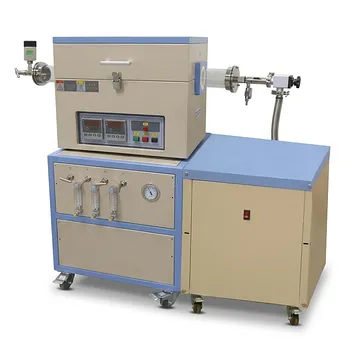
Dual Zone Quartz Tube Furnace with 80mm Diameter 1200C Max Temperature 3 Channel Gas Mixer and Vacuum Pump System
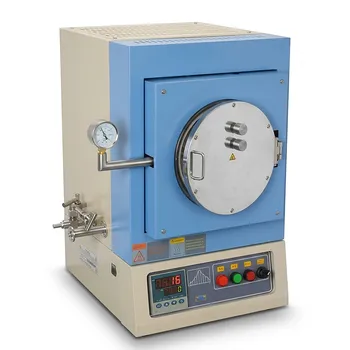
1100°C High Temperature Quartz Chamber Furnace 8 Inch OD with 7.6 Liter Capacity and Vacuum Atmosphere Capability

Compact Vertical Split Quartz Tube Furnace with Stainless Steel Vacuum Flanges for Rapid Thermal Quenching and Controlled Atmosphere Material Processing
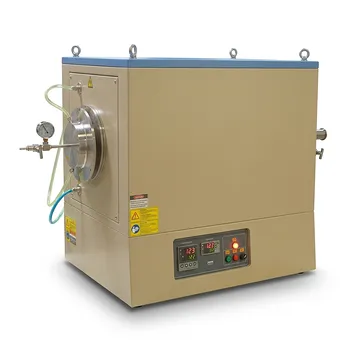
1100°C Large Diameter Quartz Tube Furnace with 24 Inch Heating Zone and Water Cooled Flanges
1200°C 5 Inch Vertical Quartz Tube Furnace with Stainless Steel Vacuum Flanges
High Throughput 1200C Four Channel Tube Furnace with 3 Inch Quartz Tubes for Multi Zone Annealing and Material Research
1200C High Temperature Atmosphere Controlled Vertical Quenching Tube Furnace with 4 Inch Quartz Tube
1100°C Three Zone Tube Furnace with 8.5 to 11 Inch OD Quartz Tube and Vacuum Flanges for Large Wafer Processing
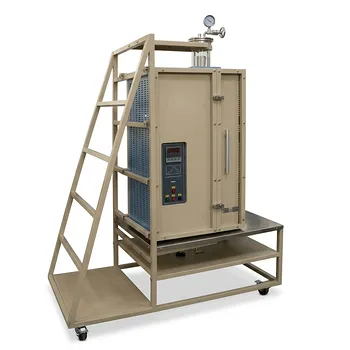
Split Vertical Tube Furnace with 1200C Quartz Tube and Stainless Steel Vacuum Flanges for Rapid Thermal Processing
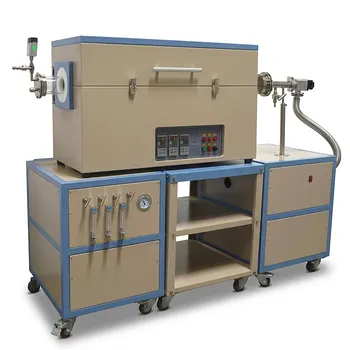
Three Zone Quartz Tube Furnace with 3 Channel Gas Mixer Vacuum Pump and Anti Corrosive Vacuum Gauge
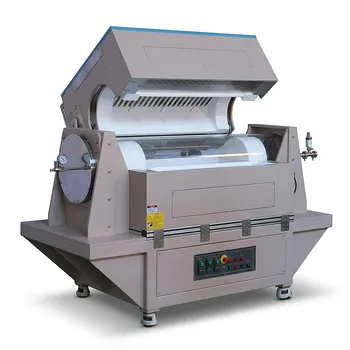
Three Zone Tube Furnace with 11 Inch or 15 Inch Quartz Tube and Hinged Flanges for Vacuum Atmosphere Heat Treatment
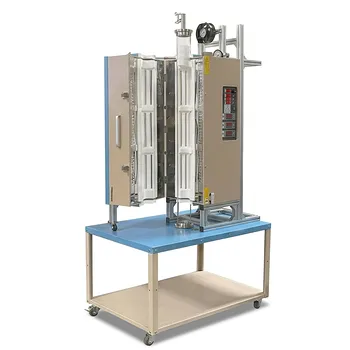
1200C Three Zone Split Vertical Tube Furnace 4 Inch Quartz Tube Stainless Steel Vacuum Flanges
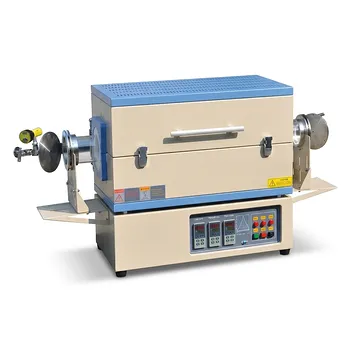
Three Zone Tube Furnace with 24 Inch Heating Length and Hinged Flange Quartz Tube System
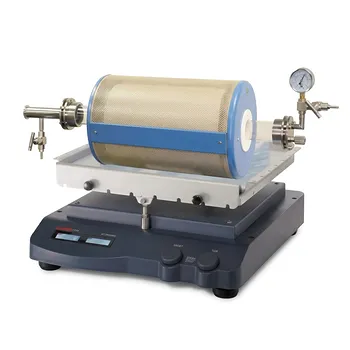
High Temperature Rocking Tube Furnace with Quartz Tube and Vacuum Flange for Materials Synthesis
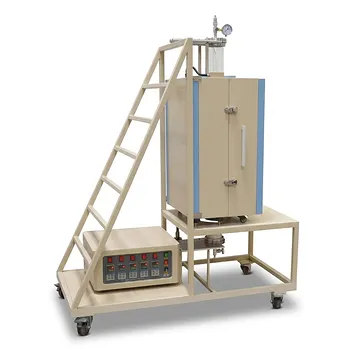
Five Zone Split Vertical Tube Furnace 1200C Max with 4 Inch Quartz Tube and Stainless Steel Vacuum Flanges
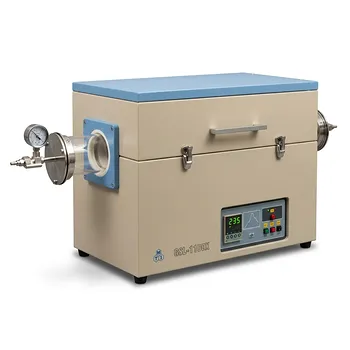
Single Zone Tube Furnace 5 Inch Quartz Tube 36 Inch Heating Zone Vacuum Flanges
High Temperature 1200C Split Tube Furnace with Hinged Vacuum Flanges and 4 Inch Quartz Tube for Laboratory Research
1200C Four Zone Split Tube Furnace with Touch Screen Control and High Purity Quartz Tube and Vacuum Sealing Flanges

High Temperature Automated 5 Inch Tube Furnace for Autonomous Material Research and Advanced Laboratory R&D