Why is post-deposition thermal treatment necessary for LiMn2O4 thin-film cathodes? Achieve Peak Battery Performance
Updated 3 months ago
Post-deposition thermal treatment is the critical bridge between an inert coating and a functional battery component. $LiMn_2O_4$ (LMO) thin films deposited via sputtering are typically amorphous or weakly crystalline, lacking the internal order required to store energy. Utilizing a high-temperature tube furnace at approximately 500°C provides the thermal energy necessary for atomic rearrangement, transforming the film into a cubic spinel structure that enables efficient lithium-ion transport and electrochemical activity.
Core Takeaway: Annealing is non-negotiable for LMO cathodes because it drives the phase transition from a disordered amorphous state to a crystalline spinel lattice. This structural shift is the primary driver of the material's ion conductivity, mechanical stability, and chemical readiness for charge-discharge cycling.
Driving the Phase Transition to Cubic Spinel
Atomic Rearrangement for Ion Transport
As-deposited sputtered films are often "disordered," meaning the atoms are positioned randomly. The tube furnace provides the kinetic energy needed for these atoms to migrate into a cubic spinel lattice, which contains the specific "tunnels" required for lithium ions to move freely.
Activation of Raman and Electrochemical Modes
Crystallization is the prerequisite for the cathode's functional identity. This process activates the specific Raman activity modes and electrochemical pathways that allow the material to host lithium ions during battery operation.
Enhancing Mechanical and Interfacial Integrity
Relieving Internal Deposition Stresses
The sputtering process often leaves thin films under significant internal tension or "quenched-in" stress. High-temperature treatment allows the lattice to relax, relieving internal stresses that would otherwise cause the film to crack or delaminate during use.
Improving Substrate Adhesion
Thermal energy facilitates atomic diffusion at the interface between the $LiMn_2O_4$ film and the underlying current collector. This strengthens the interfacial adhesion, ensuring the cathode remains physically attached to the substrate through thousands of expansion and contraction cycles.
Optimizing Chemical and Stoichiometric Balance
Oxygen Diffusion and Vacancy Repair
Tube furnaces allow for precise control over the annealing atmosphere, often utilizing flowing air or oxygen. This environment drives oxygen diffusion into the film, eliminating vacancies and ensuring the manganese ions reach the correct valence states ($Mn^{3+}/Mn^{4+}$) for optimal capacity.
Stabilization of Functional Phases
Without precise temperature soaking, a thin film may contain "unidentified phases" or unwanted metal oxides. A controlled furnace environment ensures these mixed phases stabilize into a single-phase spinel, preventing parasitic reactions that degrade battery life.
Understanding the Trade-offs
The Risk of Thermal Overexposure
While 500°C is ideal for LMO crystallization, excessive temperatures can lead to grain overgrowth. Overly large grains can reduce the surface area available for ion exchange, slowing down the battery's charge rate.
Substrate Compatibility Limits
High-temperature treatment requires substrates (like stainless steel or ceramics) that can withstand 500°C without oxidizing or melting. If the substrate is thermally sensitive, the annealing process must be strictly timed to prevent interdiffusion, where substrate atoms migrate into the cathode and poison its chemistry.
How to Apply This to Your Project
Recommendations for Implementation
- If your primary focus is maximum ion conductivity: Prioritize a soaking period at 500°C in an oxygen-rich environment to ensure a high-purity spinel phase and full oxygen stoichiometry.
- If your primary focus is long-term cycle life: Focus on a slow cooling ramp-rate after annealing to minimize the re-introduction of mechanical stresses that cause film cracking.
- If your primary focus is high-rate performance: Optimize the annealing time to achieve full crystallinity while maintaining a small grain size to maximize the electrolyte-cathode contact area.
The tube furnace transition from a disordered to a crystalline state is what ultimately transforms a thin coating into a high-performance energy storage medium.
Summary Table:
| Process Aspect | Benefit to LMO Cathode | Technical Mechanism |
|---|---|---|
| Phase Transition | Enables Ion Transport | Converts amorphous films into a functional cubic spinel lattice structure. |
| Mechanical Integrity | Prevents Delamination | Relieves internal deposition stresses and improves adhesion to current collectors. |
| Chemical Balance | Optimizes Capacity | Drives oxygen diffusion to repair vacancies and stabilize Mn valence states. |
| Structural Control | Maximizes Cycle Life | Eliminates unidentified phases and stabilizes the functional single-phase spinel. |
Elevate Your Battery Research with THERMUNITS Precision Furnaces
As a leading manufacturer of high-temperature laboratory equipment for material science and industrial R&D, THERMUNITS provides the thermal precision required to transform thin-film coatings into high-performance battery components.
Whether you are optimizing LiMn2O4 cathodes or developing next-generation materials, our comprehensive range of thermal solutions—including Tube, Vacuum, Atmosphere, Muffle, and Rotary furnaces, as well as CVD/PECVD systems—ensures exact temperature control and atmosphere stability.
Ready to achieve superior heat treatment results? Contact our experts today to find the perfect furnace for your lab!
References
- D A Medina-Sanchez, F Ambriz-Vargas. Investigation of photoactive properties in LiMn2O4 cathode for lithium-ion batteries. DOI: 10.54955/ajp.33.12.2024.793-802
Mentioned Products
- High Temperature Tube Furnace 1500C with Sliding Flanges and 50mm OD for Rapid Thermal Processing Fast Heating and Cooling
- High Temperature 1700C Tube Furnace with High Vacuum Turbomolecular Pump System and Multi Channel Mass Flow Controller Gas Mixer
- 1750°C High Temperature Benchtop Vacuum Atmosphere Tube Furnace with Kanthal Super 1800 Heating Elements and 60mm Alumina Processing Tube
- High Temperature 1700C Benchtop Tube Furnace with 5 Inch Heating Zone High Purity Alumina Tube and Vacuum Sealing Flanges
- High Temperature Split Tube Furnace 1500C for Material Research Vacuum and Atmosphere Thermal Processing
People Also Ask
- How are high-temperature tube furnaces utilized to repair etching damage? Precision Lattice Restoration Solutions
- What role does a high-temperature tube furnace play in CVD synthesis of silicon nanowires? Master VLS Growth Precision.
- What core conditions does a high-temperature tube furnace provide for rGO aerogels? Mastering Precision Synthesis.
- What role does a high-temperature tube furnace play in the sulfidation heat treatment of CoS@C/MXene nanocomposites? Guide
- How does precision tube furnace control influence CoFe nanoparticle formation? Master Your Bimetallic Synthesis.

Tech Team · ThermUnits
Last updated on Jun 02, 2026
Related Products
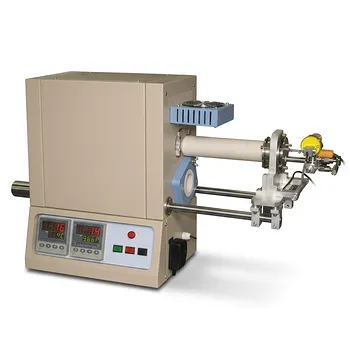
High Temperature Tube Furnace 1500C with Sliding Flanges and 50mm OD for Rapid Thermal Processing Fast Heating and Cooling

High Temperature 1700C Tube Furnace with High Vacuum Turbomolecular Pump System and Multi Channel Mass Flow Controller Gas Mixer

1750°C High Temperature Benchtop Vacuum Atmosphere Tube Furnace with Kanthal Super 1800 Heating Elements and 60mm Alumina Processing Tube

High Temperature 1700C Benchtop Tube Furnace with 5 Inch Heating Zone High Purity Alumina Tube and Vacuum Sealing Flanges
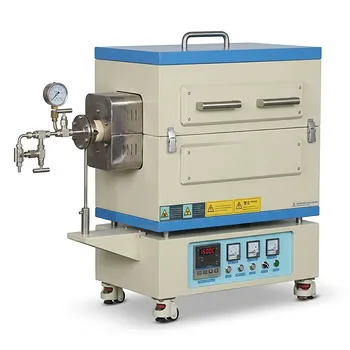
High Temperature Split Tube Furnace 1500C for Material Research Vacuum and Atmosphere Thermal Processing
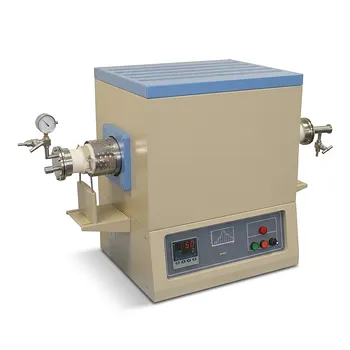
1700C High Temperature Alumina Tube Furnace with 18 Inch Heated Zone and Vacuum Sealing Flanges

1800C High Temperature Compact Vacuum Tube Furnace with 60mm OD Alumina Tube and Kanthal MoSi2 Heating Elements

Compact High Temperature 1600C Tube Furnace with 50mm Alumina Tube and Vacuum Flanges for Material Sintering
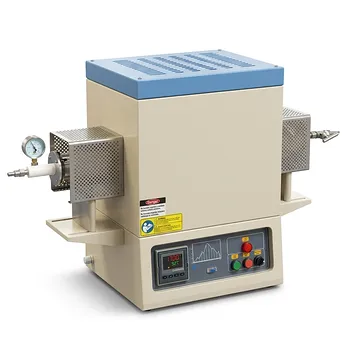
High Temperature Three Zone Tube Furnace 1700C with Alumina Tube and Water Cooled Flanges
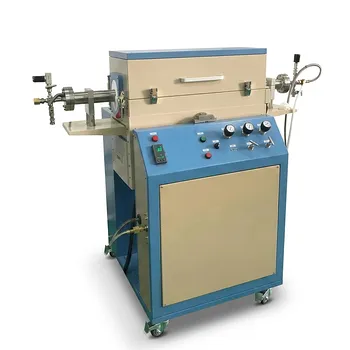
High Temperature Rocking Tube Furnace 1700°C Alumina Processing Tube with Precision Oscillation for Material Synthesis
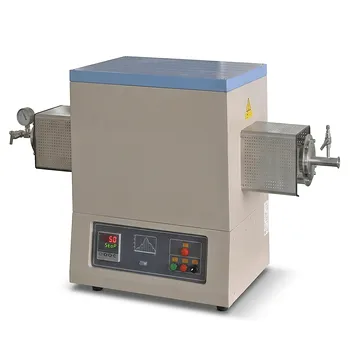
High Temperature 1700C Tube Furnace with 4 Inch OD Alumina Tube and Vacuum Sealing Flanges

High Temperature 1700C Vertical Tube Furnace for Powder Spherification and Material Sintering
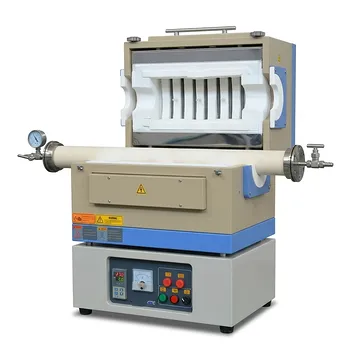
High Temperature 1600C Split Tube Furnace Vacuum Flanges Valves Optional 60mm 80mm Alumina Tube

High Temperature Automated 5 Inch Tube Furnace for Autonomous Material Research and Advanced Laboratory R&D

High Temperature 1700C Six Zone Split Tube Furnace with Alumina Tube and Water Cooled Flanges
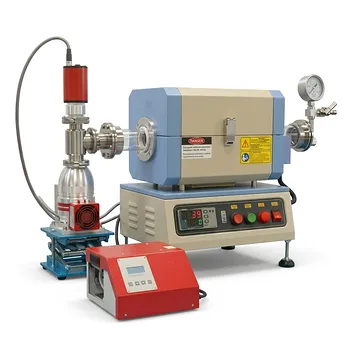
High Vacuum Compact Tube Furnace 1200C with Integrated Turbo Pump System and 8 Inch Heating Zone
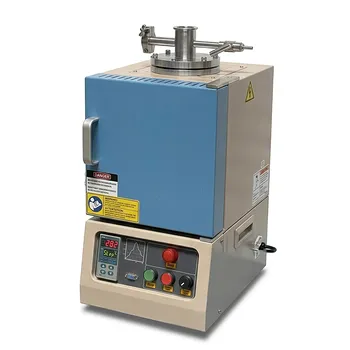
High Temperature Hybrid Muffle and Tube Furnace with Vacuum Capability and PID Control
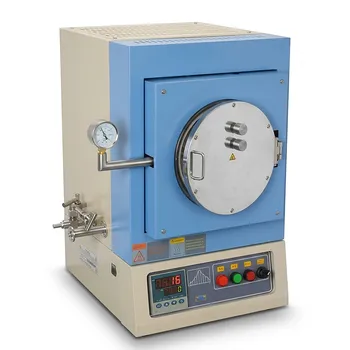
1100°C High Temperature Quartz Chamber Furnace 8 Inch OD with 7.6 Liter Capacity and Vacuum Atmosphere Capability

1100C Tube Furnace with Vacuum Flange and Programmable Temperature Controller for Material Science and Industrial Heat Treatment