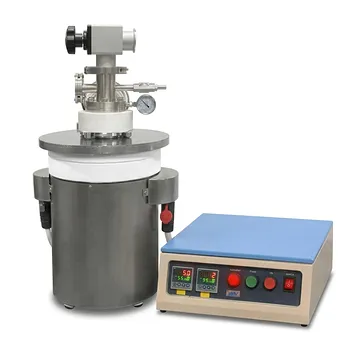
What functions do quartz tube furnaces perform in NMC111 calcination? Enhance material purity and performance.
Updated 3 months ago
The quartz tube furnace serves as a high-precision thermal reactor that facilitates the structural evolution of NMC111 through distinct chemical stages. During the first stage, the furnace provides the thermal energy necessary to decompose organic precursors and remove structural water. In the second stage, the atmosphere control system maintains a high-purity oxygen environment to drive the solid-state reaction and stabilize the layered crystal structure required for electrochemical performance.
The integration of precise temperature ramping and atmosphere regulation allows for the transformation of raw precursors into an ordered $R\bar{3}m$ layered structure. By sequentially managing decomposition and oxidative sintering, this system minimizes cation mixing and ensures the synthesis of high-capacity cathode materials.
The Role of the Furnace in Stage One: Pre-Calcination
Thermal Decomposition of Precursors
During the initial low-temperature phase, typically around 500°C, the furnace provides a stable thermal field to break down organic components. This process is essential for converting precursors like urea or metal hydroxides into reactive intermediate states.
Removal of Volatile Impurities
The furnace environment facilitates the thorough removal of structural water and residual organic fragments. Eliminating these impurities early prevents them from interfering with the delicate solid-state reactions that occur at higher temperatures.
Establishing the Initial Thermal Gradient
Precise control over the heating rate during this stage prevents rapid gas evolution, which could lead to particle cracking or non-uniform morphology. A steady ramp-up ensures the material is prepared for the transition to the high-temperature sintering phase.
The Role of Atmosphere Control in Stage Two: High-Temperature Sintering
Maintaining a Highly Oxidative Environment
The atmosphere control system introduces a continuous flow of high-purity oxygen (often at rates like 0.2 L/min) into the sealed quartz tube. This oxidizing atmosphere is critical for promoting the formation of trivalent metal ions and ensuring a single-phase layered structure.
Suppression of Cation Mixing
A primary function of the oxygen flow is to inhibit the migration of $Ni^{2+}$ ions into $Li^{+}$ sites, a phenomenon known as cation mixing. Minimizing this structural defect is vital for maintaining high lithium-ion transport kinetics and discharge capacity.
Facilitating Solid-State Reactions
At temperatures reaching 850°C, the atmosphere system ensures that the lithium source and transition metals react completely. This controlled environment drives the formation of the $R\bar{3}m$ space group, which is the hallmark of high-performance NMC cathode materials.
Understanding the Trade-offs
Atmosphere Purity vs. Operating Cost
While high-purity oxygen is essential for minimizing cation mixing in high-nickel materials, the continuous gas flow increases the cost of synthesis. Using air instead of pure oxygen can reduce costs but may lead to a higher degree of structural disorder in the final product.
Temperature Uniformity vs. Throughput
Quartz tube furnaces offer excellent temperature stability within the center of the tube, but the isothermal zone is often limited in size. Increasing the batch size can lead to temperature gradients, resulting in inconsistent crystal growth and varying electrochemical properties across the sample.
Gas Flow Dynamics
High flow rates effectively remove gaseous byproducts like $CO_2$, but they can also cause slight temperature fluctuations or lead to the loss of volatile lithium species. Balancing the gas velocity is necessary to maintain both atmospheric purity and stoichiometric accuracy.
How to Apply This to Your Synthesis Process
Implementation Recommendations
- If your primary focus is maximizing discharge capacity: Prioritize a high-purity oxygen atmosphere during the second stage to minimize $Ni^{2+}/Li^{+}$ cation mixing.
- If your primary focus is material consistency: Utilize a programmed heating rate (e.g., 5-10°C/min) and ensure the sample is placed strictly within the furnace's calibrated isothermal zone.
- If your primary focus is structural purity: Ensure the pre-calcination stage is held long enough to fully remove structural water before increasing the temperature to the sintering point.
Mastering the synergy between the thermal field of the furnace and the chemistry of the atmosphere control system is the definitive path to producing high-quality NMC111 cathode materials.
Summary Table:
| Stage | Temperature | Primary Function | Key Benefit |
|---|---|---|---|
| Pre-Calcination | ~500°C | Thermal decomposition of precursors | Removal of water and organic impurities |
| Sintering | ~850°C | Oxidative solid-state reaction | Minimizes cation mixing; forms $R\bar{3}m$ structure |
| Atmosphere Control | Continuous O2 | Maintaining oxidative environment | Ensures high capacity and structural stability |
Elevate Your Material Research with THERMUNITS
Precision is paramount in cathode material synthesis. As a leading manufacturer of high-temperature laboratory equipment for material science and industrial R&D, THERMUNITS offers a comprehensive range of thermal processing solutions.
Our advanced Tube, Vacuum, Atmosphere, and Muffle furnaces, alongside CVD/PECVD systems and Rotary kilns, provide the stable thermal gradients and strict atmosphere control necessary to minimize cation mixing and maximize discharge capacity in NMC materials. Whether you are performing delicate laboratory heat treatment or scaling up industrial R&D, our equipment ensures consistent, high-purity results.
Ready to optimize your synthesis process? Contact THERMUNITS today to discuss your specific requirements with our experts!
References
- Tristan Kipfer, Reza Younesi. Upcycling of lithium cobalt oxide to LiNi<sub>1/3</sub>Mn<sub>1/3</sub>Co<sub>1/3</sub>O<sub>2</sub>. DOI: 10.1039/d4su00131a
Mentioned Products
- Dual Zone Quartz Tube Furnace with 80mm Diameter 1200C Max Temperature 3 Channel Gas Mixer and Vacuum Pump System
- 1100°C High Temperature Quartz Chamber Furnace 8 Inch OD with 7.6 Liter Capacity and Vacuum Atmosphere Capability
- Compact Vertical Split Quartz Tube Furnace with Stainless Steel Vacuum Flanges for Rapid Thermal Quenching and Controlled Atmosphere Material Processing
- 1200°C 5 Inch Vertical Quartz Tube Furnace with Stainless Steel Vacuum Flanges
- 1100°C Large Diameter Quartz Tube Furnace with 24 Inch Heating Zone and Water Cooled Flanges
People Also Ask
- How do dual-zone quartz tube furnaces achieve controllable material preparation? Optimize Perovskite VD Processes
- What are the technical advantages of using a dual-zone tube furnace for growing large PdCoO2 crystals via CVT? Expert Tips
- Purpose of the reverse gradient step in CVT growth? Master Crystal Purity with Dual-Zone Furnaces
- Why is it necessary to place MoS2 devices in a dual-zone tube furnace for annealing? Optimize Lattice Repair & Doping
- Why is a dual-zone tube furnace necessary for ReO3-doped Cu2Te CVD? Essential for precise precursor synchronization.

Tech Team · ThermUnits
Last updated on Jun 02, 2026
Related Products
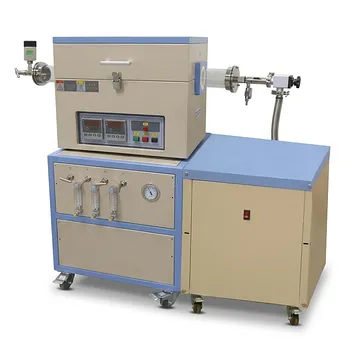
Dual Zone Quartz Tube Furnace with 80mm Diameter 1200C Max Temperature 3 Channel Gas Mixer and Vacuum Pump System
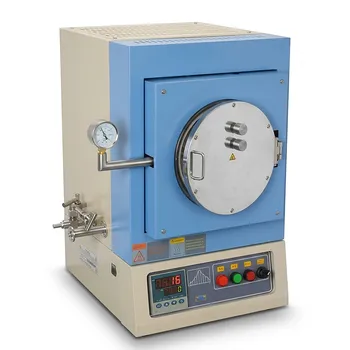
1100°C High Temperature Quartz Chamber Furnace 8 Inch OD with 7.6 Liter Capacity and Vacuum Atmosphere Capability

Compact Vertical Split Quartz Tube Furnace with Stainless Steel Vacuum Flanges for Rapid Thermal Quenching and Controlled Atmosphere Material Processing
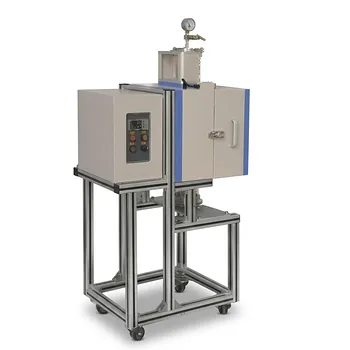
1200°C 5 Inch Vertical Quartz Tube Furnace with Stainless Steel Vacuum Flanges
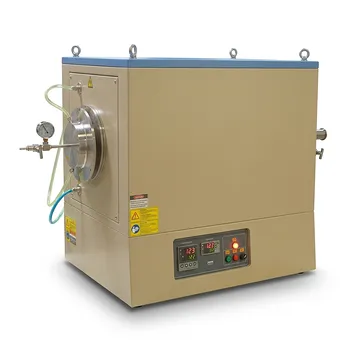
1100°C Large Diameter Quartz Tube Furnace with 24 Inch Heating Zone and Water Cooled Flanges
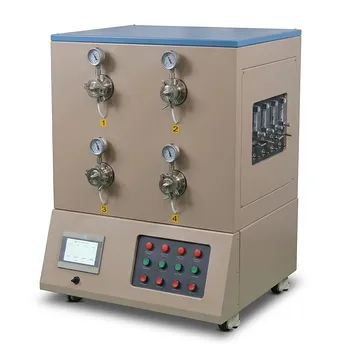
High Throughput 1200C Four Channel Tube Furnace with 3 Inch Quartz Tubes for Multi Zone Annealing and Material Research
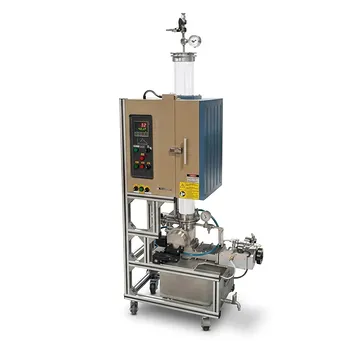
1200C High Temperature Atmosphere Controlled Vertical Quenching Tube Furnace with 4 Inch Quartz Tube
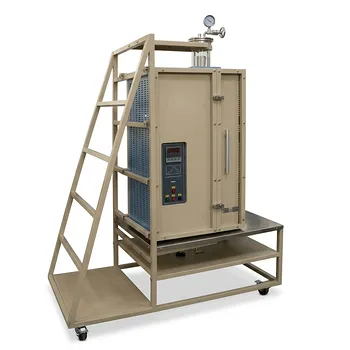
Split Vertical Tube Furnace with 1200C Quartz Tube and Stainless Steel Vacuum Flanges for Rapid Thermal Processing
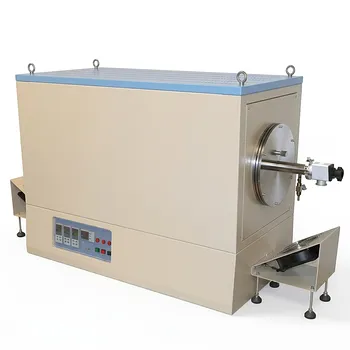
1100°C Three Zone Tube Furnace with 8.5 to 11 Inch OD Quartz Tube and Vacuum Flanges for Large Wafer Processing
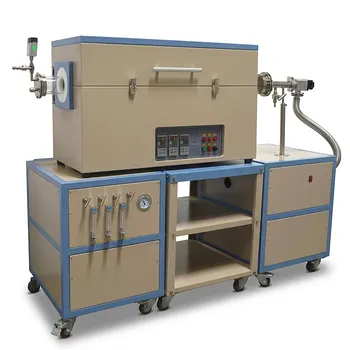
Three Zone Quartz Tube Furnace with 3 Channel Gas Mixer Vacuum Pump and Anti Corrosive Vacuum Gauge
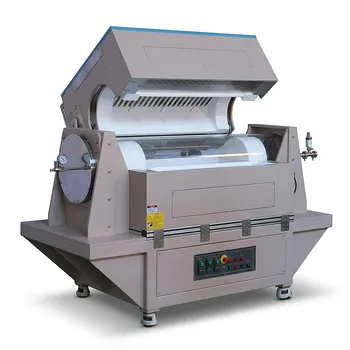
Three Zone Tube Furnace with 11 Inch or 15 Inch Quartz Tube and Hinged Flanges for Vacuum Atmosphere Heat Treatment
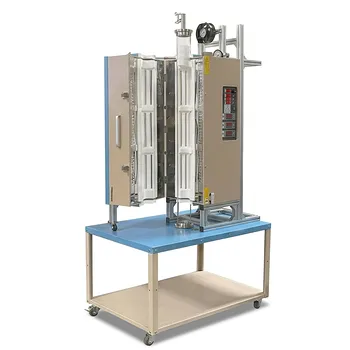
1200C Three Zone Split Vertical Tube Furnace 4 Inch Quartz Tube Stainless Steel Vacuum Flanges
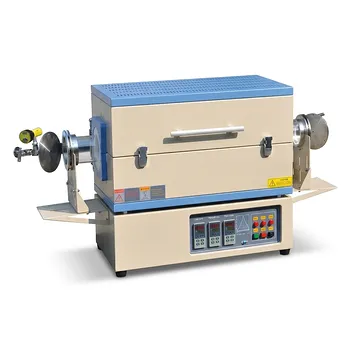
Three Zone Tube Furnace with 24 Inch Heating Length and Hinged Flange Quartz Tube System
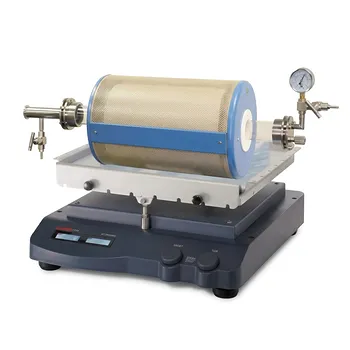
High Temperature Rocking Tube Furnace with Quartz Tube and Vacuum Flange for Materials Synthesis
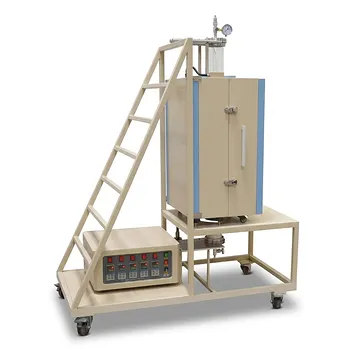
Five Zone Split Vertical Tube Furnace 1200C Max with 4 Inch Quartz Tube and Stainless Steel Vacuum Flanges
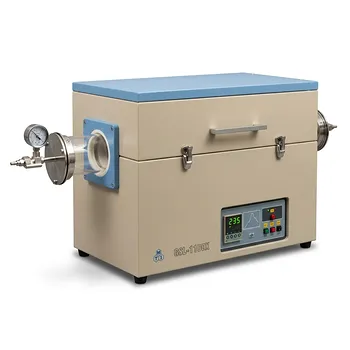
Single Zone Tube Furnace 5 Inch Quartz Tube 36 Inch Heating Zone Vacuum Flanges
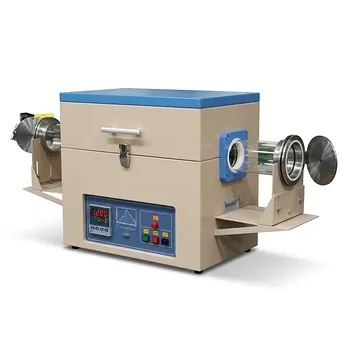
High Temperature 1200C Split Tube Furnace with Hinged Vacuum Flanges and 4 Inch Quartz Tube for Laboratory Research
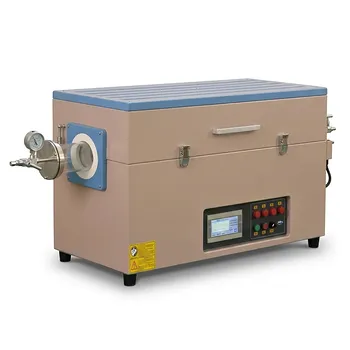
1200C Four Zone Split Tube Furnace with Touch Screen Control and High Purity Quartz Tube and Vacuum Sealing Flanges

High Temperature Automated 5 Inch Tube Furnace for Autonomous Material Research and Advanced Laboratory R&D