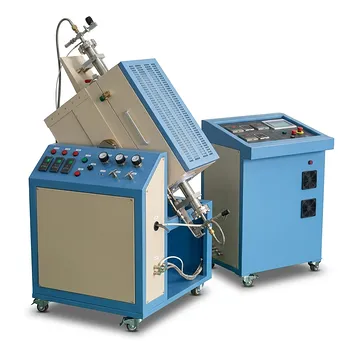
Role of Tube Furnace in KNNLST Ceramic Synthesis: Achieve High Phase Purity and Thermal Uniformity
Updated 3 months ago
The high-temperature tube furnace is the indispensable reactor for the solid-state synthesis of KNNLST ceramics. It provides the precise thermal energy and atmospheric control required to transform raw carbonate and oxide powders into a specific, complex oxide phase—typically through a programmed calcination cycle like 850°C for four hours.
Core Takeaway: A high-temperature tube furnace acts as a precision-controlled environment that facilitates complex chemical reactions and the removal of volatile byproducts. Its role is to ensure total phase purity and chemical consistency, preventing the formation of unwanted secondary phases that degrade ceramic performance.
Facilitating Complex Solid-State Reactions
Driving the Conversion of Raw Materials
At its most fundamental level, the tube furnace provides the thermal activation energy necessary for solid-state diffusion. This allows raw powders (carbonates and oxides) to react chemically at the atomic level, rearranging their structure into the target KNNLST perovskite phase.
Decomposition and Volatile Removal
During the calcination stage, the furnace must facilitate the decomposition of carbonates. As the temperature rises, carbon dioxide ($CO_{2}$) is released; the tube furnace ensures this gas is removed efficiently, allowing the chemical reaction to proceed to completion without entrapment.
Precision Heating and Phase Transformation
The furnace utilizes specific heating curves and holding times to manage phase transformations. By maintaining a steady environment, the material can transition from a mixture of independent precursors into a singular, integrated complex oxide phase with high crystallinity.
Ensuring Material Uniformity and Phase Purity
The Critical Role of Thermal Uniformity
High-temperature tube furnaces are engineered for excellent temperature uniformity within the chamber. This prevents localized "hot" or "cold" spots, ensuring that every grain of powder undergoes the same thermal history.
Minimizing Secondary Impurity Phases
Any deviation in temperature can lead to the formation of secondary impurity phases. Because KNNLST is a complex multi-component system, the furnace’s stability is vital to prevent the segregation of elements or the formation of non-functional crystal structures.
Control of Particle Morphology
The controlled environment allows for the refinement of powder by promoting uniform crystal nuclei formation. This stability prevents excessive agglomeration, ensuring the resulting powder is optimized for the subsequent sintering stages of ceramic production.
Atmospheric Control and Environmental Isolation
Managing the Chemical Environment
Unlike standard ovens, a tube furnace can be sealed to provide a precise gas atmosphere. While calcination often occurs in air, the ability to introduce inert gases (like Argon or Nitrogen) or flushing air helps manage the partial pressure of volatile components.
Preventing Contamination
The closed-tube design isolates the precursor materials from external contaminants. This is essential for high-performance ceramics like KNNLST, where even trace amounts of impurities can significantly alter the final dielectric or piezoelectric properties.
Understanding the Trade-offs and Pitfalls
Thermal Gradient Risks
While tube furnaces offer great uniformity, a large "cold zone" at the ends of the tube can lead to uneven calcination if the sample is not placed strictly within the furnace's "sweet spot." This results in a mix of fully reacted and unreacted powder.
Heating Rate Sensitivity
If the heating rate is too aggressive, the rapid release of $CO_{2}$ or organic binders can cause "bloating" or structural defects in the powder particles. Conversely, too slow a rate may lead to unwanted grain growth before the phase transformation is complete.
Vapor Pressure Challenges
At high calcination temperatures, certain elements in the KNNLST matrix (like Alkali metals) may become slightly volatile. A tube furnace must be managed carefully to balance the need for $CO_{2}$ removal with the risk of losing stoichiometry through evaporation.
How to Optimize Your Calcination Process
Selecting the right parameters for your high-temperature tube furnace depends on your specific material requirements and the desired characteristics of the final ceramic.
- If your primary focus is Phase Purity: Use a long dwell time (e.g., 4+ hours) at a stable temperature like 850°C to ensure every atom has migrated into the correct lattice position.
- If your primary focus is Nano-scale Particle Size: Utilize a faster heating rate and shorter dwell times to trigger the phase transformation while minimizing the time available for grain growth.
- If your primary focus is Eliminating Porosity: Ensure a high-flow air atmosphere during the ramp-up phase to completely flush out $CO_{2}$ and organic residues before the powder particles begin to neck.
The high-temperature tube furnace is not merely a heat source, but a precision instrument that dictates the chemical identity and structural integrity of the synthesized KNNLST ceramic.
Summary Table:
| Function | Key Role in KNNLST Synthesis | Technical Benefit |
|---|---|---|
| Thermal Activation | Drives solid-state diffusion of oxides | Ensures target perovskite phase formation |
| Atmospheric Control | Manages CO2 removal and gas environment | Prevents entrapment and volatile loss |
| Thermal Uniformity | Eliminates hot/cold spots during heating | Minimizes secondary impurity phases |
| Isolation | Sealed closed-tube design | Protects materials from external contaminants |
Elevate Your Material Research with THERMUNITS
Optimize your KNNLST ceramic synthesis with precision-engineered thermal solutions from THERMUNITS. As a leading manufacturer of high-temperature laboratory equipment for material science and industrial R&D, we provide the technology necessary for complex heat treatments.
Our comprehensive range includes:
- Furnaces: Muffle, Vacuum, Atmosphere, Tube, Rotary, and Hot Press furnaces.
- Advanced Systems: CVD/PECVD systems, Vacuum Induction Melting (VIM), and Dental Furnaces.
- Components: Electric rotary kilns, Thermal Elements, and specialized lab equipment.
Whether you are focusing on phase purity or controlled particle morphology, our equipment delivers the superior thermal uniformity your research demands. Contact us today to find your solution!
References
- Henry E. Mgbemere, Viktoriya Semeykina. SYNTHESIS AND CHARACTERISATION OF DIELECTRIC COMPOSITES PRODUCED FROM GLYCINE AND ALKALINE NIOBATE-BASED CERAMICS. DOI: 10.30572/2018/kje/150106
Mentioned Products
- High Temperature Tube Furnace 1500C with Sliding Flanges and 50mm OD for Rapid Thermal Processing Fast Heating and Cooling
- High Temperature 1700C Tube Furnace with High Vacuum Turbomolecular Pump System and Multi Channel Mass Flow Controller Gas Mixer
- 1750°C High Temperature Benchtop Vacuum Atmosphere Tube Furnace with Kanthal Super 1800 Heating Elements and 60mm Alumina Processing Tube
- High Temperature 1700C Benchtop Tube Furnace with 5 Inch Heating Zone High Purity Alumina Tube and Vacuum Sealing Flanges
- High Temperature Split Tube Furnace 1500C for Material Research Vacuum and Atmosphere Thermal Processing
People Also Ask
- How are high-temperature tube furnaces utilized to repair etching damage? Precision Lattice Restoration Solutions
- What role does a high-temperature tube furnace play in the sulfidation heat treatment of CoS@C/MXene nanocomposites? Guide
- What core conditions does a high-temperature tube furnace provide for rGO aerogels? Mastering Precision Synthesis.
- How does precision tube furnace control influence CoFe nanoparticle formation? Master Your Bimetallic Synthesis.
- What role does a high-temperature tube furnace play in CVD synthesis of silicon nanowires? Master VLS Growth Precision.

Tech Team · ThermUnits
Last updated on Jun 03, 2026
Related Products
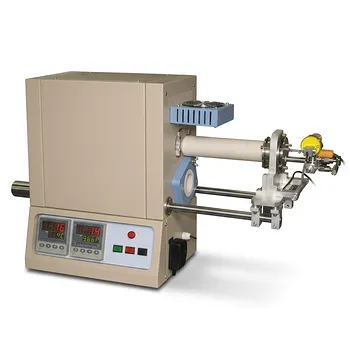
High Temperature Tube Furnace 1500C with Sliding Flanges and 50mm OD for Rapid Thermal Processing Fast Heating and Cooling

High Temperature 1700C Tube Furnace with High Vacuum Turbomolecular Pump System and Multi Channel Mass Flow Controller Gas Mixer
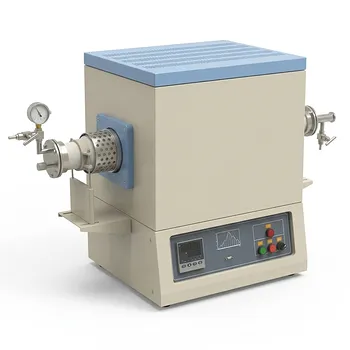
1750°C High Temperature Benchtop Vacuum Atmosphere Tube Furnace with Kanthal Super 1800 Heating Elements and 60mm Alumina Processing Tube
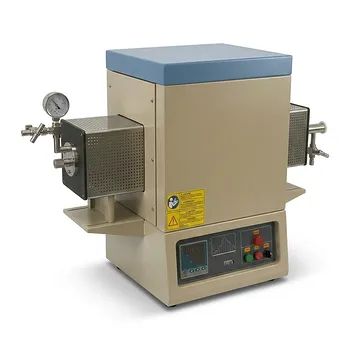
High Temperature 1700C Benchtop Tube Furnace with 5 Inch Heating Zone High Purity Alumina Tube and Vacuum Sealing Flanges
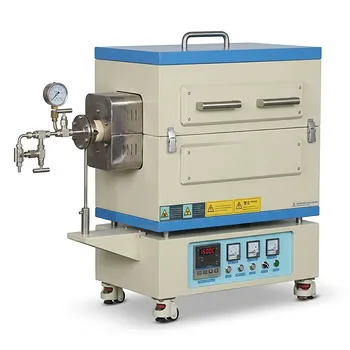
High Temperature Split Tube Furnace 1500C for Material Research Vacuum and Atmosphere Thermal Processing
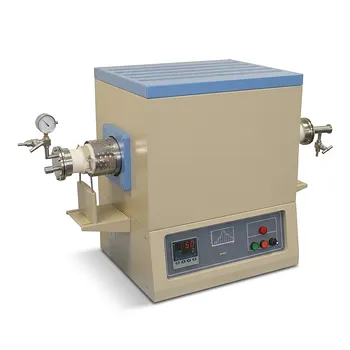
1700C High Temperature Alumina Tube Furnace with 18 Inch Heated Zone and Vacuum Sealing Flanges

1800C High Temperature Compact Vacuum Tube Furnace with 60mm OD Alumina Tube and Kanthal MoSi2 Heating Elements

Compact High Temperature 1600C Tube Furnace with 50mm Alumina Tube and Vacuum Flanges for Material Sintering
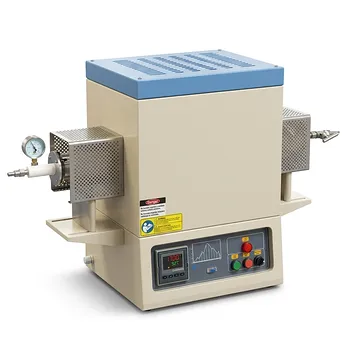
High Temperature Three Zone Tube Furnace 1700C with Alumina Tube and Water Cooled Flanges
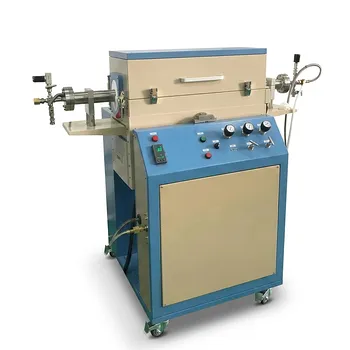
High Temperature Rocking Tube Furnace 1700°C Alumina Processing Tube with Precision Oscillation for Material Synthesis
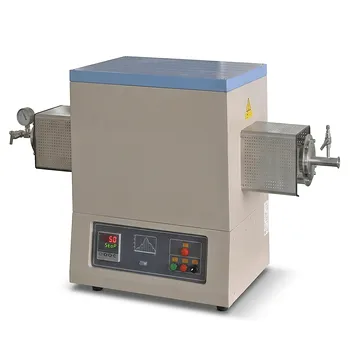
High Temperature 1700C Tube Furnace with 4 Inch OD Alumina Tube and Vacuum Sealing Flanges

High Temperature 1700C Vertical Tube Furnace for Powder Spherification and Material Sintering
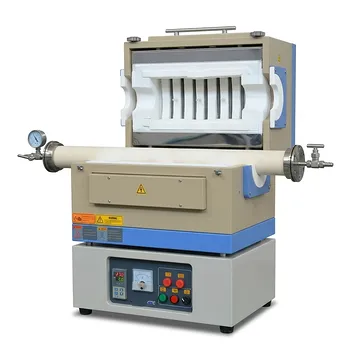
High Temperature 1600C Split Tube Furnace Vacuum Flanges Valves Optional 60mm 80mm Alumina Tube

High Temperature Automated 5 Inch Tube Furnace for Autonomous Material Research and Advanced Laboratory R&D
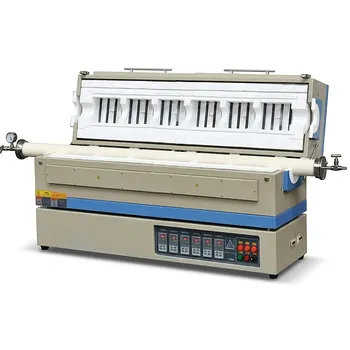
High Temperature 1700C Six Zone Split Tube Furnace with Alumina Tube and Water Cooled Flanges
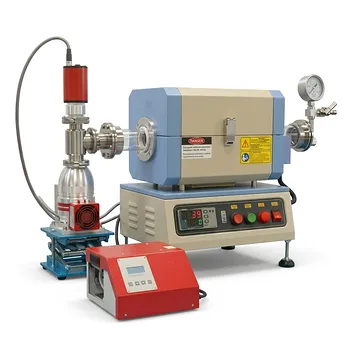
High Vacuum Compact Tube Furnace 1200C with Integrated Turbo Pump System and 8 Inch Heating Zone
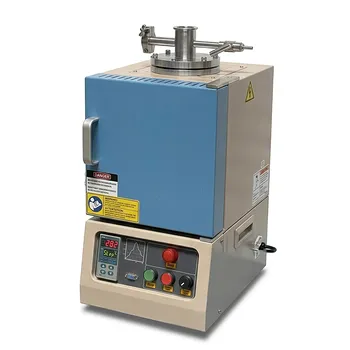
High Temperature Hybrid Muffle and Tube Furnace with Vacuum Capability and PID Control
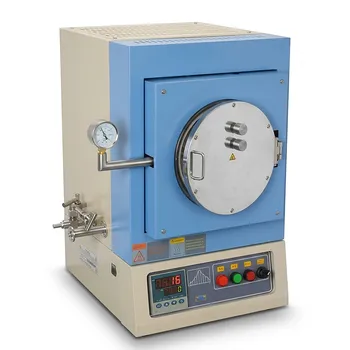
1100°C High Temperature Quartz Chamber Furnace 8 Inch OD with 7.6 Liter Capacity and Vacuum Atmosphere Capability
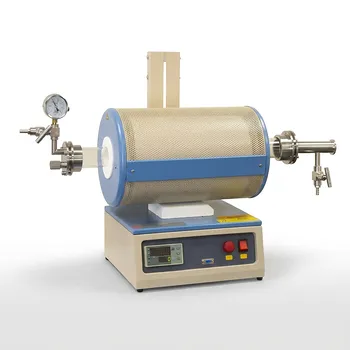
1100C Tube Furnace with Vacuum Flange and Programmable Temperature Controller for Material Science and Industrial Heat Treatment