What are the technical benefits of using graphite crucibles in titanium slag preparation? Optimize Smelting & Recovery
Updated 3 months ago
Graphite crucibles and graphite-lined alumina systems are essential for titanium slag preparation because they function as both high-performance containers and active chemical participants. They provide an auxiliary reductive atmosphere that protects the charge from oxidation, ensure thermal uniformity through superior conductivity, and utilize differential wettability to allow for the clean physical separation of metal and slag phases.
The technical advantage of graphite in titanium smelting lies in its ability to simultaneously stabilize the thermal environment and provide a local reducing potential. This dual role simplifies post-experimental analysis by ensuring the slag and metal do not bond, while also accelerating the underlying chemical kinetics.
Optimizing the Chemical and Thermal Environment
Auxiliary Reductive Atmosphere
Graphite crucibles do more than just hold the sample; they serve as a supplementary carbon source. This environment provides a local reductive atmosphere that prevents the furnace charge from re-oxidizing during the smelting process.
High Thermal Conductivity for Uniformity
One of the primary challenges in slag experiments is maintaining a consistent temperature across the sample. The high thermal conductivity of graphite ensures that heat is transferred uniformly to the sample interior, preventing localized cold spots that could skew phase transition data.
Structural Integrity at Extreme Temperatures
High-purity graphite maintains exceptional thermal stability at temperatures exceeding 1700°C and even under vacuum conditions. This allows researchers to conduct experiments in the extreme ranges required for titanium reduction without the risk of crucible failure or deformation.
Enhancing Post-Experimental Analysis
Facilitating Phase Separation via Wettability
A critical technical benefit is the difference in wettability between graphite and metallic iron. Because molten metal does not "wet" or stick to the graphite surface, it naturally forms distinct "metal crowns" that are physically separate from the slag phase.
Simplifying Yield and Composition Calculations
Because the slag and metal do not adhere to the crucible or each other, researchers can easily recover the entire sample. This physical separation is vital for accurate yield calculations and ensures that subsequent chemical composition analysis is not contaminated by crucible fragments or intermixed phases.
Chemical Inertness Against Molten Slag
In reduction environments, high-purity graphite remains chemically inert against most molten metals and slag compositions. This prevents the introduction of unwanted metallic impurities into the reaction system, which is critical for maintaining the phase purity of the final titanium dioxide or slag products.
Understanding the Trade-offs
Carbon Contamination Risks
The most significant trade-off when using graphite is its role as an auxiliary carbon source. While this assists in reduction, it can lead to the formation of unintended carbide phases (such as silicon carbide) if the reaction kinetics are not tightly controlled.
Mechanical Fragility of Liners
When using graphite-lined alumina crucibles, the difference in thermal expansion coefficients between the two materials can be an issue. If heated or cooled too rapidly, the graphite liner may crack or the alumina outer shell may fail, potentially leading to sample leakage or oxidation.
Oxidation in Ambient Air
Graphite is highly susceptible to oxidation if exposed to oxygen at high temperatures. These experiments must be conducted in inert or vacuum atmospheres to prevent the crucible itself from burning away, which limits the types of furnace setups that can be utilized.
How to Apply This to Your Project
Recommendations Based on Experimental Goals
- If your primary focus is precise yield calculation and metal recovery: Use high-purity graphite crucibles to leverage the non-wetting properties that prevent slag-metal sticking.
- If your primary focus is preventing impurity migration in high-heat reactions: Use a graphite-lined alumina crucible to benefit from the chemical stability of alumina and the reductive protection of graphite.
- If your primary focus is studying rapid carbothermic kinetics: Use a full graphite crucible to maximize the surface area contact between the melt and the carbon source, accelerating the reduction process.
Selecting the right crucible configuration transforms the container from a passive vessel into a strategic tool for ensuring chemical accuracy and experimental repeatability.
Summary Table:
| Technical Feature | Benefit in Titanium Slag Preparation | Experimental Impact |
|---|---|---|
| Auxiliary Reduction | Provides a local reductive atmosphere | Prevents re-oxidation of the charge |
| High Thermal Conductivity | Ensures uniform heat distribution | Prevents cold spots and skews in phase data |
| Non-Wettability | Molten metal does not stick to surface | Facilitates clean separation of metal and slag |
| Thermal Stability | Reliable performance up to 1700°C+ | Enables high-temperature reduction & VIM |
| Chemical Inertness | Prevents impurity migration | Maintains high phase purity of final products |
Elevate Your Material Research with THERMUNITS
Precision in titanium slag preparation requires more than just the right crucible—it demands a controlled thermal environment. THERMUNITS is a leading manufacturer of high-temperature laboratory equipment designed specifically for material science and industrial R&D.
Whether you are conducting carbothermic reduction or complex phase studies, our comprehensive range of equipment ensures unmatched stability and control:
- Advanced Furnaces: Muffle, Vacuum, Atmosphere, Tube, Rotary, and Hot Press systems.
- Specialized Solutions: CVD/PECVD systems, Dental Furnaces, Electric Rotary Kilns, and Vacuum Induction Melting (VIM) furnaces.
- Critical Components: High-quality Thermal Elements and lab heat treatment tools.
Ready to optimize your lab’s efficiency and accuracy? Contact our technical experts today to find the perfect thermal processing solution for your unique R&D requirements.
References
- Maxat K. Myrzakulov, А И Карлина. Analysis of the Effect of Fluxing Additives in the Production of Titanium Slags in Laboratory Conditions. DOI: 10.3390/met14121320
Mentioned Products
- Vertical Crucible Furnace 1000C High Temperature Laboratory Equipment 4.7 Inch Diameter Chamber SS316 Anti Corrosive Enclosure
- High Temperature Vertical Crucible Furnace with 22L Heating Chamber and 1200C Maximum Temperature
- 600°C Vertical Crucible Furnace with SS316 Alloy Reactor and 6 Port Vacuum Flange
- Compact Crucible Melting Furnace 1100C Programmable Temperature Controller Metal Sintering Equipment
- 1200C Sliding Internal Crucible Tube Furnace for Controlled Atmosphere Thin Film Deposition and Material Sublimation Research
People Also Ask
- What is the function of a high-temperature laboratory furnace in the synthesis of Crystalline Carbon Nitride (PTI)?
- How Lab Furnaces Simulate Industrial Conditions for CPCM Stability: Optimize Your Thermal Cycling R&D
- Why is a low initial heating rate of 1 °C/min required for Rh–WNO precursors? Ensuring Structural Integrity & Dispersion
- Why is a laboratory furnace with ultra-high heating rate capabilities necessary for simulating coal injection processes?
- What is the objective of performing long-term annealing at 653 K on quenched PbTe-Ag2Te? Drive Ostwald Ripening.

Tech Team · ThermUnits
Last updated on Jun 02, 2026
Related Products
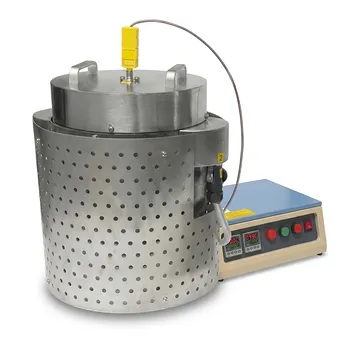
Vertical Crucible Furnace 1000C High Temperature Laboratory Equipment 4.7 Inch Diameter Chamber SS316 Anti Corrosive Enclosure
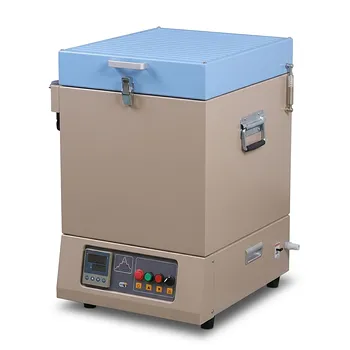
High Temperature Vertical Crucible Furnace with 22L Heating Chamber and 1200C Maximum Temperature
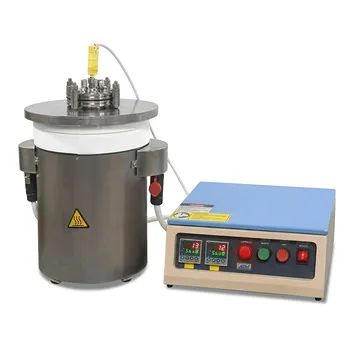
600°C Vertical Crucible Furnace with SS316 Alloy Reactor and 6 Port Vacuum Flange
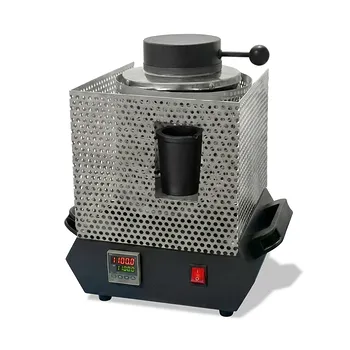
Compact Crucible Melting Furnace 1100C Programmable Temperature Controller Metal Sintering Equipment
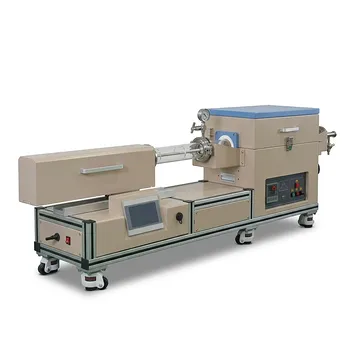
1200C Sliding Internal Crucible Tube Furnace for Controlled Atmosphere Thin Film Deposition and Material Sublimation Research
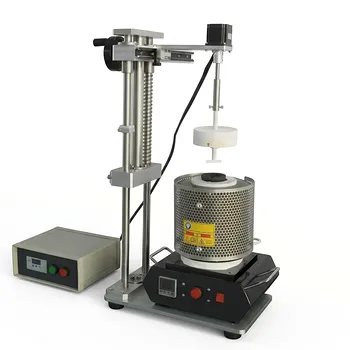
1100C Crucible Melting Furnace with Stirring Function for Glovebox and Air Sensitive Alloy Research
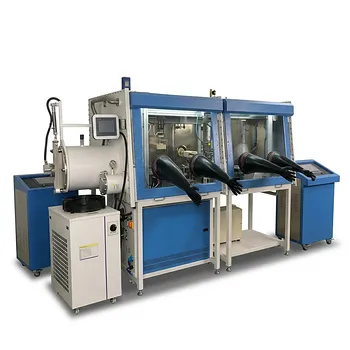
Automatic 10 Crucible Induction Melting and Casting System with Stirring Function and Glovebox Integration 2000C
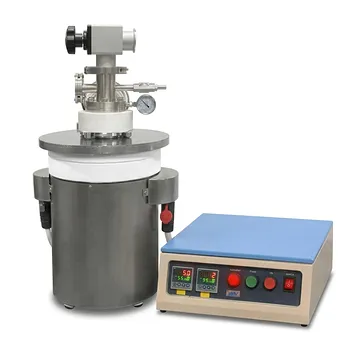
1100C High Temperature Vacuum Crucible Furnace with Quartz Chamber for Thermal Processing and Sintering
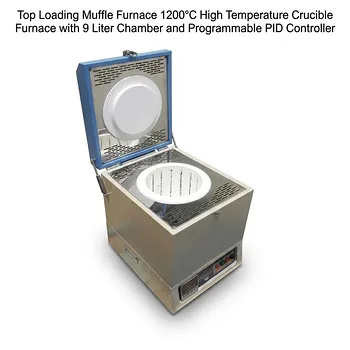
Top Loading Muffle Furnace 1200°C High Temperature Crucible Furnace with 9 Liter Chamber and Programmable PID Controller