What are the technical considerations for using lidded Alumina Crucibles during pyrolysis? Ensure Synthesis Purity
Updated 3 months ago
The use of lidded alumina crucibles is a strategic technical choice designed to regulate micro-environment kinetics and maintain chemical purity. By restricting gas exchange and providing a thermally stable reaction vessel, these crucibles prevent unwanted oxidative combustion and manage the concentration of volatile by-products essential for specific decomposition pathways.
Lidded alumina crucibles function as semi-closed chemical reactors that isolate the precursor from the furnace atmosphere. This setup is critical for transitioning from simple heating to controlled thermal decomposition, ensuring high-yield synthesis while protecting the material from external contamination.
Atmosphere Management and Kinetic Control
Creating a Micro-Oxygen Environment
The primary function of the lid is to create a localized oxygen-limited or anaerobic atmosphere within the crucible. This physical shielding prevents single-source precursors from undergoing complete oxidative combustion into ash, which is vital for the production of carbon-rich biochars or sensitive sulfides.
Retention of Volatile Decomposition By-products
The lid manages the escape of volatile by-products such as isobutene, isobutyronitrile, or HCl. By retaining these gases in the local reaction zone, the lid directly influences pyrolysis kinetics and can assist in processes like pore formation or the doping of heteroatoms into the material structure.
Regulation of Evaporation Rates
The internal geometry of the alumina crucible, specifically its inner diameter, determines the free surface area-to-volume ratio of the melt. This is a critical technical parameter for quantifying evaporation rate constants and governing interfacial reaction kinetics during high-temperature phases.
Material Integrity and Purity
High-Temperature Chemical Inertness
Alumina ($Al_2O_3$) is selected for its exceptional thermal stability and resistance to chemical erosion, even at temperatures reaching 1873 K. This ensures that the crucible material does not react with or contaminate the precursor melt, which is essential for maintaining the high purity of synthesized sulfides.
Prevention of Physical Contamination
The lid acts as a primary defense against external dust and furnace debris that could compromise the sample. Furthermore, it contains "splashing" of the reactants during the volatile stages of decomposition, protecting the furnace heating elements from corrosive damage.
Structural Strength at Scale
High-purity alumina maintains superior structural strength at the extreme temperatures required for refining and pyrolysis. This reliability prevents crucible failure or deformation, which could otherwise lead to inconsistent thermal distribution or loss of the precursor material.
Understanding the Technical Trade-offs
The Risk of Pressure Accumulation
While the lid is necessary for atmosphere control, it creates a bottleneck for mass transfer. If decomposition gases are generated too rapidly, internal pressure can build up, potentially causing "bumping" or the physical displacement of the lid, which disrupts the controlled micro-environment.
Mass Transfer Limitations
Restricting the removal of volatiles can sometimes lead to secondary reactions that are not desired in all synthesis protocols. A lid that is too tightly sealed may prevent the complete removal of byproduct species that must be eliminated to achieve specific crystal phases or morphological structures.
Optimizing the Pyrolysis Environment
How to Apply This to Your Project
To achieve the best results with lidded alumina crucibles, align your setup with your specific chemical goals:
- If your primary focus is high-yield carbonization: Use a well-fitted lid to minimize oxygen ingress and ensure the precursor follows a thermal decomposition path rather than an oxidative one.
- If your primary focus is product purity: Prioritize high-purity alumina (99% or higher) to prevent the leaching of silica or other impurities into the single-source precursor at temperatures above 1500 K.
- If your primary focus is kinetic modeling: Precisely measure the crucible’s inner diameter to accurately calculate the surface area-to-volume ratio, as this will dictate your evaporation and reaction rate constants.
By mastering the balance between volatile retention and atmosphere isolation, you can transform a standard furnace run into a precision-controlled synthesis of high-performance materials.
Summary Table:
| Consideration | Technical Function | Primary Benefit |
|---|---|---|
| Atmosphere Control | Creates an anaerobic micro-environment | Prevents oxidative combustion of samples |
| Volatile Retention | Manages escape of decomposition gases | Influences reaction kinetics and doping |
| Material Inertness | Resistance to chemical erosion up to 1873K | Maintains high purity; prevents contamination |
| Pressure Dynamics | Regulates mass transfer and evaporation | Quantifies reaction rates and yields |
Optimize Your Advanced Material Synthesis with THERMUNITS
Precision in pyrolysis requires both the right vessel and the perfect thermal environment. THERMUNITS is a leading manufacturer of high-temperature laboratory equipment for material science and industrial R&D. We empower your research with a comprehensive range of thermal processing solutions, including:
- High-Precision Furnaces: Muffle, Vacuum, Atmosphere, Tube, Rotary, and Hot Press furnaces.
- Advanced Systems: CVD/PECVD systems, Vacuum Induction Melting (VIM) furnaces, and Electric Rotary Kilns.
- Specialized Equipment: Dental Furnaces, Thermal Elements, and custom laboratory heat treatment solutions.
Whether you are refining single-source precursors or developing sensitive sulfides, our equipment ensures the stable, controlled conditions necessary for high-yield results.
Ready to elevate your lab's capabilities? Contact us today to discuss your heat treatment requirements!
References
- Sheridon N. Kelly, Stefan G. Minasian. Formation of uranium disulfide from a uranium thioamidate single-source precursor. DOI: 10.1039/d4sc03422h
Mentioned Products
- 1200C Sliding Internal Crucible Tube Furnace for Controlled Atmosphere Thin Film Deposition and Material Sublimation Research
- 600°C Vertical Crucible Furnace with SS316 Alloy Reactor and 6 Port Vacuum Flange
- Automatic 10 Crucible Induction Melting and Casting System with Stirring Function and Glovebox Integration 2000C
- Vertical Crucible Furnace 1000C High Temperature Laboratory Equipment 4.7 Inch Diameter Chamber SS316 Anti Corrosive Enclosure
- Compact Crucible Melting Furnace 1100C Programmable Temperature Controller Metal Sintering Equipment
People Also Ask
- What are the advantages of a tube atmosphere furnace for CdS thin films? Enhance Crystallinity & Prevent Sulfur Loss
- Why is an atmosphere tube furnace considered core equipment for CVD? Essential for Precision Thin-Film & 2D Materials
- Why is an atmosphere-controlled tube furnace required for the annealing of Sb2S3? Optimize Semi-conductor Performance
- How does a slanted tube furnace contribute to the crystal growth of Sr4Os3O12? Optimize Thermal Fields and Purity
- Why must deposited LiMn2O4 thin films undergo annealing in a digital tube furnace? Unlock High-Performance Cathodes

Tech Team · ThermUnits
Last updated on Jun 03, 2026
Related Products
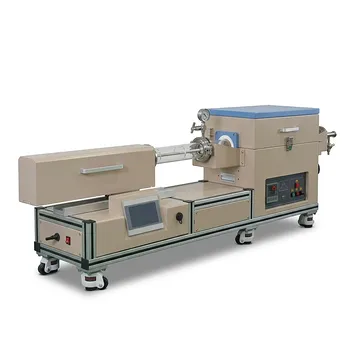
1200C Sliding Internal Crucible Tube Furnace for Controlled Atmosphere Thin Film Deposition and Material Sublimation Research
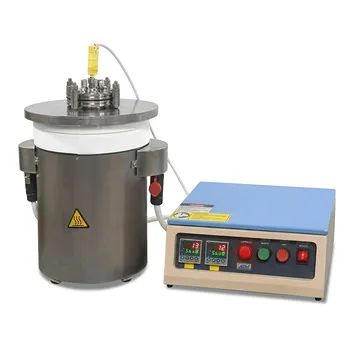
600°C Vertical Crucible Furnace with SS316 Alloy Reactor and 6 Port Vacuum Flange
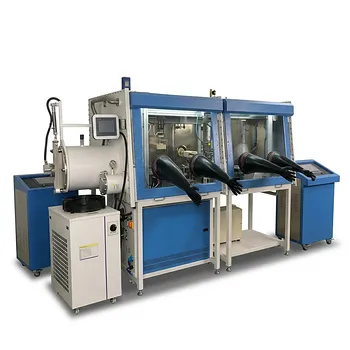
Automatic 10 Crucible Induction Melting and Casting System with Stirring Function and Glovebox Integration 2000C
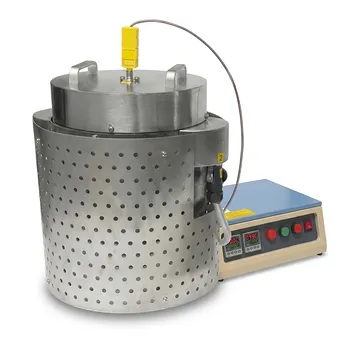
Vertical Crucible Furnace 1000C High Temperature Laboratory Equipment 4.7 Inch Diameter Chamber SS316 Anti Corrosive Enclosure
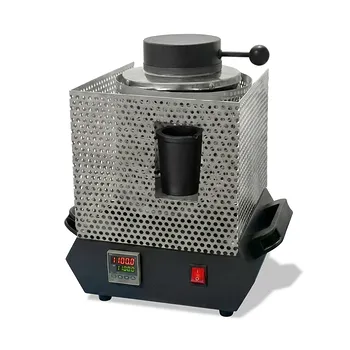
Compact Crucible Melting Furnace 1100C Programmable Temperature Controller Metal Sintering Equipment
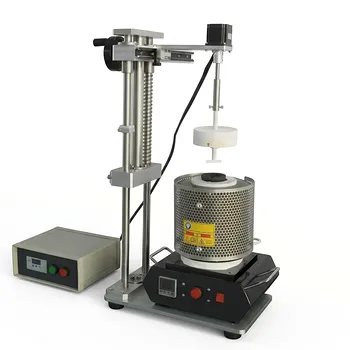
1100C Crucible Melting Furnace with Stirring Function for Glovebox and Air Sensitive Alloy Research
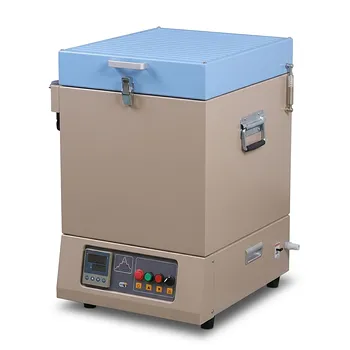
High Temperature Vertical Crucible Furnace with 22L Heating Chamber and 1200C Maximum Temperature
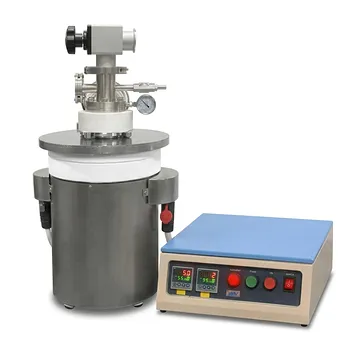
1100C High Temperature Vacuum Crucible Furnace with Quartz Chamber for Thermal Processing and Sintering
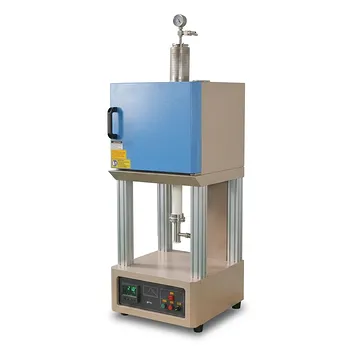
Hybrid High Temperature Tube and Box Furnace 1700C with 2 Inch Alumina Tube for Material Research
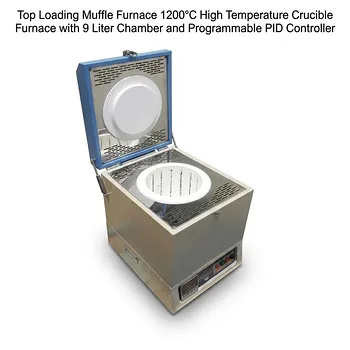
Top Loading Muffle Furnace 1200°C High Temperature Crucible Furnace with 9 Liter Chamber and Programmable PID Controller