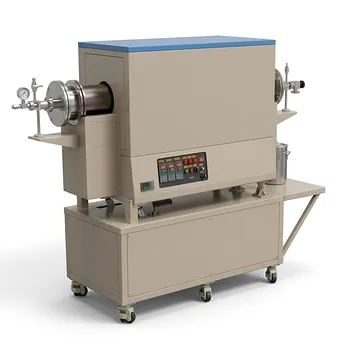
Why must deposited LiMn2O4 thin films undergo annealing in a digital tube furnace? Unlock High-Performance Cathodes
Updated 3 months ago
The transition from an inert coating to an active electrochemical component. As-deposited $LiMn_2O_4$ thin films are typically amorphous or possess low crystallinity, rendering them ineffective for energy storage. Precise heat treatment at 500 °C in a digital tube furnace provides the thermal energy required to induce a transformation into the necessary spinel crystal structure. This process is the critical bridge that converts a raw material into a high-performance cathode by optimizing its internal lattice and mechanical properties.
Annealing is a mandatory post-deposition step that reorganizes the amorphous atomic structure of $LiMn_2O_4$ into a functional cubic spinel lattice. This transformation is essential for achieving the ion transport capabilities and structural stability required for modern battery applications.
Structural Transformation and Crystallinity
Inducing the Spinel Phase
As-deposited films, particularly those created via sputtering, are usually in an amorphous or weakly crystalline state. The controlled environment of a tube furnace allows the material to reach the activation energy necessary for atomic rearrangement. This rearrangement promotes the transition into a cubic spinel structure, which is the active phase required for electrochemical functionality.
Enhancing Ion Transport
The formation of a well-defined crystal lattice is essential for lithium-ion migration. A cubic spinel structure provides clear pathways for ions to move through the cathode during charge and discharge. Without this crystallinity, the material would exhibit poor conductivity and limited electrochemical activity.
Achieving Specific Raman Activity
Annealing also influences the material's optical and vibrational properties, such as Raman activity modes. These modes are signatures of a properly formed lattice. Achieving these specific modes is a key indicator that the cathode material has reached its intended chemical and physical state.
Mechanical Integrity and Stability
Relieving Internal Stress
The deposition process often generates significant internal stresses within the thin film. High-temperature annealing allows the lattice to relax, effectively eliminating these defects. Relieving this stress prevents the film from cracking or peeling during the physical expansion and contraction of battery cycling.
Improving Substrate Adhesion
Thermal treatment enhances the interfacial bonding between the $LiMn_2O_4$ film and the underlying substrate. Stronger adhesion is vital for the long-term durability of the device. Improved contact ensures that the film remains mechanically and electrically connected to the current collector throughout its lifespan.
Increasing Structural Stability
By improving crystallinity and relieving stress, the annealing process increases the overall structural stability of the cathode. This stability is directly linked to the material's ability to withstand repeated charge-discharge cycles. A stable spinel structure is less likely to undergo phase degradation, leading to a longer-lasting battery.
The Necessity of Digital Tube Furnaces
High-Precision Thermal Fields
Digital tube furnaces offer a highly controlled thermal environment that is superior to standard heating methods. Maintaining a precise temperature of 500 °C is critical, as deviations can lead to incomplete crystallization or the formation of unwanted phases. The digital interface allows for exact ramping and soaking profiles.
Atmosphere Control and Protection
While $LiMn_2O_4$ requires specific temperatures, the tube furnace also allows for atmosphere management. By controlling the flow of gases, researchers can prevent oxidative degradation or contamination from the surrounding environment. This ensures that the chemical purity of the thin film is maintained during the high-temperature phase.
Understanding the Trade-offs
Thermal Budget and Substrate Limits
While high temperatures are necessary for crystallization, they must be balanced against the thermal budget of the substrate. Excessive heat or prolonged exposure can cause the substrate to warp or lead to unwanted interdiffusion between the film and the substrate layers.
Grain Growth Management
Increased annealing time can lead to larger grain sizes, which generally improves crystallinity. However, excessively large grains may reduce the active surface area, potentially slowing down the rate at which lithium ions can enter or exit the material. Finding the "sweet spot" at 500 °C is essential for balancing stability with power density.
Optimizing the Annealing Process for Your Goals
To achieve the best results with $LiMn_2O_4$ thin films, the annealing parameters should be tailored to your specific performance requirements.
- If your primary focus is maximum ion conductivity: Maintain a strict 500 °C environment to ensure the complete formation of the cubic spinel lattice for optimal ion pathways.
- If your primary focus is long-term mechanical durability: Implement a slow, controlled cooling ramp to minimize residual internal stresses and maximize adhesion to the substrate.
Proper thermal processing is the definitive factor that transforms a simple thin film into a high-performance, stable electrochemical cathode.
Summary Table:
| Process Aspect | Impact on LiMn2O4 Thin Film | Benefit for Battery Performance |
|---|---|---|
| Phase Transformation | Converts amorphous state to cubic spinel lattice | Enables electrochemical activity and energy storage |
| Ion Transport | Creates defined pathways for lithium migration | Increases conductivity and charge/discharge efficiency |
| Stress Relief | Eliminates internal defects and lattice strain | Prevents film cracking and peeling during cycling |
| Interfacial Bonding | Enhances adhesion between film and substrate | Improves long-term structural and mechanical stability |
| Precision Control | Maintains uniform 500 °C thermal field | Ensures chemical purity and prevents unwanted phases |
Elevate Your Material Research with THERMUNITS Precision
Transform your thin-film deposition into high-performance electrochemical components with THERMUNITS. As a leading manufacturer of high-temperature laboratory equipment, we provide the precise thermal environments necessary for critical processes like $LiMn_2O_4$ spinel formation.
Our comprehensive range of thermal solutions—including Digital Tube Furnaces, Muffle Furnaces, Vacuum/Atmosphere Systems, CVD/PECVD units, and Vacuum Induction Melting (VIM) furnaces—is designed specifically for material science and industrial R&D.
Why choose THERMUNITS?
- Unmatched Precision: Achieve the exact ramping and soaking profiles required for advanced battery materials.
- Versatile Solutions: From rotary kilns to hot press furnaces, we cover all heat treatment needs.
- Expert Support: Our equipment is engineered to maximize your lab’s efficiency and research accuracy.
Ready to optimize your thermal processing? Contact our experts today to find the perfect furnace for your application!
References
- Fabián Ambriz-Vargas, Manuel Quevedo-López. Fine-Tuning Cathode Performance: The Influence of Argon Deposition Pressure on LiMn2O4 Thin Film Electrochemistry for Li-Ion Batteries. DOI: 10.3390/batteries10120449
Mentioned Products
- 1200C Sliding Internal Crucible Tube Furnace for Controlled Atmosphere Thin Film Deposition and Material Sublimation Research
- 1200C High Throughput Multi Channel Tube Furnace with 50mm Quartz Tubes for Annealing and Material Phase Diagram Research
- 950C Rapid Thermal Processing Furnace for 12 Inch Wafer CSS Coating with Rotating Substrate Holder
- High Throughput 1200C Four Channel Tube Furnace with 3 Inch Quartz Tubes for Multi Zone Annealing and Material Research
- High Temperature 800C Rapid Thermal Processing Furnace with Rotating Sample Holder for Close Spaced Sublimation and Thin Film Solar Cell Research
People Also Ask
- What are the advantages of a tube atmosphere furnace for CdS thin films? Enhance Crystallinity & Prevent Sulfur Loss
- Why is an atmosphere tube furnace considered core equipment for CVD? Essential for Precision Thin-Film & 2D Materials
- Why is an atmosphere-controlled tube furnace required for the annealing of Sb2S3? Optimize Semi-conductor Performance
- How does a slanted tube furnace contribute to the crystal growth of Sr4Os3O12? Optimize Thermal Fields and Purity
- How does a high-vacuum tube furnace facilitate the PVD growth of CdS nanobelts? Precision Control for Nanomaterials

Tech Team · ThermUnits
Last updated on Jun 03, 2026
Related Products
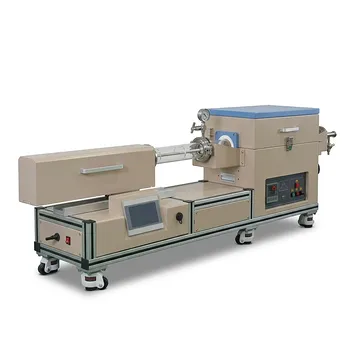
1200C Sliding Internal Crucible Tube Furnace for Controlled Atmosphere Thin Film Deposition and Material Sublimation Research

1200C High Throughput Multi Channel Tube Furnace with 50mm Quartz Tubes for Annealing and Material Phase Diagram Research
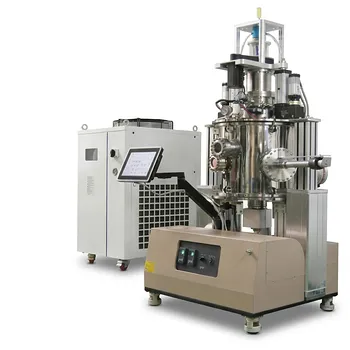
950C Rapid Thermal Processing Furnace for 12 Inch Wafer CSS Coating with Rotating Substrate Holder
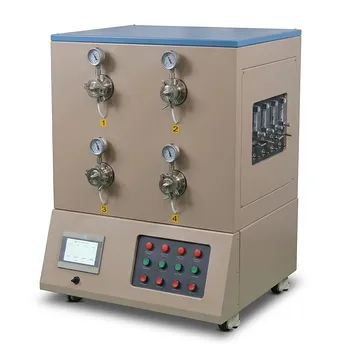
High Throughput 1200C Four Channel Tube Furnace with 3 Inch Quartz Tubes for Multi Zone Annealing and Material Research
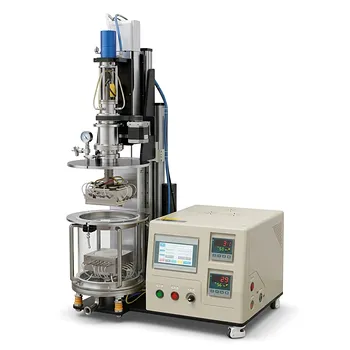
High Temperature 800C Rapid Thermal Processing Furnace with Rotating Sample Holder for Close Spaced Sublimation and Thin Film Solar Cell Research
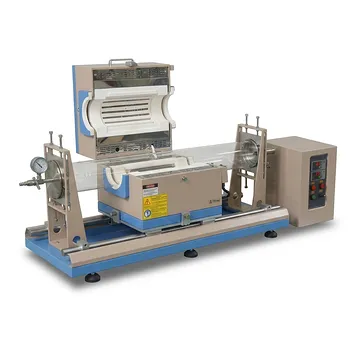
1200C High Temperature 5 Inch Sliding Tube Furnace for Rapid Thermal Processing RTP and Wafer Annealing
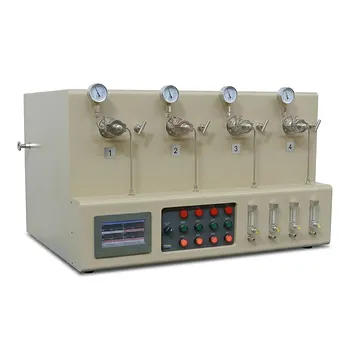
High Temperature 1700C 4 Channel Tube Furnace 1 Inch Alumina Tube for Hi-Throughput Annealing
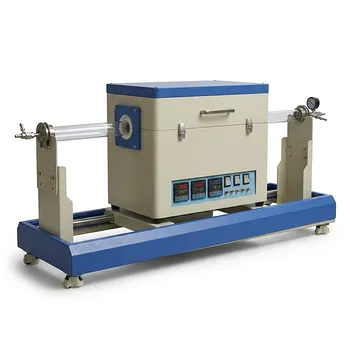
Double Temperature Zone Double Cover Tube Furnace for High Temperature CVD and Vacuum Annealing
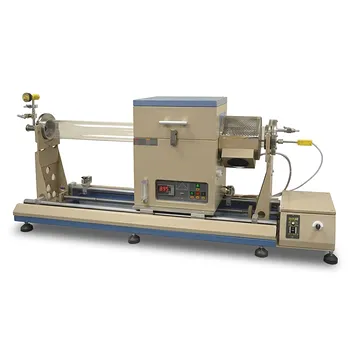
900 ºC Max Sliding RTP Tube Furnace with Rapid IR Heating and 4 Inch OD Quartz Tube

High Temperature 1700C Vertical Tube Furnace for Powder Spherification and Material Sintering
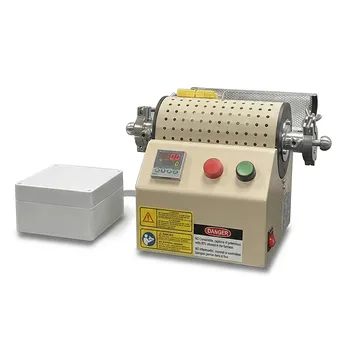
1000C Mini Tube Furnace with 20mm Quartz Tube and Vacuum Flanges for Material Science Research and Controlled Atmosphere Small Sample Processing
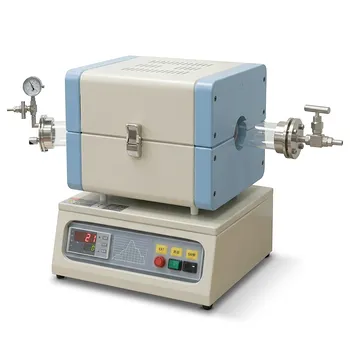
1200C Tube Furnace with Internal Magnetic Sample Sliding for Direct Vaporizing Deposition and Rapid Thermal Processing

Compact High Temperature 1600C Tube Furnace with 50mm Alumina Tube and Vacuum Flanges for Material Sintering
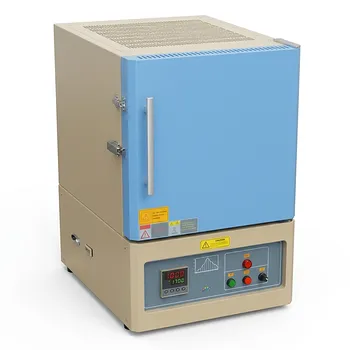
Large Bench Top 1700C High Temperature Muffle Furnace with 19L Chamber for Advanced Material Sintering and Annealing

Vertical 1700C Vacuum and Atmosphere Tube Furnace with 80mm Alumina Tube
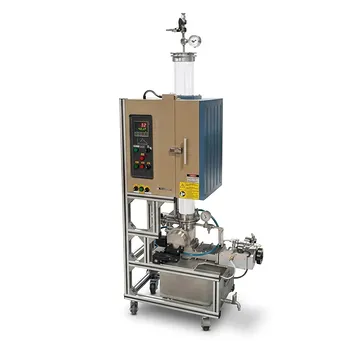
1200C High Temperature Atmosphere Controlled Vertical Quenching Tube Furnace with 4 Inch Quartz Tube

1800C High Temperature Compact Vacuum Tube Furnace with 60mm OD Alumina Tube and Kanthal MoSi2 Heating Elements
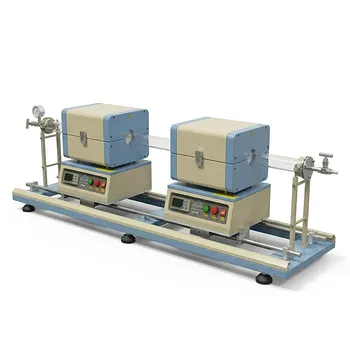
1200C Max Dual Sliding Tube Furnace with 50 mm Tube Flanges for CVD
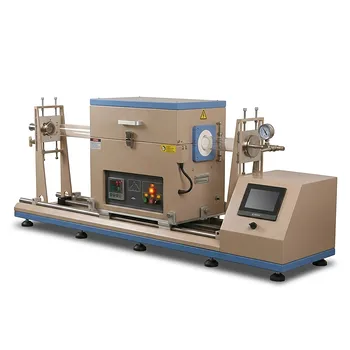
1200C Sliding Tube Furnace for Rapid Thermal Processing and CVD Graphene Growth with 100mm OD Capacity